Best Feature Management Software in 2026: 9 Tools Compared
WLWPLegible EditorsLast verified 23 Nov 2026How we rank12 min read
★ Short answer
LaunchDarkly is the best feature management software for most engineering teams, with unlimited seats and flags, governance controls and a 4.5 out of 5 G2 rating. Pick Statsig for flags plus analytics, or ConfigCat for a flat $110 monthly price.
How we make this list: we compare pricing pages, product documentation and public user reviews, then re-check every price before each update. No product paid for a place. Disclosure.
LaunchDarkly leads on breadth: unlimited seats and flags, 30+ SDKs and a 4.5/5 G2 rating from 882 reviews.
Statsig is the only pick that bundles flags, experiments, analytics and session replay on one $150 monthly plan.
ConfigCat is the cheapest predictable paid plan at $110 a month with unlimited seats.
Flagsmith and Unleash are the open-source picks; both offer a free self-hosted edition.
Harness FME and Optimizely publish no price, so budget for a quote and a sales cycle.
What to look for in feature management software
Feature management software wraps code in flags so a team can turn a feature on or off without a new deploy. The best tools add targeting rules, percentage rollouts and a kill switch that works in seconds.
Governance matters once more than one team shares the system. Look for approvals, audit logs and roles that control who can change a flag in production.
Pricing is the hardest part to compare. Some tools charge per seat, some per request or event, and some by monthly active users. Our guide on deploying WordPress with GitHub Actions shows the same deploy-then-release split in a smaller setup.
Experiments are a bonus, not a given. LaunchDarkly, Statsig, GrowthBook, Harness and Optimizely run statistics on flags; ConfigCat, Flagsmith and Unleash keep the focus on delivery.
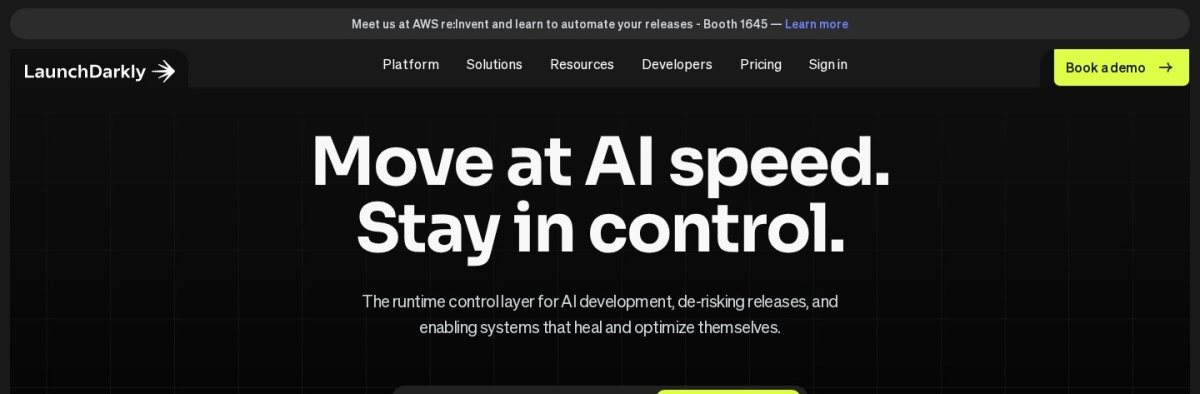
LaunchDarkly is the feature management platform most large engineering teams measure others against. The free Developer plan includes unlimited seats and unlimited flags, with targeting, percentage rollouts and kill switches across more than 30 SDKs.
The trade off is usage pricing. Foundation bills per service connection from $10 a month plus client-side monthly active users, so a high-traffic app costs more than the headline rate suggests. It suits large or regulated teams that need approvals, audit trails and SDK breadth.
What we like
Unlimited seats and flags on every plan
Approvals, audit trails and workflows on Enterprise
30+ SDKs, including mobile and edge
Watch out for
Usage pricing is hard to forecast
Audit logs and SSO need Enterprise
Free plan covers 1 project and 3 environments only
Foundation adds unlimited projects and environments; governance needs EnterpriseVisit launchdarkly.com
02
Statsig
4.7/5on G2 (347 reviews, checked Nov 2026)
Paid from$150/mo
Best flags plus experiments and analytics
Free planYes, 2M events/mo
Cheapest paid$150/mo Pro
Self-hostedNo, SDKs only
ExperimentsBuilt in with analytics
statsig.com
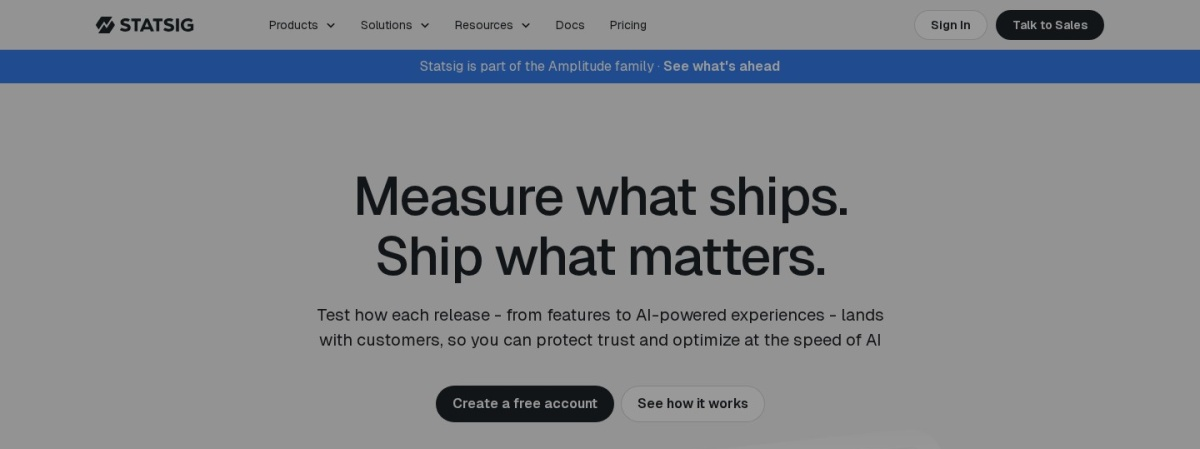
Statsig homepage, captured Nov 2026.
Statsig is a product platform that puts feature flags, experiments, dynamic configs and product analytics on one meter. The free Developer plan includes 2 million metered events a month, unlimited flag checks and session replays.
The trade off is the event meter. Pro costs $150 a month for 5 million metered events, then $0.05 per 1,000 extra events, so heavy logging raises the bill. It suits product teams that want every flag tied to a measured outcome.
What we like
Flags, experiments and analytics under one account
ConfigCat is a focused feature flag service built for teams that want safe releases without extra complexity. The free plan covers 10 flags, 2 products and 5 million config downloads a month, with unlimited team members on every plan.
The trade off is depth. Pro costs $110 a month for 100 flags, and built-in experimentation is light, so teams that run serious A/B tests pair it with an analytics tool. It suits small and mid-size teams that want a fixed bill.
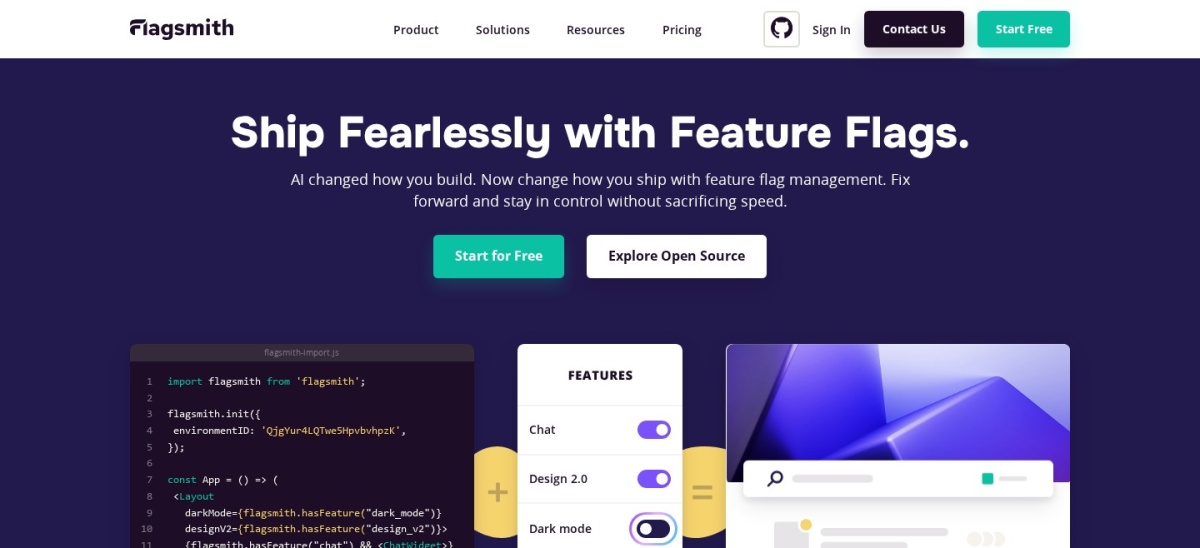
Flagsmith is an open-source feature flag platform with remote config, segments and multivariate flags. The free cloud plan covers 50,000 requests a month with unlimited flags and environments, and the code can be self-hosted.
The trade off is team size. Start-Up costs $45 a month for 1 million requests and 3 team members, and audit logs and approvals need higher plans. It suits teams that want open code and a hosted option they can run themselves.
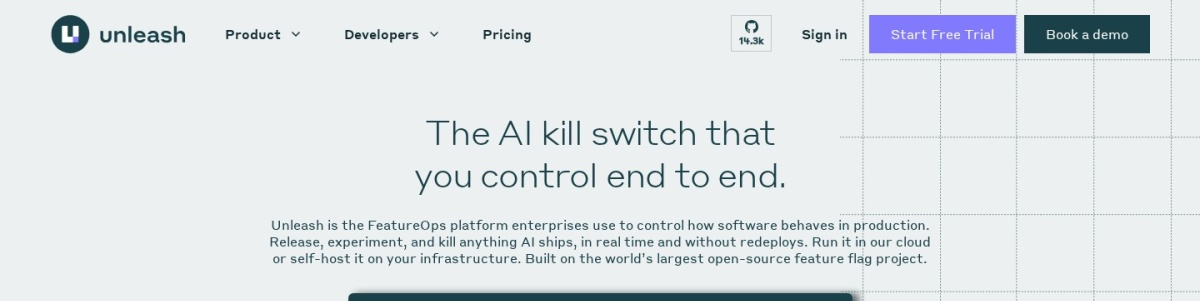
Unleash is an open-source feature management platform built for teams that run flags on their own infrastructure. The free self-hosted edition covers 1 project, 2 environments and 5,000 flags, with 25+ SDKs and local evaluation.
The trade off is governance. SSO, approvals and change-request workflows need the paid cloud plan at $75 per seat a month, which includes 53 million API requests. It suits regulated teams that need data control and audited releases.
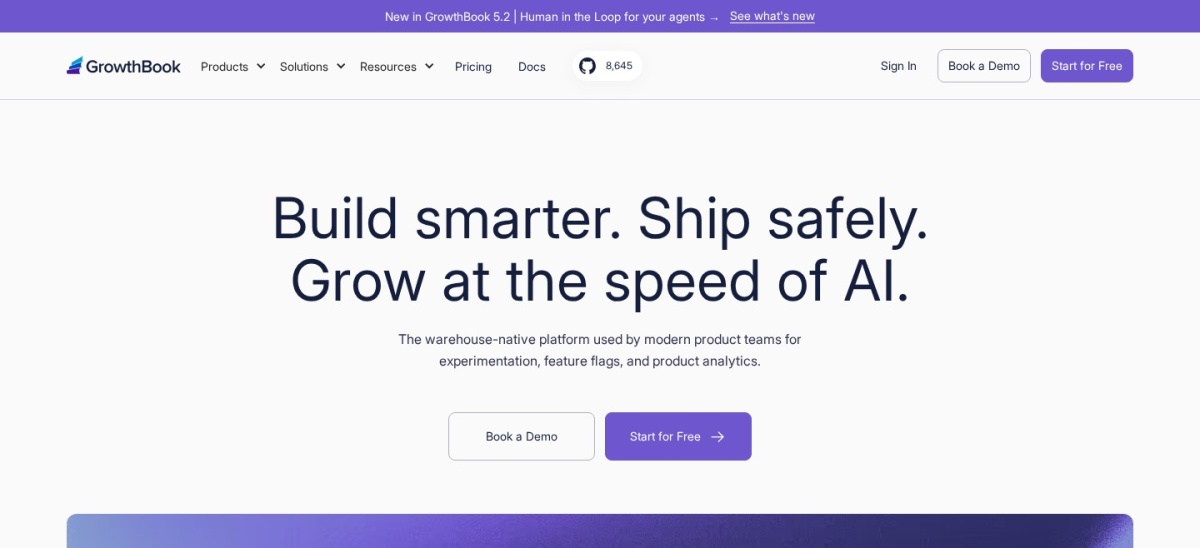
GrowthBook is an open-source experimentation platform that runs feature flags and A/B tests against data already in your warehouse. The free Starter plan covers up to 3 users with unlimited flags, experiments and traffic.
The trade off is the seat meter. Pro costs $40 per seat a month for up to 30 users, and advanced permissioning and approval workflows sit on higher tiers. It suits data teams that refuse to duplicate their warehouse.
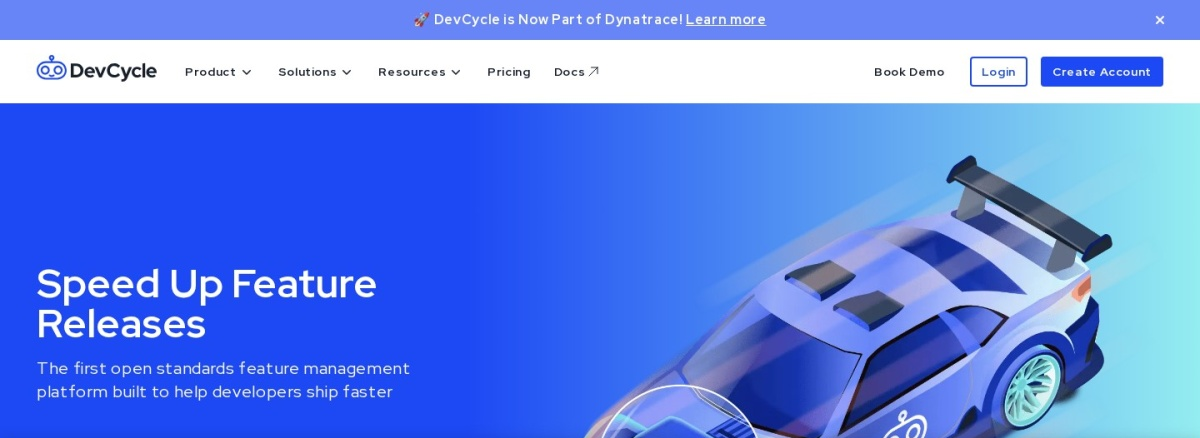
DevCycle is a feature flag platform built around OpenFeature, with SDKs that evaluate flags at the edge. The free plan includes unlimited seats, unlimited flags and 1,000 client-side monthly active users.
The trade off is the jump to paid. Business costs $500 a month billed annually for 100,000 MAUs, and the monthly rate is $625, so small teams outgrow the free plan fast. It suits teams that want OpenFeature support and edge evaluation.
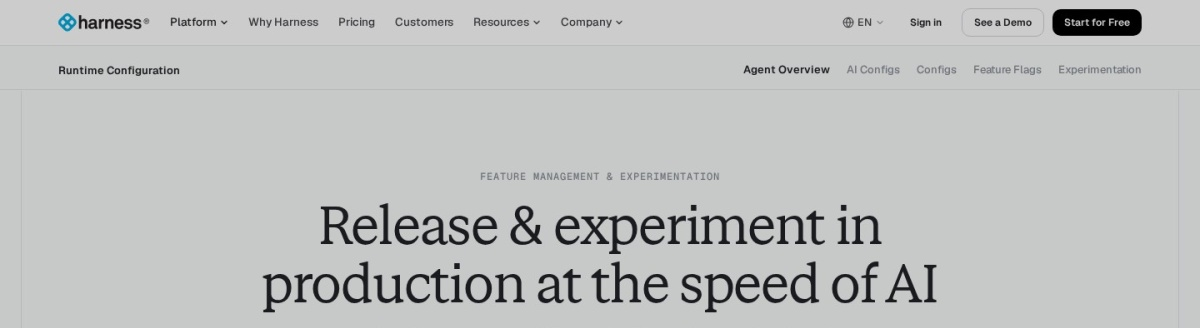
Harness Feature Management & Experimentation homepage, captured Nov 2026.
Harness Feature Management & Experimentation is the flag and experiment product inside the Harness delivery platform, formerly sold as Split. It covers progressive rollouts, targeting, guardrails and warehouse-native experiments with one statistical engine.
The trade off is price and fit. Harness publishes no starting price, so teams need a quote, and the strongest case is for teams already running Harness CI/CD. It suits enterprises that want flags, governance and delivery pipelines from one vendor.
Optimizely Feature Experimentation homepage, captured Nov 2026.
Optimizely Feature Experimentation is the server-side flagging and testing product from Optimizely, formerly Full Stack. It offers 20+ SDKs with sub-millisecond local evaluation and a 99.9% uptime SLA on paid plans.
The trade off is access. Pricing is by quote, and the free Rollouts plan runs one experiment at a time, so serious use means an enterprise deal. It suits large teams that already run Optimizely and need strict statistics and governance.
Per-seat pricing is the easiest to forecast: multiply the rate by your team size. Unleash charges $75 per seat a month and GrowthBook $40, so a 10-person team pays $750 or $400 a month before any add-ons.
Usage pricing moves with traffic instead. LaunchDarkly bills per service connection plus client-side users, Statsig bills per metered event, and Flagsmith bills per API request. A quiet internal tool costs little; a popular consumer app costs far more.
Flat pricing sits in between. ConfigCat charges $110 a month for Pro whatever the seat count, and DevCycle charges $500 a month billed annually for 100,000 MAUs. Check what each plan counts before you compare headline rates.
How we chose
We started from the feature flag tools that appear most often in engineering evaluations, then kept nine established products with a free plan or trial and public documentation.
Prices come from each vendor's pricing page, checked on 23 November 2026. LaunchDarkly, ConfigCat and Statsig prices were read directly from their official pages; Flagsmith's dollar amounts did not render in our crawl, so its $45 monthly rate is corroborated by secondary pricing comparisons. Ratings and review counts come from G2 on the same day.
We left out tools built mainly for analytics or marketing tests. No vendor paid for a place, and we do not claim hands-on testing for this list.
How to choose feature management software
Count your flags, your team and your traffic before you compare prices.
Map how you will use flags. Release toggles need targeting and kill switches; experiments need statistics; remote config needs typed values. Shortlist only the tools that cover your main use.
Work out the real monthly cost. Multiply per-seat rates by your team, and estimate requests, events or users for usage plans. A $45 plan can cost more than a $110 plan once volume is counted.
Check governance before you buy. Approvals, audit logs and SSO sit on different tiers, so confirm which plan holds the controls your reviewers will ask for.
Run the free plan on one service first. Ship one real feature behind a flag, roll it to a small group, then kill it. That round shows whether the SDKs, dashboard and pricing fit your team.
FAQ
What is the best feature management software?
LaunchDarkly is the best pick for most engineering teams. It combines unlimited seats and flags, targeting, rollouts and experiments with a 4.5 out of 5 G2 rating from 882 reviews, though its usage pricing needs careful forecasting.
What is the cheapest feature management tool?
ConfigCat has the cheapest predictable paid plan at $110 a month with unlimited seats. Flagsmith starts lower at $45 a month, and Unleash, GrowthBook and Statsig all offer free plans for small teams.
Can I self-host feature flags?
Yes. Unleash and Flagsmith are open source and free to self-host, and GrowthBook offers a free self-hosted build. Self-hosting gives you data control, but you operate upgrades, backups and uptime yourself.
Do I need experimentation built in?
Only if you run A/B tests on flags. Statsig, GrowthBook, LaunchDarkly, Harness and Optimizely include statistics, while ConfigCat, Flagsmith and Unleash focus on delivery and pair with an analytics tool.
How does LaunchDarkly pricing work?
Foundation is pay as you go: $10 per service connection a month plus $10 per 1,000 client-side monthly active users on monthly billing. Annual billing cuts usage rates by 17%, and the free Developer plan covers small projects.
What happened to Split?
Split was acquired by Harness and is now sold as Harness Feature Management & Experimentation. The product keeps Split's flag and experiment features inside the Harness delivery platform, and pricing is by quote.