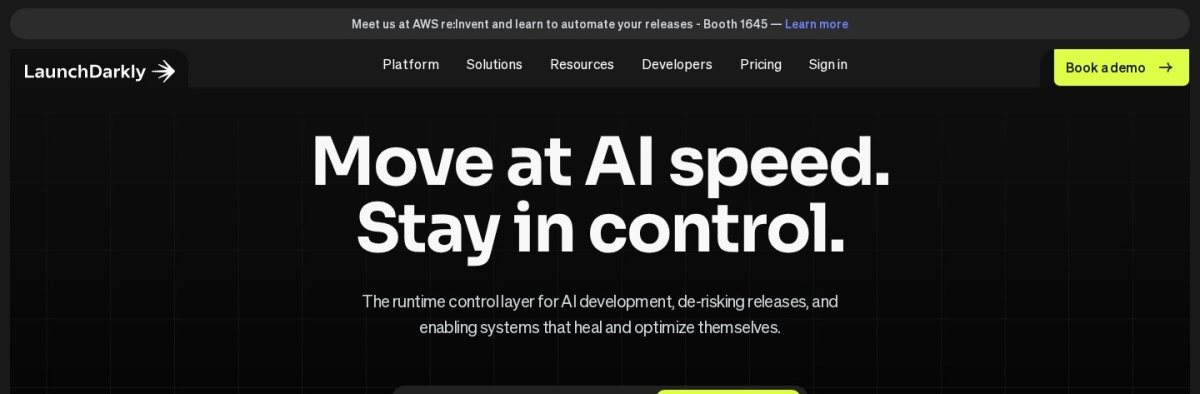
LaunchDarkly is the best feature flag management software for most engineering teams, with unlimited seats and flags, a free Developer plan and a 4.5 out of 5 G2 rating. Pick Statsig for flags plus analytics, or Flagsmith for open-source flags at $45 a month.
How we make this list: we compare pricing pages, product documentation and public user reviews, then re-check every price before each update. No product paid for a place. Disclosure.
LaunchDarkly leads on breadth: unlimited seats and flags on the free Developer plan, with a 4.5 out of 5 G2 rating from 882 reviews.
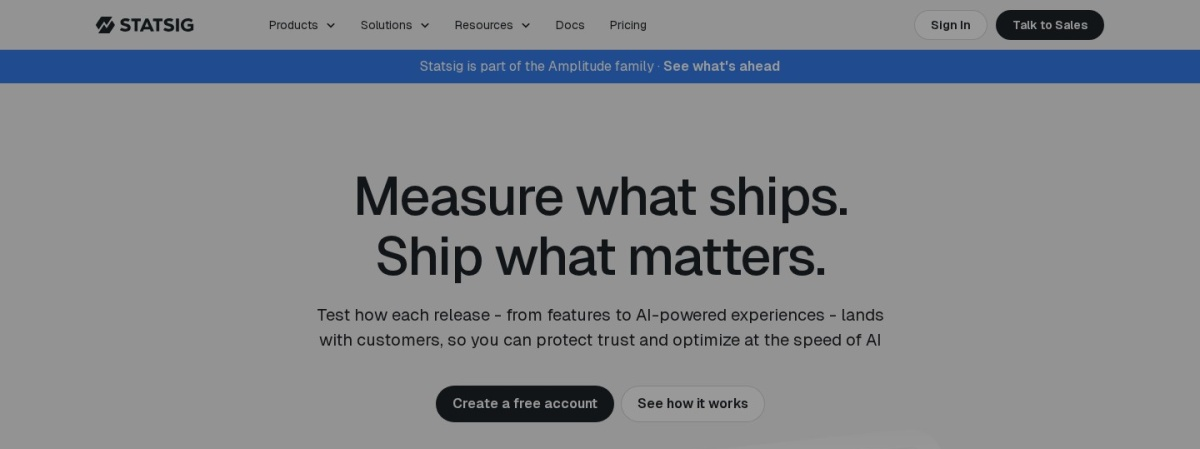
Statsig is the best flags-plus-analytics pick: flag checks are free and unlimited, and Pro costs $150 a month.
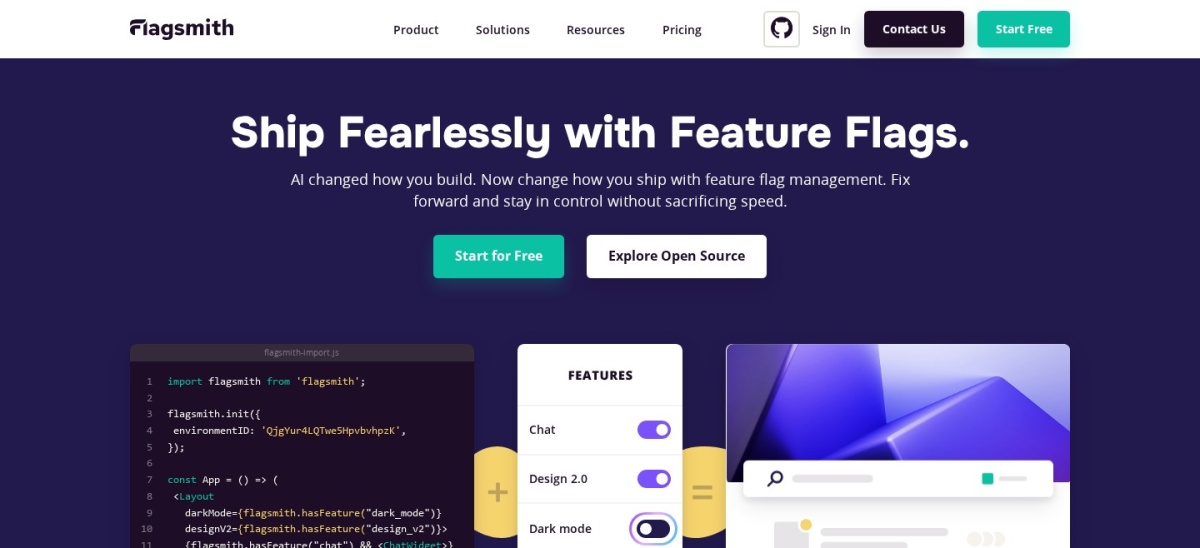
Flagsmith is the cheapest open-source route: self-host free, or Start-Up at $45 a month.
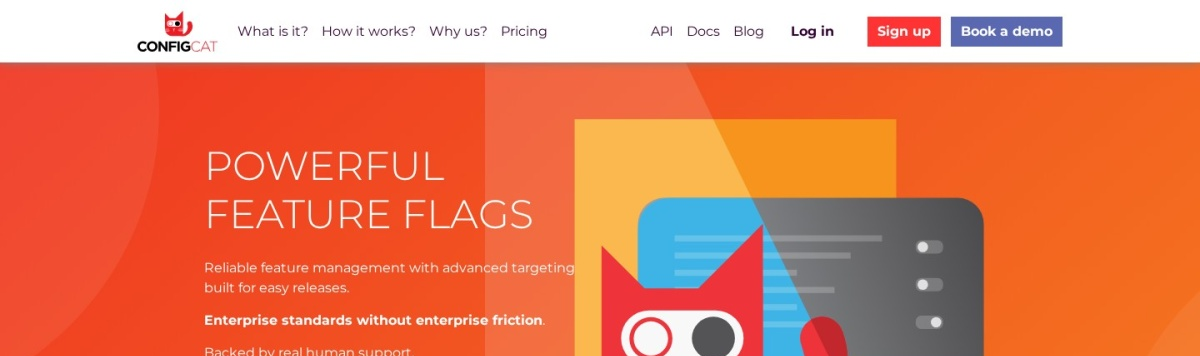
ConfigCat charges by flag, not by seat: $110 a month for 100 flags with unlimited seats and users.
DevCycle Business starts at $500 a month, and Harness and Optimizely publish no starting price, so get a quote before budgeting.
What to look for in a feature flag tool
Feature flags let a team ship code with a feature switched off, then turn it on for a slice of users, roll it back in seconds, or run a test without a new deploy. The flag, not the release, decides who sees what.
The first choice is where flags live: a hosted dashboard, a server you run, or your own warehouse. Open-source tools such as Flagsmith, Unleash and GrowthBook can be self-hosted, while LaunchDarkly, Statsig and ConfigCat are hosted only.
Feature flags decouple deploy from release, so code can ship while a feature stays off. Our guide on deploying WordPress with GitHub Actions covers the deploy side of that split.
Experiments are the third choice. Simple rollout tools only switch flags on and off, while Statsig, GrowthBook, Harness and Optimizely add stats engines that measure whether a change helped. Pick the depth of measurement your team will actually use.
LaunchDarkly is the category leader in feature flag management, with the broadest SDK coverage and the most integrations of any tool here. The free Developer plan includes unlimited seats, unlimited flags, 5 service connections and 1,000 client-side monthly active users, with 30 SDKs.
The trade off is usage-based pricing. Foundation costs $10 per service connection a month after the first 5, plus $8.33 per 1,000 client-side monthly active users on annual billing, so a busy app can cost more than a seat-priced tool. It suits teams that want the most complete platform and can forecast their traffic.
What we like
Broadest SDK coverage, with 30 SDKs
Free Developer plan with unlimited seats and flags
Approvals, audit logs and progressive delivery on paid plans
Statsig is a hosted platform that pairs feature flags with experimentation and product analytics, so a flag and the test that measures it live in one place. Flag and config checks are unlimited and free on every plan, and the free Developer plan includes 2 million metered events a month and 50,000 session replays.
The trade off is that the bill follows events, not flags. Pro costs $150 a month for 5 million events, then $0.05 per 1,000 events, and Pro covers a single project, so multi-project teams need Enterprise. It suits growth teams that want flags, tests and analytics from one vendor.
What we like
Flag checks free and unlimited
Strong stats engine with CUPED and sequential testing
Free plan includes analytics and session replay
Change reviews on Pro
Watch out for
Pro covers one project only
Event overages add up fast
SSO and role-based access need Enterprise
Pro adds change reviews, advanced stats and unlimited retentionVisit statsig.com
03
Flagsmith
4.8/5on G2 (37 reviews, checked Nov 2026)
Paid from$45/mo
Best open-source feature flags
Free planYes, 50K requests/mo
Cheapest paid$45/mo Start-Up
Self-hostedYes, open source
ExperimentsA/B and multivariate
flagsmith.com
Flagsmith homepage, captured Nov 2026.
Flagsmith is an open-source feature flag and remote config platform that teams can self-host or run as a hosted cloud service. The free cloud plan covers 50,000 API requests a month with unlimited flags and environments, and the open-source build has no license fee at all.
The trade off is team size on the cheap plans. Start-Up costs $45 a month, or $40 on annual billing, for 1 million requests and 3 team members, while SAML single sign-on and governance controls need Scale-Up at $300 a month. It suits teams that want open-source flags with a dashboard they control.
ConfigCat is a hosted feature flag and config service that charges by flags and environments instead of seats or users. Seats, monthly active users and flag reads are unlimited on every plan, and the free plan covers 10 flags across 2 environments and 2 products.
The trade off is the flag cap. Pro costs $110 a month for 100 flags, 3 environments and 25 million config downloads, so teams that do not retire stale flags are pushed to Smart at $325 a month. It suits consumer and mobile apps where per-user pricing would cost more than the flags are worth.
Unleash is an open-source feature management platform with a free self-hosted edition and a hosted cloud service. The open-source build covers core flags with 1 project, 2 environments and 5,000 flags per instance, and paid plans add SSO, approvals, audit logs and A/B testing.
The trade off is seat pricing. Pay-As-You-Go costs $75 per seat a month, with 53 million API requests a month included, and self-hosted paid plans need at least 5 seats. It suits regulated and platform teams that want a proven open-source toggle server with strong governance.
What we like
Free self-hosted edition with no seat limit
Flag evaluations are never billed
Approvals and audit logs on paid plans
25+ SDKs
Watch out for
Paid plans charge per seat, so costs grow with headcount
GrowthBook is an open-source experimentation platform with unlimited feature flags, experiments and traffic on every plan. Its strength is warehouse-native statistics: it reads results from BigQuery, Snowflake and Databricks, with Bayesian and frequentist analysis, CUPED and sequential testing.
The trade off is that it is a separate app to run. The free Starter cloud plan covers up to 3 users and 1 project, and Pro costs $40 per seat a month for up to 30 users and 3 projects. It suits data-led teams that want rigorous experiment stats on their own warehouse.
DevCycle is a feature management platform built around edge delivery, with SDKs that evaluate flags close to the user. The free plan covers 1,000 client-side monthly active users with unlimited seats, and paid plans add A/B testing, scheduled releases and dependency mapping for flags.
The trade off is price. Business costs $500 a month on annual billing, or $625 billed monthly, for 100,000 monthly active users and 500,000 events a month, which is steep for a small team. It suits product-led teams that want fast edge evaluation and clean flag lifecycle tools.
Harness Feature Management & Experimentation homepage, captured Nov 2026.
Harness Feature Management & Experimentation is the Harness flag platform, formerly Split, that treats every flag as a measurement, so a rollout and an experiment are one object. It has a free plan, and its stats and impression data are mature, with warehouse-native analysis for teams that already run Harness delivery tools.
The trade off is pricing and platform fit. There is no published starting price, so teams need a custom quote, and it sits inside the larger Harness platform, which fits Harness users best. It suits enterprise teams that want rigorous experiment measurement tied to delivery pipelines.
What we like
Flags and experiments are one object
Mature stats and impression data
Free plan to start
Fits teams already on Harness
Watch out for
No published price, quote only
Closed source
Weakest fit outside the Harness platform
Paid plans are custom quotes with enterprise controlsVisit harness.io
09
Optimizely Feature Experimentation
4.3/5on G2 (117 reviews, checked Nov 2026)
PricingCustom/yr
Best for marketing-led experiments
Free planYes, Rollouts
Cheapest paidCustom quote
Self-hostedNo
ExperimentsSequential and Bayesian
optimizely.com
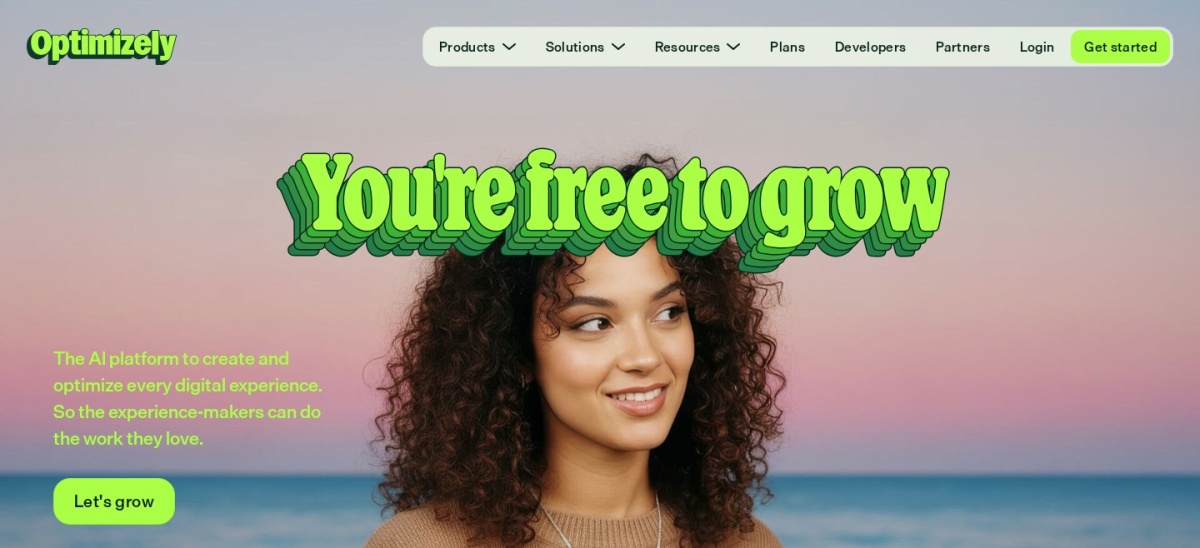
Optimizely Feature Experimentation homepage, captured Nov 2026.
Optimizely Feature Experimentation is the experimentation incumbent, strongest at web and marketing tests with a visual editor and personalization. Its Rollouts tier gives away basic feature flags for free, and the full platform adds sequential and Bayesian stats across apps and services.
The trade off is the enterprise sales motion. The full experimentation platform is quote-based with no published price, and it is aimed more at marketers than engineers. It suits marketing and product teams already running Optimizely Web at scale.
Seat pricing is easy to forecast: Unleash at $75 a seat and GrowthBook at $40 a seat cost the same whether traffic doubles or not. The bill follows headcount, so a small team stays cheap.
Usage pricing follows traffic instead. LaunchDarkly meters service connections and monthly active users, Statsig meters events, Flagsmith meters API requests and ConfigCat meters flags. A quiet app can stay on a free plan for years, while a busy one can outgrow the cheapest paid tier fast.
Before choosing, work out which meter your app will hit first. Count seats, monthly users, flag evaluations and flags, then compare the cheapest paid plan on that meter, not on the headline number.
How we chose
We started from the established feature flag tools with public G2 ratings and a free plan or a free self-hosted build, then kept the nine with the widest SDK coverage and the clearest flag, rollout and experiment features.
Prices come from each vendor's pricing page, checked on 25 November 2026, with Flagsmith's $45 monthly and $40 annual Start-Up rates and DevCycle's $500 annual Business rate corroborated by multiple sources checked the same day. Ratings and review counts come from G2 compare pages.
We left out narrow or single-platform tools such as Firebase Remote Config and GO Feature Flag. No vendor paid for a place, and we do not claim hands-on testing for this list.
How to choose feature flag management software
Match the tool to your traffic, your team and how much measurement you need.
Count what the vendor meters. Seats, users, requests, events or flags: work out which number your app will hit first, then price that meter.
Decide hosted or self-hosted. Self-host Flagsmith, Unleash or GrowthBook if you need data residency or no vendor lock-in; otherwise pick a hosted dashboard.
Check the free plan limits. Free plans cap users, requests, flags or projects. A cap you hit in week one is not a free plan.
Pick the experiment depth you will use. Simple rollouts need only a toggle. If you run A/B tests, choose a tool with a stats engine such as Statsig or GrowthBook.
FAQ
What is the best feature flag management software?
LaunchDarkly is the best pick for most engineering teams. Its free Developer plan includes unlimited seats and flags, and it is rated 4.5 out of 5 on G2 from 882 reviews, with the broadest SDK coverage in this list.
What is the cheapest feature flag tool?
Flagsmith is the cheapest paid route here: self-hosting the open-source build is free, and hosted Start-Up costs $45 a month, or $40 on annual billing. LaunchDarkly, Statsig, ConfigCat, Unleash and GrowthBook also have free plans with real limits.
Are feature flags free?
Several tools have free tiers. LaunchDarkly and Statsig offer free hosted plans, Flagsmith, Unleash and GrowthBook are free to self-host, and Optimizely gives away basic flags through Rollouts. Paid plans add governance, SSO, approvals and deeper experiments.
Do I need experimentation built in?
Not always. If you only switch features on and off or roll them out gradually, a simple flag tool is enough. If you want to know whether a change improved a metric, pick a tool with a stats engine such as Statsig, GrowthBook or Harness FME.
What is the difference between LaunchDarkly and Flagsmith?
LaunchDarkly is a closed hosted platform with the broadest SDK coverage and usage-based pricing. Flagsmith is open source, can be self-hosted for free, and charges a flat monthly price, which suits teams that want control over their flag server.
Can I self-host a feature flag tool?
Yes. Flagsmith, Unleash and GrowthBook all offer free open-source builds you can run on your own servers. Self-hosting removes the vendor bill for flags, but you take on running, updating and backing up the service yourself.
SaaS SEO and WordPress specialist with about 8 years of experience. Rakib compares WordPress plugins, themes, hosting and software using public pricing, documentation and user reviews. See how we rank.