Best Failed Payment Recovery Software in 2026: 9 Tools Compared
WLWPLegible EditorsLast verified 23 Nov 2026How we rank12 min read
★ Short answer
ChurnBuster is the best failed payment recovery software for most subscription businesses, with dedicated dunning from $269 a month, rated 4.3/5 on G2. Pick Churnkey for cancel flows as well, or Stunning at $60 a month if you only bill through Stripe.
How we make this list: we compare pricing pages, product documentation and public user reviews, then re-check every price before each update. No product paid for a place. Disclosure.
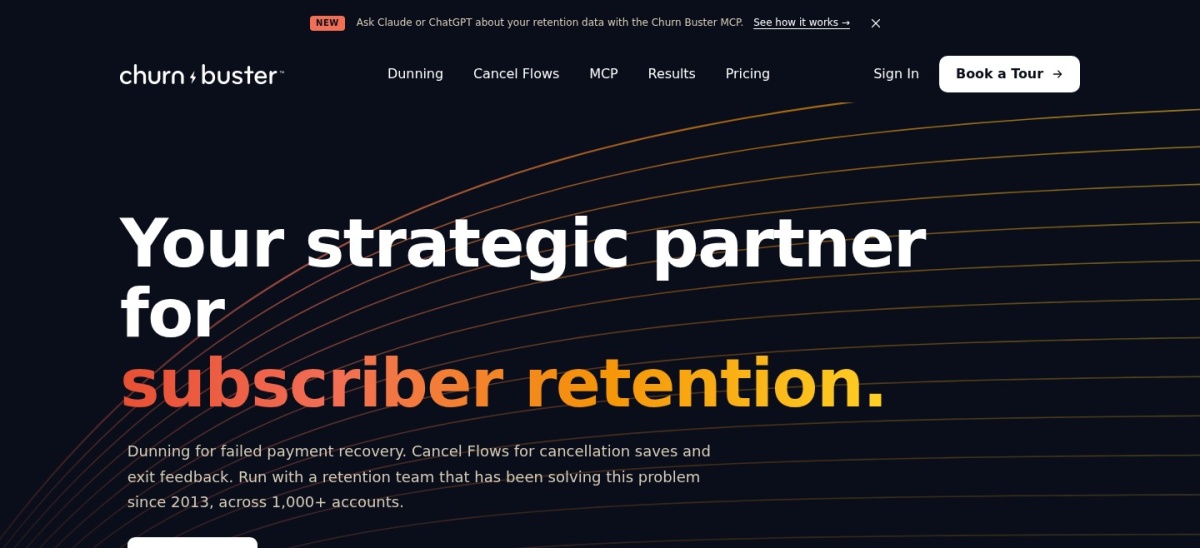
ChurnBuster starts at $269 a month for Dunning, with a flat fee that never takes a share of recovered revenue.
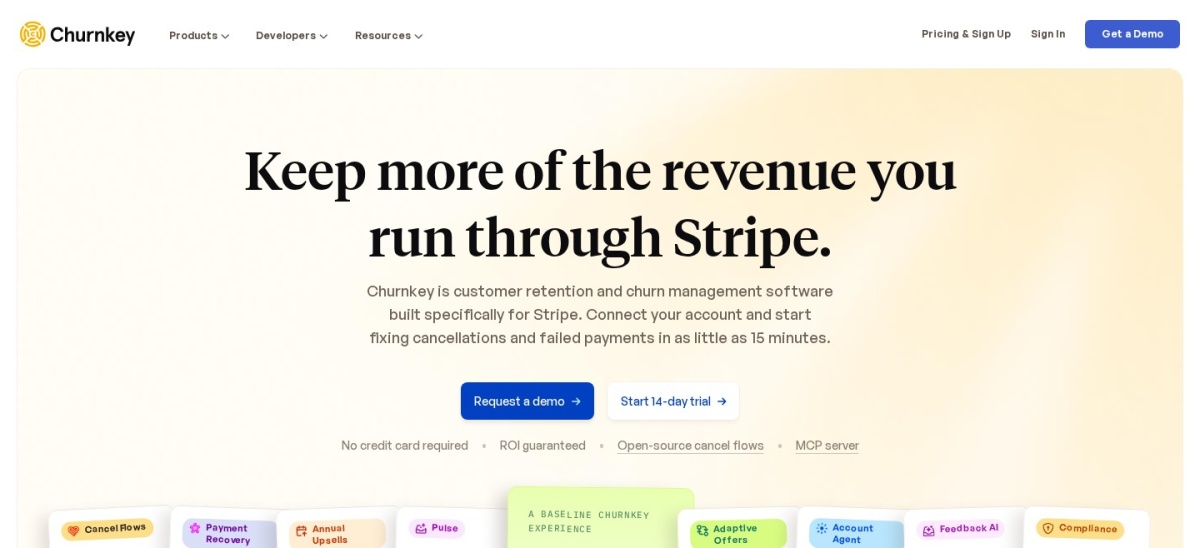
Churnkey pairs payment recovery with cancel flows from $250 a month billed yearly, rated 4.6 out of 5 on G2.
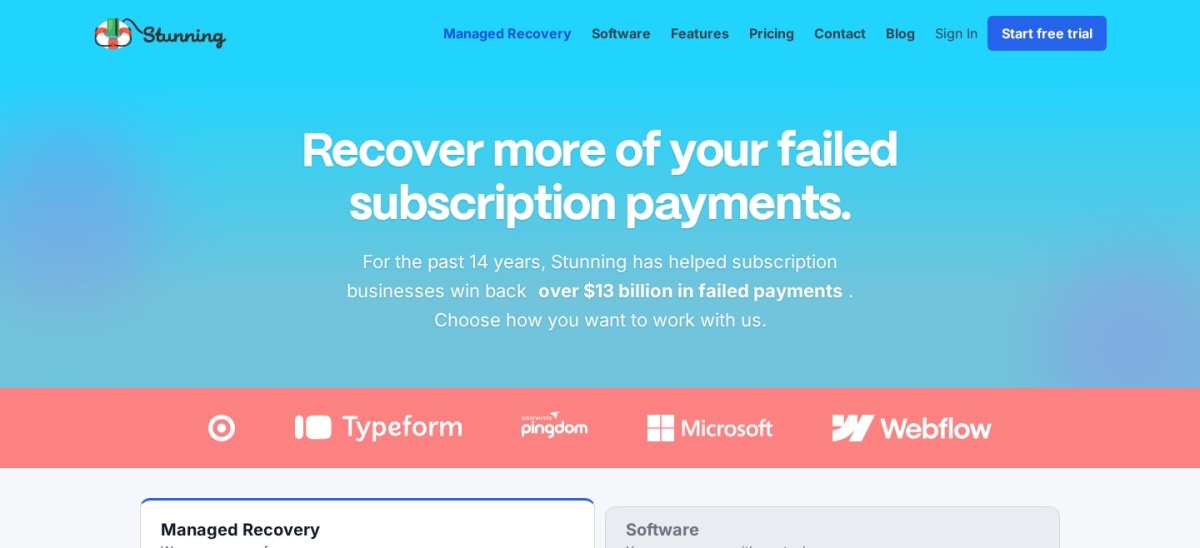
Stunning is the cheapest dedicated tool here at $60 a month, but it mainly serves Stripe billing.
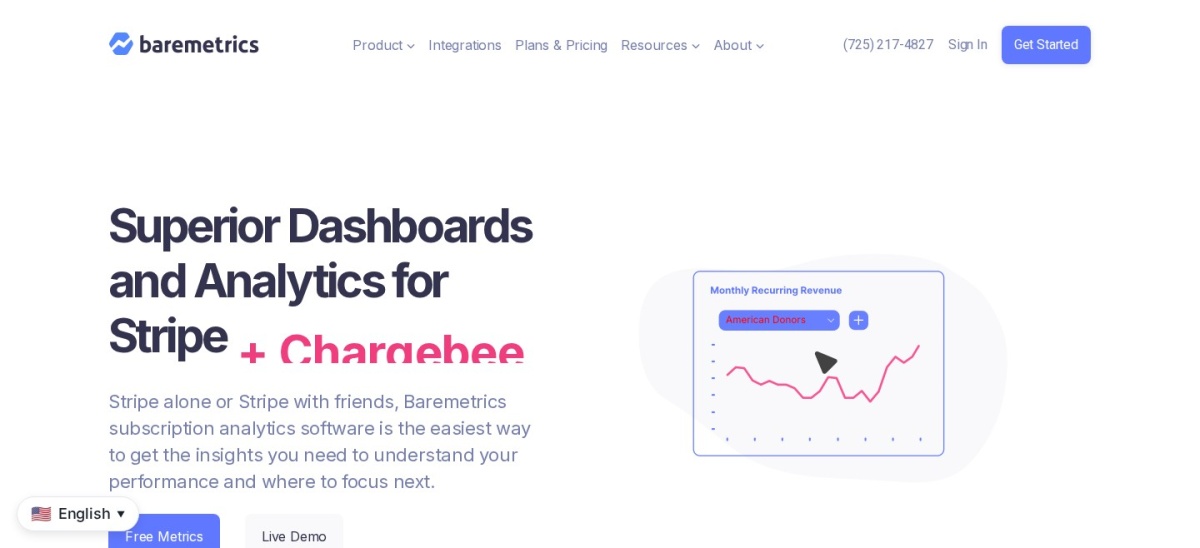
Baremetrics Recover costs $129 a month on top of a Baremetrics plan and handles outreach, not retries.
Stripe Billing charges 0.7% of billing volume with no monthly fee, so check its built-in retries before buying a separate tool.
Chargebee's Starter plan is free up to $250,000 in cumulative billing, then Performance jumps to $599 a month.
What failed payment recovery software does
A failed payment is rarely a lost customer. Most often the card expired, the bank declined the charge, or the customer hit a limit, and the subscription can be saved with a retry or a short message.
Dunning software does that follow-up for you. It retries the charge at better times, emails or texts the customer with a link to update their card, and reports how many payments came back.
Start with what your billing platform already does. Stripe Billing, Chargebee and Recurly all include retries and failed payment emails, so turn those on first and measure for a month. Our guide to fixing WooCommerce payment failed errors shows how to tell a card decline from a broken checkout.
Then compare price models, not just prices. A flat monthly fee is easy to plan, a share of billing volume grows with sales, and a share of recovered revenue costs nothing when nothing comes back.
ChurnBuster is a retention service for subscription brands that has worked on failed payments since 2013, across more than 1,000 accounts. Its Dunning product runs retry timing with branded email and SMS campaigns that ask customers to update their card, and a free Measure plan tracks failed payments before you pay.
The trade off is price. Dunning or Cancel Flows starts at $269 a month, and both together cost $430 a month, so the bill is high for a small store with few failed payments. It suits mid-market subscription brands that want a retention team to run recovery with them.
Churnkey is a retention platform that pairs failed payment recovery with cancel flows in one product. Recovery runs through email, SMS and in-app messages, plus a payment wall that blocks features until the card is updated, and setup takes as little as 15 minutes.
The trade off is the Starter cap. Starter costs $250 a month billed yearly but only covers teams with less than $5,000 a month in churn volume, and Precision Retries need the Core plan, whose price is quoted. It suits SaaS teams on Stripe or Chargebee that also lose customers at the cancel click.
Stunning is a dunning tool built for Stripe that has recovered failed payments since 2012. It replaces Stripe's failed payment emails with its own sequence, adds SMS and pre-dunning emails before a card expires, and gives customers a hosted page to update their card.
The trade off is reach. Stunning works fully with Stripe only, with fewer features on Subbly and Foxy, and the flat fee rises with MRR, reaching about $120 a month at $40,000 MRR. It suits small Stripe businesses that want simple dunning without cancel flows.
Baremetrics Recover is an add-on to Baremetrics subscription analytics that chases failed payments with timed emails, SMS, in-app banners and a paywall. It sends 7 emails by default, gives customers a hosted form to update their card, and shows results next to MRR and churn.
The trade off is that Recover handles outreach only. It has no retry schedule of its own, so retries stay with your payment processor, and the $129 a month sits on top of a Baremetrics plan once you pass the free ARR limit. It suits teams already using Baremetrics for analytics.
Stripe Billing is the billing platform many subscription businesses already use, and its recovery tools come with it. Smart Retries time each retry with machine learning, the card updater refreshes expired cards through the card networks, and dunning emails and a customer portal are built in.
The trade off is that it only works with Stripe. The dunning emails offer little room for customisation, there is no win-back flow after a subscription ends, and the 0.7% fee grows with billing volume. It suits teams already on Stripe that have not turned these settings on yet.
Chargebee is a subscription billing platform with dunning built in, so failed payment recovery runs beside invoicing and plan changes. The Starter plan is free until $250,000 in cumulative billing, and it works with Stripe, PayPal and Razorpay as gateways.
The trade off is the jump after Starter. Performance costs $599 a month billed yearly, plus 0.75% of billing over $100,000 a month, so the bill climbs fast once you pass the free cap. It suits SaaS teams that want billing and dunning in one platform.
Recurly is a subscription billing platform with a long record in payment recovery. Starter includes retries, dunning campaigns and a customer portal, plus coupons and gift subscriptions that help keep consumer subscribers billing after a failed charge.
The trade off is the floor price. Starter costs $249 a month plus 0.9% of billing volume above $40,000 a month, and higher tiers are quoted rather than published. It suits consumer subscription businesses where failed payments are the biggest revenue leak.
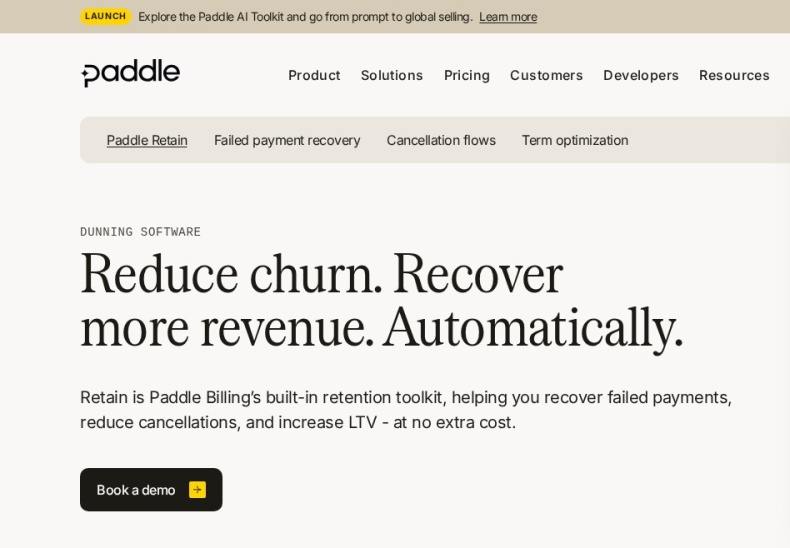
Paddle Retain is the retention toolkit built into Paddle Billing, covering failed payment recovery and cancellation flows. It sends recovery emails, times retries and shows cancellation reasons, and Paddle Billing customers get it at no extra cost.
The trade off is price outside Paddle. Standalone Retain starts at $500 a month flat for smaller companies, and larger companies pay on performance, with no published rate on the Retain page. It suits software sellers already billing through Paddle.
What we like
Free with Paddle Billing
Recovery plus cancellation flows
Highest G2 rating here at 4.8 out of 5
Tax and compliance handled by Paddle
Watch out for
$500 a month standalone is the highest flat price here
G2 rating rests on only 10 reviews
Standalone rate for larger companies is not published
Paddle Billing charges 5% plus 50 cents per transactionVisit paddle.com
09
ChargeOver
4.7/5on G2 (68 reviews, checked Nov 2026)
Starts at$229/mo
Best flat-fee billing for B2B subscriptions
Growth$229/mo, 200 customers
Extra customers$1.15 each after 200
AccountingQuickBooks, Xero
Pricing modelFlat, never % of revenue
chargeover.com
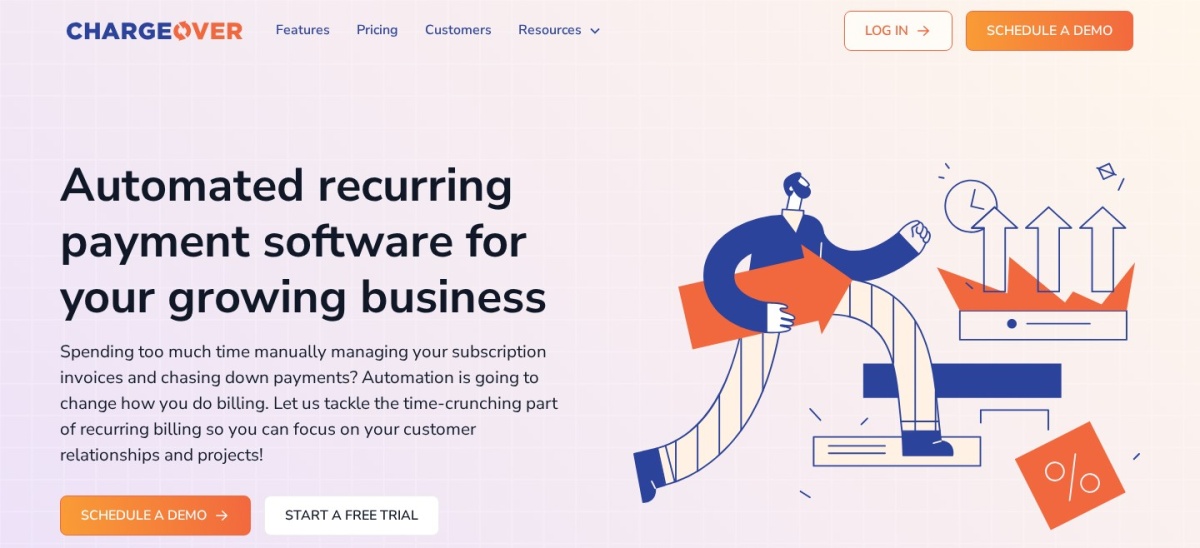
ChargeOver homepage, captured Nov 2026.
ChargeOver is subscription billing software that charges by the number of customers you bill, never a share of revenue. Growth costs $229 a month for up to 200 active customers, and it automates invoices, late notices and dunning while syncing with QuickBooks and Xero.
The trade off is that the bill follows your customer count. Each customer past 200 adds $1.15 a month, and card processing fees go to your gateway on top. It suits B2B teams that bill known customers and want a flat fee.
Flat-fee tools charge the same whether you recover a little or a lot. ChurnBuster starts at $269 a month, Churnkey at $250 a month billed yearly, and Stunning at $60 a month, so the cost is easy to plan.
Volume fees grow with your sales. Stripe Billing takes 0.7% of billing volume, Recurly adds 0.9% above $40,000 a month, and ChargeOver charges by customer count instead, at $229 a month for 200 customers.
A share of recovered revenue costs nothing when nothing comes back. Baremetrics Recover offers 10% of recovered revenue instead of its $129 flat fee, and Paddle Retain charges larger standalone customers on performance. Model each option at your size in a year, not just today.
How we chose
We started from the dunning and billing tools subscription teams compare most often, then kept nine with published prices and public G2 ratings: dedicated recovery tools, billing platforms with dunning built in, and one flat-fee B2B billing tool.
Prices come from each vendor's pricing page, checked on 23 November 2026. Ratings and review counts come from G2 on the same day. Where a vendor shows a sale, the list shows the regular price.
We left out tools with no published price and no public rating, and recovery-rate claims, which vendors measure in different ways. No vendor paid for a place, and we do not claim hands-on testing for this list.
How to choose failed payment recovery software
List your billing platforms first, then turn on what you already have before you buy anything.
Check what your billing platform already does. Stripe Billing, Chargebee and Recurly include retries and failed payment emails. Turn them on and measure for a month before adding a vendor. See how to set up Stripe in WooCommerce for the WooCommerce side.
Match the tool to your billing platform. A tool that does not connect to your billing system is not an option. ChurnBuster covers 17 platforms, while Stunning works fully with Stripe only.
Compare the price model at your size in a year. A $60 flat fee beats a 0.7% volume fee at low volume, and the order flips as sales grow. Run both against your own numbers.
Run one tool at a time. Two dunning tools send two sets of reminders for the same failure. Test the new tool on part of your customers, then compare recovery on the same weeks.
FAQ
What is the best failed payment recovery software?
ChurnBuster is the best dedicated pick for most subscription businesses. Its Dunning product starts at $269 a month with a flat fee, and it works with 17 subscription platforms. Churnkey is the better pick if you also want cancel flows.
Do I need dunning software if my billing platform already retries?
Not always. Turn on your billing platform's built-in retries and failed payment emails first, then measure for a month. Add a separate tool when you want smarter retry timing, better emails, or a hosted card update page.
How much does failed payment recovery software cost?
Dedicated tools in this list start at $60 a month for Stunning and run to $500 a month for standalone Paddle Retain. Stripe Billing charges 0.7% of billing volume instead, and Chargebee's Starter plan is free up to $250,000 in cumulative billing.
What is the difference between dunning and payment recovery?
Dunning is the follow-up after a payment fails: retries, reminders and a card update page. Payment recovery is the wider job, which can also include pre-dunning before cards expire and win-back after a subscription ends.
Can one tool recover payments on several billing platforms?
Some can. ChurnBuster lists 17 subscription platforms, and Churnkey supports Stripe, Chargebee, Maxio, Paddle and Braintree. Stunning works fully with Stripe only, so check the integration list before you pay.
Does a dunning tool take a share of recovered revenue?
Some do and some do not. ChurnBuster, Churnkey and Stunning charge flat monthly fees, while Baremetrics Recover offers 10% of recovered revenue as an option. Paddle Retain charges larger standalone customers on performance.