Best EV Charging Software in 2026: 9 Tools Compared
WLWPLegible EditorsLast verified 23 Nov 2026How we rank13 min read
★ Short answer
ChargePoint is the best EV charging software for most operators, with the largest driver network and software that runs 900+ charger models. Pick EV Connect for utility programs and Monta if you want published per-port pricing.
How we make this list: we compare pricing pages, product documentation and public user reviews, then re-check every price before each update. No product paid for a place. Disclosure.
ChargePoint is the top pick, with software that runs 900+ charger models and roaming with EVgo and FLO.
EV Connect is the strongest choice for utility programs, backed by Schneider Electric since 2022.
Monta is the only tool with published prices: $5 per Level 2 port a month, plus a platform fee from $250 a month.
FLO is Canada's largest network, with 140,000+ charging stations and a driver app rated 4.7 out of 5.
8 of the 9 tools are quote-only, so budget on a per-port monthly fee and confirm contract minimums before signing.
What EV charging software does
EV charging software is the cloud platform that operates charging stations: it monitors charger health, sets who can charge and what they pay, processes payments, balances electrical load and reports on usage.
Most of the market is quote-only. Only Monta publishes per-port prices, so compare quotes as a total cost per port per month over three years, including onboarding, payment processing and any revenue share.
Hardware freedom matters most. Platforms that speak OCPP let you mix charger brands and swap hardware later without migrating software, while bundled hardware deals simplify the first purchase but tie you to one vendor.
Our guide on how much a WordPress website costs makes the same point about software buying: the licence is only part of the cost, and setup time matters too.
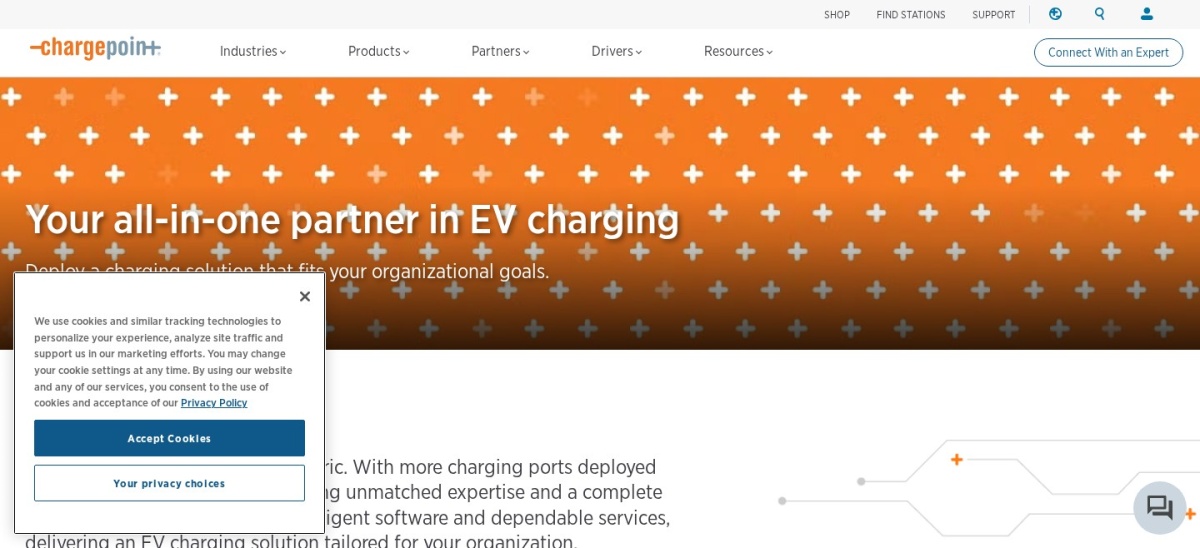
ChargePoint is the largest name in EV charging, and its be.ENERGISED software runs more than 900 charger models from over 100 manufacturers. The platform covers station management, driver payments, waitlists and roaming with partners such as EVgo and FLO, plus an open API with more than 40 integrations.
The trade off is the commercial model. ChargePoint sells hardware, software and network access as a bundle, and pricing is by quote with no published tiers, so switching later can be costly. It suits site hosts and fleets that want one vendor and a network drivers already know.
4.5/5on App Store (6,774 reviews, checked Nov 2026)
PricingCustom/yr
Best for utility programs and fleets
Hardware supportMany brands, OCPP
Utility programsYes
Driver app rating4.5/5 App Store
Cheapest paid planQuote only
evconnect.com
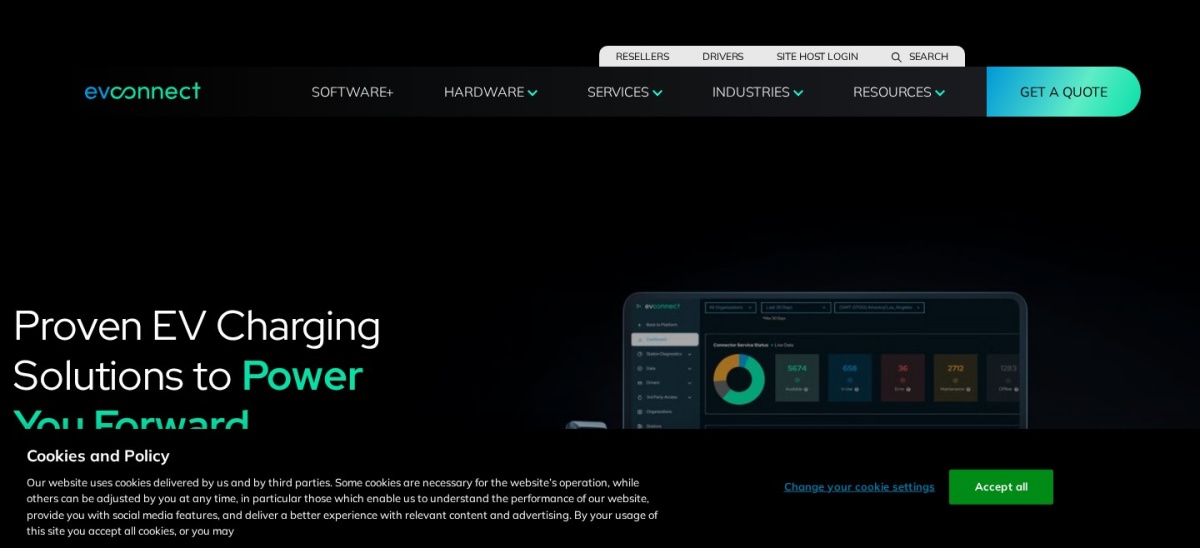
EV Connect homepage, captured Nov 2026.
EV Connect is a cloud platform for charging networks, owned by Schneider Electric since June 2022. It manages chargers from many manufacturers, with driver access, pricing control, billing and reporting, plus program tools built for utility rebate schemes. Its utility footprint grew in early 2026 with Salt River Project and Tucson Electric Power.
The trade off is brand reach. EV Connect is less known to drivers than ChargePoint, which matters if driver acquisition is your job. Pricing is by quote and depends on location and hardware. It suits utilities, fleets and site hosts running managed charging programs.
What we like
Strong utility partnerships and program experience
Hardware-agnostic platform across many brands
Depot scheduling and vehicle-aware charging windows
4.4/5on Google Play (8,694 reviews, checked Nov 2026)
Starts at$5/mo
Best for published per-port pricing
Cheapest paid plan$5/L2 port/mo
Platform feeFrom $250/mo
Transaction fee4%
RoamingRoaming-as-a-Service
monta.com
Monta homepage, captured Nov 2026.
Monta is a charge point management platform for operators, workplaces and fleets, and the only tool here with published US prices. Advanced costs $5 per Level 2 port and $10 per Level 3 port a month, with a platform fee from $250 a month and a 4% transaction fee. It covers payments, roaming, load management and home charging reimbursement.
The trade off is the fee stack. Per-port fees, the platform fee and the 4% transaction fee add up, and the platform fee weighs most on a handful of ports. White-label apps cost extra. It suits growing operators that want clear pricing and paid public charging.
What we like
Only published per-port pricing in this list
Payments, roaming and load management included
Supports 900+ charger models from 250+ brands
ISO 27001 and SOC 2 Type II certified
Watch out for
Platform fee from $250 a month on top of port fees
ChargeLab is an API-first charging platform that runs on whatever OCPP hardware you buy. It suits commercial real estate and multifamily sites, where the site owner is the customer. ChargeLab also created the open-source OpenOCPP firmware, and added Spark, an AI tool for network operations, in 2026.
The trade off is vendor scale. ChargeLab is smaller than ChargePoint or EV Connect, and its driver app scores 3.4 out of 5 from only 17 App Store ratings. Pricing is by quote with no public tiers. It suits mid-size portfolios that value hardware freedom and API access.
What we like
API-first platform that works with any OCPP hardware
4.4/5on Google Play (808 reviews, checked Nov 2026)
PricingCustom/yr
Best for fleets and workplaces
Best forFleets, workplaces
CTEP-certified brands5 OEM brands
Pricing engineYes, Dec 2025
Cheapest paid planQuote only
ampup.io
AmpUp homepage, captured Nov 2026.
AmpUp is a charging platform for fleets, workplaces, apartments and campuses. It serves enterprise clients including JLL, CBRE, Domino's and Hilton, with scheduling and access control for known user groups. Its Pricing Recommendation Engine, launched in December 2025, sets rates from utility costs and nearby prices.
The trade off is focus. AmpUp is built for private charging networks, not public networks with roaming drivers, and pricing is by quote. It suits a fleet depot or workplace that charges its own vehicles and staff.
4.7/5on App Store (5,179 reviews, checked Nov 2026)
PricingCustom/yr
Best for site hosts that want a proven network
Charging stations140,000+
Public chargers110,000+
Members680,000+
Cheapest paid planQuote only
flo.com
FLO homepage, captured Nov 2026.
FLO is a North American charging network operator, founded as AddEnergie in 2009, that designs its own hardware and software. Its network covers 140,000+ charging stations, with 110,000+ public chargers open to its 680,000+ members. Site hosts buy the chargers and subscribe to FLO's Global Management Services for monitoring, payments and revenue distribution.
The trade off is vertical integration. FLO designs its own chargers, so the software comes with FLO hardware rather than any brand you choose. Pricing is a hardware purchase plus a recurring subscription, by quote. It suits site hosts that want one proven vendor for hardware and software.
What we like
Canada's largest charging network
Driver app rated 4.7 out of 5 on the App Store
Hardware and software from one vendor
2 million+ charging sessions a month
Watch out for
Software comes with FLO hardware, not any brand
Quote-only pricing with no published tiers
US network smaller than its Canadian base
Pricing is a hardware purchase plus a subscriptionVisit flo.com
07
Virta
3.3/5on Google Play (1,929 reviews, checked Nov 2026)
PricingCustom/yr
Best for grid services and vehicle-to-grid
Vehicle-to-gridYes
AFIR complianceYes
Driver app rating3.3/5 Google Play
Cheapest paid planQuote only
virta.global
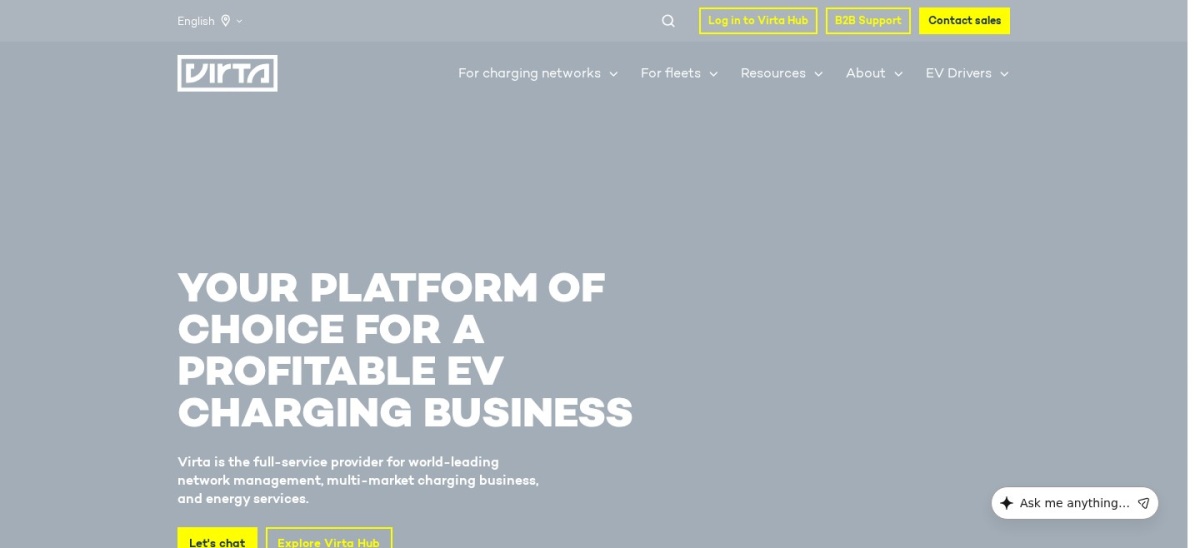
Virta homepage, captured Nov 2026.
Virta is a European charging platform built for grid services as well as network management. It runs the operator and driver sides on one platform, supports vehicle-to-grid services, and helps operators meet AFIR rules. Its driver app scores 3.3 out of 5 from 1,929 Google Play ratings.
The trade off is geography. Virta's strength is concentrated in Europe, and North American operators should treat it as a specialist pick for grid-interactive projects. Pricing is by quote. It suits operators planning vehicle-to-grid services.
What we like
Leader in grid integration and vehicle-to-grid services
4.4/5on Google Play (88 reviews, checked Nov 2026)
PricingCustom/yr
Best for fast hardware-agnostic migration
GrowthFastest-growing, Ohm Analytics
LAZ Parking partnershipYes
Enel X migrationsYes
Cheapest paid planQuote only
epiccharging.com
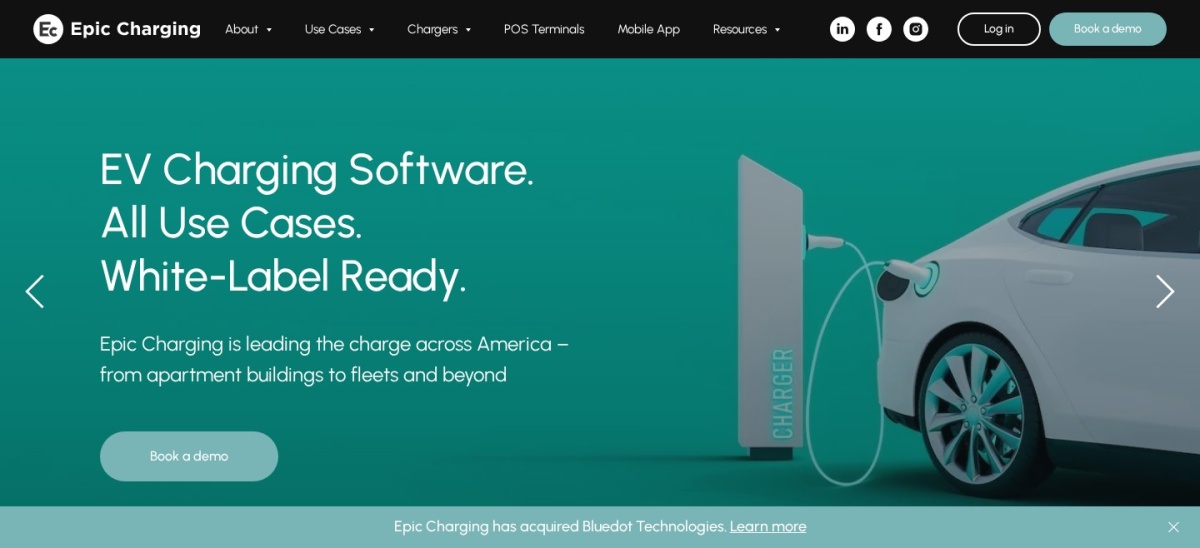
Epic Charging homepage, captured Nov 2026.
Epic Charging is a US charging platform named the fastest-growing in the country by Ohm Analytics two years running. It holds a national partnership with LAZ Parking, acquired Bluedot, and led large charger migrations after the Enel X shutdown. Its driver app scores 4.4 out of 5 from 88 Google Play ratings.
The trade off is track record. Epic Charging is newer and smaller than the incumbents, and its app rating rests on only 88 reviews. Pricing is by quote. It suits North American operators that need a fast hardware-agnostic migration.
3.8/5on Google Play (630 reviews, checked Nov 2026)
PricingCustom/yr
Best for multifamily housing charging
Multifamily focusYes
Greystar properties136 in Washington
FirstService rollout1,000 chargers
Cheapest paid planQuote only
swtchenergy.com
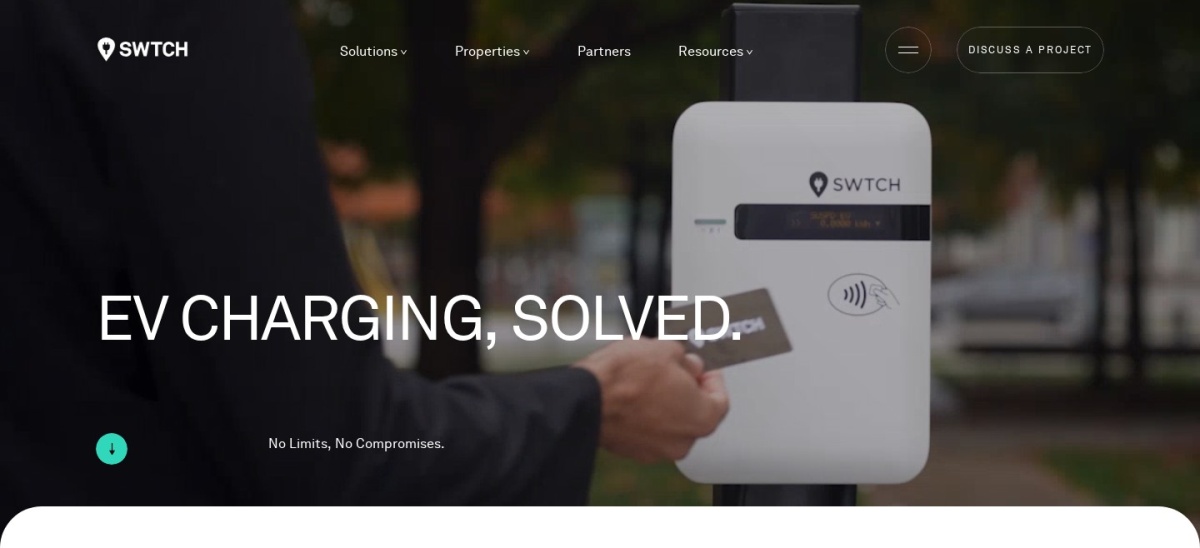
Swtch Energy homepage, captured Nov 2026.
Swtch Energy is a Canadian charging platform focused on multifamily housing and dense urban sites. It powers 2,500 chargers across 136 Greystar properties in Washington State, and partnered with FirstService Residential in late 2025 to deploy 1,000 chargers for more than 45,000 residents. Its SWTCH Cortex platform adds AI-driven load management.
The trade off is the app score. The SWTCH driver app rates 3.8 out of 5 from 630 Google Play ratings, down from a 4.3 average across both stores in June 2026. Pricing is by quote. It suits apartment operators that need charging for many residents on limited power.
Eight of the nine tools publish no prices at all. Quotes scale with connector count, and enterprise networks negotiate custom terms.
Ask each vendor for a five-year total per port that includes software, network fees, transaction fees and support, not just the year-one figure.
Confirm what happens to your data and your chargers if you leave. Migration costs are the hidden term in every charging software contract, and multi-year deals often include annual price rises.
How we chose
We started from the established charging platforms that appear across recent comparison guides, then kept nine that are actively sold to operators in 2026 and support open OCPP hardware.
Prices come from each vendor's pricing page, checked on 23 November 2026. Only Monta publishes prices; the rest sell by quote. Ratings are driver-app store scores checked the same day, because no G2 or Capterra listing exists for these tools.
We left out AMPECO and Driivz: the two enterprise white-label platforms have no public user rating anywhere, so we could not score them honestly. No vendor paid for a place, and we do not claim hands-on testing for this list.
How to choose EV charging software
Start with your role, then check hardware, payments and the full price.
Name your role first. A site host needs access control and simple billing, a charge point operator needs billing and roaming, and a fleet needs load management and reporting.
Insist on OCPP hardware support. Software and chargers that speak OCPP can be mixed and changed later. Closed systems tie you to one vendor for the life of the hardware.
Check payments and roaming. Confirm which payment methods and roaming partners are included, and whether transaction fees apply on top of the software fee.
Price the whole stack. Add per-port fees, platform fees and transaction fees together, and ask for a three-year total per port before signing.
FAQ
What is the best EV charging software?
ChargePoint is the best pick for most operators. Its software runs 900+ charger models, it has the largest driver network, and roaming partners such as EVgo and FLO put your chargers in front of more drivers.
How much does EV charging software cost?
Most platforms are quote-only, so there is no list price. Monta is the exception: its Advanced plan costs $5 per Level 2 port and $10 per Level 3 port a month, plus a platform fee from $250 a month and a 4% transaction fee.
What is OCPP and why does it matter?
OCPP is the open standard chargers use to talk to management software. Platforms that support it let you mix charger brands and switch software later, while closed systems lock you to one vendor.
Which EV charging software is best for fleets?
AmpUp and EV Connect fit fleets best. AmpUp focuses on depots and workplaces with scheduling and access control, while EV Connect adds depot scheduling and vehicle-aware charging windows for managed programs.
Is there free EV charging software?
Not among the established commercial platforms in this list. All nine are paid, and eight sell by quote only. Free options exist as open-source OCPP servers, but they have no driver app, payments or vendor support.
Can I mix charger brands on one platform?
Yes, if the software is hardware-agnostic. ChargePoint's be.ENERGISED, EV Connect, ChargeLab and Monta all run chargers from many manufacturers over OCPP, so you are not tied to one hardware brand.