Best Enterprise AI Platforms in 2026: 9 Tools Compared
WLWPLegible EditorsLast verified 23 Nov 2026How we rank8 min read
★ Short answer
Azure OpenAI Service is the best enterprise AI platform for most companies, with OpenAI models inside Azure security and a 4.6 out of 5 G2 rating. Pick Vertex AI for Google Cloud teams and Claude for writing and coding work.
How we make this list: we compare pricing pages, product documentation and public user reviews, then re-check every price before each update. No product paid for a place. Disclosure.
Azure OpenAI Service leads: OpenAI models with Azure security, rated 4.6 out of 5 on G2 from 58 reviews.
Vertex AI, Bedrock, Databricks and watsonx.ai all bill pay as you go, so budget by tokens and compute, not seats.
Claude holds the highest rating in this list at 4.7 out of 5 on G2 from 2,193 reviews.
ChatGPT Business and Claude Team both start at $25 per user a month, or $20 billed annually.
Hugging Face Enterprise is listed at $50 per user a month, but its own Enterprise page calls it custom priced.
What an enterprise AI platform should cover
Enterprise AI platforms differ from chatbots. They add access controls, audit logs, private networking and data rules around the models, so a company can roll AI out to staff without sending company data to a consumer service.
The big choice is cloud versus model maker. The three big clouds, Databricks and IBM sell platforms that run many models, while Anthropic, OpenAI, Cohere and Hugging Face sell their own models and tools.
Pricing splits two ways. Cloud platforms bill per token or per compute unit, so the bill follows use. Seat plans such as ChatGPT Business and Claude Team charge per user a month, which is easier to budget. Our guide on adding an AI chatbot to WordPress shows the same split on a smaller scale.
Governance matters more than model quality at enterprise scale. Check SSO, audit logs, data retention and where data is stored before comparing model scores.
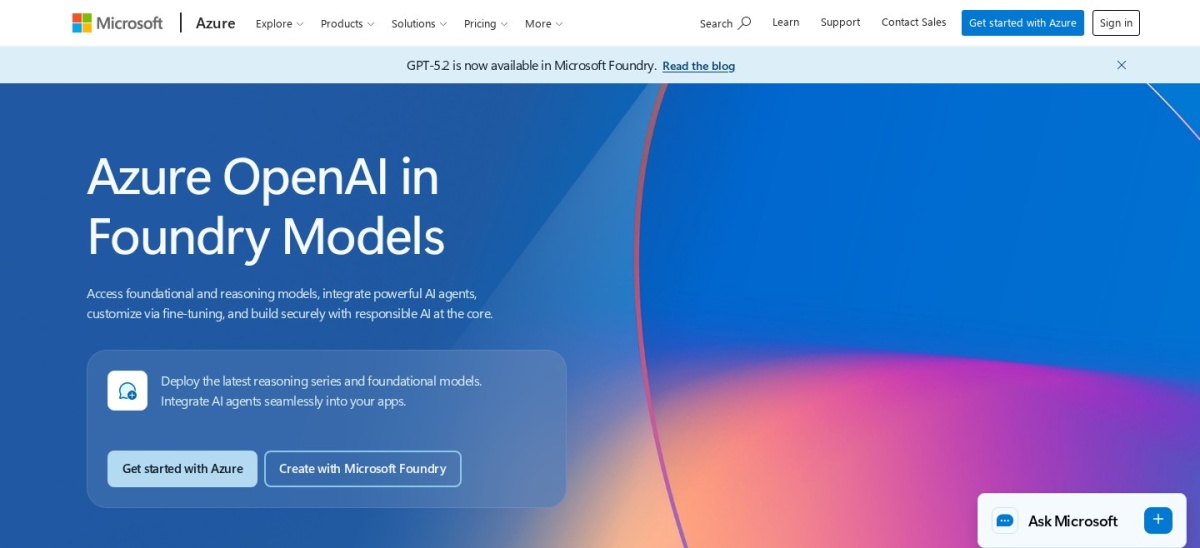
Azure OpenAI Service is Microsoft's managed service for running OpenAI models inside an Azure subscription. It adds Entra ID sign-in, private networking, content filters and Azure compliance controls around the same GPT models, so teams can build copilots and document tools without sending data to a consumer service.
The trade off is cost control. Pricing is pay as you go per token, so a busy app can run up a large bill, and estimating spend takes care. It suits companies already on Microsoft 365 or Azure that want OpenAI models under their own cloud controls.
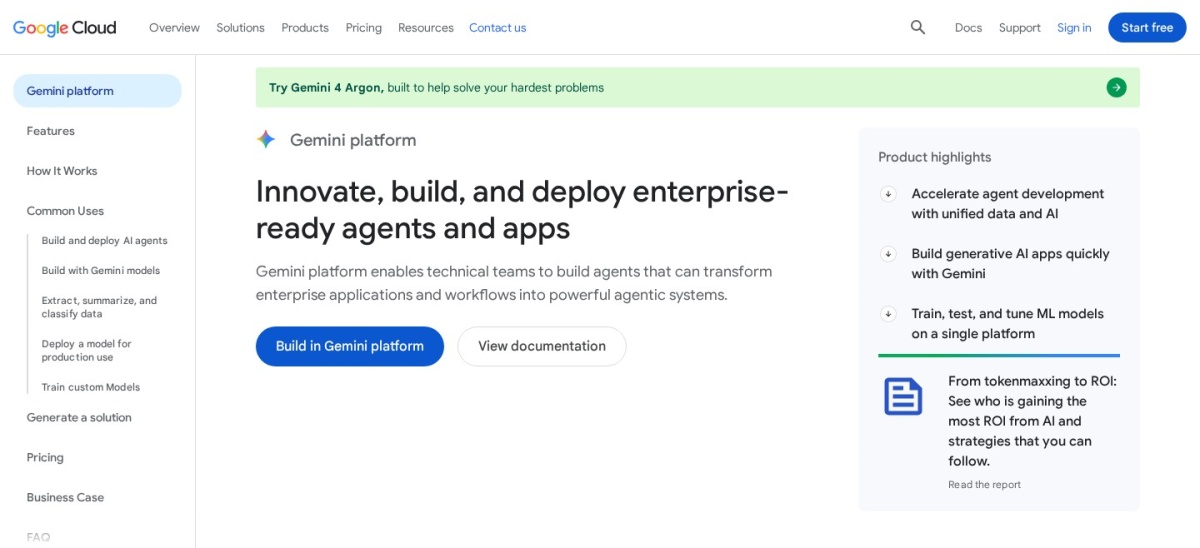
Google Cloud Vertex AI homepage, captured Nov 2026.
Google Cloud Vertex AI is Google's platform for building, training and running AI on Google Cloud. It covers Gemini models, custom training, pipelines and model endpoints in one place, and it connects directly to BigQuery and Cloud Storage, so teams can ground answers in their own data.
The trade off is the learning curve. G2 reviewers praise the Google Cloud integration but flag steep setup and complex pay-as-you-go billing. It suits teams already on Google Cloud that want one platform from notebook code to deployed models.
Amazon Bedrock is a managed service that gives access to foundation models from Anthropic, Meta and other providers through one API. Teams can switch models by changing a model ID, build agents and knowledge bases, and run everything serverless inside AWS with IAM and VPC controls.
The trade off is pricing clarity. G2 reviewers like the single API but call the pricing complex and hard to predict at high volume. It suits AWS teams that want several model providers without managing servers or hosting models themselves.
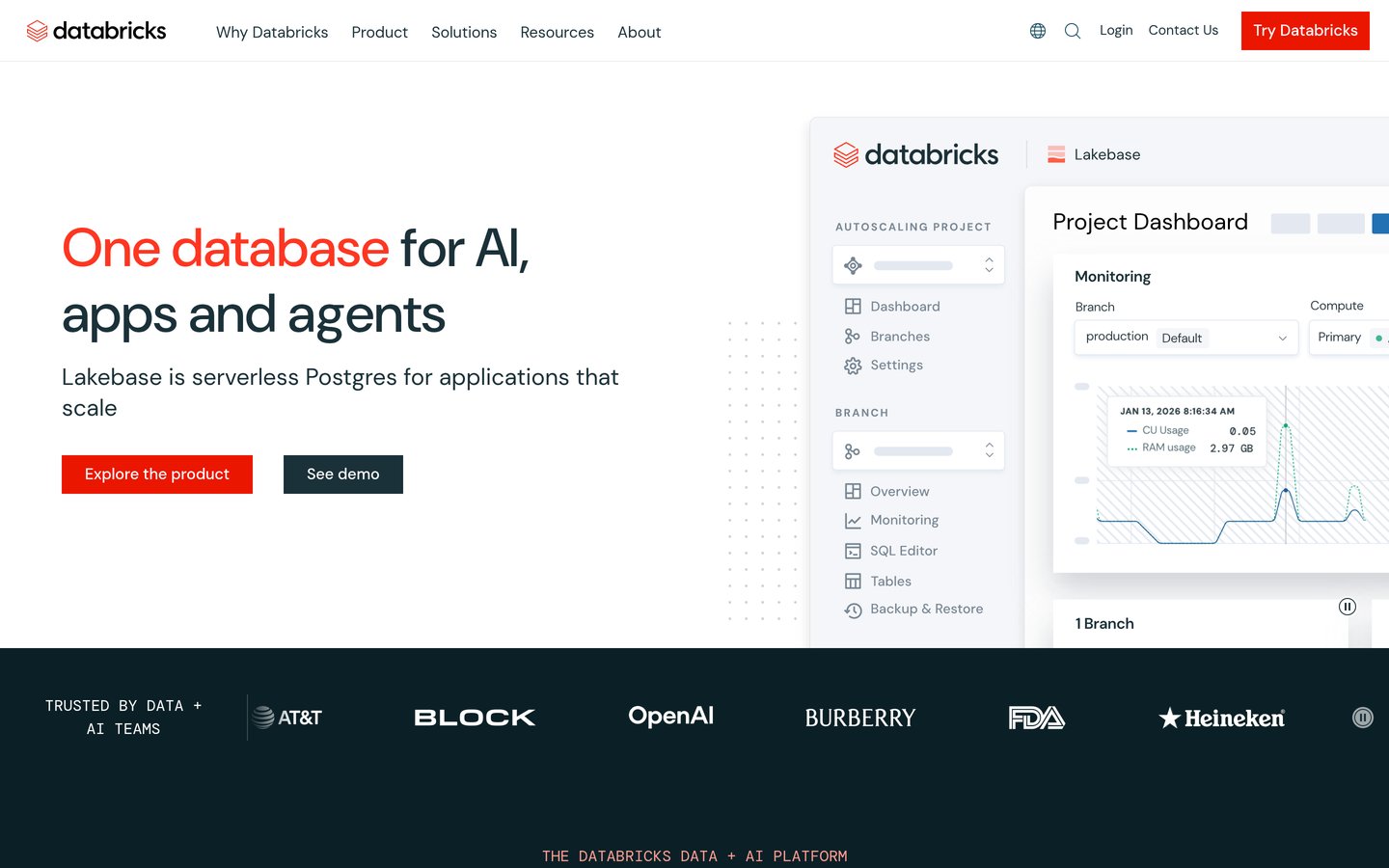
Databricks is a unified data and AI platform built on the lakehouse. It brings data engineering, SQL analytics, notebooks and Mosaic AI agents together, with Unity Catalog governing data and models in one place, so AI work runs on the same data teams already trust.
The trade off is cost management. It is pay as you go, and G2 reviewers warn costs can rise fast if clusters are not managed. It suits data-led companies that want AI agents, models and analytics on one governed platform.
IBM watsonx.ai is an AI studio for building, tuning and deploying models with governance built in. It brings IBM and third-party models into one workspace with prompt tools, tuning and deployment, and it fits companies that need audit trails and control over how models are used.
The trade off is complexity. G2 reviewers call it user-friendly once set up, but note a steep learning curve and high cost for small teams. It suits regulated companies that put governance and transparency ahead of quick experiments.
What we like
Governance and audit controls built in
Mix of IBM and third-party models
Prompt and tuning tools in one studio
Rated 4.4 out of 5 on G2 from 161 reviews
Watch out for
Steep learning curve for new users
Cost is high for small teams
Setup takes time for new teams
Billed by use; enterprise plans are quoted by IBMVisit ibm.com
06
Claude
4.7/5on G2 (2,193 reviews, checked Nov 2026)
Paid from$25/user/mo
Best for writing and coding work
Entry price$25/user/mo, Team Standard
Annual$20/user/mo billed annually
Enterprise$20/seat/mo plus API use
Free planYes, limited
anthropic.com
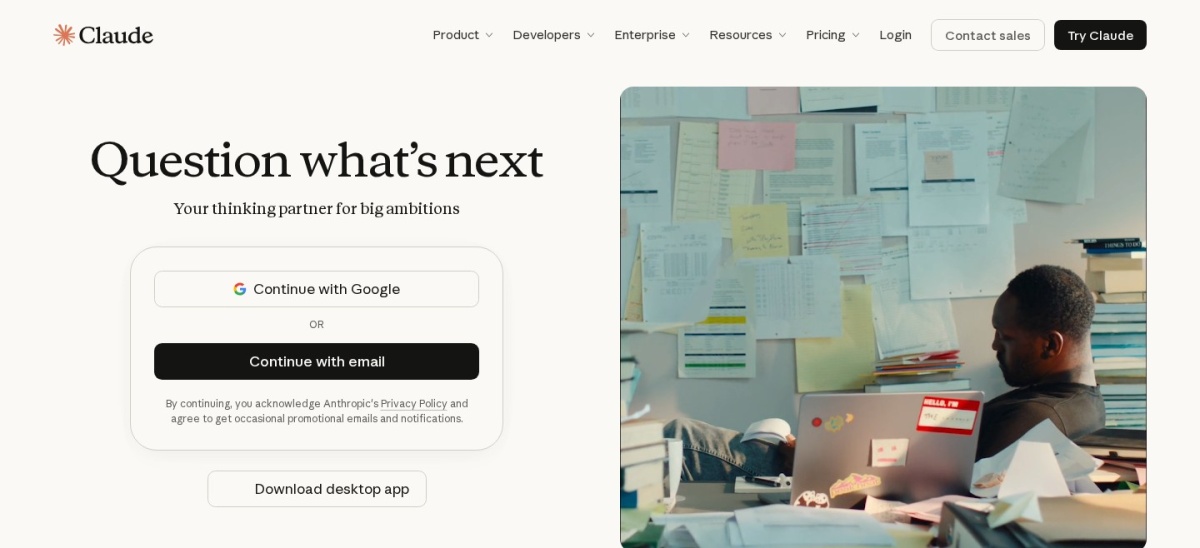
Claude homepage, captured Nov 2026.
Claude is Anthropic's AI assistant for writing, analysis and coding, with Team and Enterprise plans for companies. Team Standard costs $25 per user a month, or $20 billed annually, and Enterprise adds SSO, audit logs and admin controls for larger rollouts.
The trade off is usage limits. G2 reviewers praise the clear writing and long-document work but say paid users can hit message caps on heavy days. It suits teams that want one assistant for documents, research and code.
What we like
Highest G2 rating in this list at 4.7 out of 5
Strong writing, reasoning and coding
Team seats from $25 a user a month
Enterprise controls with SSO and audit logs
Watch out for
Usage caps can bite on heavy days
Enterprise bills API use on top of seats
No native image generation
Team Premium adds Claude Code at $100 a seat a month billed annuallyVisit anthropic.com
07
ChatGPT
4.4/5on Capterra (409 reviews, checked Nov 2026)
Paid from$25/user/mo
Best for everyday business AI
Entry price$25/user/mo, Business Standard
Annual$20/user/mo billed annually
EnterpriseCustom, quoted by sales
Free planYes
openai.com
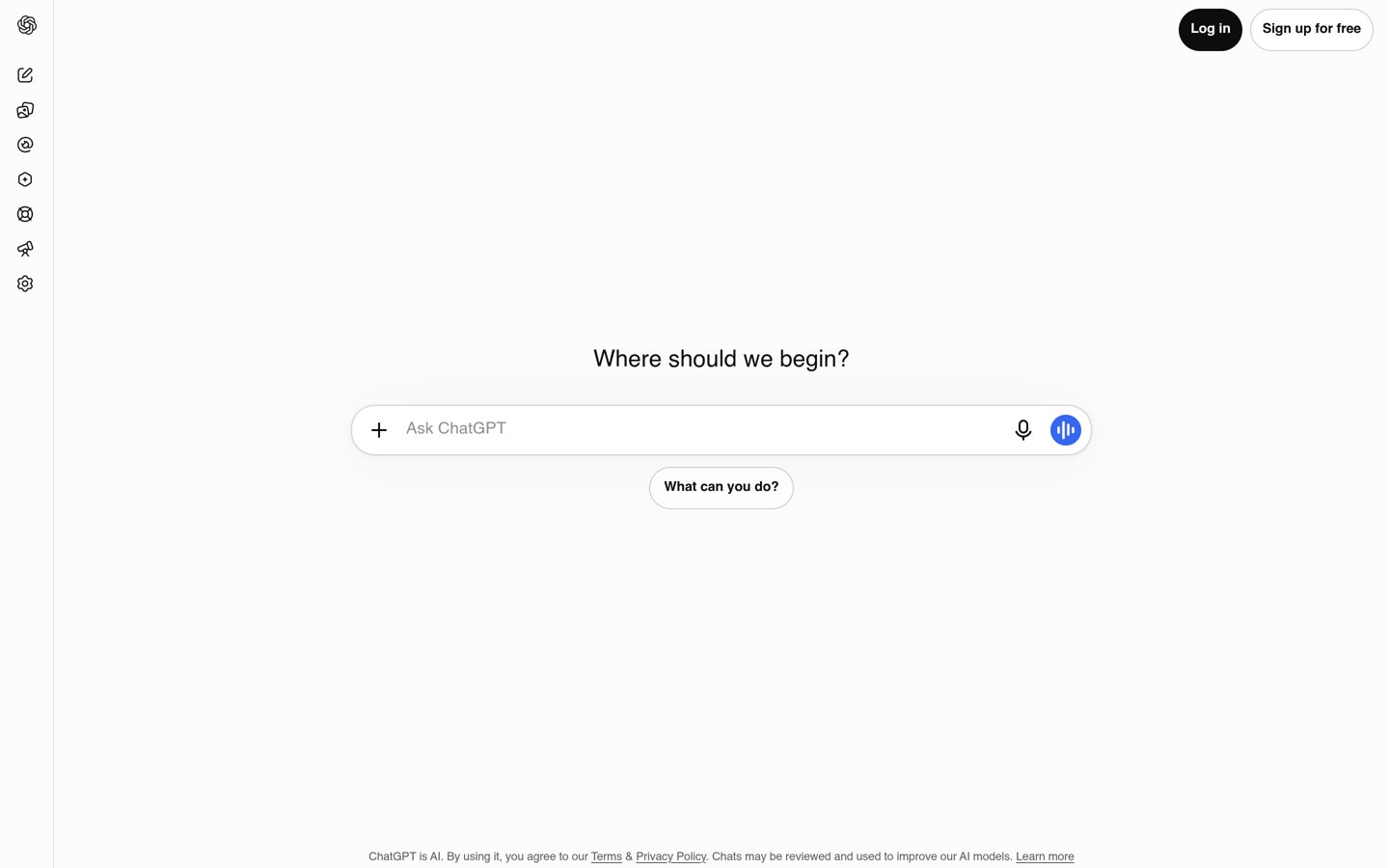
ChatGPT homepage, captured Nov 2026.
ChatGPT is OpenAI's assistant, and ChatGPT Business is its team plan for companies of 2 to 200 people. A Standard seat costs $25 per user a month, or $20 billed annually, and includes a shared workspace, admin roles and no training on company data by default.
The trade off is scale. Business tops out at 200 seats, so larger companies need Enterprise, which is custom priced through sales. It suits small and mid-size teams that want the most familiar AI assistant with simple per-seat billing.
What we like
Most familiar AI assistant for staff
Simple per-seat pricing from $25 a user
Shared workspace with admin controls
Rated 4.4 out of 5 on Capterra from 409 reviews
Watch out for
Business plan caps at 200 seats
Enterprise pricing is not published
Heavy users may need Premium seats at $125
Premium seats cost $125 a user a month, or $100 billed annuallyVisit openai.com
08
Cohere
4.5/5on G2 (151 reviews, checked Nov 2026)
PricingCustom/yr
Best for retrieval and private deployment
Entry pricingPay as you go, per token
API price$2.50/1M input tokens, Command R+
DeploymentCloud, VPC or on-premises
FreeTrial API key
cohere.com
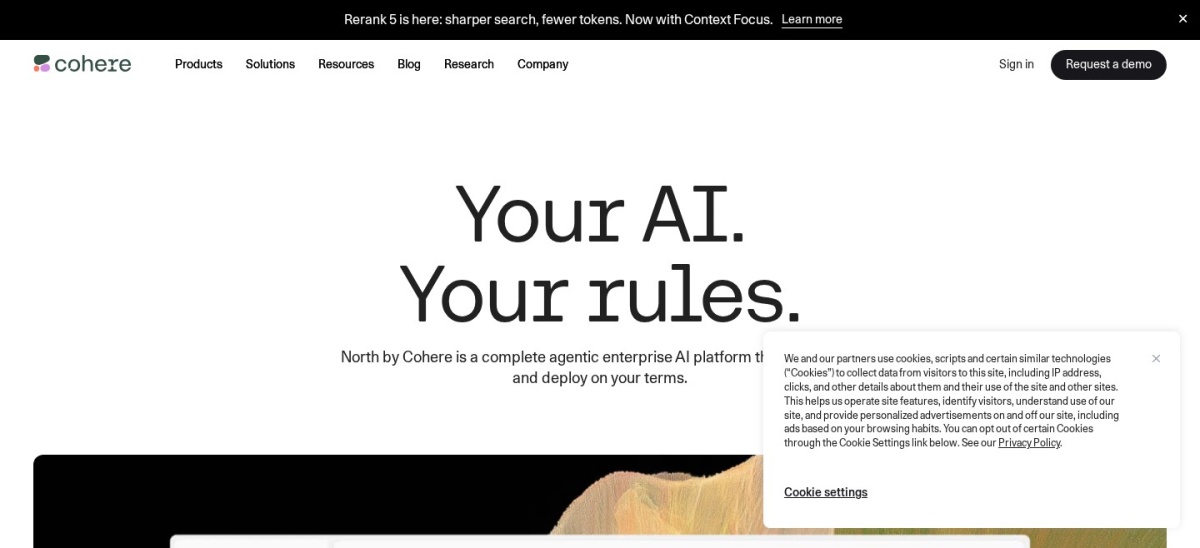
Cohere homepage, captured Nov 2026.
Cohere is an enterprise AI company built around retrieval and private deployment. Its Command models are tuned for search, RAG and multi-step tool use, and its API starts at $2.50 per million input tokens for Command R+, with dedicated and private deployments for regulated work.
The trade off is that the newest flagship models are not on a public price list, so large deals go through sales. It suits companies that need grounded answers from their own documents, deployed inside their own cloud.
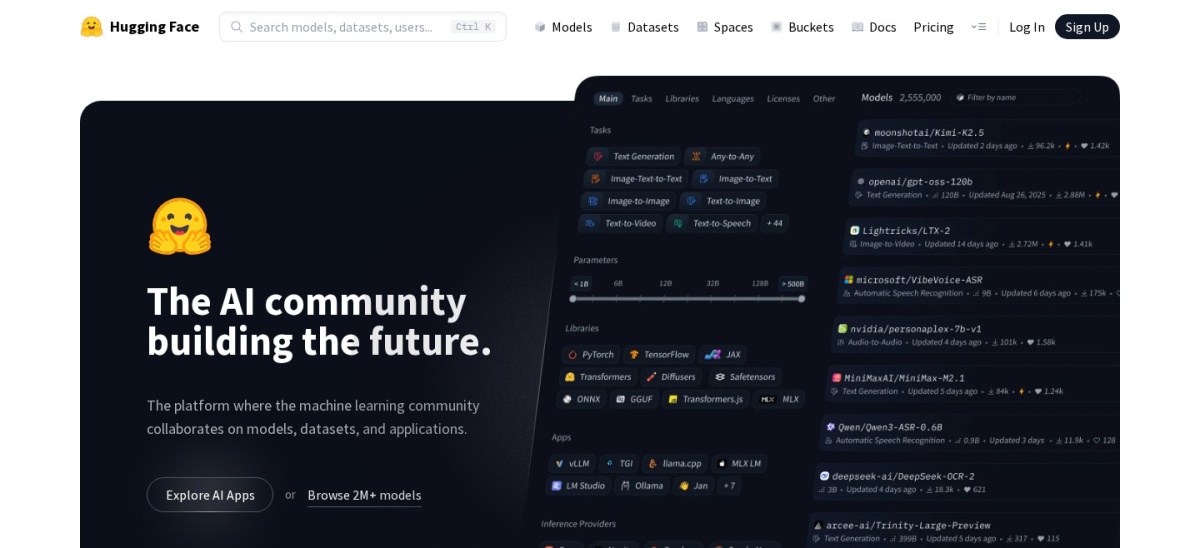
Hugging Face is the open hub where most open models, datasets and demos are published. Teams can find, fine-tune and deploy open models, and the Enterprise plan is listed at $50 per user a month, with Team at $20 per user a month and PRO at $9 a month.
The trade off is that compute bills separately. Endpoints, Spaces hardware and inference are charged by use on top of seats, and the Enterprise page describes Enterprise as custom priced. It suits ML teams that build on open models and want the widest catalog.
What we like
Largest catalog of open models
Free Hub for public models and datasets
Team seats from $20 a user a month
Rated 4.6 out of 5 on G2
Watch out for
Compute is billed separately from seats
Enterprise price is listed as $50 but described as custom
Pay-as-you-go plans fit uneven use. A team that runs bursts of document work pays only for those tokens, but a busy app can surprise the budget.
Seat plans fit steady daily use. ChatGPT Business and Claude Team cost $25 per user a month, so the monthly bill is known in advance.
Ask each vendor for a written estimate. Include API use, seats and any add-ons before signing, because the entry price rarely covers everything.
How we chose
We started from the platforms most often named in enterprise AI shortlists: the three big clouds, Databricks, IBM, Anthropic, OpenAI, Cohere and Hugging Face.
Prices and ratings were checked on 23 November 2026. Ratings come from G2, except ChatGPT, which uses Capterra. The five cloud platforms bill pay as you go, so no fixed seat price is listed for them.
We left out niche tools and single-model APIs with no enterprise controls. No vendor paid for a place, and we do not claim hands-on testing for this list.
How to choose an enterprise AI platform
Start with the cloud and data you already use, then match the plan to how your team works.
Check your cloud first. If you run on Azure, Google Cloud or AWS, that cloud's AI platform usually fits best and keeps data in place.
Decide how you will pay. Pick seat pricing for steady daily use and pay as you go for uneven or app-driven use. See how to add AI search to a WordPress site for a small example of the same choice.
List the controls you must have. SSO, audit logs, data retention and private networking are the usual enterprise needs. Drop any tool that lacks one.
Run a small pilot first. Give one team a real task for a month and watch the bill, the limits and the support replies before rolling out widely.
FAQ
What is the best enterprise AI platform?
Azure OpenAI Service is the best pick for most companies. It runs OpenAI models with Azure security and is rated 4.6 out of 5 on G2 from 58 reviews. Pick Vertex AI for Google Cloud teams and Claude for writing and coding work.
How much does an enterprise AI platform cost?
Cloud platforms bill pay as you go per token or per compute unit, so the cost follows use. ChatGPT Business and Claude Team start at $25 per user a month, and Hugging Face Enterprise is listed at $50 per user a month.
Is ChatGPT Enterprise the same as ChatGPT Business?
No. Business is a self-serve plan for 2 to 200 people at $25 per user a month, or $20 billed annually. Enterprise is custom priced through sales, with more admin controls and higher limits for larger companies.
Which enterprise AI platform is best for Google Cloud?
Vertex AI is the best fit for Google Cloud teams. It covers Gemini models, training and deployment in one place and connects to BigQuery. It is rated 4.3 out of 5 on G2 from 738 reviews, but reviewers note a steep learning curve.
Do enterprise AI platforms train on company data?
Most enterprise plans state they do not train on customer data, and ChatGPT Business has no training on company data by default. Read the contract and data policy for each vendor before rolling out, because terms differ by plan.
Can I use open models in the enterprise?
Yes. Hugging Face hosts the largest catalog of open models, and Databricks, Bedrock and Vertex AI also run open models. Governance, support and deployment controls still matter, so check those before choosing a model.