WLWPLegible EditorsLast verified 23 Nov 2026How we rank11 min read
★ Short answer
ESO EHR is the best EMS software for most agencies, pairing a NEMSIS-compliant ePCR with dispatch, scheduling, billing and hospital data exchange in one suite. Pick ImageTrend Elite for deep configuration and state reporting, and AngelTrack if you want a published price with no contract.
How we make this list: we compare pricing pages, product documentation and public user reviews, then re-check every price before each update. No product paid for a place. Disclosure.
ESO EHR leads with the broadest suite: ePCR, dispatch, scheduling, billing and hospital data exchange from one vendor.
ImageTrend Elite is rated 4.2 out of 5 on G2 from 55 reviews, and 43 state EMS repositories run on ImageTrend.
AngelTrack is the only tool here with a published monthly EMS price: Bronze at $778 a month for up to 450 calls.
FirstResponse911 is the highest rated tool here at 4.9 out of 5 on Capterra, but it only shares CAD data between agencies.
Seven of the nine vendors publish no price, so expect a written quote based on call volume, units and modules.
What EMS software has to cover
EMS software covers the whole run: the 9-1-1 call, the dispatch, the patient care report, the billing and the state filing. The best tools move data between those steps without re-typing, so a chart started in the field arrives at billing complete.
The ePCR is the core. Look for NEMSIS-compliant charting, offline field entry, monitor data import and a QA review step that catches errors before the chart is locked. A weak ePCR costs crews time on every call.
Most vendors in this list sell by quote, so price depends on call volume, unit count and modules. Only AngelTrack publishes a starting price on its own site, and FirstResponse911 has a starting price listed on Capterra, which makes them the easiest to budget for.
Scheduling and dispatch tools matter as much as charting. A missed shift or a slow CAD handoff hurts response times, so agencies that run their own dispatch should weigh CAD and scheduling beside the ePCR.
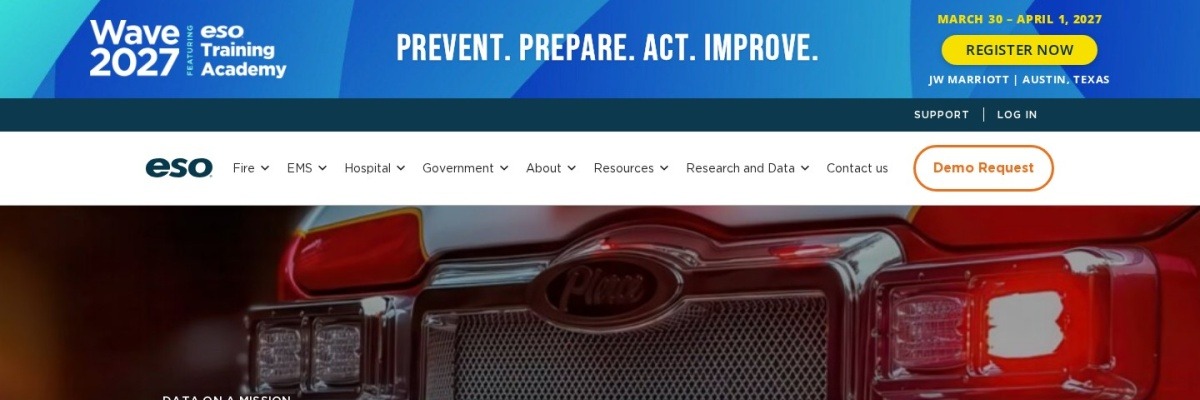
ESO EHR is a cloud-based electronic patient care reporting system for EMS agencies and fire departments. It pairs the ePCR with Logis Dispatch, scheduling, personnel tools, Logis Billing and analytics, and shares patient records with hospital partners in real time. The charting workflow supports NEMSIS-compliant reporting and state submission.
The trade off is price transparency. ESO publishes no price, so budgeting needs a written quote, and Capterra lists a starting price of $1,000 per user per year. It suits mid-size and large agencies that want one vendor from dispatch to billing, while a small volunteer service may pay for modules it never uses.
What we like
ePCR, dispatch, scheduling and billing from one vendor
Real-time hospital record sharing
Strong analytics and QA tools
Watch out for
No published price; budgeting needs a quote
Large suite can be more than a small agency needs
Paid plans add modules such as dispatch, billing and analyticsVisit eso.com
02
ImageTrend Elite
4.2/5on G2 (55 reviews, checked Nov 2026)
Starts at$1,000/yr
Best for configurable ePCR and state reporting
ePCRElite EMS
Offline field appYes
PackagesEssential, Premier
State repositories43 states
imagetrend.com
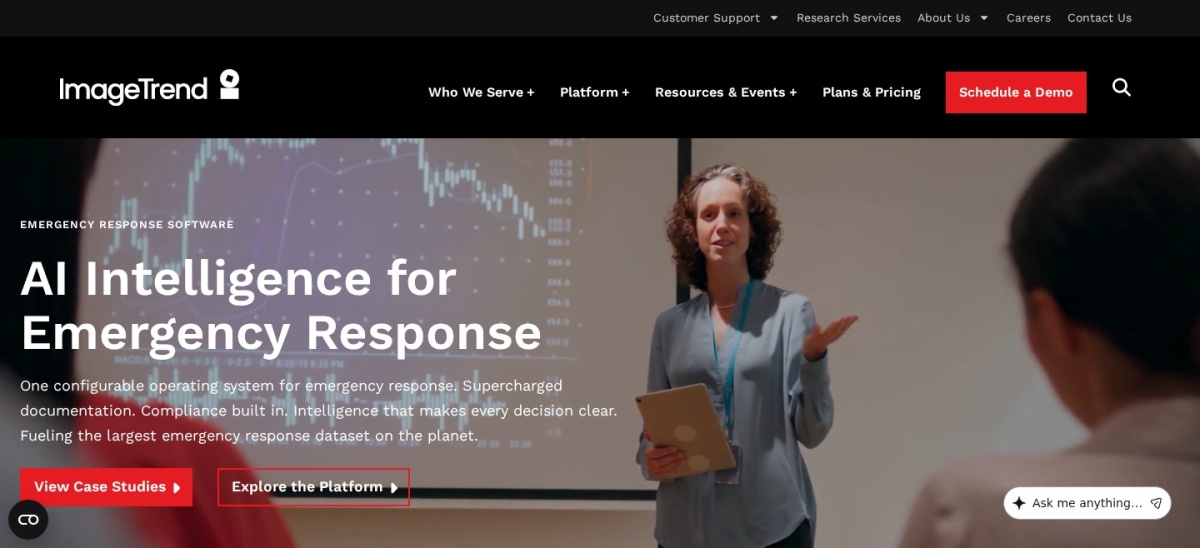
ImageTrend Elite homepage, captured Nov 2026.
ImageTrend Elite is a configurable ePCR and records platform for EMS agencies, fire departments and hospitals. Its Elite EMS ePCR works offline in the field, imports cardiac monitor data with diagnostic-quality EKGs, and feeds a repeat-patient database, quality-improvement reviews and state NEMSIS reporting. ImageTrend says 43 state EMS repositories run on its platform.
The trade off is setup time. G2 reviewers report an average implementation time of 4 months, and the two packages, Essential and Premier, are sold by quote with modules available à la carte. It suits large and state-level agencies that need deep configuration. Smaller agencies should weigh the setup effort against a simpler ePCR.
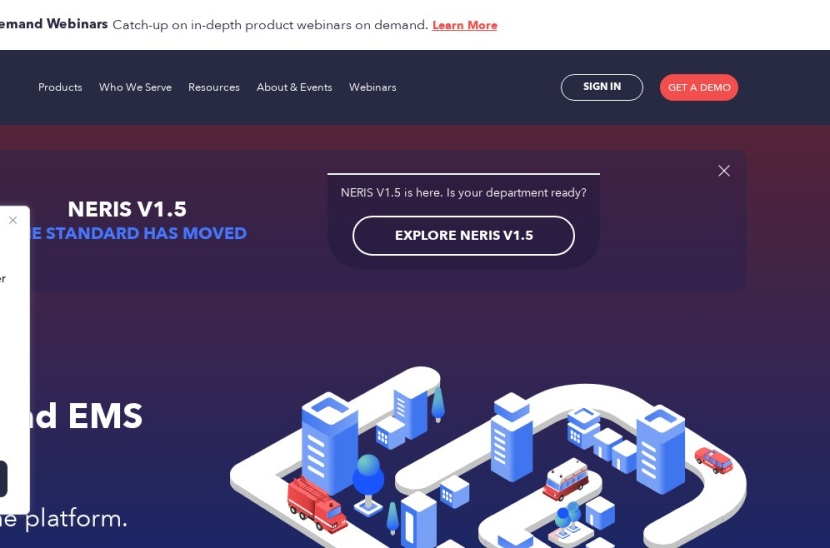
First Due is a cloud-based, end-to-end platform for fire and EMS agencies. It combines NERIS incident reporting, a NEMSIS v3.4 compliant ePCR, pre-incident planning, scheduling and personnel, assets and inventory, hydrants, training and mobile response in one application with a single login. Crews can use it on any device.
The trade off is breadth over depth. First Due covers more jobs than any rival here, but its ePCR analytics are lighter than ESO or ImageTrend, and pricing is by quote only. It suits departments that run fire and EMS together and want one system. Agencies that only need an ePCR may find it more than they need.
What we like
One login for records, ePCR, planning and training
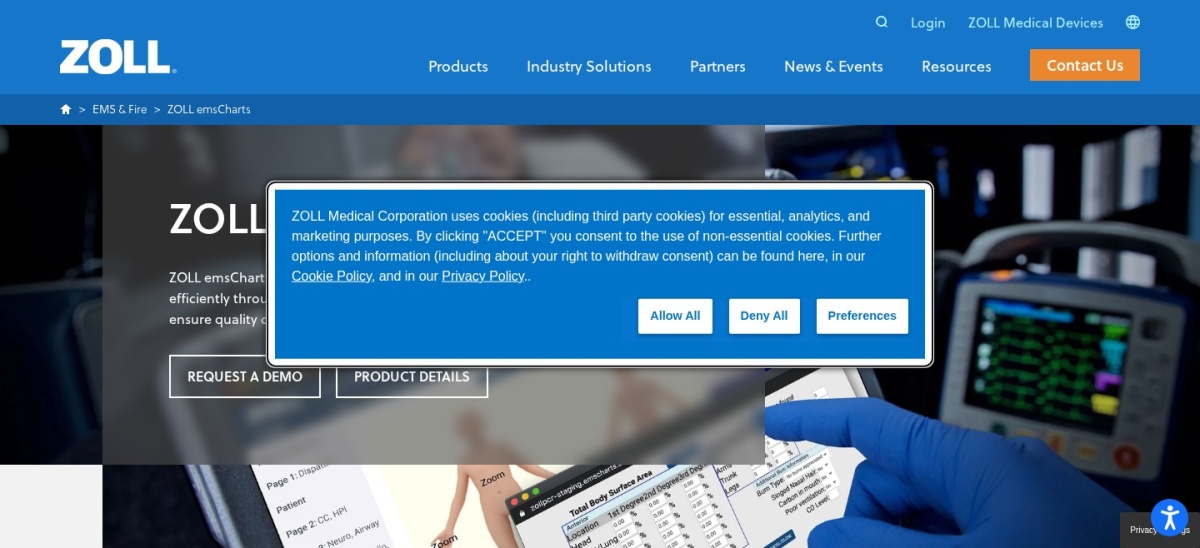
ZOLL emsCharts is a cloud-based ePCR that guides clinicians through patient documentation in the field. It imports vitals and waveforms from ZOLL monitors, works online or offline on any device, and exports NEMSIS v3.5 data to state repositories. A companion app, emsCharts NOW, captures patient data on scene with a standard phone.
The trade off is its thin public review record. emsCharts is rated 4.2 out of 5 on G2, but from only 5 reviews, and ZOLL publishes no price, so the cost needs a quote. It suits agencies already using ZOLL X Series monitors and ZOLL Dispatch or Billing. Others should compare its charting flow with ESO and ImageTrend first.
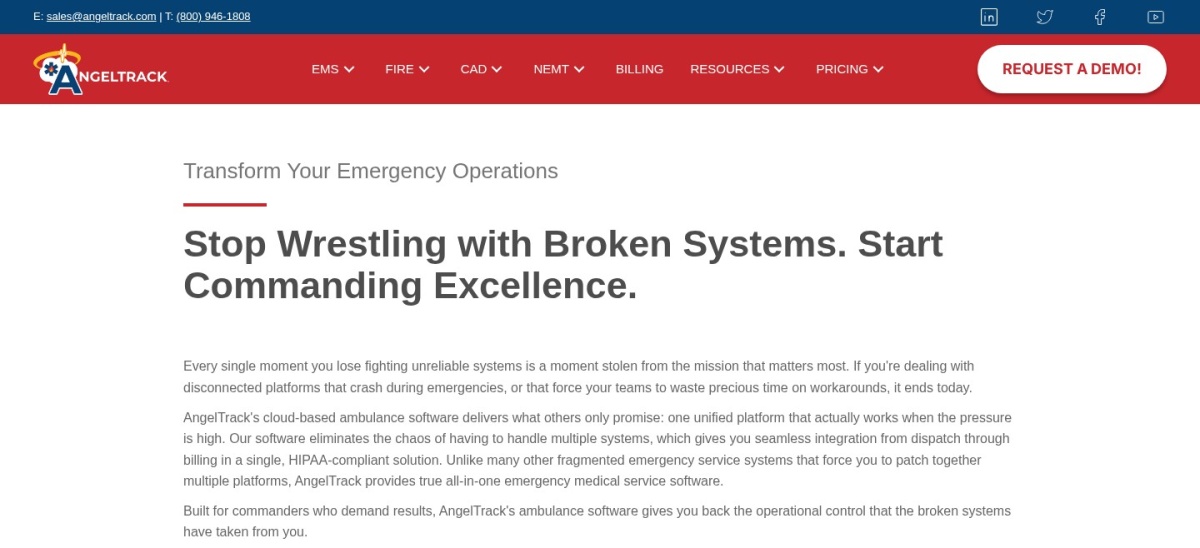
AngelTrack is a cloud-based ambulance platform that covers dispatch, ePCR, billing, crew scheduling, fleet management and state reporting in one HIPAA-compliant system. Its ePCR is NEMSIS certified, and the CAD includes real-time GPS tracking and an AI dispatch planner. It charges no ordinary implementation, hosting or training fees and requires no contract.
The trade off is call-volume pricing. Bronze costs $778 a month for up to 450 calls, so a busy agency climbs the tiers fast, reaching $2,988 a month for up to 4,000 calls. It suits private ambulance services and smaller agencies that want a published price. Fire-only departments should note that fire pricing is custom.
What we like
Published price with no contract
Dispatch, ePCR, billing and scheduling in one system
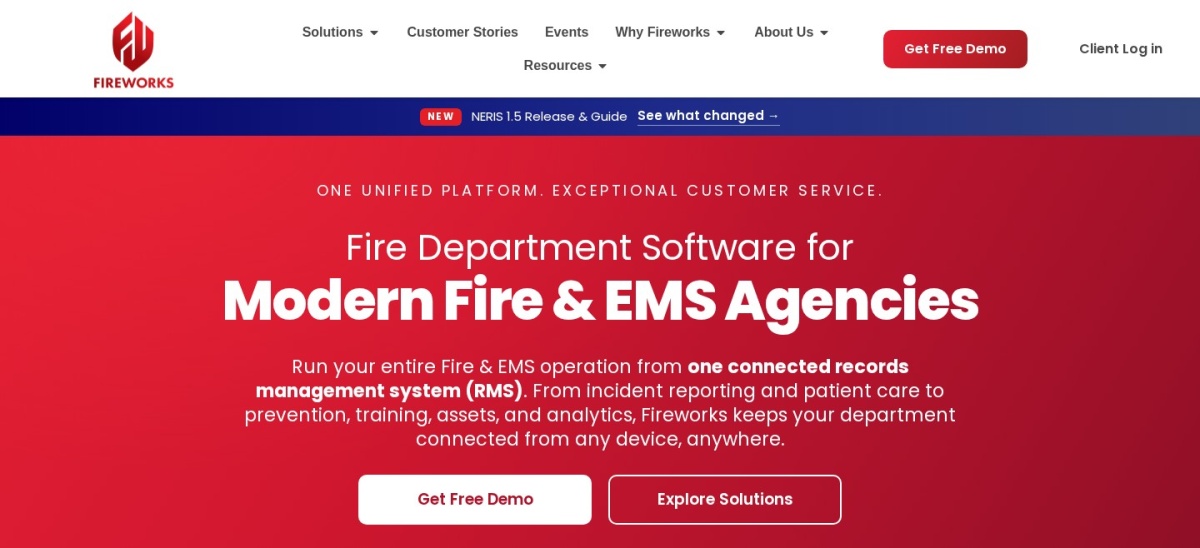
EPR FireWorks is an all-in-one fire and EMS records system with an embedded ePCR. It covers incident reporting, patient care, workforce management, equipment tracking, fire prevention and analytics from one login, and its vendor lists 270+ reports. The ePCR links patient care reports directly to incident data, so crews enter each detail once.
The trade off is that pricing is by quote only, and the platform leans toward fire departments, with EMS as one part of a wider RMS. It suits combination fire and EMS departments that want one records system. Agencies that only run ambulances may prefer a dedicated ePCR such as ESO EHR or ZOLL emsCharts.
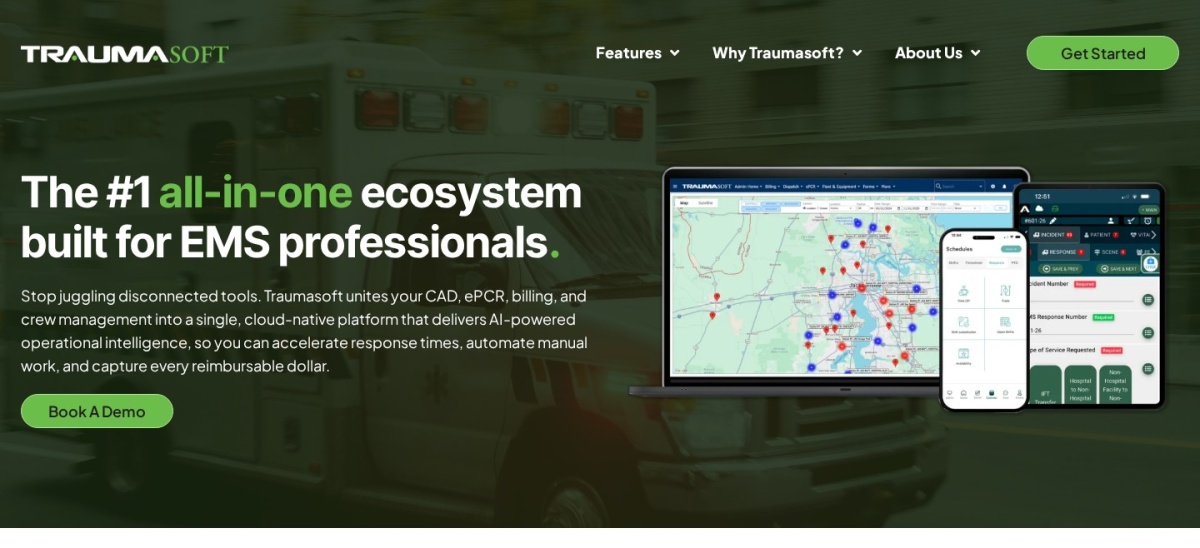
Traumasoft is a cloud-native platform that puts CAD, ePCR, billing, crew management and fleet tracking on one shared database. Trip data flows from the first dispatch call to the final claim without re-entry, and AI-powered QA/QI checks charts before they reach billing. The vendor says the checks support near 100% chart review.
The trade off is its review record. Traumasoft is rated 3.6 out of 5 on Capterra from 16 reviews, the lowest score in this list, and pricing is by quote only. It suits ambulance operators that want dispatch, clinical work and billing in one place. Agencies that want a proven ePCR record should weigh ESO or ImageTrend instead.
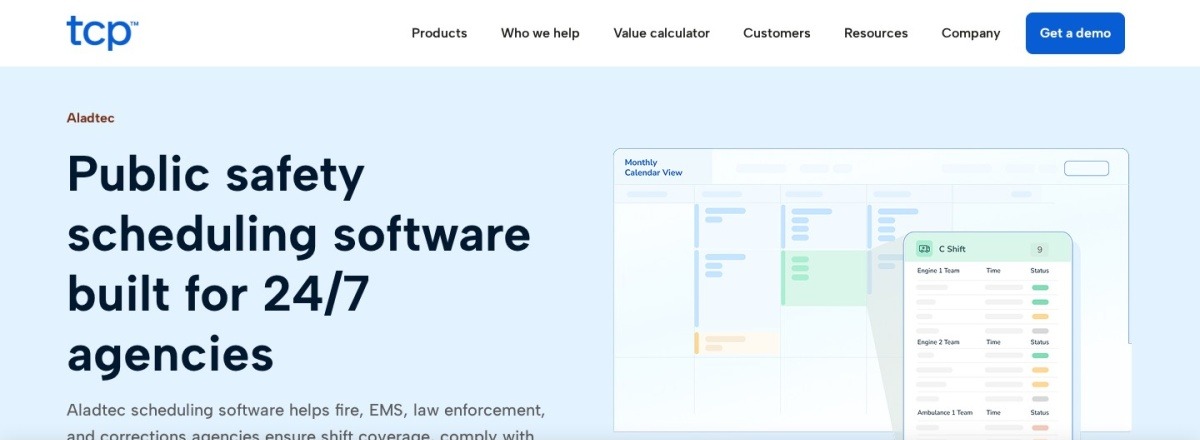
Aladtec is scheduling software for fire, EMS, law enforcement and corrections agencies that run 24/7 rotations. It fills shifts automatically, builds union, work and fatigue rules into every schedule, and tracks overtime so managers can see where labor dollars go. Crews can trade shifts and check schedules from a mobile dashboard.
The trade off is scope. Aladtec only schedules people, so an agency still needs an ePCR, a CAD and a billing tool beside it, and pricing is by quote only. It suits departments that struggle with rotating rosters and minimum staffing. Agencies that want one system for everything should look at Traumasoft or First Due instead.
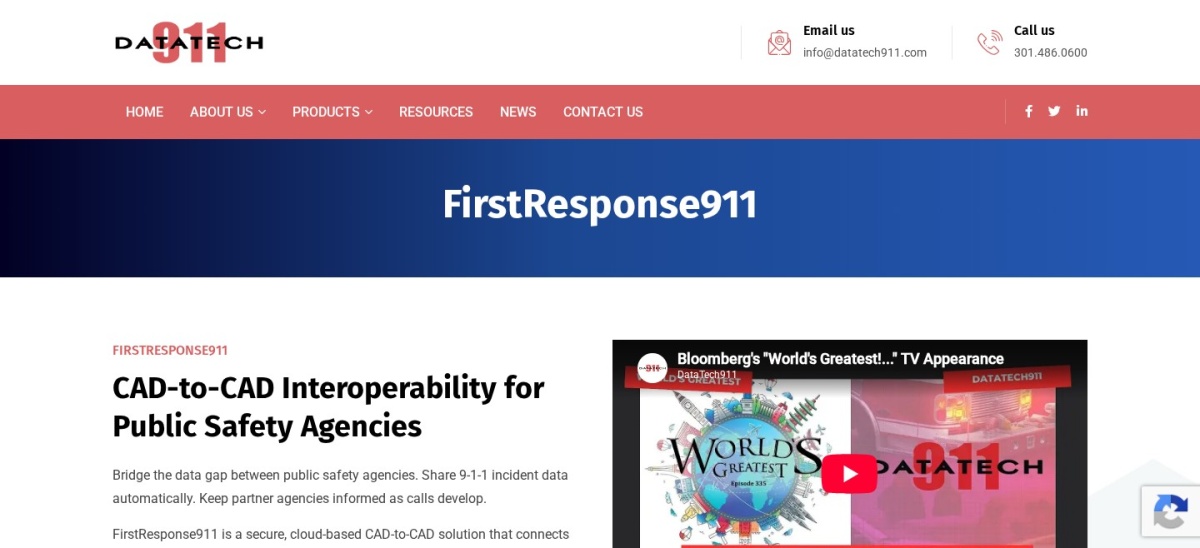
FirstResponse911 is a cloud-based CAD-to-CAD tool from DataTech911. It monitors 9-1-1 call data and transfers incident details to partner agencies in real time, with continuous updates for address changes, priorities and CAD notes. Location data includes RapidSOS, what3words and Google Plus Codes, and keyword monitoring flags safety risks.
The trade off is narrow scope. FirstResponse911 moves dispatch data between agencies but does no patient charting, scheduling or billing, and its Capterra starting price is $5,495 a year. It suits 9-1-1 centers and private ambulance services that share calls across agencies. Most agencies will need it beside, not instead of, an ePCR.
Only two tools in this list have a published starting price. AngelTrack lists Bronze at $778 a month on its own rate card, and FirstResponse911 lists $5,495 a year on Capterra.
The rest sell by quote because price follows call volume, unit count, stations and modules. Two agencies can pay very different amounts for the same product.
Ask every vendor for a written quote that lists each module, the implementation fee and the renewal price. A low first-year price can hide a steep renewal.
How we chose
We started from the EMS tools that appear most often in agency shortlists and review-site categories, then kept nine established products that cover ePCR, dispatch, scheduling or billing.
Prices and ratings were checked on 23 November 2026. Ratings come from G2 or Capterra, and prices come from vendor pages where published; ESO and ImageTrend publish no price, so their starting figures come from Capterra and G2 listings, and AngelTrack's price was confirmed against its published rate card.
We left out tools with no public reviews, including CloudPCR and HealthEMS. No vendor paid for a place, and we do not claim hands-on testing for this list.
How to choose EMS software
Start with your call volume and your current stack, then shortlist two or three tools to demo.
Count your calls and units first. Quotes follow call volume, unit count and stations, so vendors will ask for these numbers before they price anything.
Check NEMSIS and state reporting. Confirm the ePCR exports the NEMSIS version your state requires and files reports without manual re-entry.
Demo the field workflow. Watch a medic complete a chart offline on a phone or tablet, including monitor data import and signatures.
Get the renewal price in writing. Ask for the implementation fee, the per-module cost and the renewal price, not just the first-year quote.
FAQ
What is the best EMS software?
ESO EHR is the strongest pick for most agencies. It combines a NEMSIS-compliant ePCR with dispatch, scheduling, billing and hospital data exchange in one suite, and Capterra rates it 4.4 out of 5.
What is ePCR software?
ePCR software is the electronic patient care report: the digital chart medics complete in the field. It records assessments, treatments, vitals and signatures, then exports the data to state repositories in NEMSIS format.
How much does EMS software cost?
Most vendors sell by quote, so costs vary with call volume and modules. AngelTrack publishes Bronze at $778 a month for up to 450 calls, and FirstResponse911 lists a $5,495 yearly starting price on Capterra.
Is there free EMS software?
No tool in this list has a free plan. Some vendors offer demos or trials, and a few run reduced rates for qualifying volunteer or non-profit agencies, so ask the vendor directly.
What is NEMSIS compliance?
NEMSIS is the national standard for EMS patient care data in the United States. A NEMSIS-compliant ePCR records data in the standard format so it can be submitted to state repositories without rework.
Do I need dispatch software as well as an ePCR?
It depends on who dispatches your calls. Agencies with their own dispatch center need CAD, while agencies dispatched by a county center can often start with an ePCR and add scheduling or billing later.
Which EMS software is best for small agencies?
AngelTrack suits small and private services because it publishes its price, charges no contract and covers dispatch through billing. Small volunteer services should also ask vendors about reduced rates for qualifying agencies.