BigCommerce is the best ecommerce platform for multiple stores for most sellers, with Core at $29 a month billed yearly and extra storefronts at $30 a month each. Pick Shopify if you already sell on Shopify, or WooCommerce if you want a free core on WordPress Multisite.
How we make this list: we compare pricing pages, product documentation and public user reviews, then re-check every price before each update. No product paid for a place. Disclosure.
BigCommerce Core costs $29 a month billed yearly, with extra storefronts at $30 a month each, up to 3 on Core.
Shopify Plus starts from $2,300 a month and includes 9 expansion stores under one organisation admin.
WooCommerce core is free, and WordPress Multisite runs several stores from one WordPress install.
Adobe Commerce and Salesforce B2C Commerce publish no prices, so both need a sales quote.
nopCommerce is free and open source with multi-store built in, while CS-Cart starts at $55 a month billed yearly.
Squarespace has no shared multi-store admin, so each store needs its own subscription.
What to look for in a platform for multiple stores
Running several stores means more than opening a second shop. Brands, regions and wholesale channels each need their own prices, catalogues and checkout, while the team still wants one place to manage orders and stock.
The models differ. Some platforms run several storefronts from one admin, some run each store as a separate subscription, and WooCommerce runs several stores from one WordPress install with Multisite.
Costs stack up in different ways too. A platform may charge per extra storefront, cap annual sales and force an upgrade, or price the whole deal as a quote with no public rate.
The WordPress route is the cheapest way to start. Our guide on setting up WordPress Multisite explains how one install can host several sites before you add a store to each one.
The 9 best ecommerce platforms for multiple stores
01
BigCommerce
4.2/5on G2 (581 reviews, checked Nov 2026)
Starts at$29/mo
Best ecommerce platform for multiple stores overall
Cheapest paid planCore, $29/mo
Multi-storefrontAdd-on, $30 each
Storefronts on CoreUp to 3 extra
Sales cap$30,000 TTM GMV
bigcommerce.com
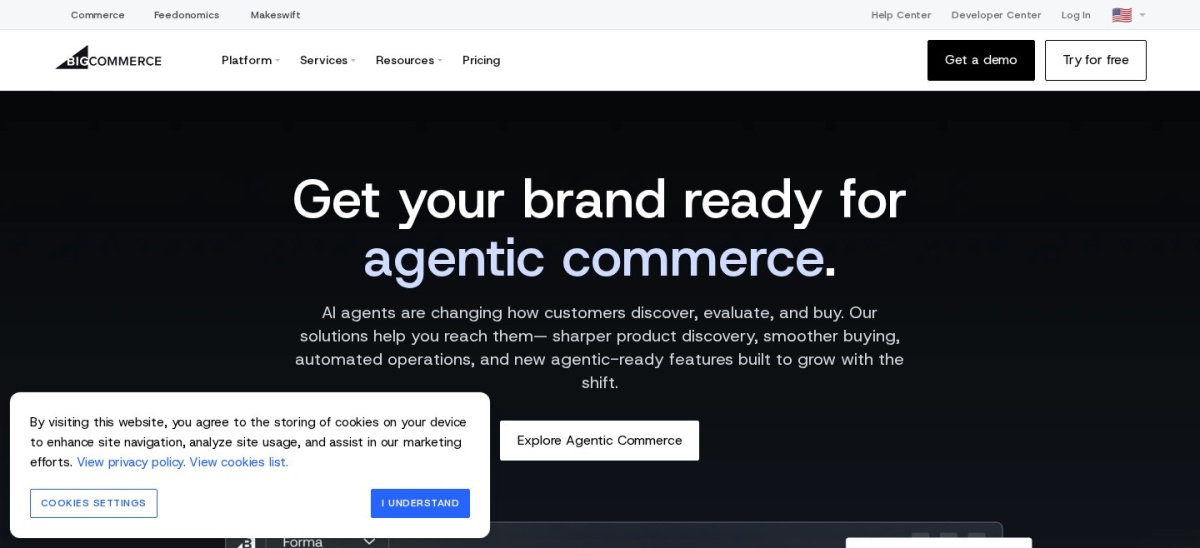
BigCommerce homepage, captured Nov 2026.
BigCommerce is a hosted ecommerce platform with multi-storefront as a paid add-on on its self-serve plans. Core costs $29 a month billed yearly, or $39 a month billed monthly, and includes one storefront, unlimited products and unlimited staff accounts.
The trade off is the sales cap. Core covers up to $30,000 in trailing 12-month sales and upgrades automatically above that, and each extra storefront costs $30 a month, up to 3 on Core. It suits growing brands that want several storefronts with a published monthly price.
Shopify is a hosted commerce platform, and its enterprise tier, Shopify Plus, runs up to 10 storefronts under one organisation admin, with 1 primary store and 9 expansion stores. Basic costs $29 a month billed yearly, or $39 a month billed monthly, and includes unlimited products and 10 inventory locations.
The trade off is that real multi-store management sits on Plus. Plus starts from $2,300 a month on a contract, and each expansion store carries its own cost, so a five-store setup is priced like five stores. It suits brands already on Shopify that are ready to pay for the enterprise tier.
4.5/5on WordPress.org (4,834 reviews, checked Nov 2026)
PriceFree
Best free core for multiple stores
Free coreYes, open source
Multi-storeWordPress Multisite
Extensions$29-$299/yr each
Hosting$25-$350/mo typical
woocommerce.com
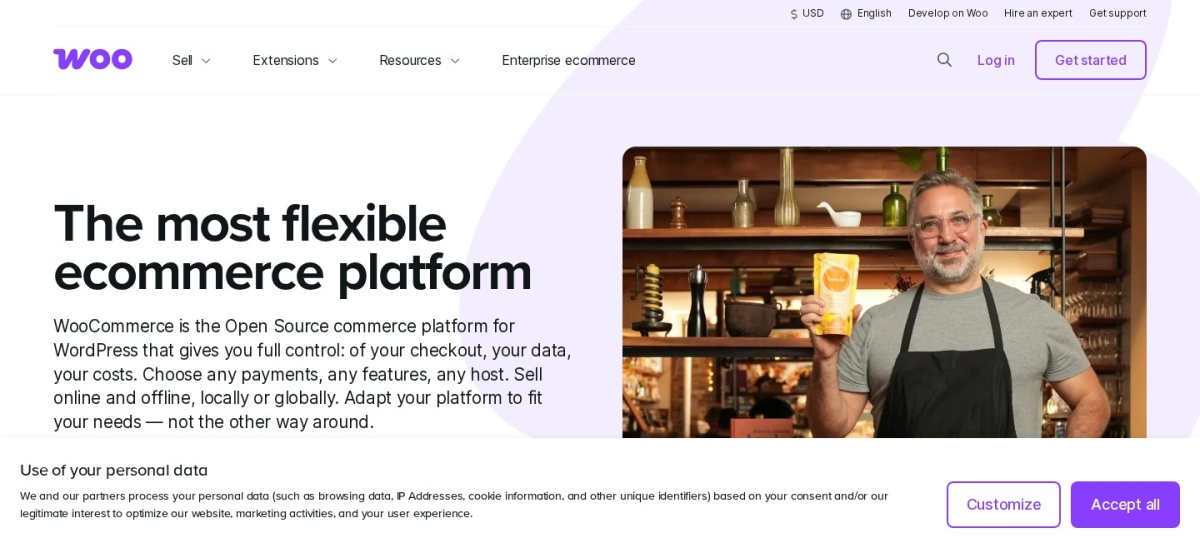
WooCommerce homepage, captured Nov 2026.
WooCommerce is an open-source WordPress ecommerce plugin with more than 7 million active installs and a 4.5 out of 5 rating on WordPress.org. Its core is free with no monthly subscription and no revenue share, and WordPress Multisite lets one install run several independent stores.
The trade off is that the free core is only part of the bill. Hosting typically costs $25 to $350 a month, and paid extensions cost $29 to $299 a year each, so subscriptions, bookings and memberships each add a licence. It suits WordPress teams that want full control of each store.
Adobe Commerce, formerly Magento Commerce, is an enterprise platform built for several brands, regions and currencies from one admin. Its multisite architecture shares catalogues, content and promotions across stores, while each store keeps its own branding, language and tax rules.
The trade off is price and effort. Adobe publishes no prices, so every deal needs a sales quote, and reviewers report that setup takes months and needs developers. It suits large teams with complex catalogues and B2B workflows that need deep customisation.
What we like
Native multi-store and multi-brand support
Shared catalogues with per-store pricing
Deep B2B tools: quotes, shared catalogues, approvals
Salesforce B2C Commerce homepage, captured Nov 2026.
Salesforce B2C Commerce, formerly Demandware, runs many brands, sites, languages and currencies from one admin, Business Manager. Its Growth edition covers 5 sites and 10 price books, while Plus covers 100 sites and 3,500 price books, and pricing is a negotiated share of sales.
The trade off is cost and complexity. Salesforce publishes no prices, setup takes about 5 months according to G2, and reviewers name cost and the learning curve as the main downsides. It suits enterprise brands already invested in Salesforce CRM, service and marketing tools.
nopCommerce is a free, open-source ecommerce platform that manages several stores from one admin panel, with shared or store-specific settings per store. It includes multi-vendor support, SEO tools, marketing features, affiliate tools and one-page checkout with no licence fee and no transaction fee.
The trade off is the technical load. It is self-hosted on .NET, so the team needs hosting, setup and upkeep, and reviewers note that less common integrations may need custom work. It suits technical teams that want a free multi-store platform they fully control.
What we like
Free download with multi-store built in
No licence fee and no transaction fee
Multi-vendor and B2B features included
Rated 4.5 out of 5 on G2 from 106 reviews
Watch out for
Self-hosted, so hosting and upkeep are yours
Needs .NET skills for custom work
Smaller integration market than Shopify or WooCommerce
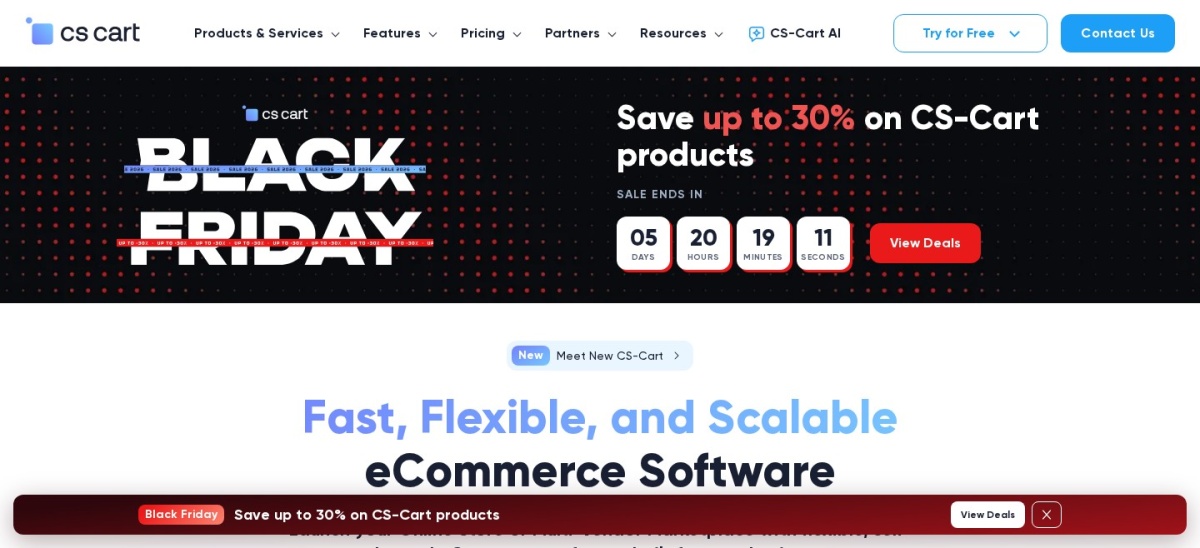
CS-Cart Multi-Vendor is a self-hosted platform for building online marketplaces with several vendors and storefronts in one system. Standard costs $55 a month billed yearly and covers 500-plus features, while the top plan adds unlimited storefronts, warehouses and multi-storefront logistics.
The trade off is that multi-storefront control is locked to the top tier. The top plan costs $275 a month billed yearly, and G2 lists higher annual licence prices than the vendor site, so confirm the current rate before budgeting. It suits marketplace founders who want vendors and storefronts in one install.
What we like
Highest G2 rating here at 4.8 out of 5
500-plus features on the Standard plan
No transaction fee on the software itself
Lifetime licences available as an alternative
Watch out for
Multi-storefront needs the $275 a month Ultimate plan
G2 lists higher licence prices than the vendor site
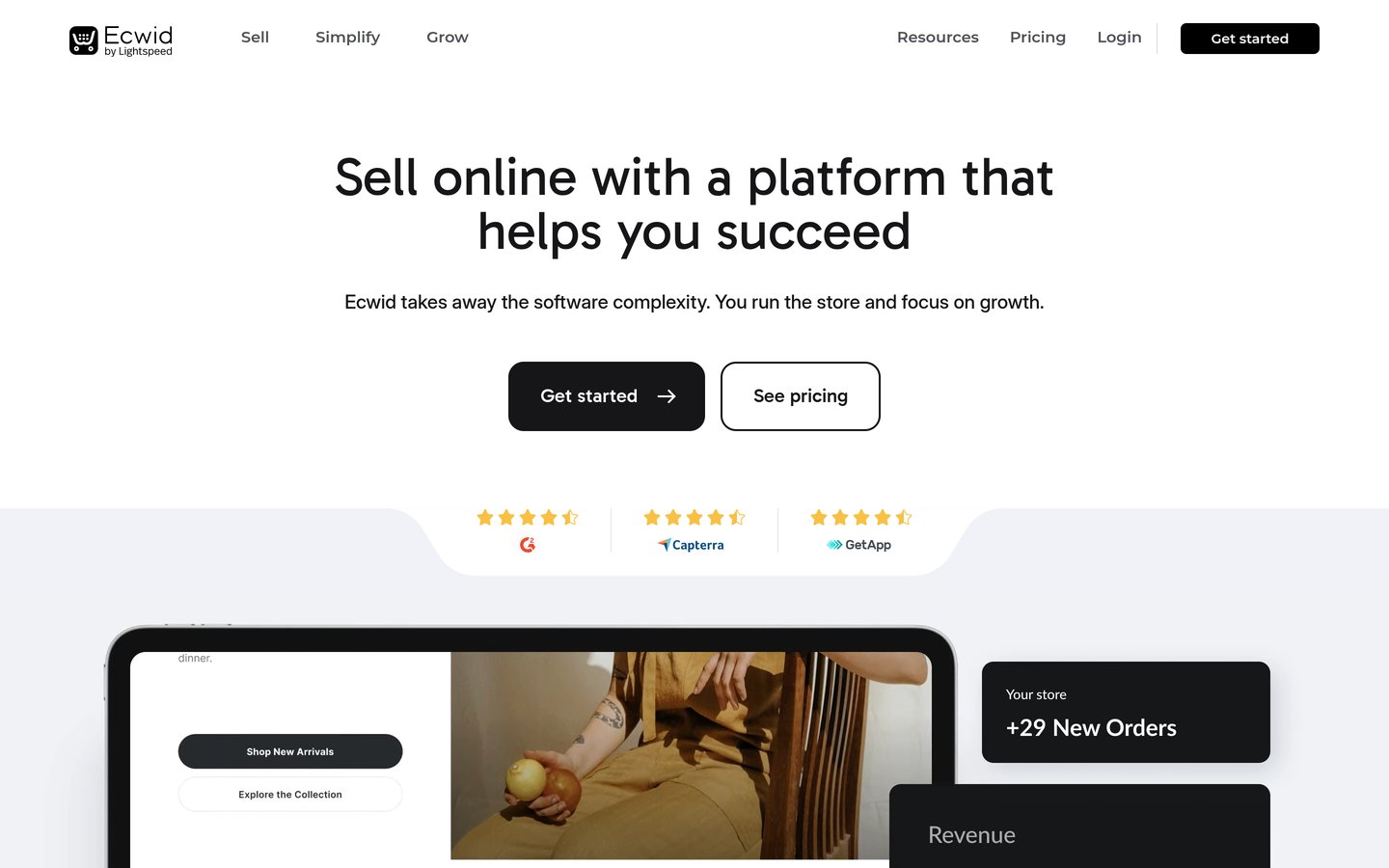
Ecwid, by Lightspeed, is a lightweight store that embeds into an existing website, social profile or marketplace instead of replacing the site. Starter costs $5 a month for up to 10 products, and the same store can appear on several sites, which makes it a cheap way to sell from more than one place.
The trade off is depth. Starter caps products at 10, and Ecwid is less full-featured than Shopify or BigCommerce, with marketplace selling and subscriptions gated to higher plans. It suits small sellers who already have sites and want to add a small store to each one.
What we like
Cheapest paid plan here at $5 a month
Embeds into any existing site or social page
No transaction fee charged by Ecwid
Rated 4.7 out of 5 on G2 from 405 reviews
Watch out for
Starter caps products at 10
No free plan since the 2026 pricing change
Less powerful than Shopify or BigCommerce
Venture at $29 a month adds 100 products and social sellingVisit ecwid.com
09
Squarespace
4.4/5on G2 (1,138 reviews, checked Nov 2026)
Starts at$28/mo
Best for design-led small stores
Cheapest selling planBusiness, $23/mo
Commerce Basic$28/mo, 0% fee
Multi-storeSeparate subscription each
Transaction fee3% on Business
squarespace.com
Squarespace homepage, captured Nov 2026.
Squarespace is a design-led website builder with selling built in, and Commerce Basic costs $28 a month billed yearly with a 0% transaction fee. It covers physical and digital products, subscriptions, gift cards and appointment scheduling, with clean checkout and strong templates.
The trade off is that it is not a multi-store platform. Each store needs its own subscription, there is no shared admin or shared catalogue, and large catalogues and complex B2B selling stretch it. It suits creators and small brands running one or two polished stores.
What we like
Easiest platform here to make look good
Commerce Basic removes the transaction fee
Selling, content and scheduling in one place
Rated 4.4 out of 5 on G2 from 1,138 reviews
Watch out for
No shared multi-store admin or catalogue
Each extra store needs a full subscription
Business plan charges a 3% transaction fee
Commerce Advanced at $52 a month adds subscriptions and advanced shippingVisit squarespace.com
One admin or several subscriptions?
A shared admin saves the most time. BigCommerce, Adobe Commerce, Salesforce B2C Commerce and nopCommerce run several storefronts from one login, so stock, orders and prices stay in one place.
Separate subscriptions are simpler to start but cost more as stores grow. Shopify Basic and Squarespace both work this way, so each extra store is another full monthly bill.
WooCommerce sits in the middle. Multisite shares one WordPress install, but each store still needs its own products, settings and upkeep, so the saving is on hosting and licences, not on management time.
How we chose
We started from platforms with documented multi-store support, either native multi-storefront, WordPress Multisite, expansion stores or an embeddable store, then kept the nine most established options.
Prices come from each vendor pricing page, checked on 25 November 2026. Ratings come from G2 on the same day, except WooCommerce, which comes from WordPress.org. Where a vendor shows a sale, the list shows the regular price.
We left out Shopware, whose paid plans are priced in euros with no US dollar list price. No vendor paid for a place, and we do not claim to have used these tools ourselves.
How to choose an ecommerce platform for multiple stores
Count your stores first, then match the platform to how they will be run.
Count the stores and how they differ. Brands, regions and wholesale channels need separate prices and catalogues. A shared admin matters most when the stores share stock.
Check the per-store cost, not just the entry price. Add the extra-storefront fee or the second subscription to the headline price. A cheap entry plan can cost more than a dearer plan with storefronts included.
Watch the sales caps and quote-only tiers. BigCommerce upgrades Core above $30,000 in annual sales, while Adobe Commerce and Salesforce B2C Commerce need a sales quote, so get the number in writing.
Test the admin with two stores before you commit. Set up a second storefront on a trial and check orders, stock and staff access. See how to set up WooCommerce for the WordPress route.
FAQ
What is the best ecommerce platform for multiple stores?
BigCommerce is the best pick for most sellers. Its Core plan costs $29 a month billed yearly, extra storefronts cost $30 a month each, and the prices are published, so a multi-store setup can be budgeted without a sales call.
How many stores does Shopify Plus include?
Shopify Plus includes 9 expansion stores plus 1 primary store, for 10 storefronts under one organisation admin. Plus starts from $2,300 a month on a contract, and each expansion store carries its own cost.
Can WooCommerce run multiple stores?
Yes. WordPress Multisite lets one WordPress install run several independent WooCommerce stores, each with its own products and settings. The core plugin is free, but hosting and paid extensions add cost to every store.
Which ecommerce platform is free for multiple stores?
WooCommerce and nopCommerce are the free options here. WooCommerce core is free on WordPress Multisite, and nopCommerce is free open-source software with multi-store built in, though both need hosting and upkeep.
Is multi-storefront included in BigCommerce Core?
No. Core includes one storefront, and extra storefronts are a paid add-on at $30 a month each, up to 3 on Core. Growth allows up to 5 extra storefronts at $50 a month each.
Do I need a separate subscription per store on Squarespace?
Yes. Squarespace has no shared multi-store admin, so each store needs its own subscription, starting with Business at $23 a month billed yearly or Commerce Basic at $28 a month billed yearly.
SaaS SEO and WordPress specialist with about 8 years of experience. Rakib compares WordPress plugins, themes, hosting and software using public pricing, documentation and user reviews. See how we rank.