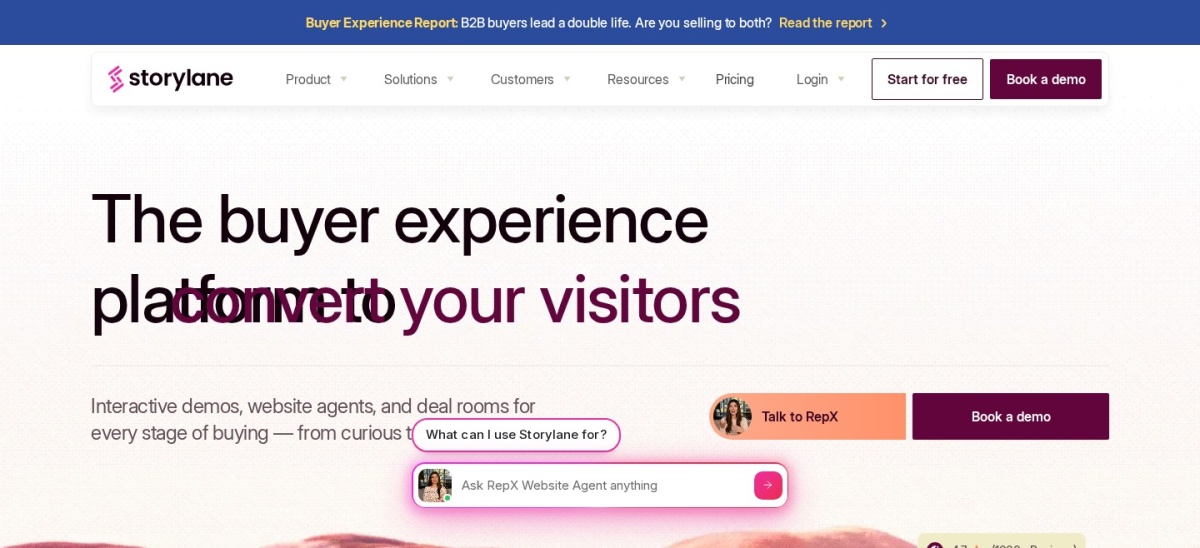
Storylane is the best demo software for most sales teams, with a free plan, Starter at $40 a month billed yearly, and a 4.7 out of 5 rating from 1,593 G2 reviews. Pick Navattic for the most lifelike HTML demos and Consensus for video demos that show which buyers watched.
How we make this list: we compare pricing pages, product documentation and public user reviews, then re-check every price before each update. No product paid for a place. Disclosure.
Storylane is the cheapest way in: a free plan, then $40 a month billed yearly, with the largest review base here at 1,593 G2 reviews.
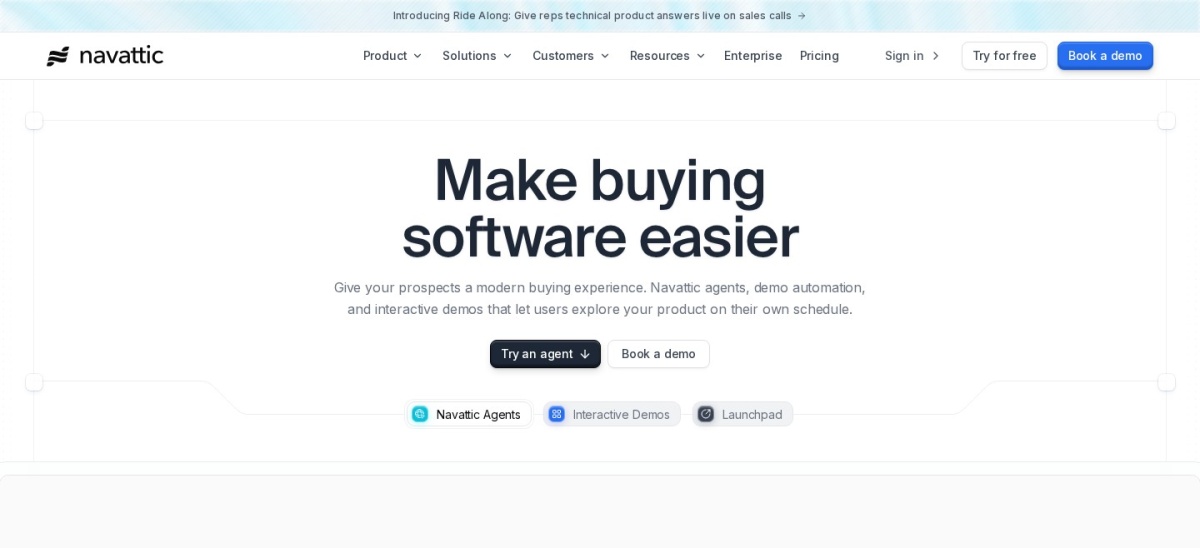
Navattic has the highest G2 rating in this list at 4.8 out of 5, but its first paid plan jumps straight to $500 a month.
Consensus starts at $600 a month and tracks which stakeholders watch each demo, which suits teams selling to buying committees.
Supademo and Arcade both have free plans and paid plans under $60 a month, so small teams can start without a sales call.
Saleo, Demoboost and Demostack are enterprise tools: Saleo and Demostack publish no prices, and Demoboost starts at $375 a month.
What sales teams should look for in demo software
A sales demo has one job: let a prospect see the product working without a live call going wrong. The best tools record your product once, then let buyers click through it on their own time.
Formats matter more than feature lists. Screenshot tours are fast to build, HTML demos feel like the real product, and video demos work when a buyer will not click at all.
Check where the demo lives. Website embeds catch buyers early, while shareable links with viewer tracking help reps follow up with the people who actually watched.
CRM links decide whether demo data reaches sales. Our guide on creating a contact form in WordPress covers the same capture problem on a smaller scale: if the lead data never reaches the CRM, the demo did not sell anything.
Storylane is an interactive demo platform that builds screenshot, video and HTML demos from one workspace, so a sales team can cover website embeds, follow-up links and onboarding tours without a second tool. The free plan includes one published demo with unlimited views, and Starter at $40 a month billed yearly adds unlimited demos, AI avatars and account reveal.
The trade off is the gap between Starter and Growth. HTML demos, personalization tokens and A/B testing start on Growth at $500 a month billed yearly, and Salesforce waits until Premium at $1,200 a month. It suits small and mid-size sales teams that want fast demos now and can live without HTML editing at first.
Navattic is a demo automation platform that captures your product as working HTML, so visitors click through the real interface instead of watching a video. The free Starter plan includes 1 seat, 1 demo, unlimited views, basic analytics and AI Copilot. Paid plans add integrations with Salesforce and Marketo, sandbox demos and A/B testing.
The trade off is the jump from free to paid. There is no paid plan between the free Starter plan and Base at $500 a month billed yearly, or $600 billed monthly, so a team that outgrows one demo faces a steep step up. It suits marketing-led teams that want one polished HTML demo on their site without paying first.
What we like
Highest G2 rating in this list at 4.8 out of 5
HTML demos included on the free plan
Unlimited views on every plan
Salesforce and Marketo integrations on Base
Watch out for
No paid plan between free and $500 a month
Sales integrations and SSO sit on higher plans
Reviewers note a learning curve for new builders
Base adds unlimited HTML demos, integrations and a dedicated CSMVisit navattic.com
03
Consensus
4.7/5on G2 (1,723 reviews, checked Nov 2026)
Starts at$600/mo
Best for video demos that reveal buyer intent
Free planNo
Demo formatsVideo and product tours
Buyer analyticsYes, stakeholder tracking
Paid planStarter, $600/mo
goconsensus.com
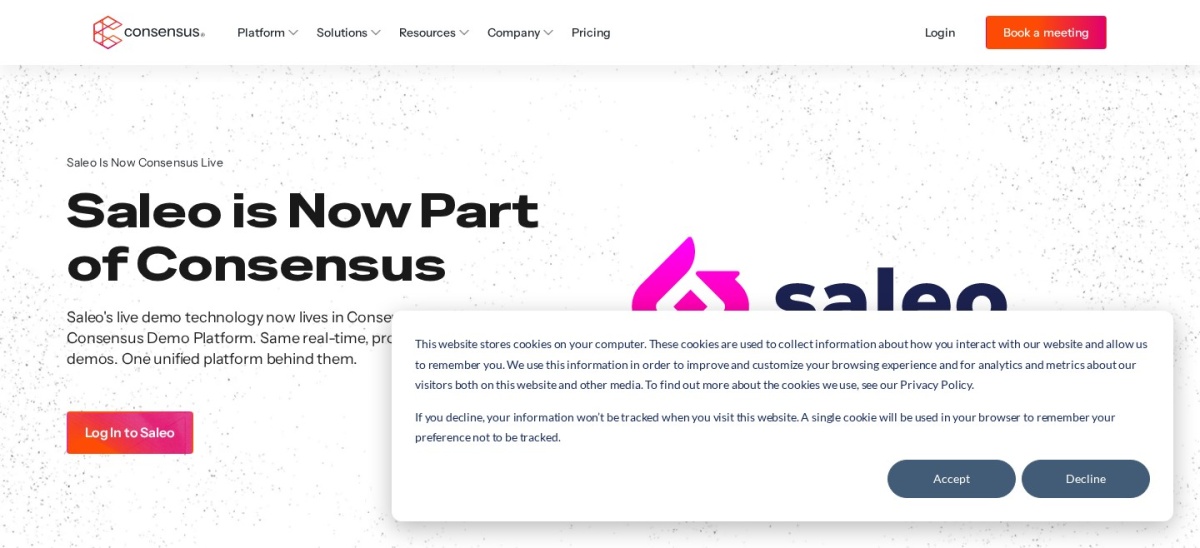
Consensus homepage, captured Nov 2026.
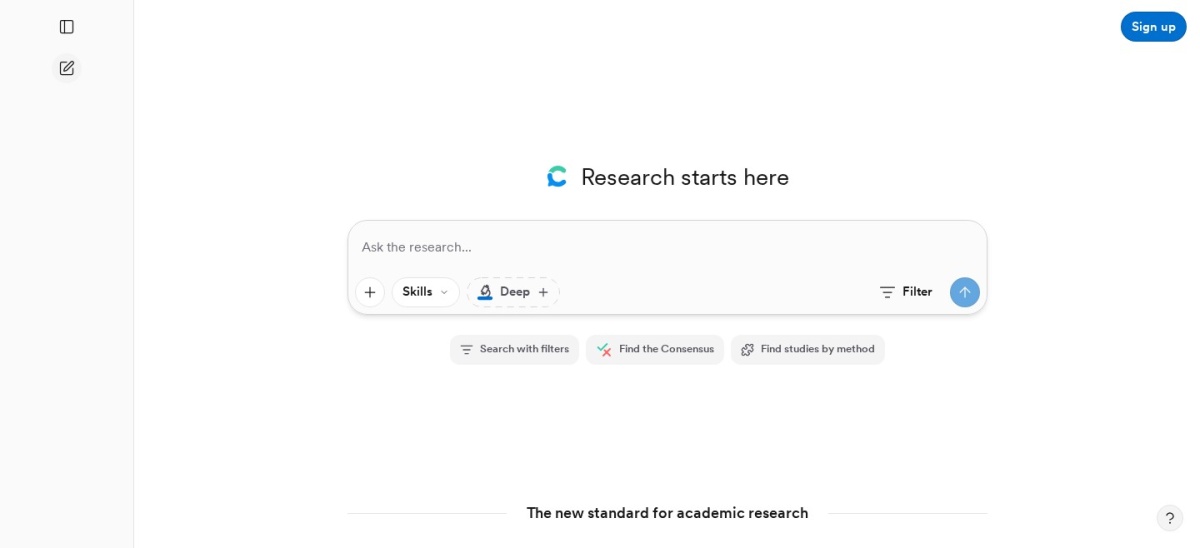
Consensus is a demo automation platform built around video demos that buyers watch on their own time, with tracking that shows which stakeholders viewed each part. Starter at $600 a month covers 5 users and includes video demos, product tours and marketing analytics. Pro at $1,250 a month adds personalized sales links, CRM integrations and API access.
The trade off is the lack of a free plan and the enterprise shape of the pricing. There is no way to try the product without a sales conversation, and the features sales teams want most sit on Pro or Enterprise. It suits mid-market and enterprise teams selling to committees where knowing who watched matters.
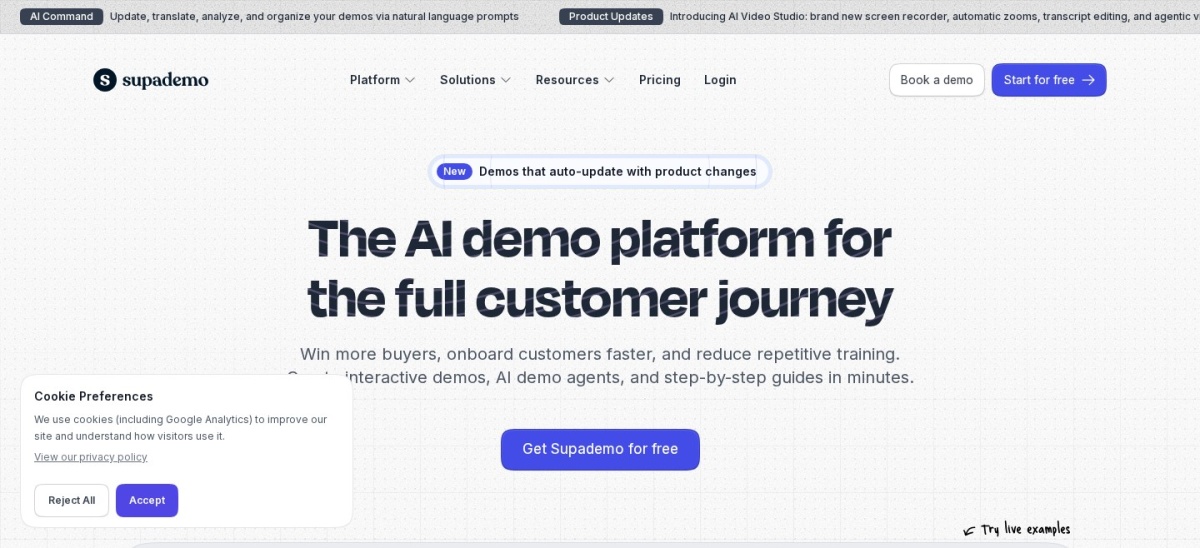
Supademo is an interactive demo builder that turns a screen capture into a clickable product tour with a Chrome extension or desktop app. The free plan includes 5 interactive demos and 50 video recordings, and Scale at $38 per creator a month billed yearly adds unlimited demos, branching, tracking links and analytics.
The trade off is depth. HTML demos start on Business at $199 a month billed yearly, and sandbox demos wait until Growth at $350 a month, so teams that outgrow screenshot tours face steep jumps. It suits small sales teams that need polished click-through demos fast and cheap.
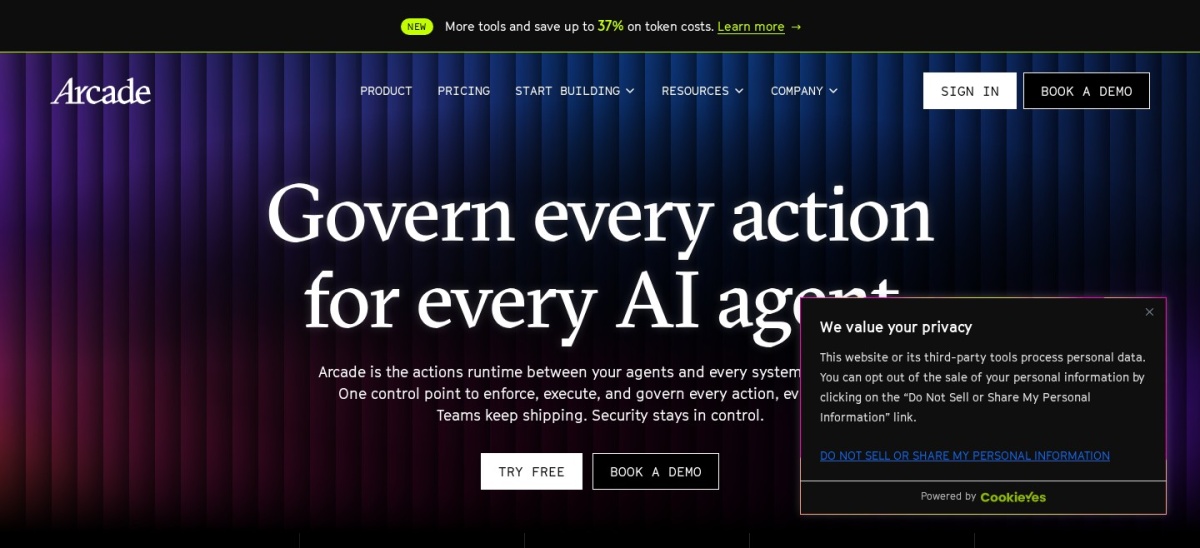
Arcade is an interactive demo platform that builds polished product stories from screen recordings, with hotspots, callouts, branching paths and AI voiceover. The free plan covers 3 demos with 720p export, and Pro at $59 a month adds 1,000 credits a month, videos up to 5 minutes, 4K exports and no watermark.
The trade off is that the deeper demo features sit higher up. HTML capture, branching and advanced analytics were on the Growth tier, and the current Pro plan at $59 a month replaced older per-user pricing, so check the plan page before buying. It suits product marketing teams that need visual demos fast.
What we like
Fastest demo creation in this list by most accounts
AI voiceover and video generation included
Free plan with 3 published demos
Used by large teams including Zapier and Wrike
Watch out for
Pro price changed in November 2026, so older $32 quotes are stale
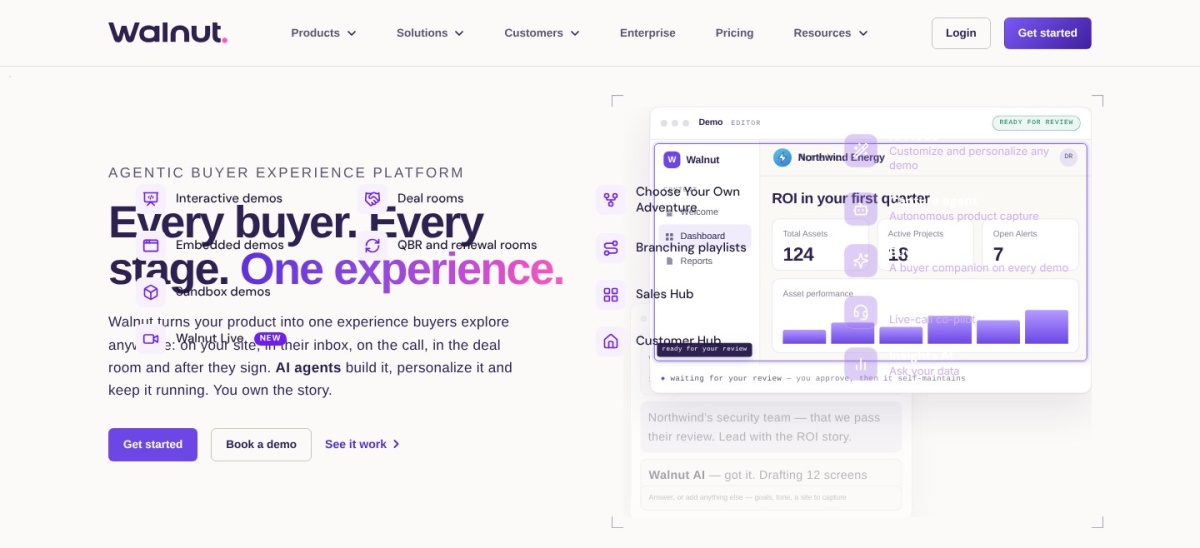
Walnut is an interactive demo platform built for sales-led teams, with AI-built product tours that reps personalize for each prospect without rebuilding them. Ignite at $575 a month billed yearly includes 3 editor seats and 3 presenter seats, unlimited demos and CRM integrations with Salesforce, HubSpot and Marketo.
The trade off is price and the lack of a free plan. There is no self-serve trial tier, and Accelerate at $1,550 a month adds the sandbox demos and personalization most teams want next. It suits sales organizations with dedicated presales staff and a steady flow of live demos.
What we like
Built for sales teams, not just marketing
Personalize one demo per prospect quickly
Salesforce, HubSpot and Marketo integrations
Deal Rooms gather demos and docs for buyers
Watch out for
No free plan to try before buying
Ignite price is reported as $750 in some sources
Reviewers flag slow demos and editor friction
Accelerate adds sandbox demos and personalizationVisit walnut.io
07
Saleo
4.9/5on G2 (232 reviews, checked Nov 2026)
PricingCustom/yr
Best for live demos with real product data
Free planNo
Demo formatLive product overlay
Data injectionYes, AI-generated
Paid planCustom quote
saleo.io
Saleo homepage, captured Nov 2026.
Saleo is a live demo platform that overlays realistic, personalized data on your actual product during sales calls, using a Chrome extension instead of a staging environment. Reps show the real product with clean demo data, masked features and prospect-specific values, and it holds ISO 27001 certification.
The trade off is cost and access. Saleo publishes no prices, third-party estimates put entry at about $20,000 a year, and there is no free plan or self-serve trial. It suits enterprise sales engineering teams running many live demos a month where fake data would break trust.
Demoboost is a demo automation platform that covers six formats in one place: HTML tours, sandbox demos, live overlays, screenshot demos, mobile demos and video demos. Start Up at $375 a month covers 2 seats with HTML tours, screenshot, mobile and video demos, and it is popular with European presales teams.
The trade off is that the formats buyers want most are gated higher. Sandbox demos start on Growth at $1,200 a month and live overlays are Enterprise-only, while reviewers flag slow demo loading and editor lag. It suits presales-led teams that need every format under one contract.
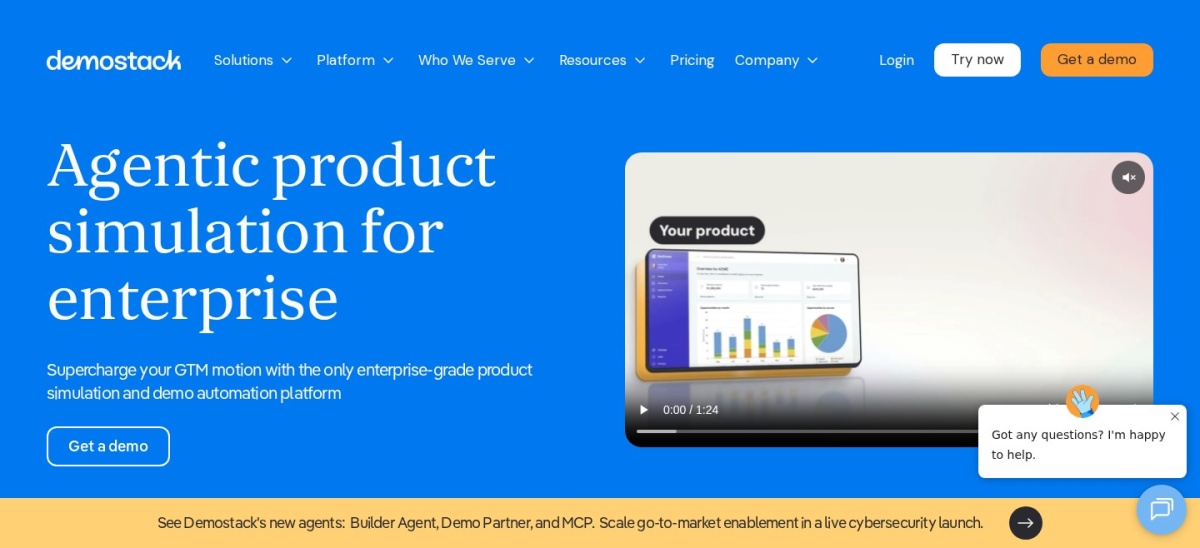
Demostack is a demo environment platform that clones your web app into a live, editable sandbox, so buyers explore a working copy without touching production. G2 lists a Basic plan at $25,000, and the platform adds product tours, demo analytics and AI personalization on top of the clone.
The trade off is cost and upkeep. Third-party reports put real entry prices near $55,000 a year, and every product release can mean recapturing the clone, which reviewers flag as ongoing work. It suits enterprise teams with dedicated sales engineers and complex products.
What we like
Only full product clone in this list
Buyers explore freely instead of following a script
Strong support scores on G2 at 9.5 out of 10
Governance and account analytics included
Watch out for
Smallest review base here at 80 G2 reviews
Entry price reported near $55,000 a year elsewhere
Free plans in this list cover one to five demos, which is enough to test the format with a real prospect. Storylane, Navattic, Supademo and Arcade all let you publish at least one demo without paying.
Paid plans mostly add volume and depth. You get unlimited demos, HTML editing, CRM links, sandbox environments and viewer analytics.
The enterprise tools skip free plans entirely. Saleo and Demostack publish no prices at all, Walnut and Consensus start at $575 and $600 a month, and Demoboost starts at $375 a month with no free trial.
For a team running a few demos a month, a $40 to $59 plan covers most needs. For a team running live demos every day, the enterprise tools earn their price by removing staging work and failed live demos.
How we chose
We started from the demo automation tools with the largest G2 review bases and published pricing, then kept the nine that fit sales teams: interactive demos, live demos and video demos with CRM links.
Prices come from each vendor's pricing page and G2 pricing data, checked on 25 November 2026. Ratings and review counts come from G2 on the same day. Where a vendor shows a sale, the list shows the regular price.
We left out tools with no public G2 rating and quote-only tools with no price signal at all. No vendor paid for a place, and we do not claim to have used these tools ourselves.
How to choose demo software for your sales team
Start with how your buyers actually want to see the product, then match the format and the budget to that.
Pick the format your buyers prefer. Screenshot tours suit quick follow-ups, HTML demos suit website visitors, and video suits buyers who will not click through a tour.
Check the free plan first. Storylane, Navattic, Supademo and Arcade all publish a demo for free. Build one real demo before you talk to any sales team.
Confirm the CRM link you need. HubSpot and Salesforce links sit on different tiers in most tools, so check the plan page for the integration your team uses.
Count the seats, not just the price. Most tools price per creator or per seat, so a $40 plan for one person can cost far more once five reps build demos.
FAQ
What is the best demo software for sales teams?
Storylane is the best pick for most sales teams. It covers screenshot, video and HTML demos from $40 a month billed yearly, has a free plan, and holds a 4.7 out of 5 rating from 1,593 G2 reviews.
Is there free demo software for sales teams?
Yes. Storylane, Navattic, Supademo and Arcade all have free plans that let you publish one to five demos. Supademo is the most generous, with five demos and 50 video recordings on its free plan.
How much does demo software cost?
Self-serve tools start at $38 to $59 a month, with Storylane at $40 and Supademo at $38 per creator. Mid-tier plans run $375 to $600 a month, while enterprise tools such as Saleo and Demostack start near $20,000 a year.
What is the difference between an interactive demo and a live demo?
An interactive demo is a recorded tour a buyer clicks through alone, while a live demo happens on a call with a rep driving. Tools such as Saleo overlay demo data on the live product during calls, while Storylane and Navattic focus on tours buyers watch alone.
Do these tools connect to a CRM?
Most do. Storylane links to HubSpot on Starter, Navattic links to Salesforce and Marketo on Base, and Supademo links to HubSpot and Salesforce on Scale. Consensus needs its Pro plan for CRM integrations.
Which demo tool is best for enterprise sales teams?
Saleo is the best pick for live demos, with a 4.9 out of 5 G2 rating and data overlays on the real product. Demostack fits teams that need full product clones, and Consensus fits teams selling to large buying committees.
SaaS SEO and WordPress specialist with about 8 years of experience. Rakib compares WordPress plugins, themes, hosting and software using public pricing, documentation and user reviews. See how we rank.