Best CRM Tools for Creators in 2026: 8 Tools Compared
WLWPLegible EditorsLast verified 22 Nov 2026How we rank8 min read
★ Short answer
HoneyBook is the best CRM for creators because its Starter plan ($360/yr) bundles unlimited clients, proposals, e-signature contracts, invoices, and a branded client portal. Solo creators on a tighter budget should pick Bonsai ($108/yr) or Notion's free workspace.
How we make this list: we compare pricing pages, product documentation and public user reviews, then re-check every price before each update. No product paid for a place. Disclosure.
HoneyBook starts at $30/mo billed annually ($360/yr) for unlimited clients, contracts, invoices, and a client portal.
Bonsai undercuts other client-workflow CRMs at $9/user/mo billed annually ($108/yr), though contracts and invoicing start on Essentials at $19/mo ($228/yr).
Notion and HubSpot CRM both offer permanent free plans for solo creators, while HubSpot's regular Starter price is $20/seat/mo ($240/yr).
Dubsado requires a $335/yr Starter plan, and automated sponsorship workflows sit on its $525/yr Premier tier.
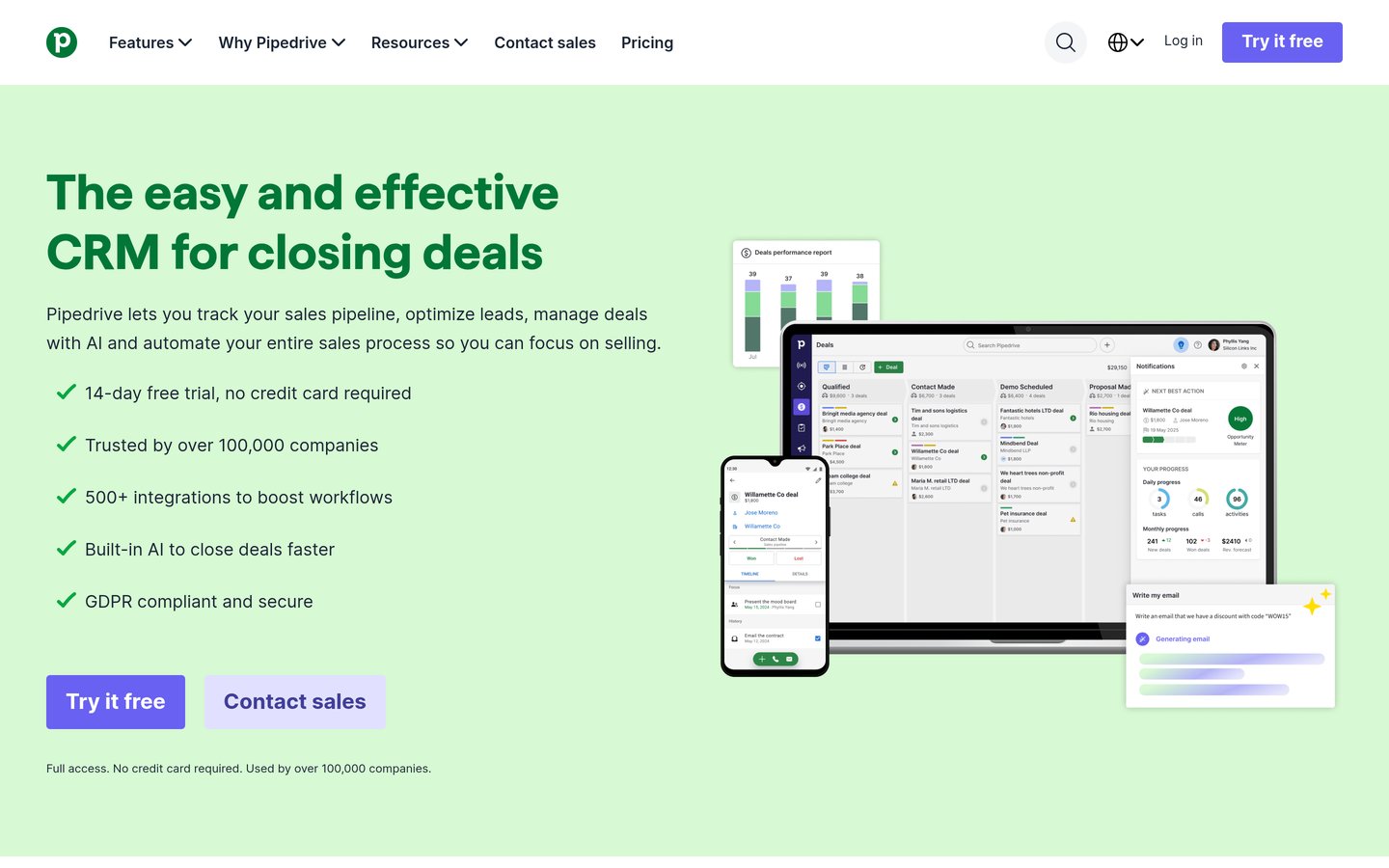
Pipedrive ($168/yr) and Zoho CRM ($168/yr) give high-volume sponsorship sellers structured deal pipelines at under $200/yr.
What creators need from a CRM
Most traditional CRMs assume an outbound sales team chasing hundreds of B2B leads. Content creators run a different workflow: managing a smaller roster of brand managers, talent agencies, podcast guests, and recurring sponsors across email and social DMs.
The biggest friction point in creator sponsorships is post-pitch administration. Once a brand says yes, you still need a scope of work, usage-rights contract, deliverable deadline tracker, and an invoice that accepts ACH or card payments without chasing net-30 reminders manually.
Because creator businesses vary from solo YouTubers to multi-channel production studios, the best options fall into three buckets: all-in-one client workflow suites (HoneyBook, Bonsai, Dubsado), flexible relational databases (Notion, Airtable), and pipeline-first sales CRMs (HubSpot, Pipedrive, Zoho CRM).
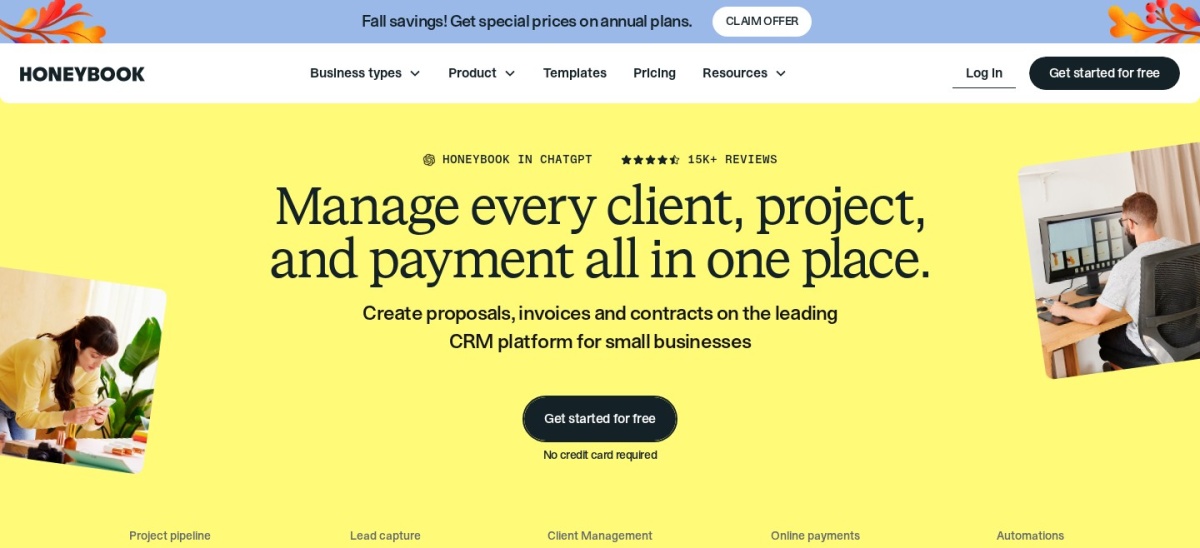
HoneyBook is a client relationship and booking platform built for independent creatives. Its Starter plan ($30/mo billed annually, or $360/yr) includes unlimited clients and projects, customizable pipelines, proposals, e-signature contracts, invoices, a branded client portal, and up to 2 live lead forms.
The trade off is that there is no permanent free tier, and automated pipeline workflows plus 10 lead forms require upgrading to Essentials at $38/mo billed annually ($456/yr). It suits full-time creators who close regular sponsorships and want pitches, contracts, and payouts in one place.
What we like
Combines proposals, contracts, and invoicing in a single client file
Unlimited clients and projects on every tier
Branded client portal keeps briefs and approvals organized
30-day free trial with no credit card required
Watch out for
No permanent free plan
Pipeline automations require the $38/mo Essentials plan
Card and ACH processing fees apply on top of the subscription
Essentials ($38/mo billed annually) adds pipeline automations, QuickBooks sync, and 2 team seats.Visit honeybook.com
Bonsai is a freelancer and creator business suite covering client tracking, proposals, contracts, time tracking, and invoicing. Its Basic plan costs $9/user/mo billed annually ($108/yr, or $15/mo monthly) and includes unlimited clients, unlimited projects, task management, time tracking, and mobile apps.
The trade off is that proposals, e-signature contracts, invoicing, expense tracking, and the client portal are locked behind Essentials at $19/user/mo billed annually ($228/yr, or $25/mo monthly). It suits solo creators who want affordable per-seat pricing without agency bloat.
What we like
Lowest annual entry price among dedicated client-management suites
Built-in income and expense tracking for creator tax prep
Unlimited clients and projects even on the $9/mo Basic tier
Clean proposal-to-contract-to-invoice handoff on Essentials
Watch out for
Basic plan lacks invoicing, contracts, and the client portal
No permanent free tier
Fewer native marketing integrations than HubSpot
Essentials ($19/user/mo billed annually) unlocks proposals, contracts, invoicing, and the client portal.Visit hellobonsai.com
03
Notion
4.6/5on G2 (14,011 reviews, checked Nov 2026)
Paid from$10/mo
Best free workspace for content and sponsor tracking
Entry price$10/seat/mo billed annually ($120/yr)
Free planYes (unlimited blocks for individuals)
ViewsTable, Kanban board, calendar, timeline
Forms & chartsBasic forms free; custom forms on Plus
notion.com
Notion homepage, captured Nov 2026.
Notion is an all-in-one workspace where creators build custom sponsorship trackers alongside scripts, media kits, and production calendars. The Free plan costs $0 for individuals and includes relational databases, Kanban deal boards, basic inbound forms, and calendar sync.
The trade off is that Notion has no native invoicing, e-signatures, or email logging, and removing Notion branding from inbound sponsor forms requires Plus at $10/seat/mo ($120/yr). It suits creators who already plan videos or newsletters in Notion and want one connected hub.
What we like
Generous $0 forever-free tier for solo creators
Links sponsor deals directly to video scripts and publishing dates
Hundreds of ready-made creator CRM templates
Low $10/seat/mo upgrade path on Plus
Watch out for
No built-in invoicing, payment processing, or legal e-signatures
Requires manual setup to mirror a true sales pipeline
Does not automatically log Gmail or Outlook threads
Plus ($10/seat/mo) removes Notion form branding and adds custom sites, charts, and larger file uploads.Visit notion.com
04
HubSpot CRM
4.4/5on G2 (14,407 reviews, checked Nov 2026)
Paid from$20/mo
Best free traditional CRM with email tracking
Entry price$20/seat/mo regular ($240/yr)
Free planYes (up to 2 users, 1,000 contacts)
Pipelines1 free; up to 15 on Starter
Meeting linkIncluded on Free and Starter
hubspot.com
HubSpot CRM homepage, captured Nov 2026.
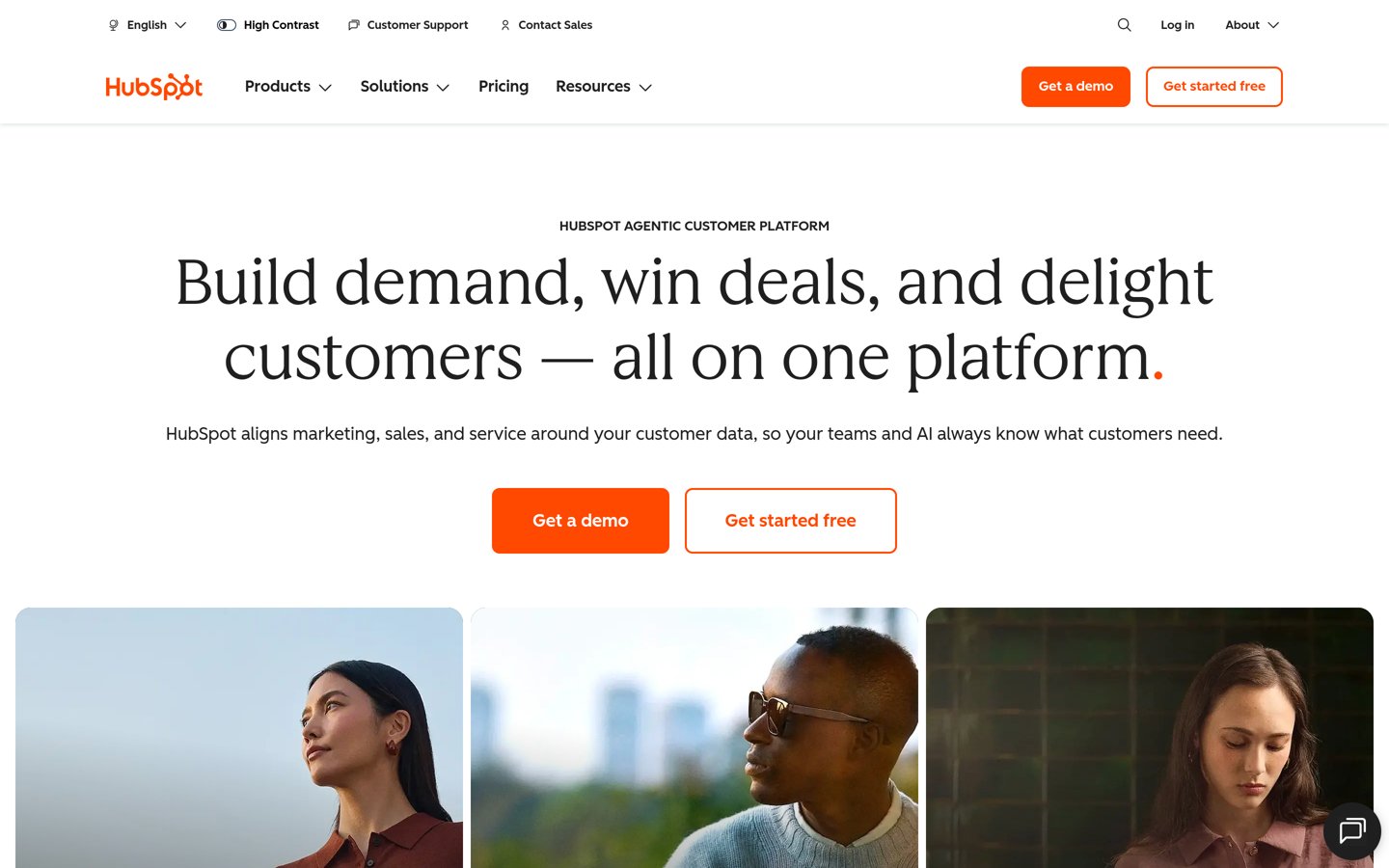
HubSpot CRM is a cloud customer platform that pairs contact records with visual deal pipelines, meeting scheduling links, and Gmail or Outlook logging. Its Free plan supports up to 2 users and 1,000 contacts with 1 deal pipeline, forms, and 3 email templates.
The trade off is that HubSpot Starter carries a regular price of $20/seat/mo ($240/yr, though new customers often see limited-time $7–$10/mo introductory offers), and automated email sequences jump to Professional at $90–$100/seat/mo plus a $1,500 onboarding fee. It suits creators managing high-volume outbound brand pitches.
What we like
Free plan covers 2 users and 1,000 brand contacts with no time limit
Logs Gmail and Outlook sponsorship emails directly to brand records
Includes a built-in discovery-call scheduling link
Scales cleanly if a creator launches a talent agency
Watch out for
Regular Starter price is $20/seat/mo once introductory promos expire
Automated outreach sequences require the expensive Professional tier
B2B terminology (leads, opportunities) feels heavy for solo creators
Starter ($20/seat/mo regular price) unlocks up to 15 pipelines, 10,000 email templates, and removes HubSpot branding.Visit hubspot.com
05
Dubsado
4.2/5on G2 (77 reviews, checked Nov 2026)
Starts at$335/yr
Best for custom-branded client portals and workflows
Entry price$335/yr Starter ($35/mo monthly)
Free planNo (21-day free trial)
Automation & schedulerPremier only ($525/yr)
Team seats3 additional users included
dubsado.com
Dubsado homepage, captured Nov 2026.
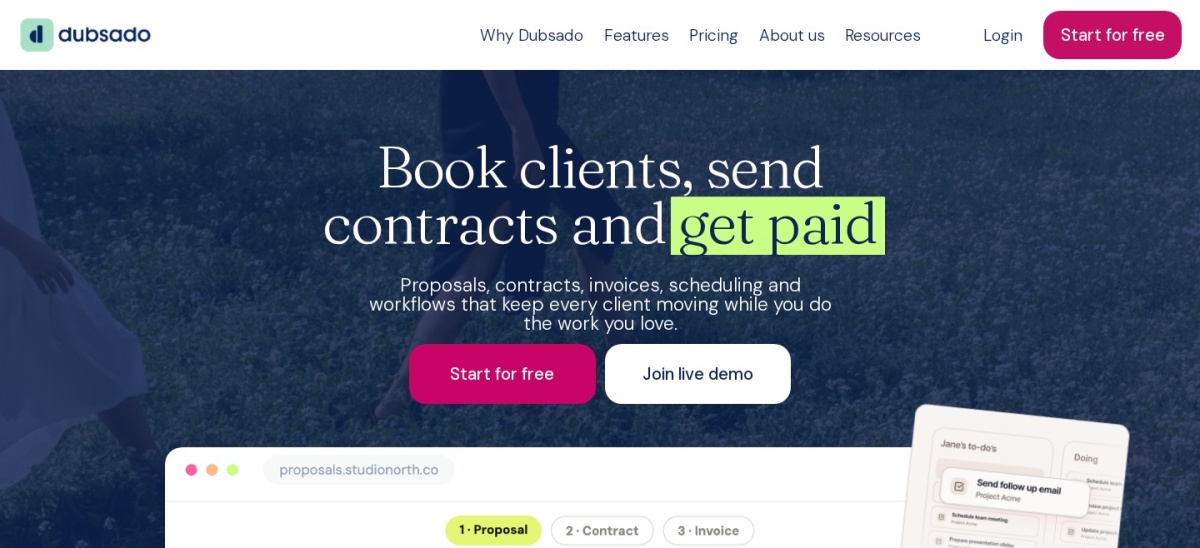
Dubsado is a client management platform built around custom forms, proposals, contracts, invoicing, and client portals. Its Starter plan costs $335/yr (or $35/mo billed monthly) and includes unlimited projects and clients, payment plans, canned emails, and 3 extra user seats at no charge.
The trade off is a steep initial setup curve, and both appointment scheduling and automated multi-step workflows are restricted to the Premier plan at $525/yr ($55/mo). It suits established creators or boutique talent managers who want white-labeled brand portals.
What we like
Includes 3 extra team seats without per-user fees
Strong white-label customization for sponsor portals and proposals
Supports installment payment plans on Starter
21-day free trial of Premier with no credit card required
Watch out for
Automated workflows and scheduler require the $525/yr Premier tier
Initial template and workflow setup takes several hours
No permanent free plan
Premier ($525/yr) adds automated multi-step workflows, appointment scheduling, and Zapier integration.Visit dubsado.com
06
Airtable
4.6/5on G2 (3,306 reviews, checked Nov 2026)
Paid from$20/mo
Best relational database for multi-channel creators
Entry price$20/seat/mo billed annually ($240/yr)
Free planYes (up to 5 editors, 1,000 records/base)
Automation runs100/mo free; 25,000/mo on Team
Storage1 GB/base free; 20 GB/base on Team
airtable.com
Airtable homepage, captured Nov 2026.
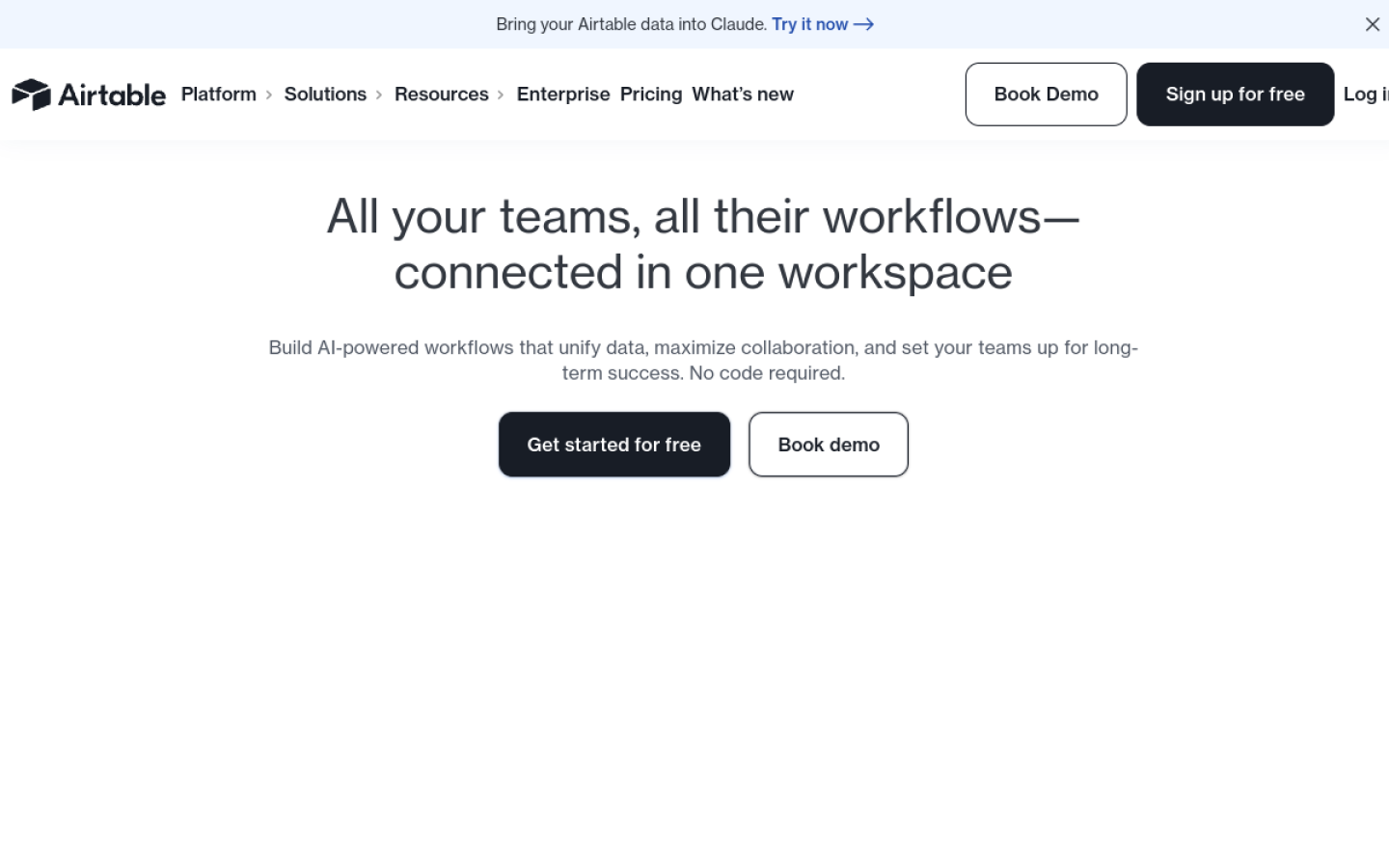
Airtable is a no-code relational database that lets creators link brand contacts to individual campaigns, deliverables, promo codes, and payout dates. Its Free plan supports up to 5 editors, 1,000 records per base, 100 automation runs per month, and custom intake forms.
The trade off is that moving past 1,000 records per base or unlocking timeline views and 25,000 monthly automations costs $20/seat/mo billed annually ($240/yr, or $24/mo monthly), and it still lacks native invoicing. It suits data-minded creators tracking hundreds of affiliate and sponsorship deliverables.
What we like
Relational tables link brands, campaigns, and deliverables cleanly
Free tier covers up to 5 editors and 1,000 records per base
Interface Designer creates clean status dashboards for managers
Read-only collaborators and form submissions are free
Watch out for
No native invoicing, e-signatures, or payment collection
Per-seat pricing adds up quickly for larger production teams
Requires thoughtful table design before scaling
Team ($20/seat/mo billed annually) raises limits to 50,000 records per base, 20 GB attachments, and 25,000 automations.Visit airtable.com
07
Pipedrive
4.3/5on G2 (5,129 reviews, checked Nov 2026)
Starts at$14/mo
Best visual sales pipeline for outbound brand pitching
Entry price$14/seat/mo billed annually ($168/yr)
Free planNo (14-day free trial)
Deal cap2,500 open deals per seat on Lite
AutomationsFrom Growth ($39/seat/mo annual)
pipedrive.com
Pipedrive homepage, captured Nov 2026.
Pipedrive is a pipeline-first sales CRM designed to keep outbound pitches moving with activity reminders and visual deal stages. Its Lite plan costs $14/seat/mo billed annually ($168/yr, or $24/mo monthly) and includes up to 2,500 open deals per seat, calendar sync, and AI report building.
The trade off is that there is no permanent free plan, and email sequences, full inbox sync, and workflow automations require Growth at $39/seat/mo billed annually ($468/yr), while e-signature documents cost extra. It suits creators or creator-led media brands actively pitching sponsors every week.
What we like
Intuitive drag-and-drop deal board built around next-step reminders
Affordable $168/yr entry tier for a solo creator
Strong mobile app for logging sponsor calls and events on the go
500+ third-party integrations including Zapier and Google Workspace
Watch out for
No forever-free plan (14-day trial only)
Email sequences and automations jump to $39/seat/mo
Smart Docs for proposals and e-signatures require higher tiers or add-ons
Growth ($39/seat/mo billed annually) adds full two-way email sync, sequences, and 50 active automations.Visit pipedrive.com
08
Zoho CRM
4.1/5on G2 (2,962 reviews, checked Nov 2026)
Paid from$14/mo
Best budget CRM with workflow rules and multi-app sync
Entry price$14/user/mo billed annually ($168/yr)
Free planYes (up to 3 users, 5,000 records)
PipelinesMultiple pipelines on Standard
EcosystemConnects to Zoho Invoice and Books
zoho.com
Zoho CRM homepage, captured Nov 2026.
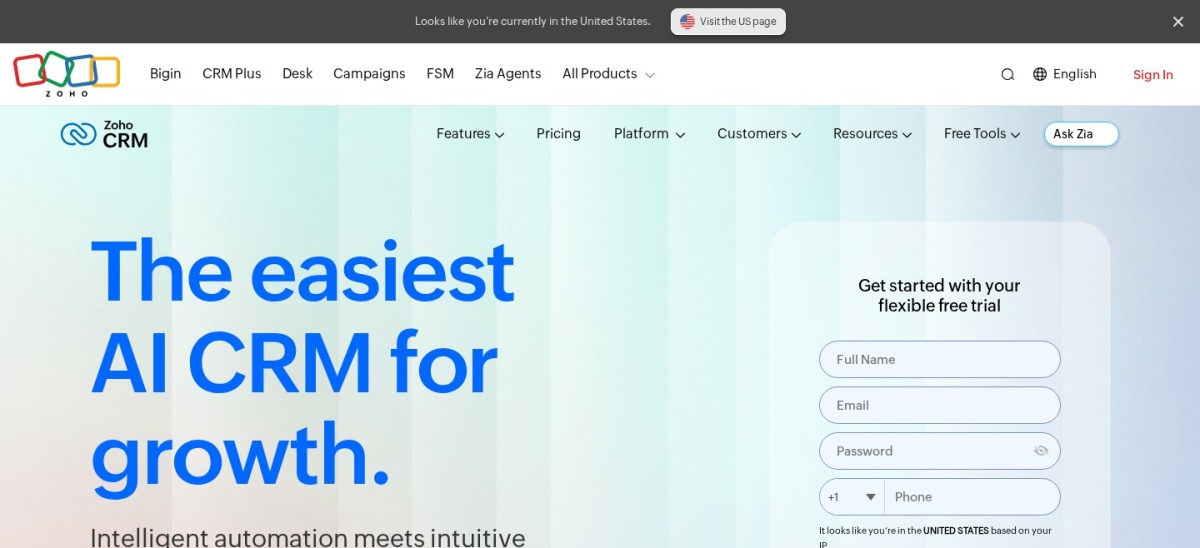
Zoho CRM is a full-featured sales CRM that connects directly to Zoho's wider suite, including Zoho Invoice and Zoho Books. Its Free edition supports up to 3 users and 5,000 records with basic workflow rules, while Standard costs $14/user/mo billed annually ($168/yr, or $20/mo monthly) for multiple pipelines and 100,000 records.
The trade off is a denser, more corporate interface than HoneyBook or Notion, and built-in AI assistant tools sit on Enterprise at $40/user/mo ($480/yr). It suits budget-conscious creators or small talent teams who want multi-pipeline tracking under $200/yr.
What we like
Forever-free tier supports up to 3 users and 5,000 records
Standard tier at $168/yr includes multiple pipelines and workflow rules
Pairs cleanly with Zoho Invoice for billing brand sponsors
High customization with custom fields and modules
Watch out for
Interface feels busier and more corporate than creator-first tools
Zia AI features require the $40/user/mo Enterprise edition
Initial setup involves navigating many enterprise settings
Standard ($14/user/mo billed annually) expands storage to 100,000 records and unlocks multiple pipelines and forecasting.Visit zoho.com
How we chose
We evaluated creator-focused client management suites, flexible no-code databases, and lightweight sales CRMs used by solo creators, podcasters, and small talent teams to track brand sponsorships from pitch to payout.
All prices, plan limits, G2 ratings, and review counts were verified directly against vendor pricing pages and G2 product listings on 22 Nov 2026, using regular annual-billed USD rates rather than temporary introductory discounts.
We excluded enterprise-only CRMs with high seat minimums or mandatory multi-thousand-dollar onboarding fees, as well as early-stage creator tools without established public review histories. No vendor paid for a place, and we do not claim testing for this list.
How to choose a CRM as a creator
Match the CRM category to how you currently close and deliver brand deals:
Pick a client-workflow suite if contracts and invoices slow you down. Choose HoneyBook, Bonsai, or Dubsado when your bottleneck is sending proposals, collecting e-signatures, and getting paid without juggling separate apps.
Pick a database workspace if your deals live beside content calendars. Choose Notion or Airtable if you already manage video scripts, podcast guests, and publishing dates in boards and want a free or low-cost sponsor tracker.
Pick a pipeline CRM if you send high-volume outbound pitches. Choose HubSpot CRM, Pipedrive, or Zoho CRM when you pitch dozens of brands a month and need email open tracking, follow-up reminders, and stage conversion reports.
Check automation gates and payment fees before committing. Verify whether automated follow-ups sit on the entry plan or a higher tier, and compare card and ACH processing fees if you invoice sponsors directly through the CRM.
FAQ
What is the best free CRM for content creators?
Notion and HubSpot CRM offer the strongest forever-free plans for creators. Notion is best for organizing brand deals alongside scripts and content calendars at $0 for individuals, while HubSpot CRM gives up to 2 users a dedicated deal pipeline, meeting link, and Gmail or Outlook logging.
Do creators need a traditional sales CRM or a client management tool?
Creators who close 2 to 15 custom sponsorships a month usually benefit more from client management tools like HoneyBook or Bonsai because they include proposals, e-signature contracts, and invoicing. Creators sending hundreds of cold brand pitches benefit more from pipeline CRMs like Pipedrive or HubSpot.
Is HoneyBook or Dubsado better for creators?
HoneyBook is faster to set up and includes a client portal, contracts, and invoicing on its $360/yr Starter plan. Dubsado starts at $335/yr and includes 3 extra team seats, but automated workflows and scheduling require its $525/yr Premier plan and more upfront configuration.
How much does HubSpot CRM actually cost after the intro discount?
HubSpot's Starter plan carries a regular list price of $20/seat/mo ($240/yr). While HubSpot frequently advertises $7 to $10/seat/mo introductory discounts for new customers, creators should budget around the regular $20/seat/mo rate when comparing long-term costs.
Can Notion or Airtable send invoices to brand sponsors?
Neither Notion nor Airtable includes native invoicing or payment processing. Creators using them as a sponsor CRM typically pair them with Stripe, QuickBooks, or Zoho Invoice to send bills and track paid versus overdue sponsorships.