Best CRM Software Comparison in 2026: 9 Tools Compared
WLWPLegible EditorsLast verified 24 Nov 2026How we rank9 min read
★ Short answer
HubSpot is the best CRM for most teams, with a free plan for up to 2 users and Starter at $20 per seat a month, rated 4.4 out of 5 on G2. Pick Pipedrive for a pure sales pipeline, Zoho CRM for the most features per dollar, and Freshsales for the lowest paid entry price.
How we make this list: we compare pricing pages, product documentation and public user reviews, then re-check every price before each update. No product paid for a place. Disclosure.
HubSpot is the only pick with a free CRM plus full marketing and sales hubs on the same record.
Freshsales has the lowest paid entry price at $9 per user a month, with phone and chat included.
Pipedrive and Zoho CRM both start at $14 per user a month, but Zoho CRM includes a free plan for 3 users.
Salesforce starts at $25 per user a month and is the pick for teams that need deep customization and scale.
Keap is the most expensive pick at $249 a month, priced per business for 2 users and 1,500 contacts.
What to look for in a CRM
A CRM should hold every lead, contact and deal in one place, so no follow-up depends on memory or a spreadsheet.
Most teams need a clear pipeline, email and call logging, and simple reports. Marketing automation, forecasting and custom objects matter only once the basics work.
Entry prices in this list run from $7 to $249 a month. Per-user prices rise with every seat, so a $14 plan costs $1,680 a year for 10 users. Our guide on WordPress vs HubSpot CMS covers HubSpot's wider platform for teams that also need a CMS.
Free plans help small teams start, but check the limits. HubSpot caps its free CRM at 2 users, Zoho CRM at 3, and several tools in this list offer only a 14-day trial.
HubSpot is an all-in-one customer platform with a free CRM for up to 2 users and 1,000 contacts. The free plan covers contact records, deal pipelines, email tracking and live chat, and paid hubs add marketing, sales and service tools on the same record.
The trade off is the price jump. Starter lists at $20 per seat a month, while Professional rises to $90 per seat a month billed annually plus a $1,500 onboarding fee. It suits teams that want marketing and sales in one place and expect to grow into paid hubs.
What we like
Free CRM with no time limit for 2 users
Marketing, sales and service share one record
Largest review base in this list on G2
Watch out for
New-customer Starter discount hides the $20 list price
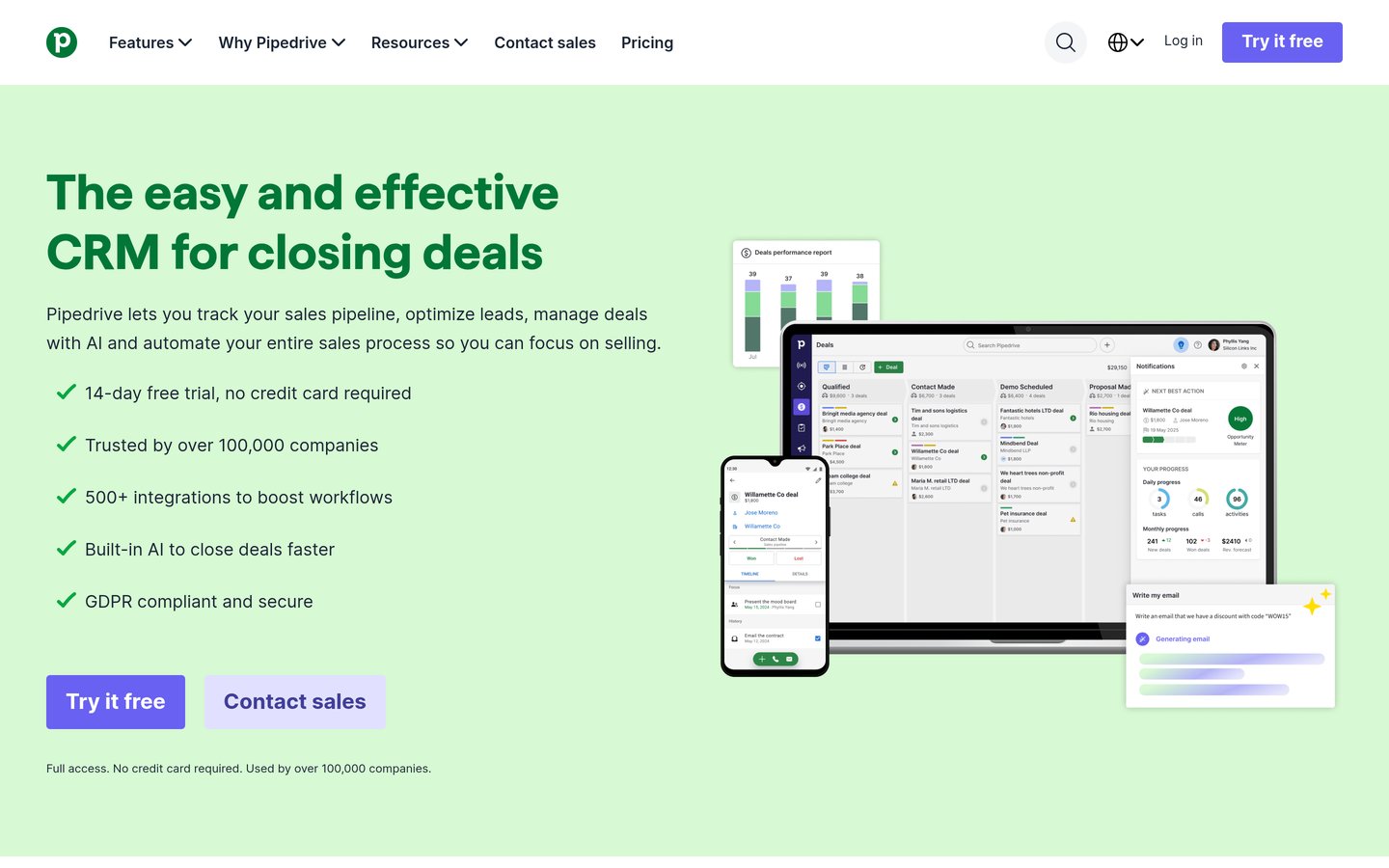
Pipedrive is a sales CRM built around a visual drag-and-drop pipeline. The Lite plan at $14 per user a month billed annually covers deal and contact management, two-way email sync, activity tracking and a mobile app.
The trade off is automation. Email sequences, workflow automation and forecasting sit on higher tiers, with Growth at $39 per user a month billed annually. It suits small sales teams that live in the pipeline and already have marketing tools elsewhere.
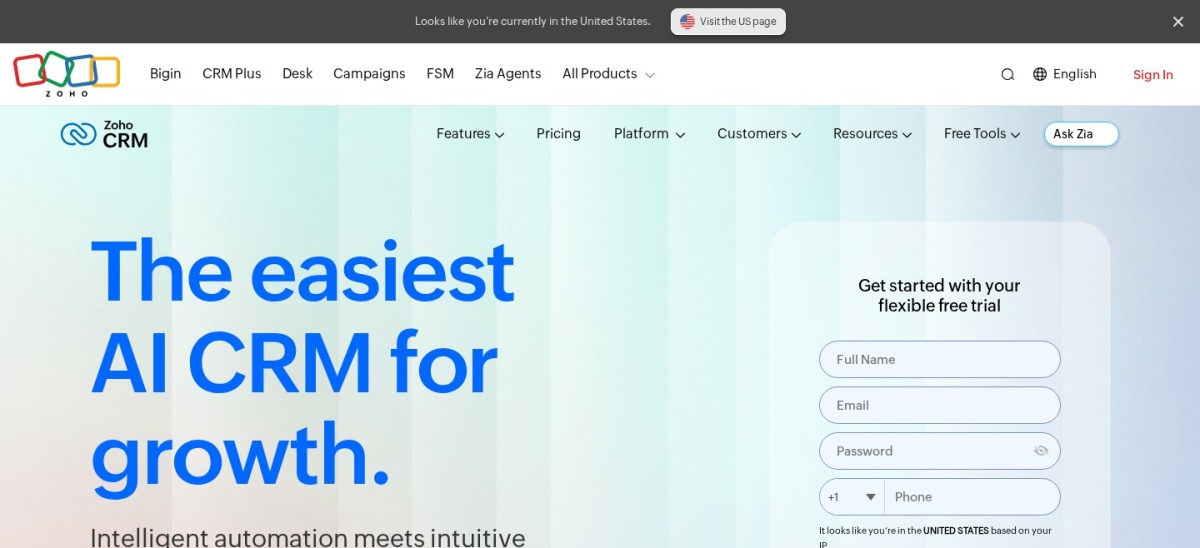
Zoho CRM is a low-cost CRM with a free edition for up to 3 users. Standard at $14 per user a month billed annually adds multiple pipelines, mass email, sales forecasting and workflow rules, with Professional at $23 adding more automation.
The trade off is setup time. Zoho CRM packs in more settings and custom options than most rivals, so a new team needs longer to configure it well. It suits budget-conscious teams that want deep customization and already use other Zoho apps.
What we like
Free plan covers 3 users, not 2
Forecasting included on the $14 plan
No onboarding fee on any tier
Watch out for
Steeper learning curve than Pipedrive
Support quality is flagged on lower tiers
Professional adds automation and process controlsVisit zoho.com
04
Freshsales
4.5/5on G2 (1,234 reviews, checked Nov 2026)
Starts at$9/mo
Best low-cost CRM with a phone
Free planNo, 21-day trial
Entry paid planGrowth, $9/user/mo
Built-in phoneYes
Built-in chatYes
freshworks.com
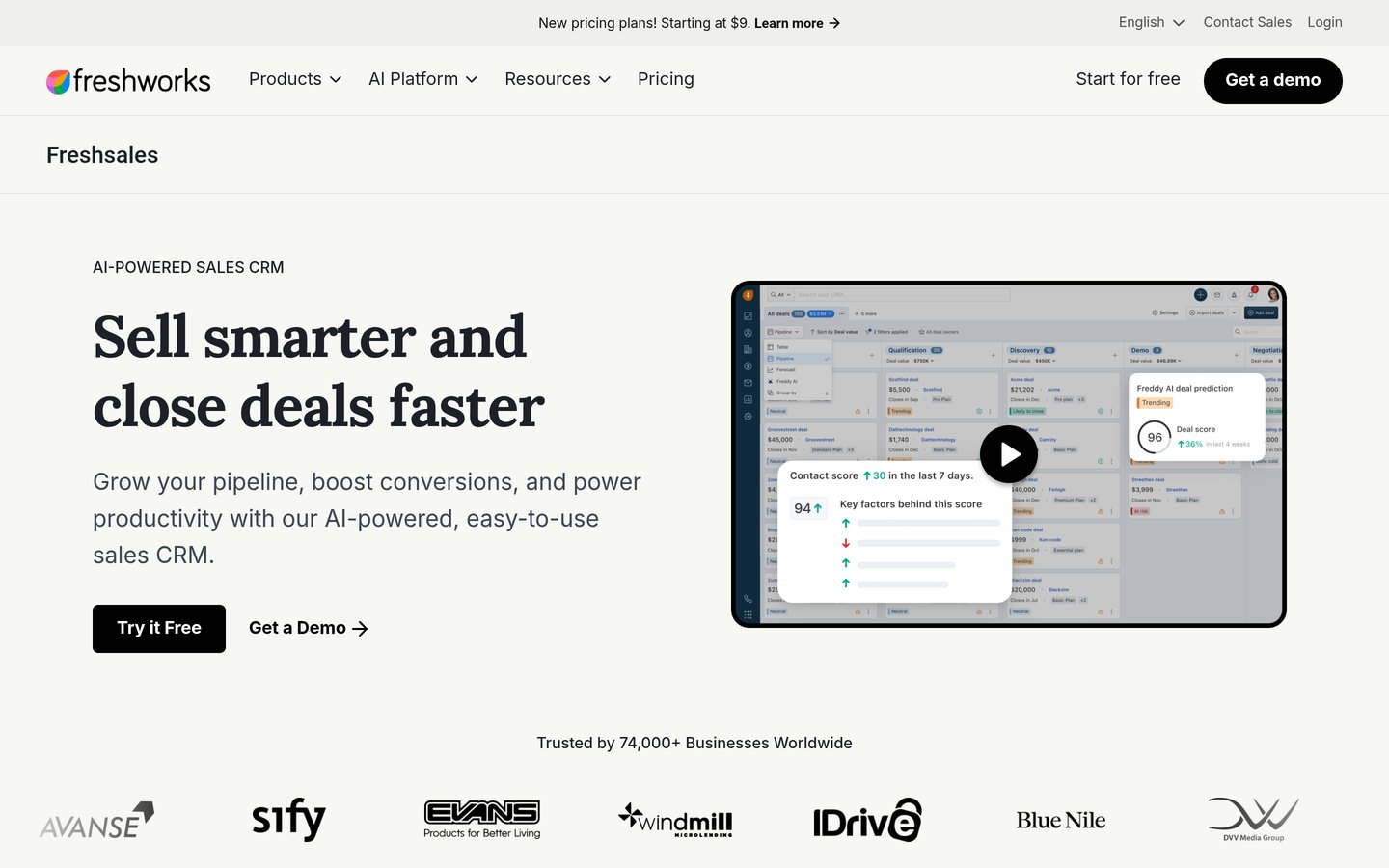
Freshsales homepage, captured Nov 2026.
Freshsales is the sales CRM from Freshworks, with phone, email and chat built into every paid plan. Growth at $9 per user a month billed annually covers a Kanban pipeline, contact lifecycle stages and basic workflows.
The trade off is depth. Growth allows one pipeline and no sales sequences, which start on Pro at $39 per user a month billed annually. It suits small teams that want calling and chat inside the CRM without buying a separate phone system.
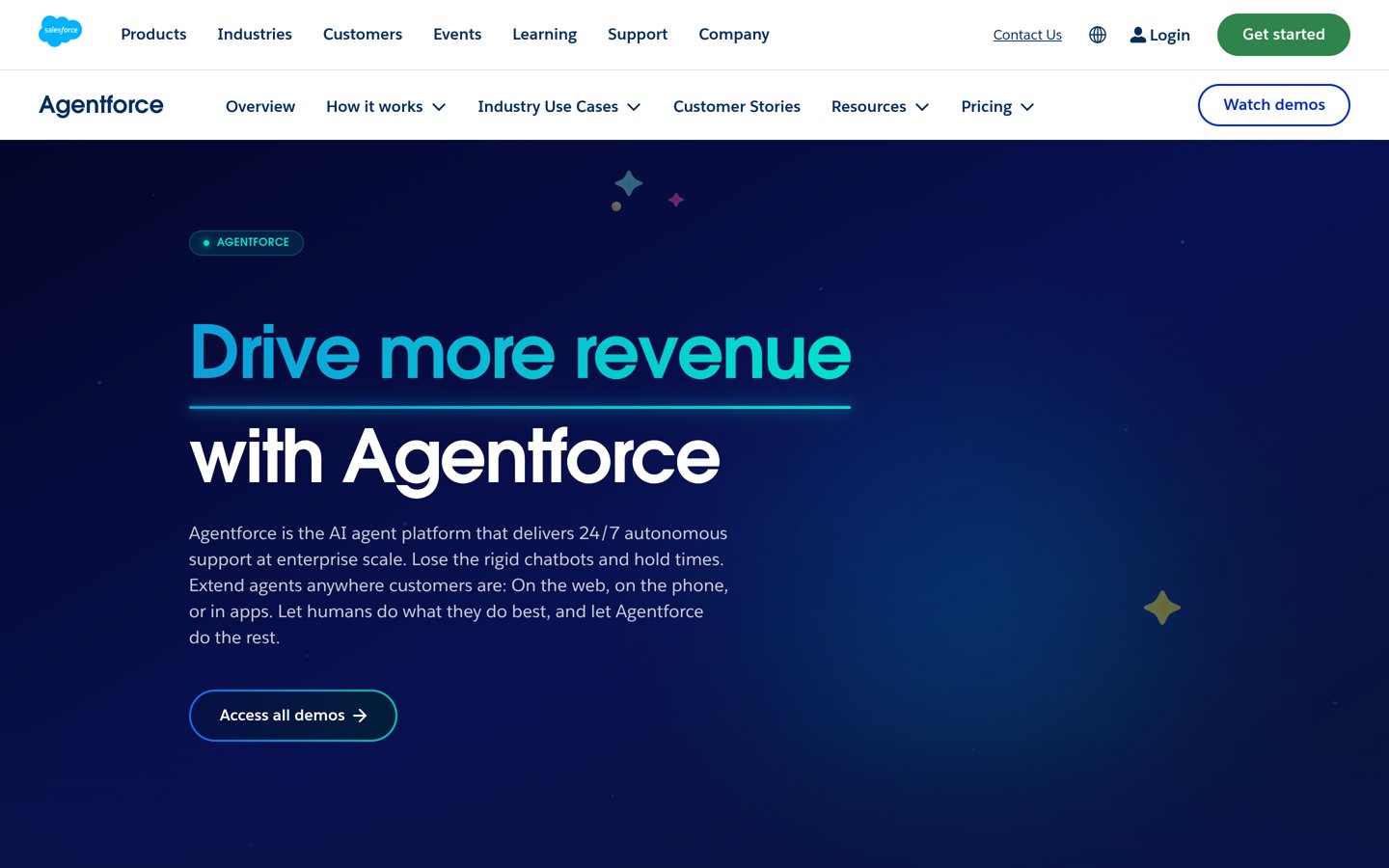
Salesforce is the largest CRM platform, built for teams that need deep customization and scale. The Starter Suite at $25 per user a month billed annually covers leads, contacts, accounts and deals, with a free suite for up to 2 users.
The trade off is cost and complexity. Prices climb fast with each tier, and most teams need an admin or partner to set it up well. It suits mid-size and large teams that plan to build sales, service and reporting on one platform.
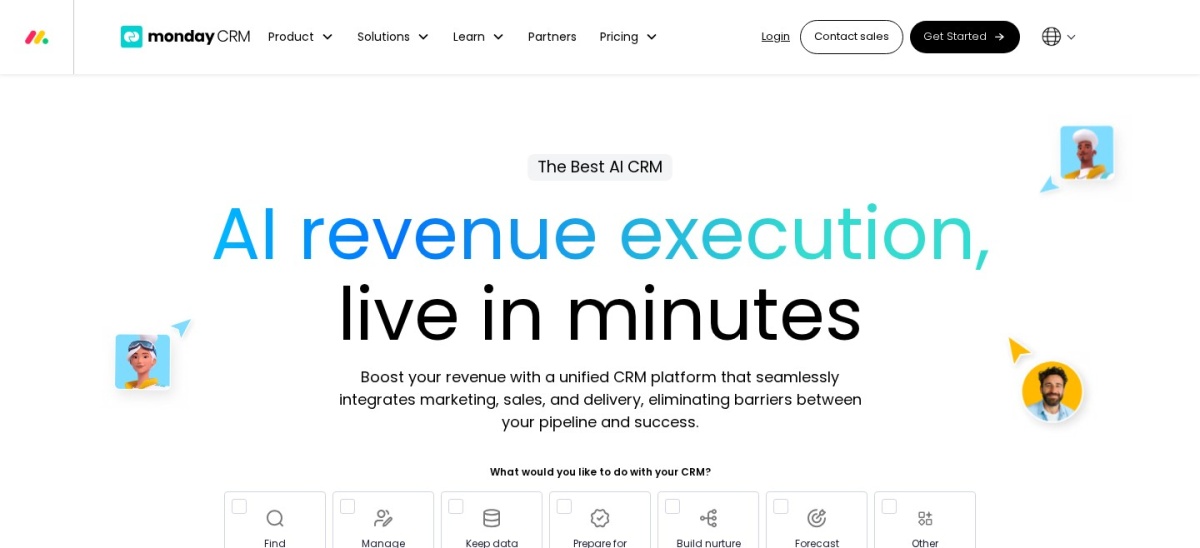
monday CRM is a sales CRM built on monday.com boards, so pipelines look like flexible spreadsheets. Basic at $12 per seat a month billed annually covers unlimited contacts, pipelines and boards, plus web forms and templates.
The trade off is the seat rule. Every plan needs at least 3 seats, so the smallest bill is $36 a month, and Basic has no email sync or automations. It suits teams that already run projects on monday.com and want sales on the same boards.
ClickUp is a work-management platform that doubles as a CRM through templates, custom fields and lists. The Free Forever plan covers unlimited tasks and members, and Unlimited at $7 per user a month billed annually adds unlimited storage and integrations.
The trade off is focus. ClickUp is not a dedicated CRM, so sales features need setup and its Business plan at $12 per user a month adds the dashboards most sales teams want. It suits teams that want tasks, docs and customer records in one workspace.
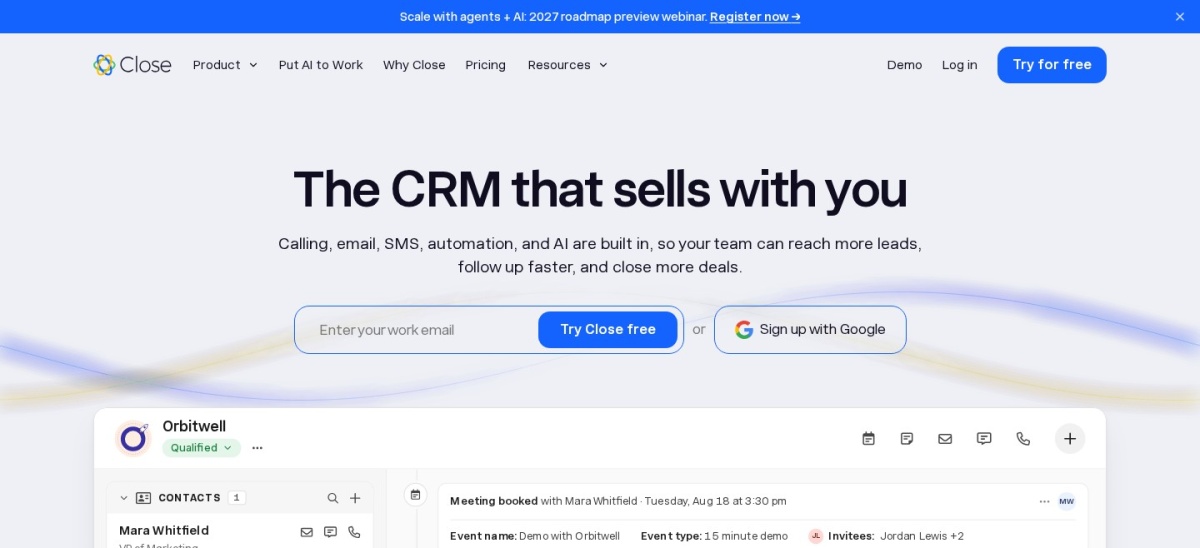
Close is a sales CRM built for inside sales teams that call and email at volume. Essentials at $35 per user a month billed annually includes built-in calling, SMS, email, unlimited contacts and leads, plus a 14-day free trial.
The trade off is price and scope. Essentials has no workflows or power dialer, which start on Growth at $99 per user a month, and there is no marketing side. It suits outbound teams that live on the phone and want calling inside the CRM.
Keap is an all-in-one CRM for small businesses that pairs sales pipelines with email marketing, automation and payments. The single plan costs $249 a month billed annually and covers 2 users and 1,500 contacts.
The trade off is price. Keap charges per business rather than per seat, so a two-person team pays $2,988 a year before extra users at $39 a month each. It suits small service businesses where the same people sell, market and collect payment.
Calling minutes, SMS and phone numbers are usually billed on top of the plan price. Freshsales and Close include a dialer, but usage still costs extra.
Onboarding fees appear at the top of some ladders. HubSpot charges $1,500 once for Professional, and Keap requires an implementation package it does not price on its page.
Seat minimums change the real entry cost. monday CRM needs 3 seats, so Basic costs $36 a month at minimum, and Keap includes only 2 users in its $249 a month.
How we chose
We started from the CRM tools with the largest review counts on G2 and the widest use among small and mid-size sales teams, then kept nine established products with published prices.
Prices come from each vendor's pricing page, checked on 24 November 2026. Ratings and review counts come from G2 on the same day. Where a vendor shows a new-customer discount, the list shows the regular price.
We left out tools with no published price and tools aimed only at one niche. No vendor paid for a place, and we do not claim to have used these tools ourselves.
How to choose a CRM
Start with your team size and how you sell, then match the CRM to that shape.
Count your seats first. Per-user prices multiply fast. A $14 plan costs $1,680 a year for 10 users, while Keap's flat $249 a month suits a two-person team better than a large one.
Decide how you reach leads. Pick Freshsales or Close if your team calls all day. Pick Pipedrive or Zoho CRM if email and pipeline tracking matter more than a dialer.
Check the free plan limits. HubSpot allows 2 free users and Zoho CRM allows 3. If your team is larger, the free plan ends before the work does.
Trial the top two before paying. Use the 14-day trials to move real deals through the pipeline. See how to create a contact form in WordPress to feed new leads into whichever CRM you pick.
FAQ
What is the best CRM software overall?
HubSpot is the best CRM for most teams. Its free plan covers 2 users and 1,000 contacts, Starter costs $20 per seat a month at list price, and it is rated 4.4 out of 5 on G2 from more than 14,000 reviews.
What is the cheapest CRM in this comparison?
ClickUp has the cheapest paid plan at $7 per user a month billed annually. Freshsales is the cheapest dedicated CRM at $9 per user a month, and HubSpot, Zoho CRM and ClickUp all offer a free plan.
Is there a free CRM in this list?
Yes. HubSpot is free for up to 2 users, Zoho CRM is free for up to 3 users, ClickUp has a Free Forever plan, and Salesforce offers a free Starter Suite for up to 2 users.
Which CRM is best for a small business?
Zoho CRM is the best small-business pick for most teams, with a free plan for 3 users and Standard at $14 a user a month. Pipedrive is simpler to learn, while Freshsales suits teams that call customers often.
Do small teams need Salesforce?
Most small teams do not. Salesforce starts at $25 per user a month and needs an admin or partner to set up well. It earns its price for mid-size and large teams that need deep customization and scale.
Which CRM has built-in calling?
Freshsales and Close both include a dialer in the plan price. Freshsales Growth starts at $9 per user a month, while Close Essentials starts at $35. Calling minutes and SMS are billed as usage on top.