Best Contract Repository Management Software in 2026: 9 Tools Compared
WLWPLegible EditorsLast verified 24 Nov 2026How we rank13 min read
★ Short answer
ContractSafe is the best contract repository for most teams. It stores every agreement in one searchable place with renewal alerts, unlimited users and a 4.7/5 G2 rating. Pick ContractWorks for a flat monthly price, or PandaDoc if you need a free plan with e-signatures.
How we make this list: we compare pricing pages, product documentation and public user reviews, then re-check every price before each update. No product paid for a place. Disclosure.
ContractSafe leads for repository-first teams: 4.7/5 on G2, unlimited users, AI extraction and renewal alerts from $450 a month.
ContractWorks is the simplest flat-rate option at $600 a month billed yearly, with unlimited users and 2,500 documents.
PandaDoc is the only tool here with a free plan, and its paid plan starts at $19 per user a month billed yearly.
Ironclad, Juro, Agiloft, DocuSign CLM and Gatekeeper all sell by quote, so budget for a sales conversation and an annual contract.
Concord is the cheapest full contract tool with published pricing after PandaDoc, at $399 a month for 5 users.
What a contract repository should do
A contract repository is one searchable home for every signed agreement. The point is not just storage: you need to find a contract fast, see its key dates and know who owns it.
Search matters most. Look for full-text search, OCR on scanned PDFs and AI extraction of dates, renewal terms and notice periods, so you do not open each file by hand.
Renewal alerts are the second must-have. A repository should warn you weeks before a renewal or expiry date, not on the day it passes. Our guide on uploading and embedding a PDF in WordPress covers the basics of keeping documents findable online.
Access control comes next. Most teams need permission-based roles so only the right people see sensitive agreements, plus an audit trail of who viewed or changed a file.
Finally, check what sits on top of the repository. Some tools add drafting, approvals and e-signatures; others stay focused on storage and alerts, which is often enough.
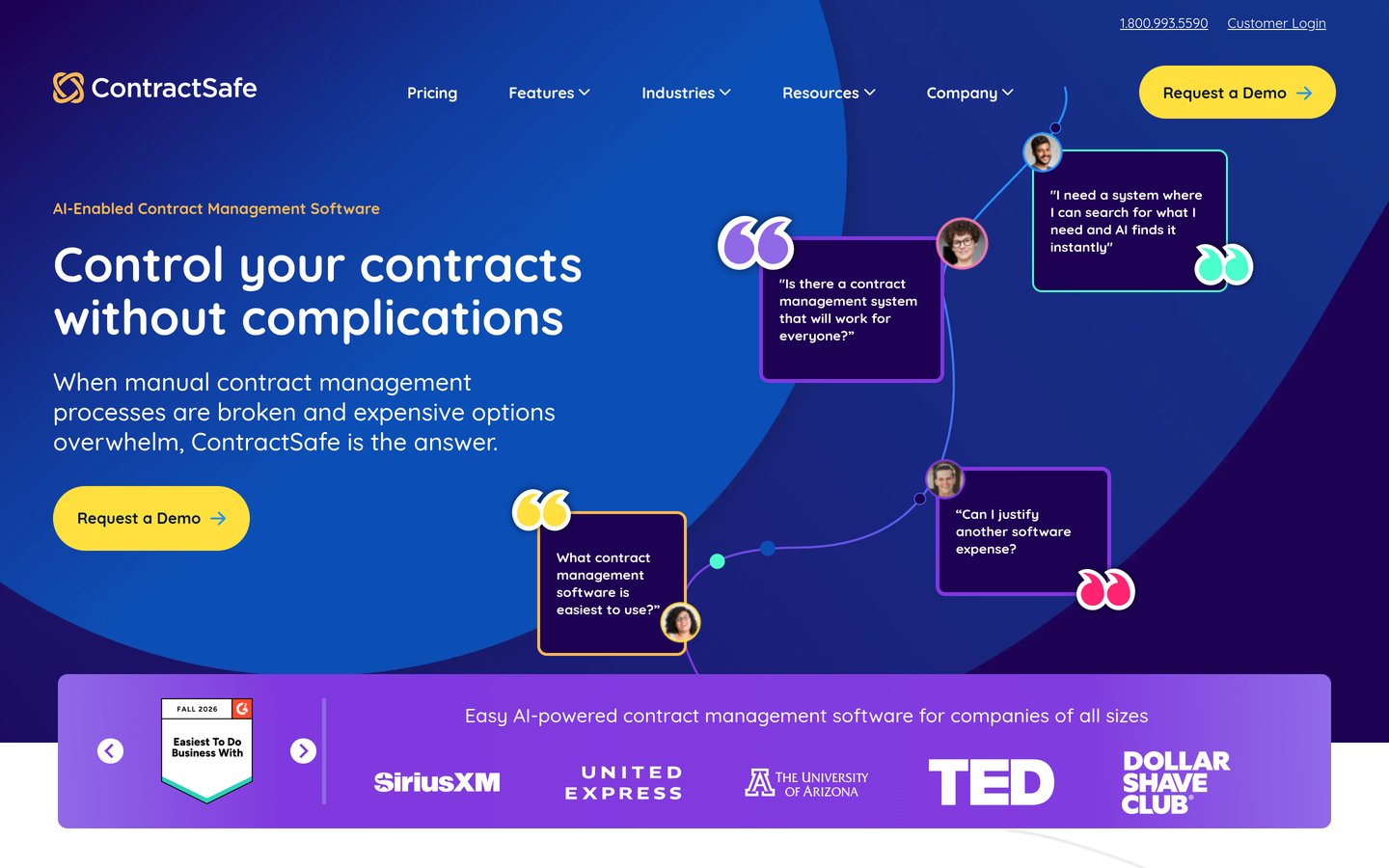
ContractSafe is a repository-first tool built around storing contracts and never missing a renewal. The Organize plan includes unlimited users, AI data extraction, smart search with OCR, automated reminders and secure storage, starting at $450 a month.
The trade off is price. It costs more than PandaDoc or Concord, and it has no free plan, only a free trial. It suits small and mid-sized teams that want a simple, searchable home for contracts without enterprise workflow complexity.
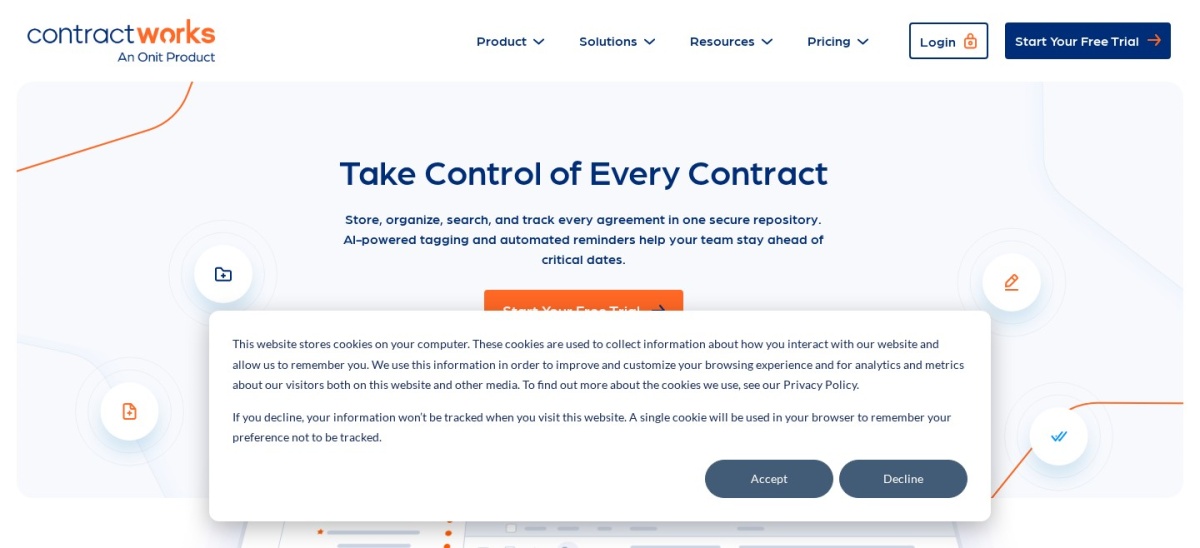
ContractWorks is a secure, repository-first tool from Onit that covers executing, storing and tracking corporate agreements. The Standard plan costs $600 a month billed yearly and includes unlimited users, 2,500 documents, 5 e-signature licences, smart document tagging, OCR and date alerts.
The trade off is that its own pricing page was offline when checked in November 2026, so the $600 figure comes from its G2 listing. It suits mid-sized teams that want flat pricing and quick setup without per-seat costs.
What we like
Flat monthly price with unlimited users
Rated 4.6/5 on G2 from 95 reviews
Free implementation included
Fast setup with a simple interface
Watch out for
Vendor pricing page was offline in November 2026
Document and e-signature limits rise only on higher tiers
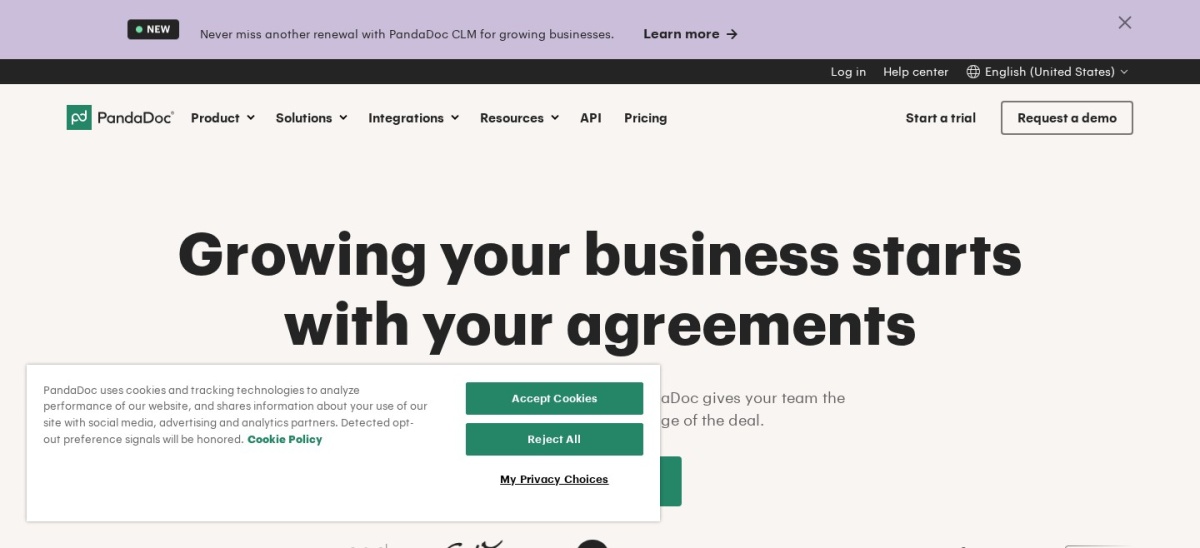
PandaDoc is a document automation platform for creating, sending and e-signing proposals, quotes and contracts. The free eSign plan covers basic signatures, and the Essentials plan costs $19 per user a month billed yearly, or $35 month to month, with unlimited documents and templates.
The trade off is that it is a sales document tool first, not a dedicated contract repository. Renewal tracking and obligation management are lighter than in ContractSafe or ContractWorks. It suits small teams that send contracts often and want a free starting point.
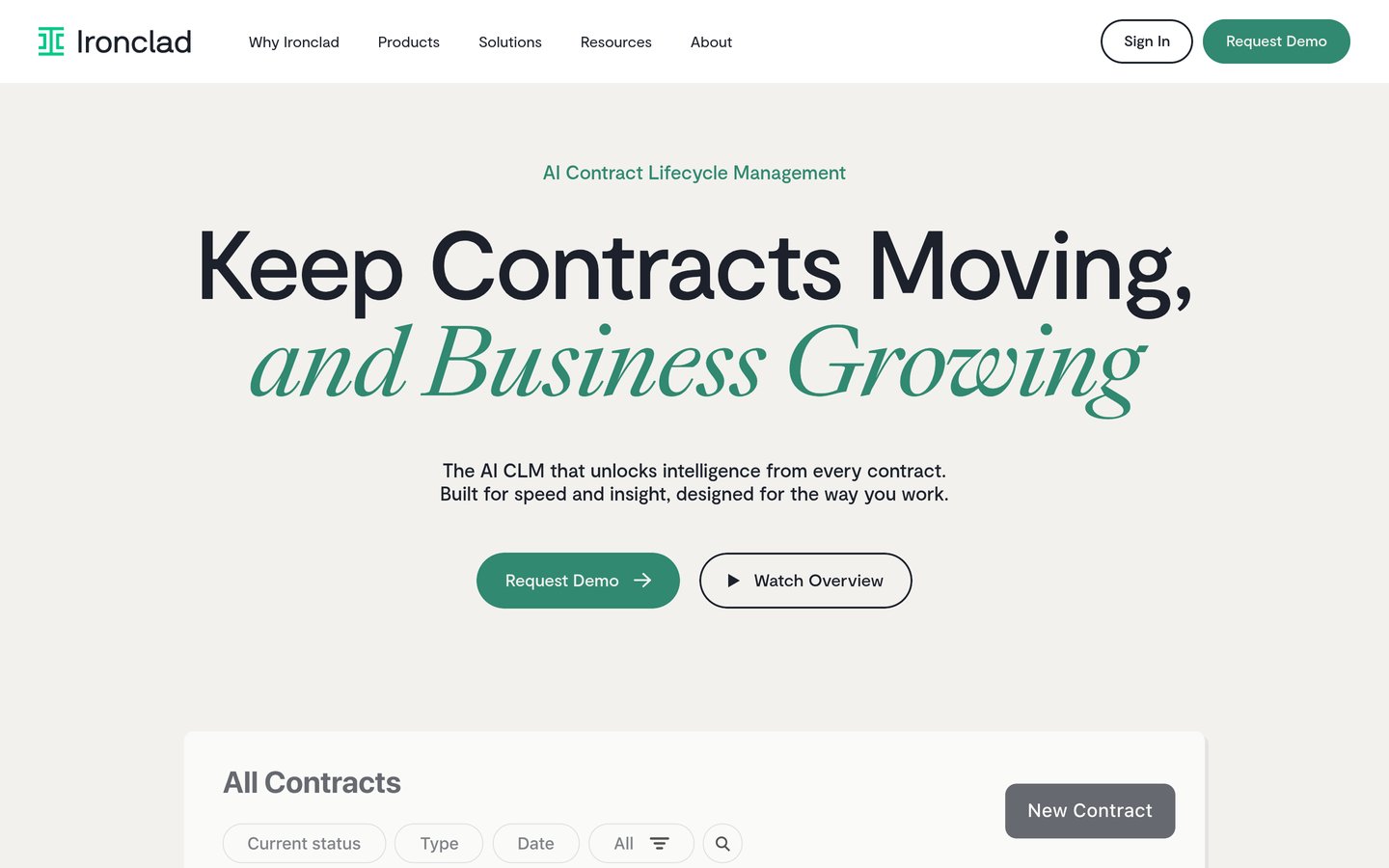
Ironclad is a full contract lifecycle platform that pairs a searchable repository with drafting, approvals, AI review and e-signatures. Business teams can self-serve standard agreements from legal-approved templates, and the repository keeps every signed contract with its metadata in one place.
The trade off is price. Ironclad publishes no prices and sells by quote, with third-party buyer data putting the median near $40,000 a year. It suits mid-sized and larger teams with high contract volumes that need the whole lifecycle, not just storage.
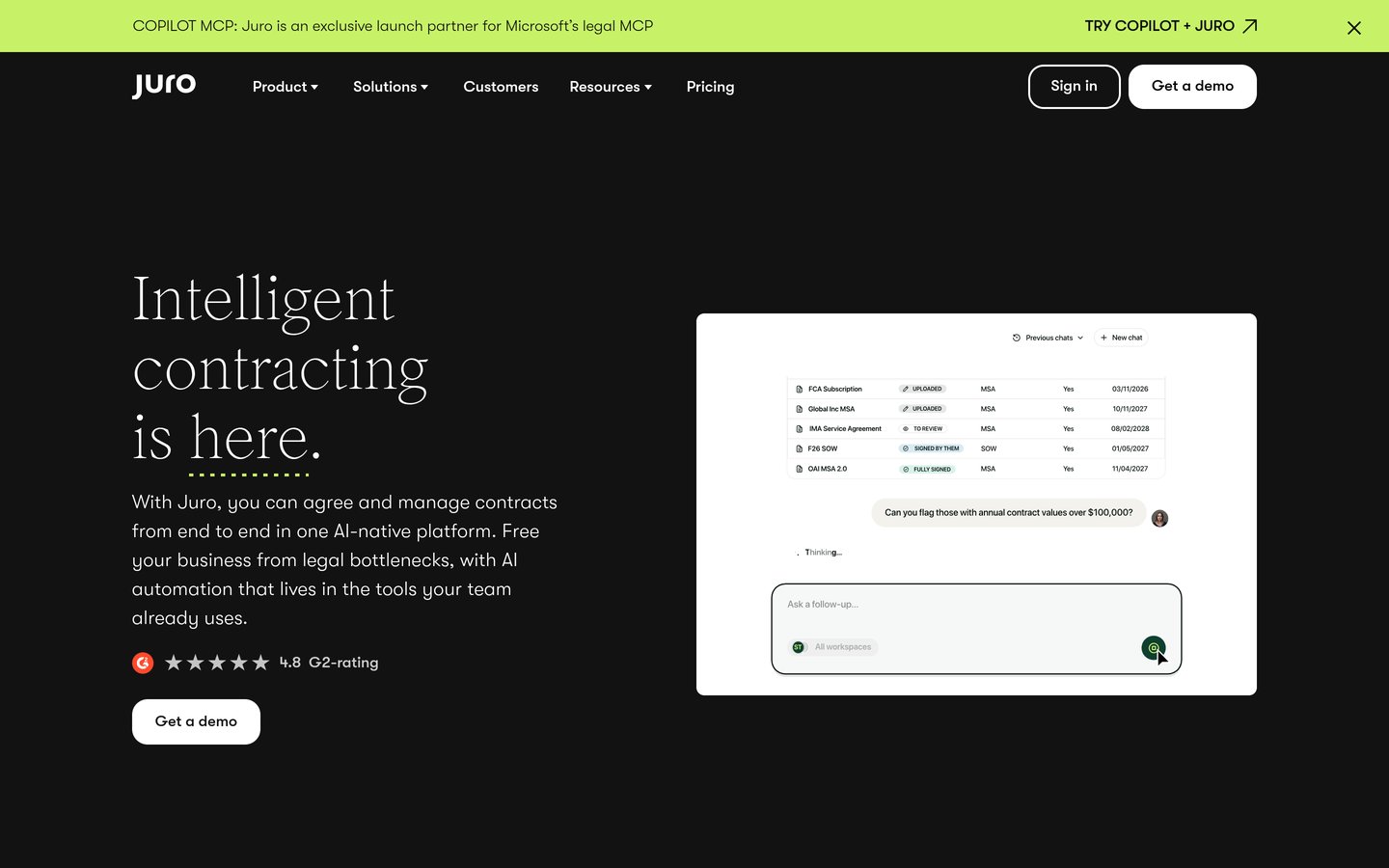
Juro is a browser-native contract workspace where teams draft, negotiate and sign from templates without Word plugins or downloads. Every plan includes unlimited users, workflows and templates, and its AI Extract pulls key data from PDFs into the repository.
The trade off is price. Juro publishes no price list and quotes by contract volume, with third-party estimates starting near $15,000 a year. It suits scale-ups where sales and HR need self-service contracts from legal-approved templates.
What we like
Rated 4.6/5 on G2 from 182 reviews
Unlimited users on every plan
Fast onboarding with no Word add-in
Review Agent redlines against playbooks
Watch out for
Quote-only pricing, no public list
Complex formatting can be awkward in the browser editor
Agiloft is an enterprise contract lifecycle platform known for deep no-code configuration of complex workflows and data rules. Its AI centers on automated metadata extraction and ConvoAI natural-language search, so teams can query the repository in plain words.
The trade off is price and complexity. Agiloft publishes no prices and sells by quote, with third-party buyer data putting the median near $67,000 a year. It suits enterprise legal and procurement teams with complex rules that off-the-shelf tools cannot model.
DocuSign CLM is a contract lifecycle platform built on DocuSign eSignature, covering drafting, approvals, signing and a searchable repository. Teams already using DocuSign for signatures get the full lifecycle in the same system, with AI analysis of agreement terms.
The trade off is price and complexity. DocuSign CLM sells by quote with no public list, and G2 reviewers often call it expensive. It suits larger teams already committed to DocuSign that want lifecycle management on top of signatures.
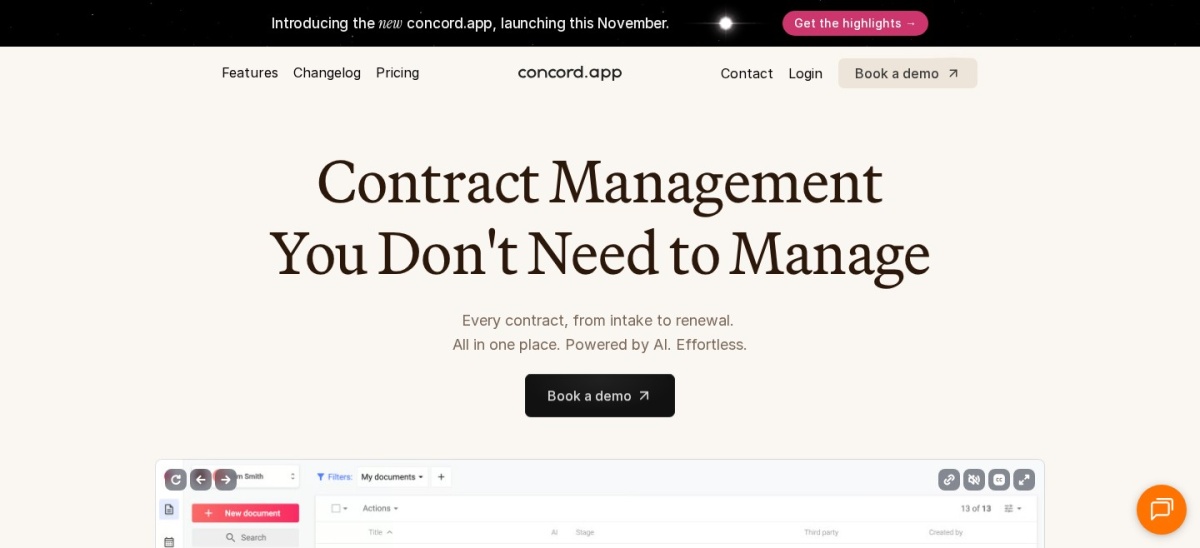
Concord is a contract management tool built around collaboration, with editing, comments, approvals and unlimited eSignatures in one place. The Essentials plan costs $399 a month for 5 users and includes AI Copilot, unlimited documents and templates, deadline reminders and collaboration tools.
The trade off is rating and scale. At 4.2/5 on G2 it is the lowest-rated tool in this list, and the entry plan covers only 5 users. It suits small teams that negotiate contracts together in the document and want unlimited signatures.
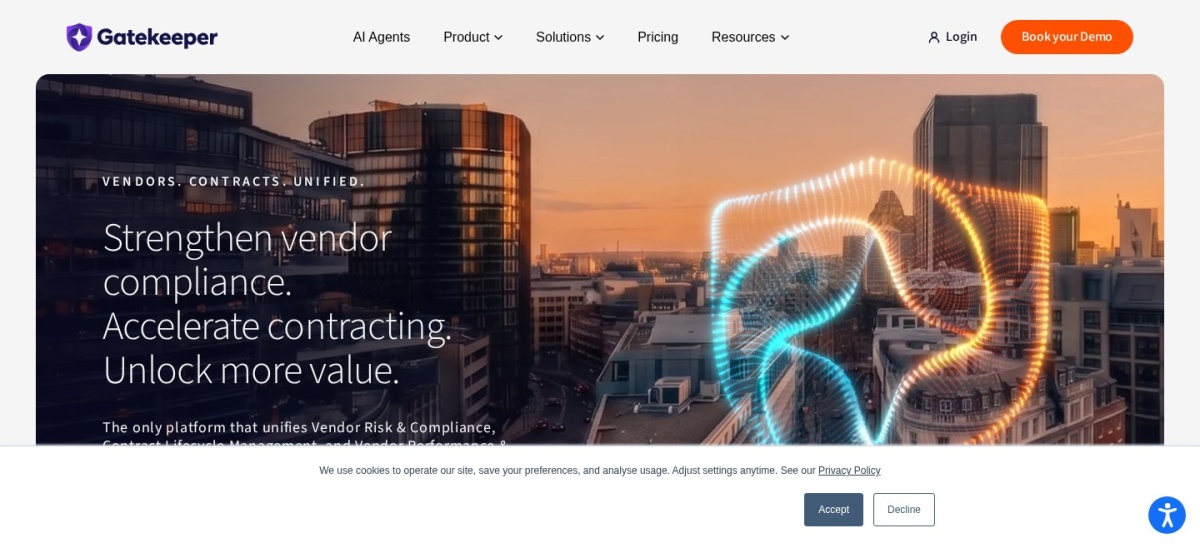
Gatekeeper is a vendor and contract lifecycle platform that manages the supplier record and the contract together. Insurance certificates, certifications and compliance documents sit beside contract obligations and renewal dates, with unlimited users, contracts and eSign licences on every plan.
The trade off is scope and price. Gatekeeper sells by quote priced on vendor volume, and teams that only need contracts pay for procurement features too. It suits procurement-led teams that manage vendors as well as their agreements.
What we like
Contracts and vendor records in one place
Rated 4.5/5 on G2 from 91 reviews
Unlimited users, contracts and eSign licences
Strong support scores on G2
Watch out for
Quote-only pricing, no public dollar list
Procurement scope is overkill for contract-only teams
A repository stores, searches and reminds. A full CLM adds drafting, negotiation, approvals and obligation tracking on top.
If your main pain is finding contracts and missing renewals, a repository tool such as ContractSafe or ContractWorks is enough, and it costs less.
If legal is a bottleneck and business teams wait days for standard agreements, a full CLM such as Ironclad or Juro earns its price.
Do not buy a full CLM for a storage problem. Start with the repository, and move up only when drafting and approvals slow you down.
How we chose
We started from the contract tools with the most G2 reviews in the repository and lifecycle categories, then kept those with a real repository, published or verifiable pricing, and an established user base.
Prices and ratings were checked on 24 November 2026. Ratings and review counts come from G2, and prices come from vendor-provided G2 listings and vendor pages. Where a vendor sells by quote, the list says so instead of estimating a price.
We left out tools with no public rating and tools that are only e-signature products with no repository. No vendor paid for a place, and we do not claim to have used these tools ourselves.
How to choose a contract repository tool
Count your contracts and name the job first, then match the tool to that job.
Count contracts and users. A team with 200 contracts and 5 users fits a flat-rate repository. A team with thousands of contracts and many departments needs a CLM.
Check search and renewal alerts. Upload a scanned contract and test OCR search, then set a renewal reminder. If either fails, the tool will not save time.
Ask for the full annual cost. Quote-only tools hide the real price. Ask for the licence, implementation and any AI add-ons in writing before you sign.
Plan the migration. Moving old contracts takes longer than the demo suggests. Ask who extracts dates and metadata, and how long the import takes.
FAQ
What is the best contract repository management software?
ContractSafe is the best pick for most teams. It combines a searchable repository, AI extraction, renewal alerts and unlimited users, and it holds a 4.7 out of 5 rating on G2 from 133 reviews.
How much does contract repository software cost?
Published prices in this list start at $19 per user a month for PandaDoc and $399 a month for Concord. ContractSafe starts at $450 a month and ContractWorks at $600 a month, while Ironclad, Juro, Agiloft, DocuSign CLM and Gatekeeper sell by quote.
Is there a free contract repository tool?
PandaDoc is the only tool in this list with a free plan, its free eSign plan for basic signatures. The other tools offer free trials but no permanent free plan, so budget for a paid plan from the start.
What is the difference between a contract repository and a CLM?
A repository stores and searches signed contracts and tracks renewals. A CLM covers the whole lifecycle, including drafting, negotiation, approvals and obligation tracking after signing.
Which tool is best for renewal reminders?
ContractSafe is built around renewal alerts, with unlimited reminders on every plan. ContractWorks also includes date alerts on its flat-rate plan, and Concord includes deadline reminders on Essentials.
Do I need e-signatures in a contract repository?
Not always, but most teams want them. Concord, PandaDoc and Gatekeeper include e-signatures, while ContractWorks includes a limited number of licences and DocuSign CLM builds on DocuSign eSignature.