Best Container Orchestration Platforms in 2026: 9 Tools Compared
WLWPLegible EditorsLast verified 24 Nov 2026How we rank12 min read
★ Short answer
Kubernetes is the best container orchestration platform for most teams: it is free, open source and rated 4.6 out of 5 on G2 from 160 reviews. Pick Amazon EKS if you run on AWS, Google GKE if you run on Google Cloud, or Azure AKS for its free control-plane tier.
How we make this list: we compare pricing pages, product documentation and public user reviews, then re-check every price before each update. No product paid for a place. Disclosure.
Kubernetes is free and rated 4.6 out of 5 on G2 from 160 reviews, but you run everything yourself.
EKS and GKE both charge $0.10 per cluster-hour, about $73 a month, before node costs.
AKS is the only big-three service with a free control-plane tier, with Standard at $73 a month per cluster.
OpenShift, Rancher Prime and Mirantis are quote only; Rancher's community edition is free.
Nomad and Docker Swarm are the light options: Nomad has only 10 G2 reviews, Swarm only 21.
What a container orchestration platform should do
Container orchestration decides where each container runs, when it restarts and how it scales. Without it, a team with more than a few services ends up wiring deployments, health checks and load balancing by hand.
Most of the tools below are Kubernetes, or run Kubernetes for you. Kubernetes itself is free, and the cloud services charge a small control-plane fee on top of the servers your workloads run on.
The choice usually follows where your workloads already live. AWS shops pick EKS, Google Cloud shops pick GKE and Azure shops pick AKS, while multi-cloud teams often add Rancher on top. Our guide on deploying WordPress with GitHub Actions shows how deployment pipelines fit around the cluster.
Price comparisons here cover the control plane only. Nodes, storage, load balancers and data transfer are billed separately on every managed service, so the monthly total is always higher than the fee shown.
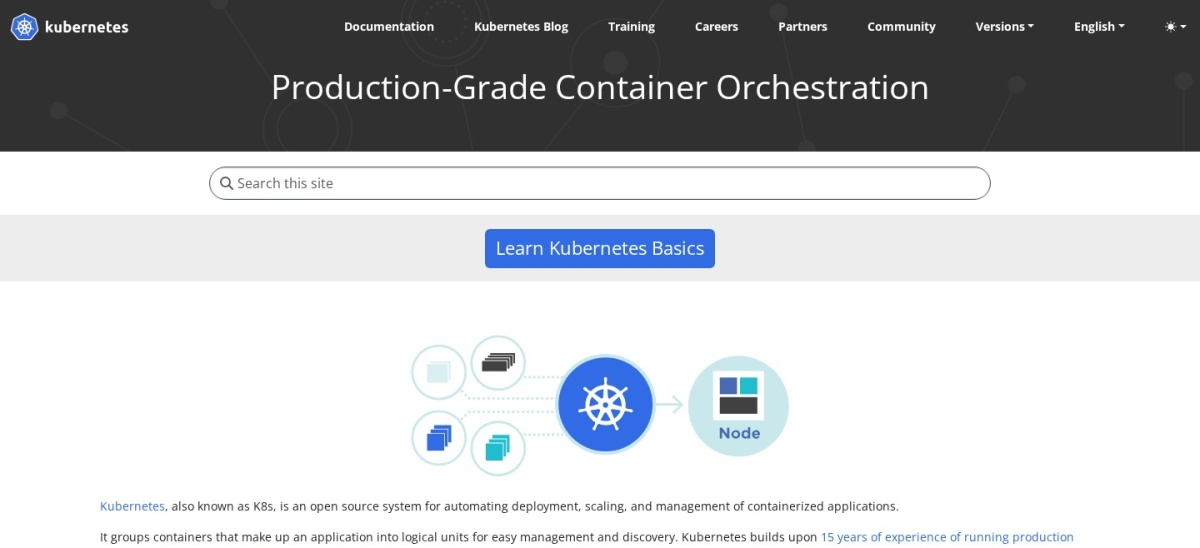
Kubernetes is the open-source platform that most container orchestration is built on, maintained by the Cloud Native Computing Foundation. It automates deployment, scaling, self-healing and rolling updates across clusters, and it costs nothing to run yourself apart from the servers underneath.
The trade off is the work it takes to run well. You manage upgrades, networking, storage and security yourself, and new teams often need months to get comfortable. It suits teams that want full control and already have the skills to run a cluster.
What we like
Free with no licence cost
Largest ecosystem of add-ons and operators
Runs on any cloud or on-premises
Self-healing and autoscaling built in
Watch out for
Steep learning curve for new teams
You run upgrades and security yourself
Managed Kubernetes adds a control-plane fee on EKS, GKE or AKSVisit kubernetes.io
02
Amazon EKS
4.5/5on G2 (110 reviews, checked Nov 2026)
Starts at$73/mo
Best managed Kubernetes on AWS
Control plane$0.10/cluster/hr
Monthly costAbout $73/cluster
Free tierNo
Extended support$0.60/cluster/hr
aws.amazon.com
Amazon EKS homepage, captured Nov 2026.
Amazon EKS is AWS's managed Kubernetes service, so AWS runs the control plane while you pay for the EC2 or Fargate compute underneath. It plugs into IAM, VPC networking, load balancers and CloudWatch, and it supports Kubernetes versions 1.34 to 1.37 in standard support.
The trade off is the bill beyond the control plane. Nodes, storage, load balancers and data transfer are charged separately, and letting a version slip into extended support raises the control-plane fee to $0.60 an hour. It suits teams already running workloads on AWS.
Google Kubernetes Engine (GKE) homepage, captured Nov 2026.
Google Kubernetes Engine is Google Cloud's managed Kubernetes service, built by the team that created Kubernetes. Standard mode gives you full control of nodes, while Autopilot mode manages nodes for you and bills on the CPU, memory and storage your pods request.
The trade off is that the metered price only covers the control plane. Node compute is billed separately in Standard mode, and Autopilot can cost more than Standard for steady workloads. It suits teams already on Google Cloud, or shops that want Autopilot to remove node work.
Azure Kubernetes Service (AKS) homepage, captured Nov 2026.
Azure Kubernetes Service is Microsoft's managed Kubernetes service, and it is the only one of the big three with a free control-plane tier. The free tier suits development and small clusters, while Standard adds a financially backed uptime SLA at $0.10 per cluster-hour.
The trade off is that free means no SLA. Production clusters need Standard at about $73 a month per cluster, and long-term support needs Premium at $0.60 an hour. It suits teams already on Azure, Entra ID and GitHub.
Red Hat OpenShift is an enterprise Kubernetes platform with developer tools built in: a web console, a container registry, CI/CD pipelines and strict security controls. It runs on-premises or on any major cloud, and Red Hat OpenShift Service on AWS (ROSA) offers a managed version.
The trade off is price. Red Hat does not publish a self-managed list price, and subscriptions are quoted by cores, so small teams often find it dear next to the cloud services above. It suits regulated enterprises that want a supported platform with security controls built in.
What we like
Developer console, registry and pipelines built in
Rancher is SUSE's open-source platform for running Kubernetes clusters from one console, wherever they live. It provisions RKE2 and K3s clusters, imports EKS, GKE, AKS and OpenShift clusters, and adds central access control plus Fleet for GitOps across the fleet.
The trade off is that Rancher adds a layer to run. You still host a management cluster, and supported Rancher Prime is a paid subscription quoted by SUSE. It suits teams with clusters on two or more clouds, or on-premises and cloud together.
Mirantis Kubernetes Engine homepage, captured Nov 2026.
Mirantis Kubernetes Engine is a production-grade platform that runs Kubernetes and Docker Swarm from one control plane. It suits shops that still run Swarm workloads beside Kubernetes, with built-in access control, networking and a web UI that reviewers praise.
The trade off is price and reach. All three support tiers are contact-vendor pricing, and there is no free plan, only a trial, so smaller teams often find it dear. It suits enterprises that need Swarm support and round-the-clock support on production clusters.
HashiCorp Nomad is a lightweight scheduler that runs containers, virtual machines, standalone apps and batch jobs from a single binary. It skips the etcd cluster and API fleet that Kubernetes needs, so a small team can run it with far less setup.
The trade off is the smaller world around it. Nomad has far fewer add-ons than Kubernetes, and paid Enterprise pricing is not published. It suits small teams that want simple scheduling across containers and batch jobs without running Kubernetes.
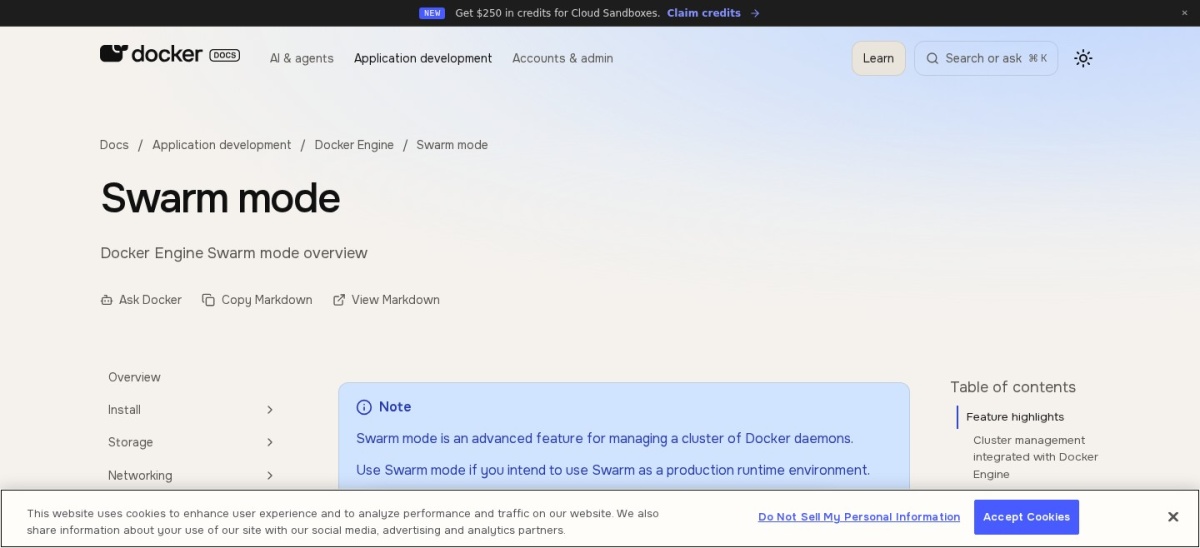
Docker Swarm is Docker's own clustering mode, built directly into Docker Engine with nothing extra to install. It schedules services across nodes, handles overlay networking, rolling updates and secrets, and it works with the Docker commands teams already know.
The trade off is depth. Swarm has no operators, service mesh or advanced placement controls, and it has seen few new features in recent years. It suits small teams with simple, stateless workloads that already run Docker.
What we like
Free and built into Docker Engine
Easiest setup in this list
Works with Docker Compose files
Watch out for
Few new features in recent years
No operators or service mesh
Free with Docker Engine; Docker Business adds supportVisit docker.com
Managed vs self-hosted: what changes
Self-hosted Kubernetes costs nothing in licences, but you own upgrades, backups, networking and security. That is a real job, and small teams often underestimate it.
Managed services take the control plane off your hands for about $73 a month per cluster, or nothing on the AKS free tier. You still manage the workloads, and the nodes are billed separately.
Enterprise platforms add a layer above the cluster: developer tools, access control and support. OpenShift and Mirantis charge for that layer by quote, while Rancher gives the multi-cluster console away free and charges for support.
How we chose
We started from the best-known container orchestration platforms: upstream Kubernetes, the three big-cloud managed services, the main enterprise platforms and the two best-known lightweight schedulers.
Prices come from each vendor's pricing page or public pricing material, checked on 24 November 2026. Ratings and review counts come from G2 on the same day. Where a vendor shows no public price, the list says quote only and shows no starting price.
We left out tools with no public review base and niche platforms aimed at a single cloud region. No vendor paid for a place, and we do not claim to have used these tools ourselves.
How to choose a container orchestration platform
Start with where your workloads already run, then match the platform to your team's size.
Pick the cloud first, then the platform. If your workloads live on AWS, EKS is the natural fit; the same logic puts GKE on Google Cloud and AKS on Azure. Cross-cloud teams should look at Rancher or plain Kubernetes.
Count the control-plane fee, then the nodes. EKS and GKE charge about $73 a month per cluster, and AKS Standard matches it. Nodes, storage and load balancers cost far more than the fee, so price a real cluster, not the headline.
Be honest about who runs it. Self-hosted Kubernetes needs someone to own upgrades and incidents. If no one on the team has that time, a managed service or Autopilot mode is the safer pick.
Try the free route before you pay. Run Kubernetes or Docker Swarm free, or use the AKS free tier, and move to a paid control plane when the cluster has to stay up. See how to set up a staging site for WordPress before you test on live traffic.
FAQ
What is the best container orchestration platform?
Kubernetes is the best pick for most teams. It is free, rated 4.6 out of 5 on G2 from 160 reviews, and it is the standard every managed service below is built on. Pick a managed service if you do not want to run the control plane yourself.
How much does Kubernetes cost?
Kubernetes itself is free to download and run. You pay for the servers underneath, or for a managed control plane: about $73 a month per cluster on EKS, GKE and AKS Standard. AKS also offers a free control-plane tier with no uptime SLA.
Is Docker Swarm still worth using in 2026?
For simple workloads, yes. Swarm is free, built into Docker Engine and easy to set up, and it covers scheduling, networking and rolling updates. It lacks operators and a service mesh, and it has seen few new features, so growing teams usually move to Kubernetes.
What is the difference between EKS, GKE and AKS?
All three are managed Kubernetes with the same $0.10 per cluster-hour control-plane fee, about $73 a month. The difference is the cloud around them: EKS fits AWS shops, GKE fits Google Cloud shops, and AKS fits Azure shops and is the only one with a free tier.
Do I need Kubernetes for a small app?
Usually not. A single server with Docker Compose or Docker Swarm handles a small app with far less work. Kubernetes earns its keep when you run many services, need autoscaling and rolling updates, or must run across several servers.
Which platform is best for multi-cloud clusters?
Rancher is the best fit for multi-cloud work. Its free community edition manages RKE2, K3s and imported EKS, GKE, AKS and OpenShift clusters from one console, with central access control and Fleet for GitOps deployments.