Zappi is the best concept testing platform for most CPG teams, with a normative database that scores concepts against category history and a 4.6 out of 5 G2 rating. Pick Suzy for the fastest reads from its owned panel, Conjointly for self-serve conjoint work at a published $2,895 a year, and Highlight when a product must be used at home.
How we make this list: we compare pricing pages, product documentation and public user reviews, then re-check every price before each update. No product paid for a place. Disclosure.
Zappi is the CPG standard for normed concept reads, rated 4.6 out of 5 on G2 from 15 reviews.
Suzy is the fastest option, rated 4.7 out of 5 from 144 G2 reviews, with live interviews in the same platform.
Conjointly is the only self-serve tool with a published price under $3,000 a year: $2,895 for Professional.
Qualtrics Strategic Research costs $420 a month billed annually, and SurveyMonkey Advantage costs $39 a month.
Six of the nine tools publish no price at all, including Zappi, Suzy, Attest, quantilope, Upsiide and Highlight.
Highlight is the only pick that ships a physical product to consumers and tests real use at home.
What a concept testing platform should cover
A concept test shows a product idea, pack, claim or price to target consumers before launch and measures appeal, uniqueness and purchase intent. For CPG brands the goal is to kill weak ideas early, when changes are cheap, and give strong ideas evidence for investment.
The tools here split into three lanes. Fast screeners such as Upsiide and Suzy cut a long list quickly. Method specialists such as quantilope and Conjointly run conjoint and MaxDiff trade-offs. Physical testers such as Highlight validate what happens after the screen.
Pricing is the hardest part of this market to compare. Six tools publish no price, so budget for a sales conversation and ask what panel costs, sample sizes and support hours are included. Check the review base behind ratings: a 4.6 from 15 reviews, as Zappi has, means less than a 4.4 from 3,018, as Qualtrics has. Our guide on how to write product reviews that rank explains useful user feedback.
Sample quality matters as much as the score. Ask who the respondents are, how they were recruited, and whether the panel covers your actual buyers. A raw appeal score without a category benchmark is hard to act on.
The 9 best concept testing platforms for CPG companies
01
Zappi
4.6/5on G2 (15 reviews, checked Nov 2026)
PricingQuote/yr
Best for enterprise CPG concept testing
Normative databaseYes, category norms
Automated templatesConcepts, packs, ads
AI summariesYes
Free planNo
zappi.io
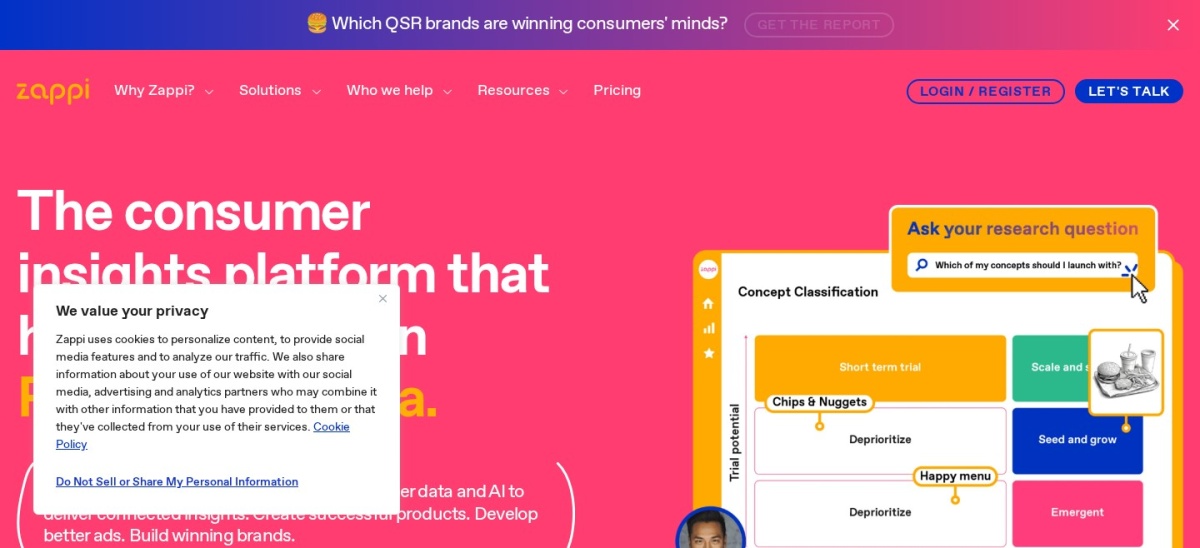
Zappi homepage, captured Nov 2026.
Zappi is a consumer insights platform built for CPG teams that test concepts constantly rather than once a year. Its normative database scores a new concept against past results in the same category, so a team sees whether an idea is strong, average or weak instead of reading a raw score. Automated templates cover concepts, packs and ads, and results stay comparable across brands and quarters.
The trade off is scale and cost. Zappi publishes no prices and is set up for enterprise teams, so a small brand will find onboarding heavy for a handful of tests. It suits large teams that run dozens of concepts a year and need every result benchmarked the same way.
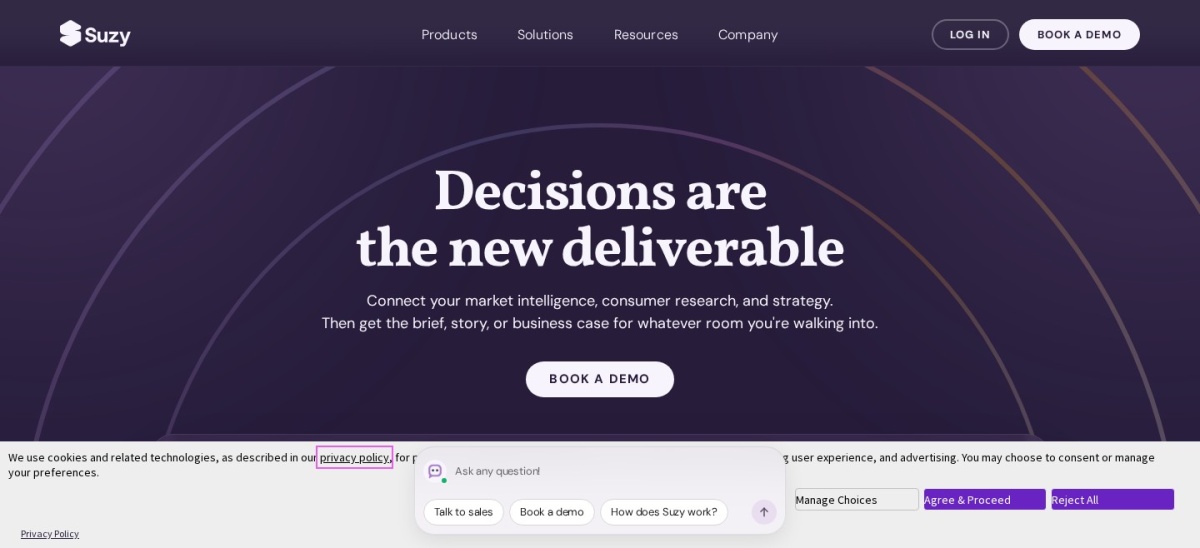
Suzy is a consumer research platform built for speed, with an owned panel of screened consumers and a live interview feature in the same system. A team can field a concept survey and follow it with real conversations, getting a number first and the reason behind it soon after. G2 users rate it 4.7 out of 5 from 144 reviews, the highest rating in this list.
The trade off is price. Suzy is sold as an annual licence with no published price, and guide figures put typical pricing in the higher five figures a year. It suits teams with steady research volume that need answers in days rather than weeks.
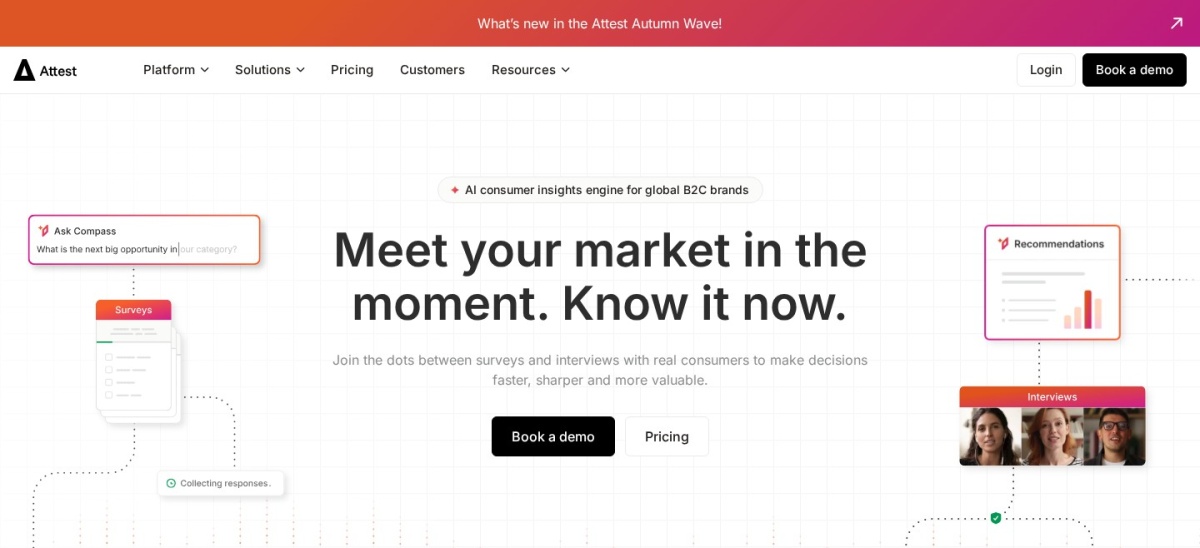
Attest is a consumer insights platform for CPG teams that sell in many markets and need the same concept tested everywhere. Its panel reaches consumers across dozens of countries, and flat-rate pricing makes budgeting a multi-market study simpler than negotiating each market separately. Results arrive in a dashboard built for brand and marketing readers.
The trade off is method depth. Attest covers standard concept tests well but does not match specialist tools on conjoint or volumetric modelling, and G2 reviewers call it expensive for small projects. It suits a global screen that must stay consistent across markets.
What we like
Large global panel across many countries
Flat published rate structure
Fast fielding
Watch out for
Less depth on advanced methods
Analysis tools are simpler than specialist platforms
quantilope is an AI-assisted consumer intelligence platform that automates advanced research methods, including conjoint, MaxDiff, TURF and pricing studies. Its AI assistant, quinn, drafts questionnaires, audits survey logic and writes reports, and results arrive in interactive dashboards. It suits insights teams that want agency-level methods without hiring an agency.
The trade off is cost and learning curve. quantilope publishes no prices, offers no free plan or trial, and G2 reviewers call its dashboards rigid with limited crosstabs. It suits teams with research training that will use the advanced methods often enough to justify a quote.
Conjointly is the easiest entry point on this list for a mid-size CPG team. The Basic tier costs nothing and covers simple surveys, while the Professional licence at $2,895 per team per year opens conjoint, Kano, claims tests and MaxDiff. Templates guide setup, and sample size tools help a team avoid running a study too small to trust.
The trade off is panel cost. Respondents are priced separately, at around $1.55 per complete response, so a large sample adds real cost, and support hours are tiered. It suits teams that run occasional studies without an agency and want control over spend.
What we like
Guided templates for conjoint, MaxDiff and claims tests
Qualtrics is the broadest platform here, covering concept testing as one part of a larger research program. Its Strategic Research plan at $420 a month, billed annually, includes guided solutions for concept testing, conjoint and MaxDiff, plus dashboards that track results over time. Teams that already use Qualtrics for brand tracking can add concept tests without buying another tool.
The trade off is scope. Qualtrics can feel large for a single study, full enterprise pricing is only available by quote, and G2 reviewers note a steep learning curve. It suits large companies that want one research system across many question types.
Upsiide is designed for the early funnel, when a team has thirty ideas and needs to keep five. Its mobile-native surveys feel natural on a phone, which helps response quality for consumer concepts, and its market simulator estimates share of choice between competing ideas. It suits innovation teams that screen often and kill weak ideas early.
The trade off is that Upsiide is a screening tool, not a forecasting tool, so a winning concept still needs validation before launch. Pricing is custom, by project or subscription, so budgeting takes a sales conversation. It suits the front of the funnel, not the final gate.
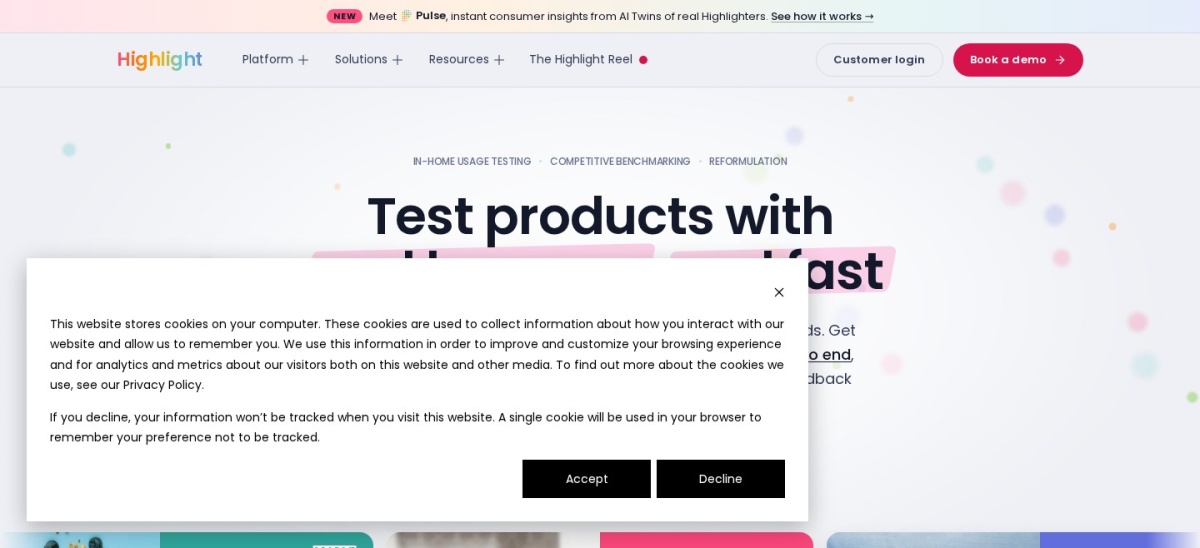
Highlight is an in-home usage testing platform built for CPG brands that need to connect physical product experience with structured digital feedback. It ships samples to verified consumers, manages the logistics, and collects surveys, photos and video as people use the product at home. It suits food, beverage, personal care and home goods teams testing formulations, flavours or scents.
The trade off is cost and speed. Pricing is project-based and depends on sample size and logistics, and a standard study takes two to three weeks from shipment to results. It suits the stage after a digital concept screen, when real use matters more than stated intent.
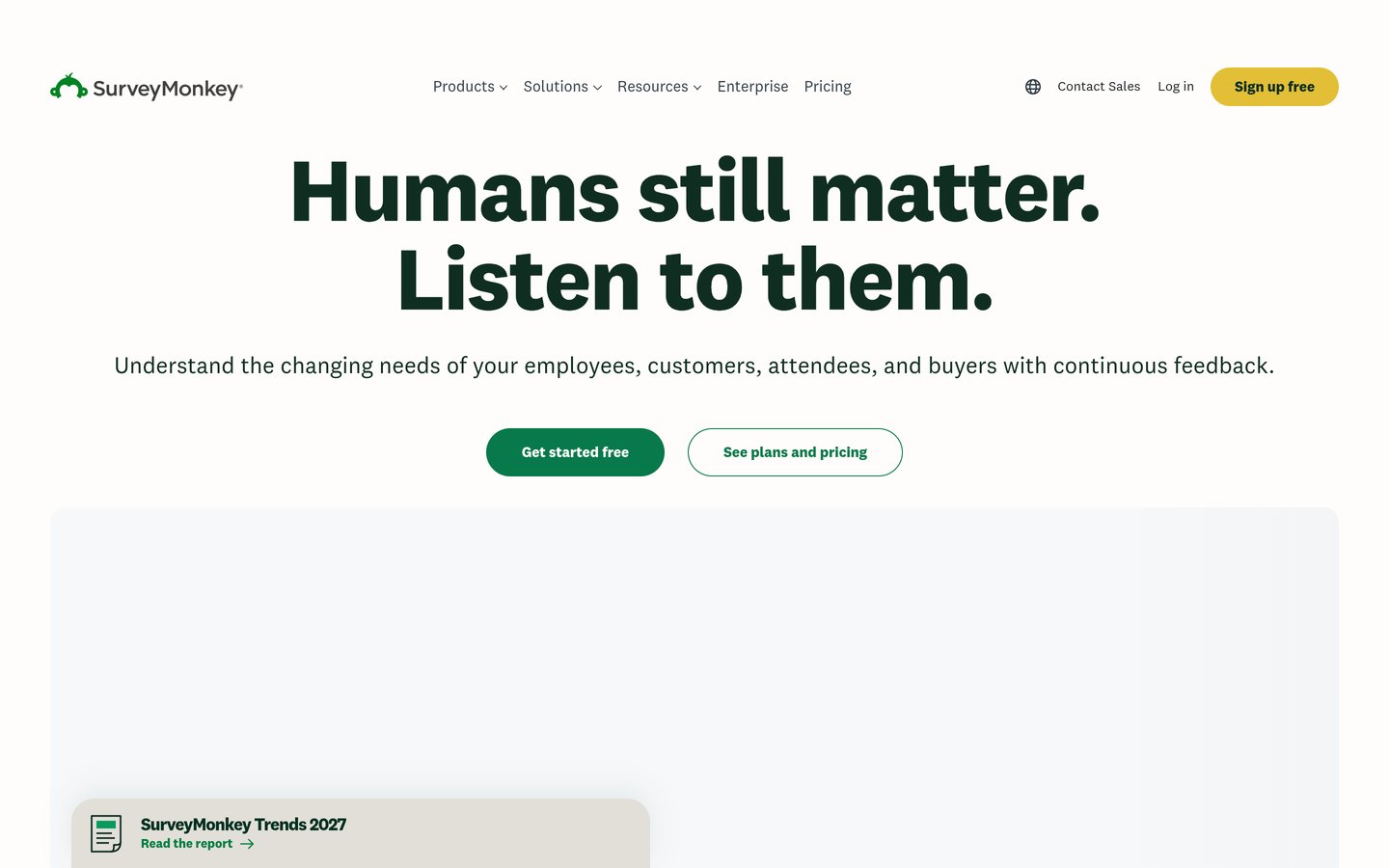
SurveyMonkey is the cheapest way onto this list, and the most reviewed, with a 4.4 out of 5 G2 rating from 23,901 reviews. The free Basic plan covers simple surveys, and Advantage Annual adds 15,000 responses a year, data export and AI analysis for $39 a month billed annually. It suits small teams that need a quick preference check, not a full concept program.
The trade off is depth. Concept tests need manual monadic setup, advanced logic and white-label surveys need higher plans, and respondent panels cost extra. It suits a quick screen of two or three ideas, not normed or volumetric decisions.
What we like
Largest G2 review base in this list
Cheapest paid plan with a published price
200+ integrations listed
Watch out for
Advanced features need the $139 a month Premier plan
Early screens can handle twenty or more ideas with a fast mobile tool, since the goal is to cut the list. Later stages should test only a few refined concepts with deeper methods, because each extra concept adds sample cost and respondent fatigue.
Reserve physical testing and volumetric forecasts for launches with major capacity, media or listing commitments. Smaller line extensions and flavour variants can usually proceed on strong concept scores and trade-off results.
Most CPG teams use two or three tools: a fast screener early, a method specialist in the middle, and a physical tester or forecaster at the gate. Buying one tool for every stage usually means paying for depth you do not use early and accepting weak forecasts late.
How we chose
We started from the concept testing platforms most often named for CPG work, including Zappi, Suzy, Attest, quantilope, Conjointly, Qualtrics, Upsiide, Highlight and SurveyMonkey, then kept those with a public rating and a clear concept testing offer.
Prices come from each vendor's pricing page or, where no price is published, are listed as a quote, checked on 25 November 2026. Ratings come from G2 or Capterra on the same day. Where a vendor shows a sale, the list shows the regular price.
We left out NielsenIQ BASES and Kantar Marketplace because neither has a public user rating we could verify, so they could not be scored on the same basis. No vendor paid for a place, and we do not claim to have used these tools ourselves.
How to choose a concept testing platform for a CPG brand
Start with the decision the test must support, then match the tool to that stage.
Name the decision first. A screen, a price trade-off and a launch forecast are different purchases. Pick the stage before you shortlist tools.
Check the sample behind the score. Ask who the respondents are, how they were recruited, and whether the panel covers your actual buyers.
Ask for the full price in writing. Six tools here publish no price. Confirm panel costs, sample sizes and support hours before you sign.
Run a small pilot before a big commitment. Test two or three concepts on a shortlist tool first. A pilot shows turnaround time and report quality before an annual licence locks you in.
FAQ
What is the best concept testing platform for CPG companies?
Zappi is the best pick for most CPG teams because its normative database scores concepts against category history, not just raw appeal. Suzy is the faster option for teams that need answers in days, and Conjointly is the best self-serve choice at $2,895 a year.
How much do concept testing platforms cost?
Prices range from $39 a month for SurveyMonkey Advantage to $420 a month for Qualtrics Strategic Research, with Conjointly Professional at $2,895 a year in between. Six of the nine tools publish no price, so expect a quote, and remember panel responses usually cost extra.
What is the difference between concept testing and in-home usage testing?
Concept testing shows an idea, pack or claim to consumers and measures appeal and purchase intent before anything is made. In-home usage testing ships a finished product to consumers and measures how it performs in real use, which is what Highlight does.
Do I need a volumetric forecast for every launch?
No. Reserve forecasting for launches with major capacity, media or listing commitments. Smaller line extensions and flavour variants can usually proceed on strong concept scores and trade-off results without a full forecast.
How many concepts should we test at once?
Early screens can handle twenty or more ideas with a fast mobile tool, since the goal is to cut the list. Later stages should test only a few refined concepts with deeper methods, because each extra concept adds sample cost and respondent fatigue.
Can one platform cover the whole concept testing funnel?
Rarely. Most CPG teams use two or three tools: a fast screener early, a method specialist in the middle, and a physical tester or forecaster at the gate. Buying one tool for every stage usually means paying for depth you do not use.
SaaS SEO and WordPress specialist with about 8 years of experience. Rakib compares WordPress plugins, themes, hosting and software using public pricing, documentation and user reviews. See how we rank.