Best Compliance Platform for Money Transmitters in 2026: 9 Tools Compared
WLWPLegible EditorsLast verified 24 Nov 2026How we rank11 min read
★ Short answer
Unit21 is the best compliance platform for most money transmitters, with AI agents that run detection, investigation and SAR filing in one place and customers who file 5% of all US SARs. Pick ComplyAdvantage for sanctions screening from $99 a month, or Sumsub when per-check KYC pricing fits your sender volume.
How we make this list: we compare pricing pages, product documentation and public user reviews, then re-check every price before each update. No product paid for a place. Disclosure.
Unit21 leads: its customers file 5% of all US SARs and the platform watches 4.5 billion events a month.
ComplyAdvantage is the only tool here with a published starting price: Starter screening from $99 a month.
Sardine and Flagright pair transaction monitoring with SAR filing; Flagright files to FinCEN and 70+ GoAML countries.
Sumsub is the only per-check option: $1.35 per verification with a $149 monthly minimum.
Seven of the nine tools publish no price at all, so budget on a quote tied to your transaction volume.
What a money transmitter compliance platform must cover
A licensed money transmitter in the US must register with FinCEN as a money services business, hold state licences, run a written BSA/AML program, screen senders against sanctions lists, monitor transactions and file SARs and CTRs. The software does not replace the compliance officer, but it carries the daily work.
Screening comes first. Every sender and payee needs a check against sanctions, PEP and adverse media lists at onboarding and again when lists change. ComplyAdvantage built its name on that layer, and most programs pair it with a monitoring tool.
Transaction monitoring is where volume hurts. A transmitter processing thousands of transfers a day cannot review alerts by hand, so the best tools score risk, cut false positives and draft the SAR narrative for an analyst to approve. Annual independent audits then test whether the program works in practice, and our guide on how to run a WordPress security audit shows the same evidence-first habit auditors expect.
KYC sits underneath both. A weak identity check at onboarding lets synthetic senders through, and no amount of monitoring fixes that later. Socure, Veriff, Jumio and Sumsub cover that layer, each with a different pricing model.
The 9 best compliance platforms for money transmitters
01
Unit21
4.6/5on G2 (32 reviews, checked Nov 2026)
PricingCustom/yr
Best compliance platform overall
SAR filing5% of all US SARs
Events monitored4.5 billion a month
AI agentsDetection to filing
PricingQuote only
unit21.ai
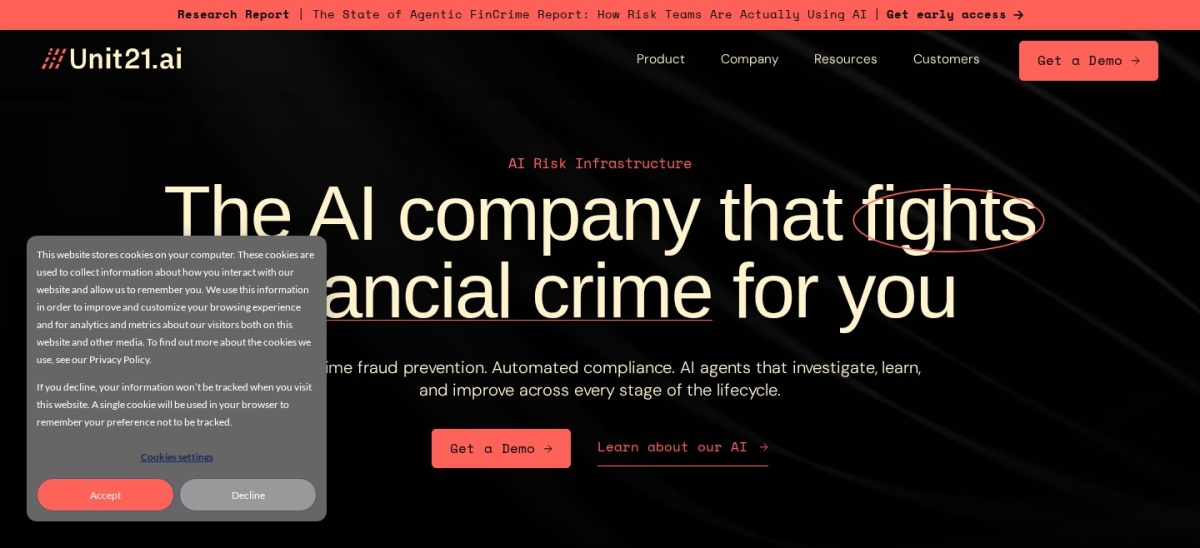
Unit21 homepage, captured Nov 2026.
Unit21 is an AI platform that runs a money transmitter's fraud and AML operations in one place. Its agents handle detection, investigation, narrative drafting and regulatory filing, and its customers file 5% of all US SARs. The platform monitors 4.5 billion events a month, and every AI decision is mapped to policy with an audit trail.
The trade off is price and effort. Unit21 publishes no price, and G2 reviewers note that setup takes work, so expect an enterprise sales cycle and implementation project. It suits licensed transmitters whose alert volume has outgrown manual review and who need filing to keep pace with growth.
What we like
Covers detection through SAR filing in one platform
Customers file 5% of all US SARs
Explainable AI decisions with a regulator-ready audit trail
Monitors 4.5 billion events a month
Watch out for
No published price
Implementation takes real effort
More platform than a small transmitter needs
Quote only; price on transaction volume and scopeVisit unit21.ai
02
ComplyAdvantage
4.4/5on G2 (110 reviews, checked Nov 2026)
Paid from$99/mo
Best sanctions screening value
Starter price$99/mo, up to 2,000 entities
ScreeningSanctions, PEP, adverse media
Transaction monitoringEnterprise only
Free accessComplyLaunch for startups
complyadvantage.com
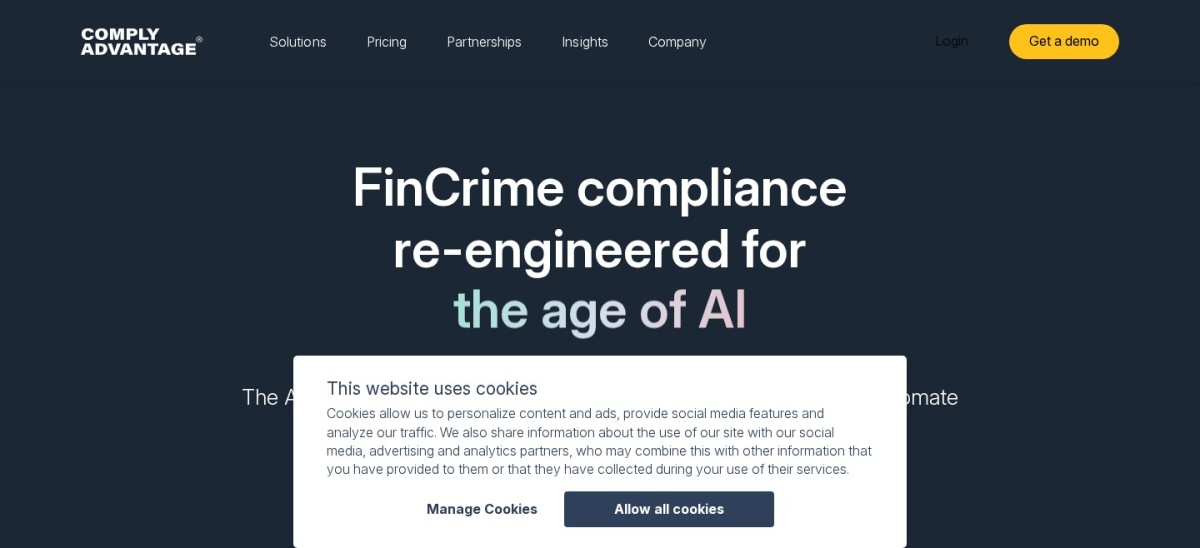
ComplyAdvantage homepage, captured Nov 2026.
ComplyAdvantage is the screening layer most money transmitter programs are built on. Its Mesh product unites sanctions, PEP and adverse media data with customer screening, company screening and ongoing monitoring. Agentic workflows resolve up to 85% of routine alerts on their own, according to the vendor.
The trade off is scope. Transaction monitoring and payment screening sit only on the quoted Enterprise plan, so a transmitter that needs monitoring pays for a second, negotiated contract. It suits transmitters that want screening priced before any sales call, with monitoring added later.
What we like
Only published starting price in this list
Sanctions, PEP and adverse media in one screen
Free ComplyLaunch program for early-stage startups
Self-serve Starter with no sales call
Watch out for
Transaction monitoring needs the quoted Enterprise plan
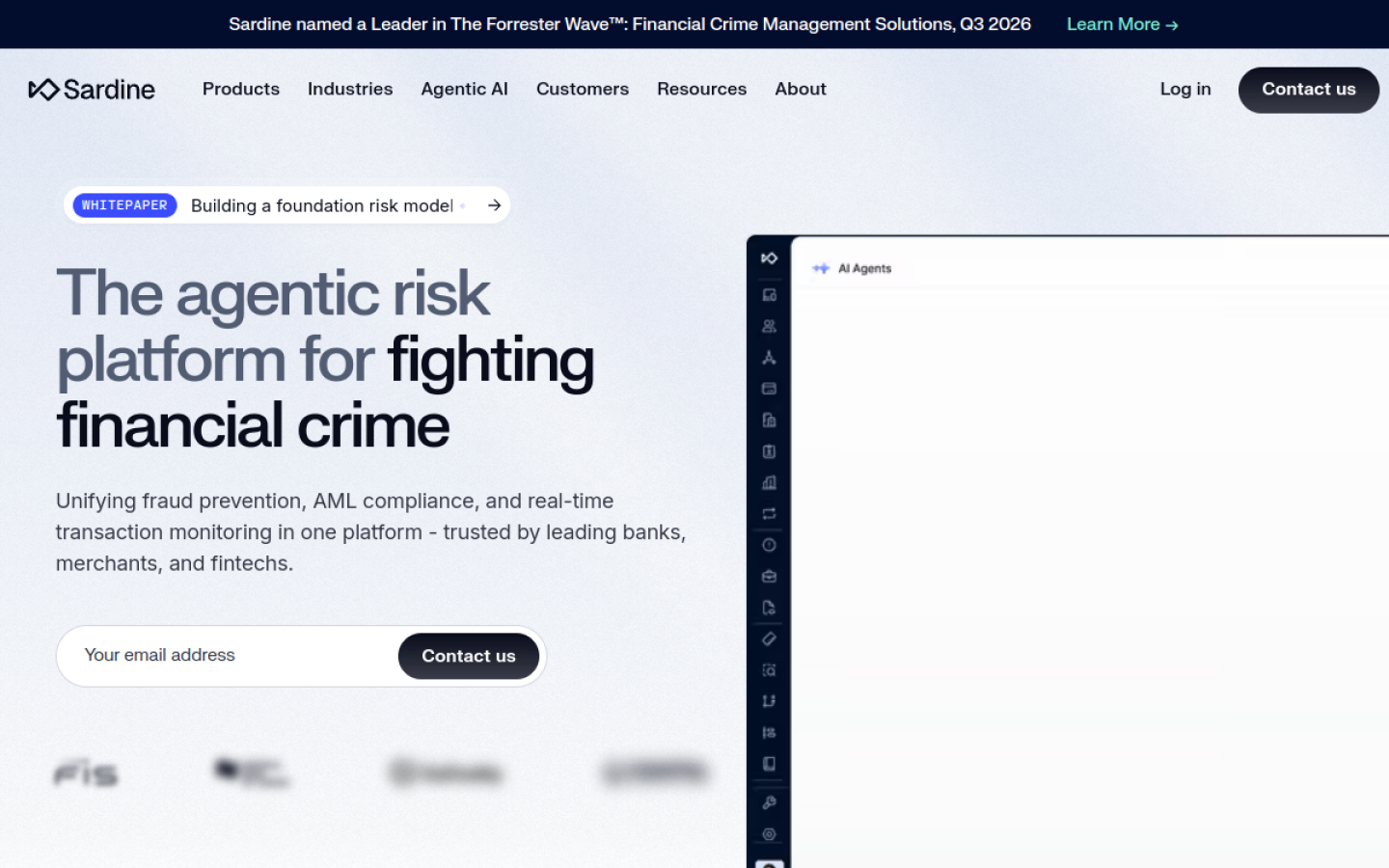
Sardine is an agentic risk platform that unifies fraud prevention, AML compliance and real-time transaction monitoring. Device intelligence, behavior biometrics, global KYC, sanctions screening, customer risk rating and case management run in one console. Its risk data covers 6.58 billion transactions and 441 million consumers.
The trade off is the sales motion. Sardine publishes no price, and G2 lists about 2 months to implement, so budgeting and rollout both need a sales cycle. It suits transmitters fighting fraud and money laundering together, where the same device signals feed both defenses.
What we like
Fraud and AML signals in one platform
Forrester Wave Leader for financial crime management, Q3 2026
Flagright is an AI-native AML platform built for cross-border operators. It covers real-time transaction monitoring, dynamic risk scoring, global watchlist screening and automated SAR filing to FinCEN and 70+ GoAML countries. The platform aligns with FinCEN, FCA, MAS and 35+ regulatory frameworks.
The trade off is youth. Flagright is younger than legacy AML suites, and its perfect 5.0 G2 score rests on 48 reviews, a small base next to larger vendors. It suits multi-jurisdiction transmitters that want one set of workflows with clean rule separation per country.
What we like
Automated SAR filing to FinCEN and 70+ GoAML countries
Hummingbird is a workspace for AML investigations, case management and SAR filing in one place. Analysts review transactions, keep the evidence and notes together, and file the suspicious activity report from the same case file. Its AI features draft parts of the investigation for an analyst to approve.
The trade off is evidence. Hummingbird has only 2 G2 reviews, so there is little independent user feedback to lean on, and it publishes no price. It suits small compliance teams that want investigations and filings in one workspace rather than a full monitoring suite.
What we like
Investigations, evidence and SAR filing in one case file
Sumsub is an all-in-one verification platform for KYC, AML screening, transaction monitoring and case management. Its Basic plan costs $1.35 per verification with a $149 monthly minimum, and only successful verifications are charged. The platform covers 14,000+ document types and offers a 14-day trial with 50 free checks.
The trade off is the tier split. Basic is aimed at non-regulated businesses, so a licensed transmitter needs the Compliance tier at $1.85 per verification with a $299 monthly minimum, and transaction monitoring needs the quoted Custom plan. It suits transmitters that want one vendor for KYC and AML at a readable price.
What we like
Only published per-check pricing in this list
Compliance tier adds AML screening and ongoing monitoring
14-day trial with 50 free checks
4,000+ clients across fintech and crypto
Watch out for
Costs climb straight with verification volume
Transaction monitoring needs the quoted Custom plan
Monthly minimum is due even with no usage
Basic $1.35/check; regulated use needs Compliance at $1.85Visit sumsub.com
07
Socure
4.5/5on G2 (103 reviews, checked Nov 2026)
PricingCustom/yr
Best for synthetic identity fraud
PlatformRiskOS decisioning
ScoresSigma identity + synthetic fraud
Customers3,000+
PricingQuote only, per check
socure.com
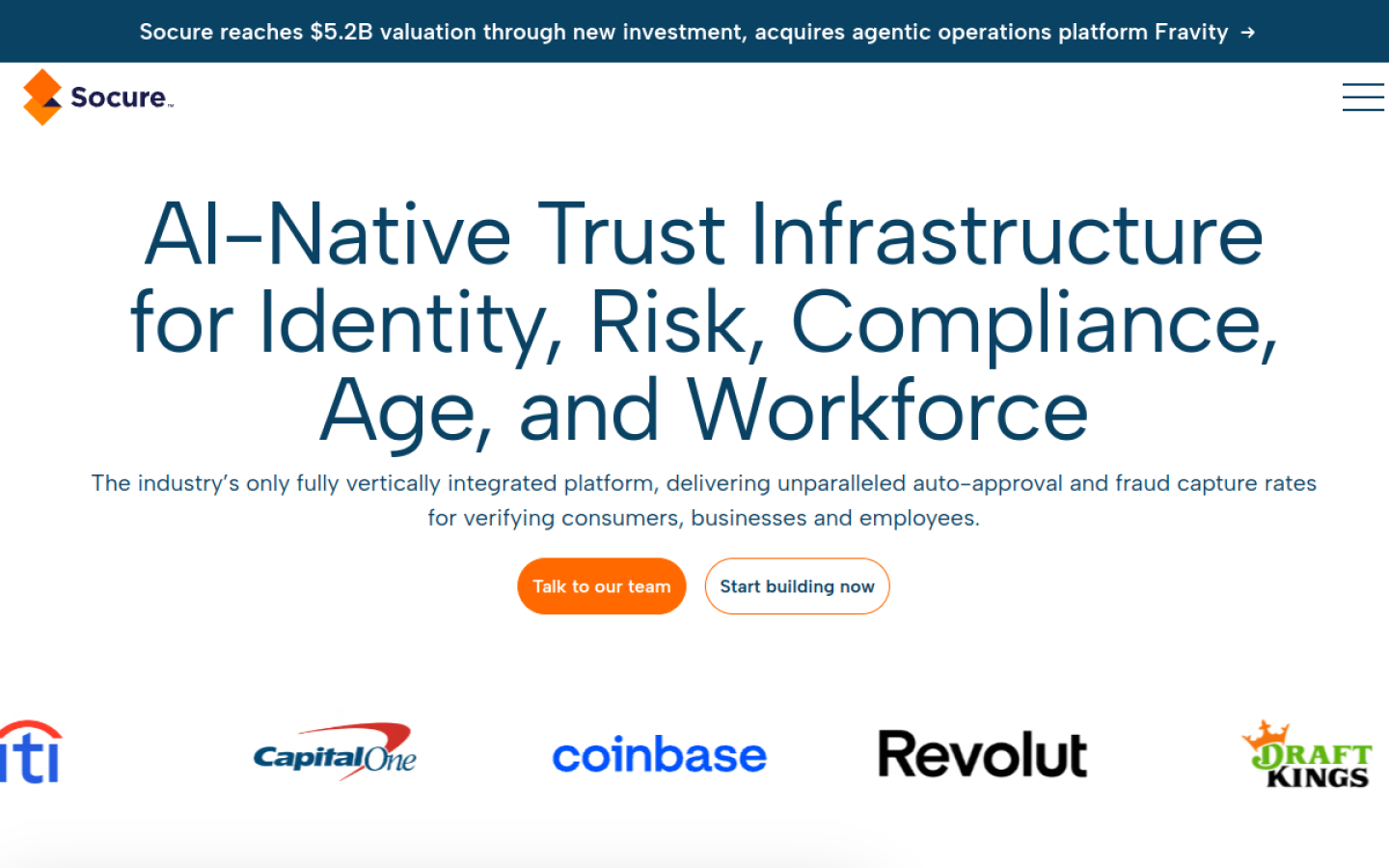
Socure homepage, captured Nov 2026.
Socure is an identity verification platform that scores fraud risk from a large identity graph. Its Sigma models return separate scores for identity fraud and synthetic identities, with a reason code for each check so analysts can defend a manual review. Socure says 19 of the top 20 US banks use it.
The trade off is scope and price. Socure prices per check by quote, with its Launch tier reported at $0.80 per document check, and its scores lean on US data, so they fit US senders best. It suits transmitters whose biggest onboarding risk is synthetic identities.
What we like
Separate scores for identity fraud and synthetic identities
Reason codes give analysts a basis for manual review
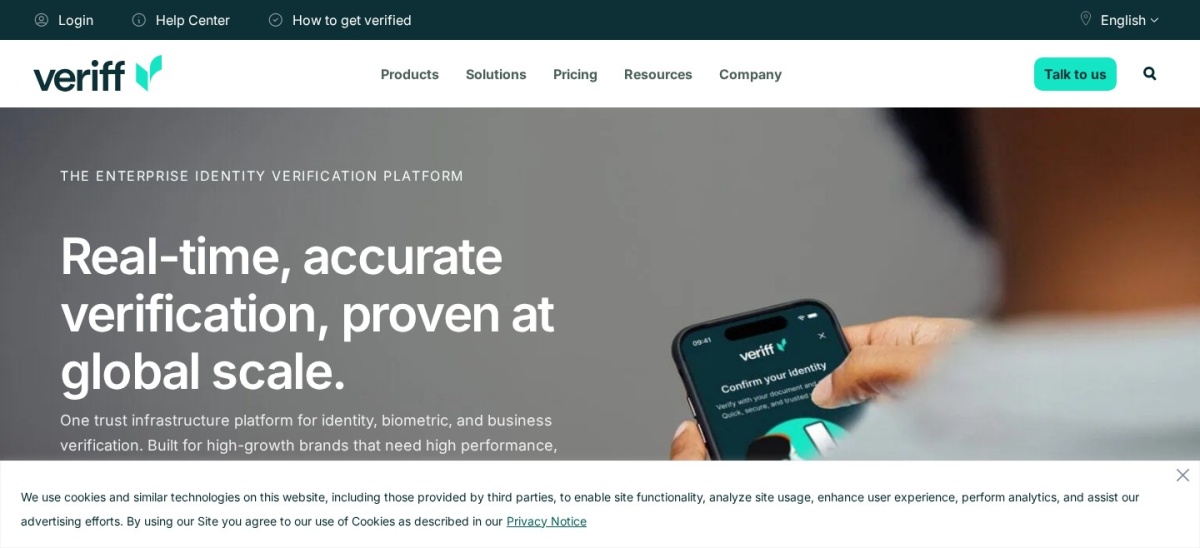
Veriff is an identity verification platform that checks documents and biometrics in real time. It verifies identity across 230+ countries, screens databases for AML, and reports 99.6% average verification accuracy. Self-serve plans sit beside custom Enterprise plans for larger volumes.
The trade off is cost at scale. Veriff publishes no starting price, and per-check costs add up fast when sender volume grows. It suits transmitters with senders from many corridors who need one verification flow for passports and national IDs alike.
Jumio is an identity verification platform that combines biometrics with liveness detection and document checks. It verifies documents across 5,000+ global ID types, and the Jumio Identity Graph holds tens of millions of known identities for cross-transaction risk. Its AML screening covers sanctions, PEP lists and adverse media.
The trade off is focus and speed. Jumio covers onboarding, not full transaction monitoring, and G2 lists about 3 months to implement. It suits transmitters that need strong document coverage for agent locations and digital channels, paired with a separate monitoring tool.
Most tools publish no price: how to compare quotes
Seven of the nine tools in this list publish no price on their own site. Only ComplyAdvantage shows a starting price, and only Sumsub publishes a per-check rate card.
Ask every vendor for the same numbers: the monthly minimum, the per-check or per-entity rate at two volumes, and what counts as a billable event. Get the SAR filing integration in writing, with the deadline it meets.
Budget screening, monitoring, KYC and case management as separate line items when vendors price them as modules. Expect five to six figures a year at production scale, and ask for money transmitter references specifically, not generic fintech logos.
How we chose
We started from compliance platforms that serve licensed money transmitters and MSBs: AML screening, transaction monitoring, KYC and SAR filing. We kept tools with a live product, a public homepage and a G2 review base we could cite.
Prices come from each vendor's pricing page, checked on 24 November 2026. Ratings come from G2 on the same day. Where a vendor shows no price, the list says quote only instead of guessing a figure.
We left out tools with no usable review base and crypto-only platforms. No vendor paid for a place, and we do not claim to have used these tools ourselves.
How to choose a compliance platform for money transmitters
Start with your licence footprint, then match the platform to your biggest compliance cost.
Map your licences and corridors. A multi-state transmitter needs multi-jurisdiction workflows and screening that covers every corridor you serve. Single-state teams can start with one screening or KYC tool.
Find your biggest cost center. If analysts drown in alerts, prioritize AI investigation and SAR filing. If onboarding fraud is the pain, invest in identity checks first.
Price each finalist at your real volumes. Ask for the monthly minimum and the per-check rate at your current volume and your volume a year from now, so the quote reflects growth.
Pilot with your own data. Run screening match rates against your actual customer base and monitoring rules against historical transactions before signing, and confirm SAR filing integration with your compliance officer.
FAQ
What is the best compliance platform for money transmitters?
Unit21 is the strongest all-round pick for most licensed transmitters. Its AI agents run detection, investigation and SAR filing in one place, and its customers file 5% of all US SARs. ComplyAdvantage leads on screening alone.
How much does money transmitter compliance software cost?
Most tools are quote only and scale with transaction and screening volume, so expect five to six figures a year at production scale. ComplyAdvantage Starter starts at $99 a month, and Sumsub charges $1.35 per verification with a $149 monthly minimum.
Do these platforms file SARs?
Unit21 and Flagright automate SAR generation and filing, with Flagright filing to FinCEN and 70+ GoAML countries. Hummingbird keeps the investigation and filing record in one case file. Confirm the filing integration and its deadline in writing before you buy.
Can one platform replace my compliance officer?
No. FinCEN requires a designated compliance officer who owns the AML program. These platforms automate screening, monitoring and investigation support, but regulatory accountability stays with a person, not the software.
What is the difference between screening and transaction monitoring?
Screening checks senders and payees against sanctions, PEP and adverse media lists at onboarding and on an ongoing basis. Transaction monitoring watches transfers as they happen and flags patterns that may signal money laundering for review.
Which tool is best for KYC at onboarding?
Sumsub is the most transparent, with published per-check pricing from $1.35 and a 14-day trial. Socure suits US senders with its synthetic identity scores, while Veriff and Jumio cover documents across 230+ countries and 5,000+ ID types respectively.