Amazon Web Services is the best cloud infrastructure for large companies, with the widest service range and a G2 rating of 4.7 out of 5. Pick Microsoft Azure if your company runs on Microsoft 365, and Google Cloud for data and AI workloads.
How we make this list: we compare pricing pages, product documentation and public user reviews, then re-check every price before each update. No product paid for a place. Disclosure.
AWS leads with a 4.7 G2 rating and more than 200 services, with entry VMs from $5 a month.
Azure fits Microsoft-based companies best and starts at $7.59 a month for a B1s VM.
Google Cloud's e2-micro costs $6.11 a month, but its G2 rating rests on only 4 reviews.
Oracle's Always Free tier includes two micro VMs, and its paid compute is usage-based.
Entry VMs across the list cost $3.50 to $7.59 a month; real enterprise bills are usage-based and far higher.
What large companies should look for in cloud infrastructure
Large companies rarely buy cloud by the virtual machine. They buy a platform: compute, storage, databases, networking, identity and security that work together across regions, with contracts, support and compliance paperwork to match.
Service range matters most. AWS, Azure and Google Cloud each run hundreds of services, so teams rarely need a second provider. Our guide on what cloud hosting is explains the basic model behind that range.
Pricing is usage-based on every platform here, so the ladder below shows the cheapest entry VM, not a real enterprise bill. Ask each vendor for a committed-use quote before you compare totals.
Check regions, compliance and support hours early. A platform with no data center near your users or no 24/7 support line will cost more later than a cheaper VM price suggests.
The 8 best cloud infrastructure platforms for large companies
01
Amazon Web Services (AWS)
4.7/5on G2 (84 reviews, checked Nov 2026)
Paid from$5/mo
Best cloud infrastructure overall
Entry VMLightsail, $5/mo
Services200+
Free tierYes, 12 months
SupportBasic, free
aws.amazon.com
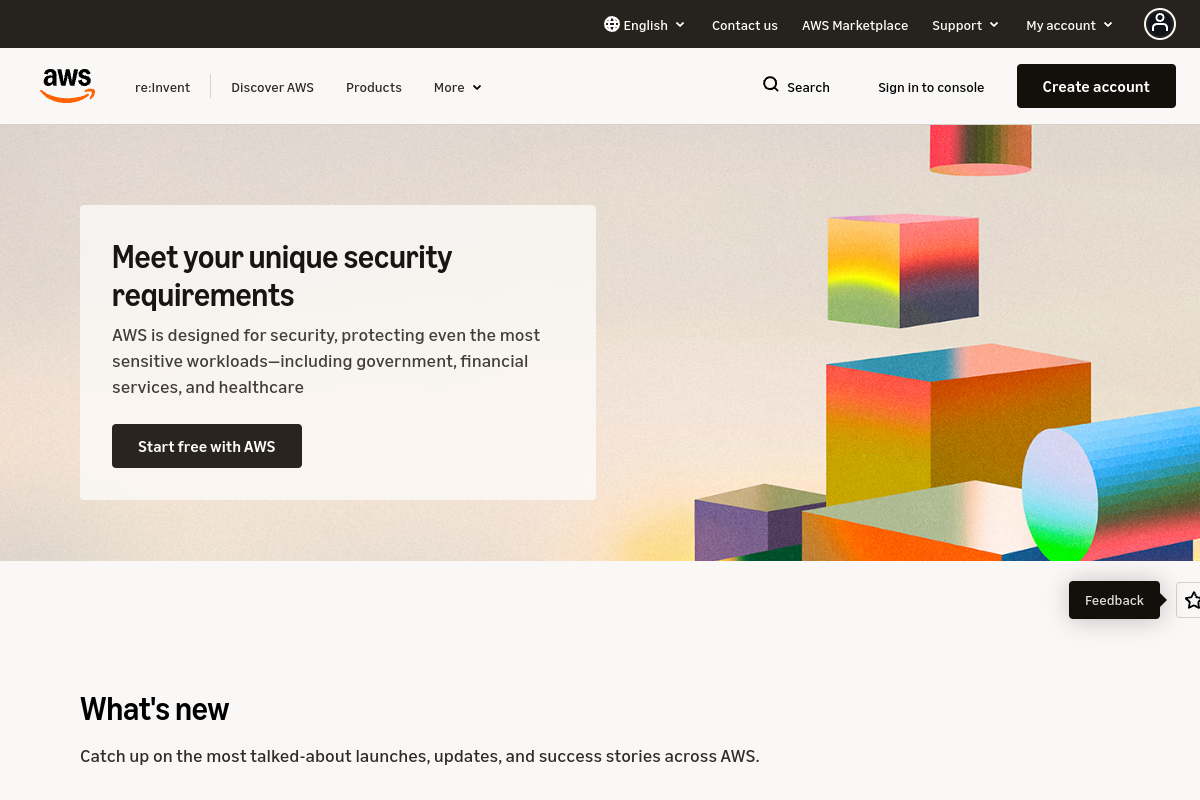
Amazon Web Services (AWS) homepage, captured Nov 2026.
Amazon Web Services (AWS) is the largest cloud platform in this list, with more than 200 services covering compute, storage, databases, machine learning and networking. Lightsail, its simplest entry point, starts at $5 a month, and the free tier covers selected services for 12 months.
The trade off is complexity and billing. With so many services and price options, a large company needs cost controls and budgets from day one, and enterprise support is a paid add-on. It suits companies that want the widest choice of services and the most regions to run them in.
What we like
Largest catalogue of cloud services
Free tier for the first 12 months
Lightsail gives a simple $5 starting server
Strongest ecosystem of third-party tools
Watch out for
Billing is hard to predict across services
Console takes time to learn
Enterprise support costs extra
Paid support and reserved servers cut the bill for steady workloadsVisit aws.amazon.com
02
Microsoft Azure
4.3/5on G2 (73 reviews, checked Nov 2026)
Paid from$7.59/mo
Best for Microsoft-based companies
Entry VMB1s, $7.59/mo
Free credit$200 for 30 days
Regions60+
Hybrid BenefitYes
azure.microsoft.com
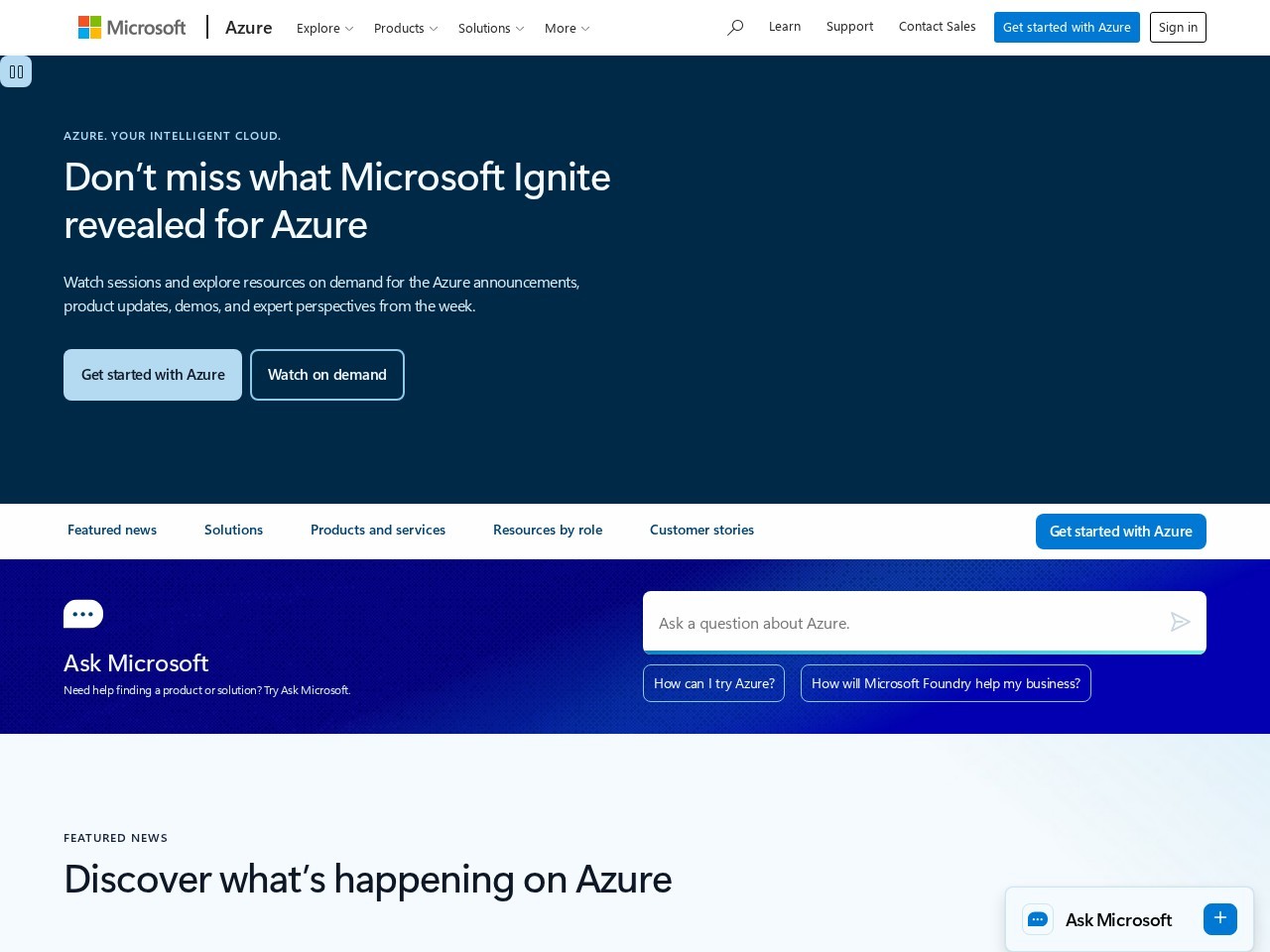
Microsoft Azure homepage, captured Nov 2026.
Microsoft Azure is the cloud platform from Microsoft, built for companies that already run Windows Server, Active Directory and Microsoft 365. The entry B1s virtual machine costs $7.59 a month, and a free account includes $200 of credit for 30 days plus 12 months of selected free services.
The trade off is the learning curve. Azure's portal and service names can confuse newcomers, and billing is hard to predict without budgets and alerts. It suits large companies standardized on Microsoft software, where Entra ID and Hybrid Benefit cut licence costs.
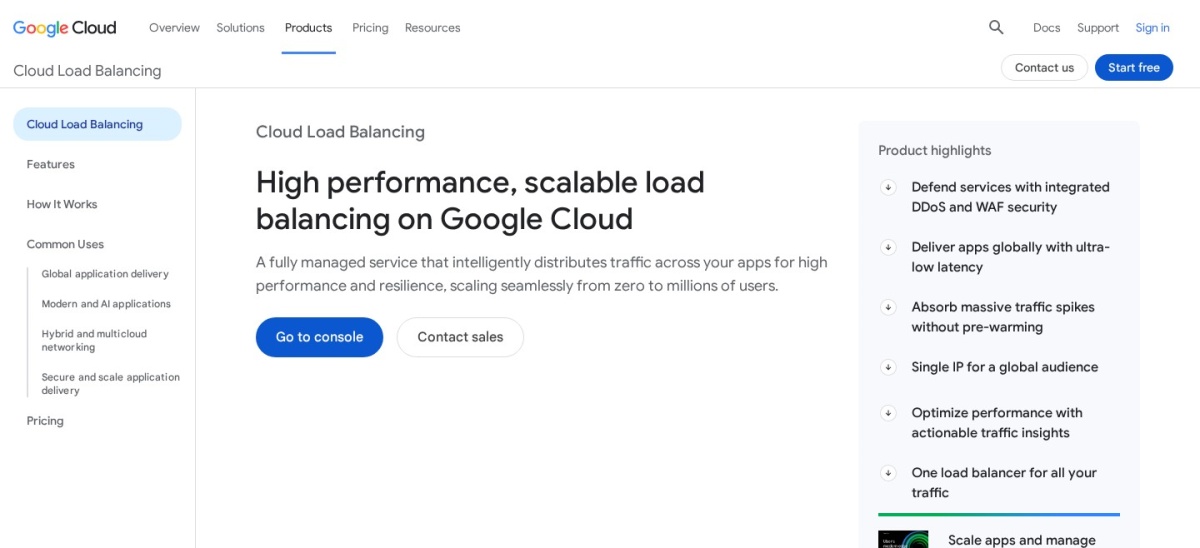
Google Cloud is Google's cloud platform, known for data, analytics and Kubernetes, which Google created. The entry e2-micro virtual machine costs $6.11 a month, one e2-micro is free every month in selected regions, and new accounts get $300 of credit for 90 days.
The trade off is a thinner review base and fewer enterprise services than AWS or Azure. Its G2 rating of 4.5 rests on only 4 reviews, so treat it with care. It suits data-heavy companies and teams running Kubernetes or BigQuery at scale.
Oracle Cloud Infrastructure homepage, captured Nov 2026.
Oracle Cloud Infrastructure is Oracle's cloud platform, built around its database and enterprise software. The Always Free tier includes two AMD micro virtual machines, and paid compute is usage-based, so large Oracle estates can run databases beside applications on the same platform.
The trade off is a smaller service range than the three hyperscalers. Some newer services arrive later, and enterprise pricing is quoted rather than listed. It suits large companies already running Oracle Database or Oracle applications.
What we like
Always Free tier with two micro VMs
Autonomous Database needs little admin work
Competitive compute prices for Oracle workloads
Strong security and compliance tooling
Watch out for
Smaller service range than the hyperscalers
Enterprise pricing is quoted, not listed
Fewer third-party integrations
Enterprise agreements set the price; ask Oracle for a quoteVisit oracle.com
05
Alibaba Cloud
4.3/5on G2 (60 reviews, checked Nov 2026)
PricingCustom/yr
Best for Asia-Pacific reach
ComputeECS, pay-as-you-go
Free trialYes
RegionsAsia-Pacific focus
KubernetesACK, managed
alibabacloud.com
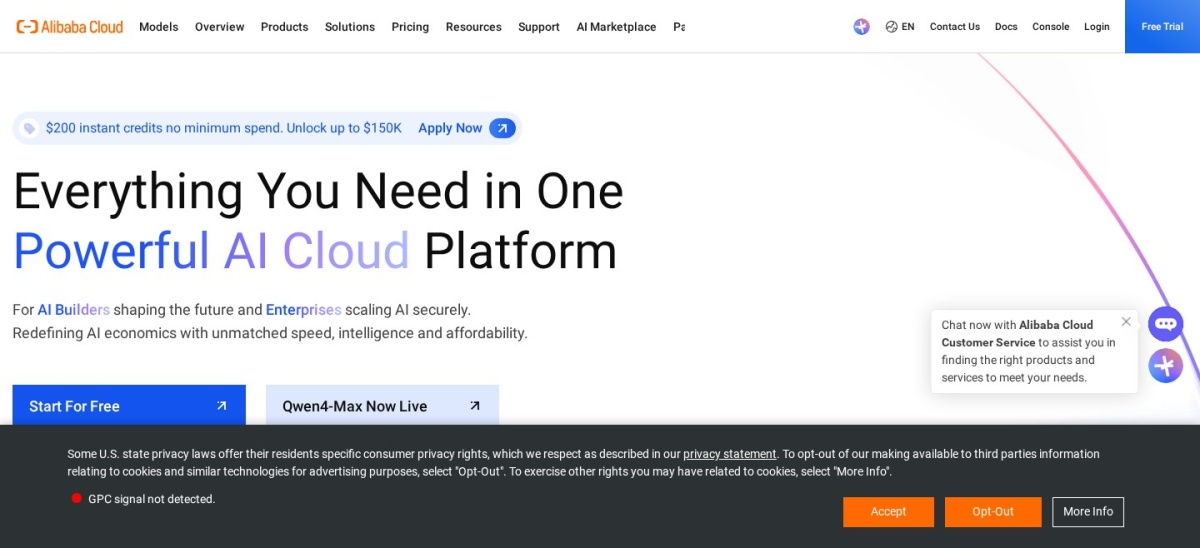
Alibaba Cloud homepage, captured Nov 2026.
Alibaba Cloud is the largest cloud provider in Asia-Pacific, with its Elastic Compute Service at the centre. Compute, storage and databases are pay-as-you-go, and the platform is strongest in China and Southeast Asia, where it has deep local coverage.
The trade off is documentation and support in English. Reviewers praise low prices and scale but report a steep learning curve and slow support replies. It suits large companies with customers or operations across Asia-Pacific.
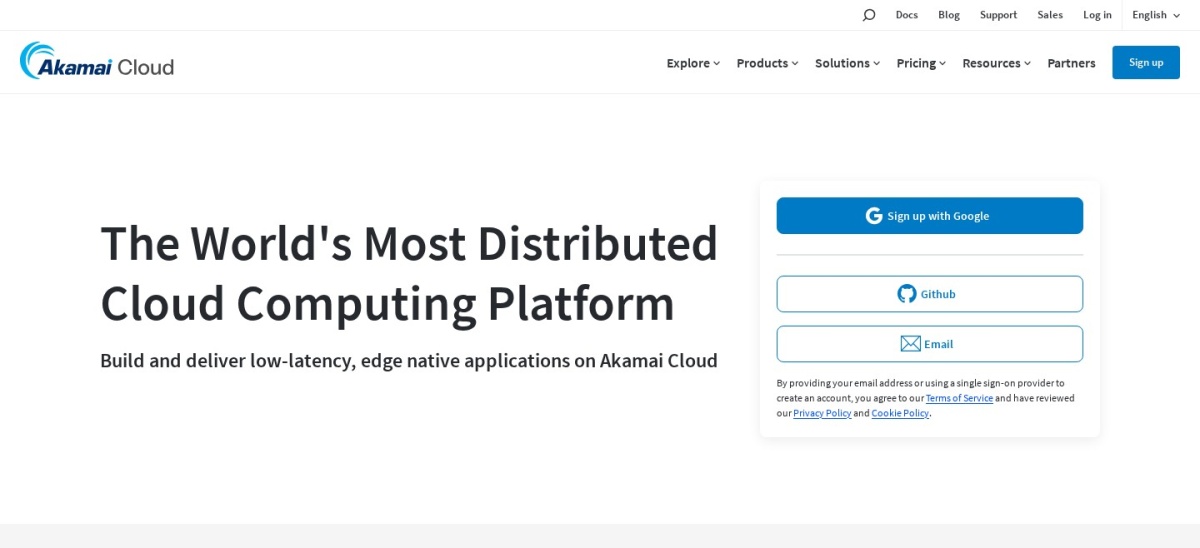
Linode (Akamai Cloud) homepage, captured Nov 2026.
Linode (Akamai Cloud) is Akamai's cloud platform, aimed at teams that want simple virtual machines without hyperscaler complexity. The Nanode plan costs $5 a month for 1 vCPU, 1 GB of RAM, 25 GB of storage and 1 TB of transfer, and managed Kubernetes has no control-plane charge.
The trade off is enterprise depth. Linode has fewer managed services, regions and compliance programs than the hyperscalers, and support is ticket-based on the standard plan. It suits large companies running steady, well-understood workloads that do not need hundreds of services.
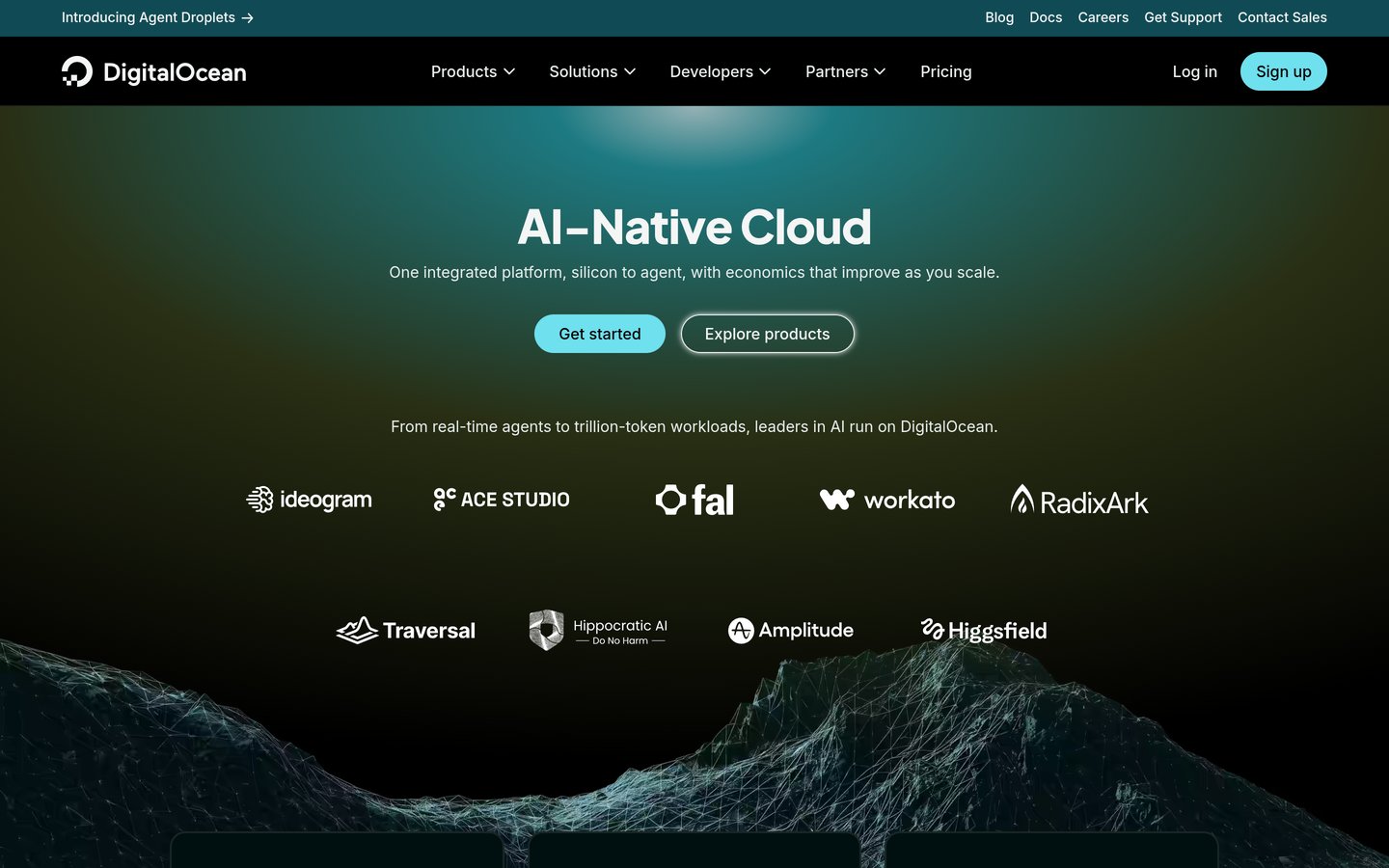
DigitalOcean is a cloud platform built for simplicity, with virtual machines called Droplets at its core. The basic Droplet costs $4 a month for 1 vCPU, 512 MB of RAM, 10 GB of storage and 500 GB of transfer, and managed Kubernetes and App Platform cover containers and apps.
The trade off is scale and enterprise features. DigitalOcean has fewer regions and managed services than the hyperscalers, and its largest plans suit mid-size workloads more than global estates. It suits teams that want a fast setup and a bill they can predict.
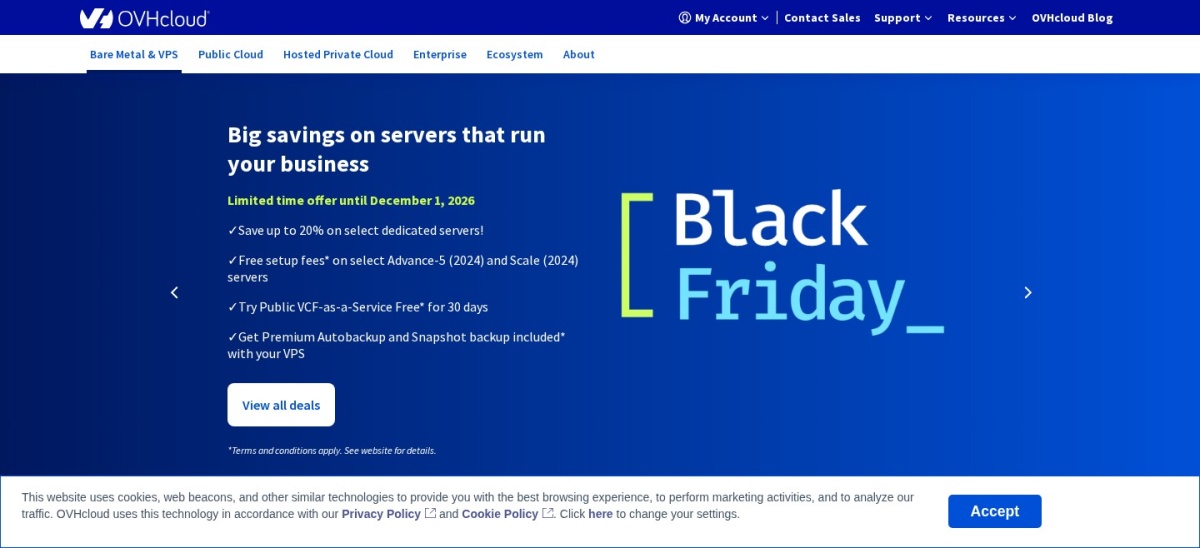
OVHcloud is a European cloud provider with its own data centers, focused on data sovereignty and low prices. The Starter virtual machine costs $3.50 a month, DDoS protection is included, and managed Kubernetes is available on its Public Cloud.
The trade off is the lowest rating in this list. OVHcloud scores 3.0 out of 5 on G2 from 79 reviews, with reviewers reporting slow support replies and a dated console. It suits large companies that need European data control and a low entry price.
Pay-as-you-go vs committed use: where the real bill comes from
Every platform here bills by the hour or by the second for the resources you use. That keeps small tests cheap, but a busy production workload can cost far more than the entry VM price.
Committed-use discounts cut that bill. AWS Savings Plans, Azure Reservations and Google committed use discounts all trade a one- or three-year promise for lower hourly rates.
We started from the cloud platforms large companies actually run: the three hyperscalers plus Oracle, Alibaba, Akamai, DigitalOcean and OVHcloud, chosen for service range, region coverage and enterprise features.
Prices come from each vendor's pricing page, checked on 25 November 2026. Ratings and review counts come from G2 on the same day. Where a vendor shows a sale, the list shows the regular price.
We left out IBM Cloud because its G2 review count could not be verified today, and platforms with no public rating at all. No vendor paid for a place, and we do not claim to have used these tools ourselves.
How to choose cloud infrastructure for a large company
Start with the workloads you already run, then match the platform to them.
List your current workloads and vendors. A company on Microsoft 365 and Active Directory will get more from Azure, while Oracle database estates fit OCI. The cheapest VM rarely decides the total cost.
Check regions and compliance first. Confirm data centers near your users and the certificates your industry needs, such as SOC 2 or ISO 27001. See what a hosting SLA actually covers before you sign.
Price a realistic month, not the entry VM. Run the vendor's pricing calculator with your real CPU, storage and transfer numbers, then compare committed-use prices for the same workload.
Test support before you migrate. Open a ticket on a trial account and time the reply. Enterprise support is a paid add-on on most platforms, so check its price and hours.
FAQ
What is the best cloud infrastructure for large companies?
Amazon Web Services is the best overall pick, with more than 200 services and a G2 rating of 4.7 out of 5 from 84 reviews. Azure fits Microsoft-based companies best, and Google Cloud leads for data and AI workloads.
How much does cloud infrastructure cost for a large company?
Entry virtual machines cost $3.50 to $7.59 a month, but a large company pays for compute, storage, transfer and support by usage, so totals depend on the workload. Get a committed-use quote from each vendor before you compare.
Is Azure or AWS better for a large company?
It depends on your stack. Azure wins for companies standardized on Microsoft 365, Windows Server and Active Directory, while AWS wins on service range and third-party tools. Both suit global estates.
Does Google Cloud suit large companies?
Yes, especially for data, analytics and Kubernetes workloads, where it is strongest. Note its G2 rating of 4.5 rests on only 4 reviews, so weigh its data tools and free tier more than the score.
What is the cheapest enterprise cloud platform?
OVHcloud has the cheapest entry VM at $3.50 a month, followed by DigitalOcean at $4. But entry VM prices do not show enterprise costs, which come from usage, storage, transfer and support.
Can a large company use DigitalOcean or Linode?
Yes, for simpler workloads. Both offer managed Kubernetes, predictable flat pricing and high G2 ratings. They suit steady workloads better than global estates that need hundreds of managed services.
SaaS SEO and WordPress specialist with about 8 years of experience. Rakib compares WordPress plugins, themes, hosting and software using public pricing, documentation and user reviews. See how we rank.