QuickBooks Online is the best cloud-based accounting software for most medium-sized businesses, with its Advanced plan covering 25 users at $340 a month and a 4.0 out of 5 rating from 3,870 G2 reviews. Pick Sage Intacct for multi-entity books and Xero if you want unlimited users at a lower monthly price.
How we make this list: we compare pricing pages, product documentation and public user reviews, then re-check every price before each update. No product paid for a place. Disclosure.
QuickBooks Online Advanced covers 25 users at $340 a month, the widest seat count among the priced tools here.
Xero charges $27 a month for Early and puts no user limit on any plan.
Sage Intacct, NetSuite and Acumatica publish no price; all three are quoted per company.
Zoho Books Standard costs $20 a month for 3 users, and its free plan covers businesses under $50,000 in annual revenue.
Business Central Essentials costs $80 per user a month, so 10 users cost $800 a month before implementation.
FreshBooks holds the highest G2 rating here at 4.5 out of 5 from 975 reviews.
What medium-sized businesses need from cloud accounting
A medium-sized business usually has more than one person touching the books, more than one bank account, and reporting needs a single-user tool cannot meet.
Look for user limits first. Some tools in this list cap users per plan, while Xero and Acumatica put no limit on users at all.
Multi-entity support matters once a company runs more than one brand, location or subsidiary. Sage Intacct and NetSuite consolidate entities; the simpler tools do not.
Price also changes shape at this size. Per-user licences such as Business Central at $80 a user a month grow with headcount, while per-organization pricing such as Zoho Books stays flat as the team grows.
The 9 best cloud-based accounting software for medium-sized business
01
QuickBooks Online
4/5on G2 (3,870 reviews, checked Nov 2026)
Paid from$38/mo
Best cloud accounting software overall
Cheapest planSimple Start, $38/mo
Users on Advanced25, plus 3 accountants
InventoryPlus plan and up
PayrollSeparate paid add-on
quickbooks.intuit.com
QuickBooks Online homepage, captured Nov 2026.
QuickBooks Online is the cloud accounting tool most US accountants already know, with invoicing, expense tracking, bank feeds and reporting in every plan. Simple Start costs $38 a month for 1 user, Essentials costs $85 a month for 3 users, and Plus costs $140 a month for 5 users with inventory and project profitability.
The trade off is price. Plus costs nearly four times Simple Start, payroll is a separate add-on, and a sixth user forces a jump to Advanced at $340 a month. It suits medium-sized businesses that want the largest accountant network and the deepest reporting in this list.
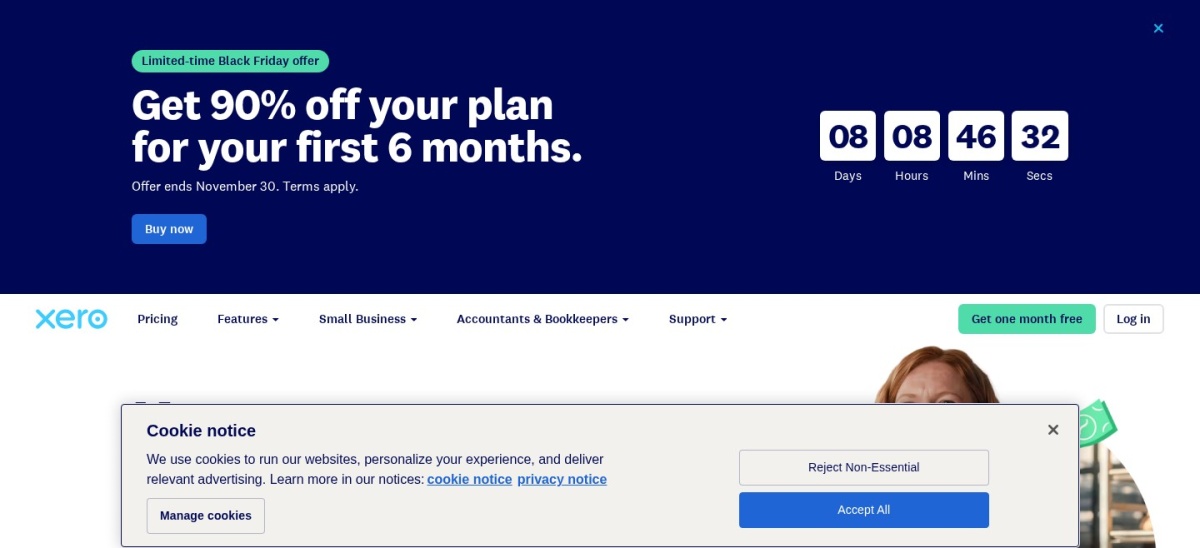
Xero is cloud accounting software with bank reconciliation, invoicing, expense claims and reporting, and every plan includes unlimited users. Early costs $27 a month and covers 20 invoices and 5 bills a month, while Growing at $59 a month removes those caps and Established at $97 a month adds multi-currency and project tracking.
The trade off is the entry cap. A business sending more than 20 invoices a month must move to Growing at $59 a month, and payroll is a separate add-on in the US. It suits medium-sized service businesses that want every staff member in the books without paying per user.
What we like
Unlimited users on every plan
Strong bank reconciliation and invoicing
Multi-currency and projects on Established
Watch out for
Early caps at 20 invoices and 5 bills a month
Payroll is a separate add-on in the US
Inventory management is basic
Established adds multi-currency, projects and expense claimsVisit xero.com
03
Sage Intacct
4.3/5on G2 (4,249 reviews, checked Nov 2026)
PricingCustom/yr
Best for multi-entity finance teams
PricingQuoted per company
Multi-entityYes, with consolidation
DimensionsBy department and location
UsersQuoted with the plan
sageintacct.com
Sage Intacct homepage, captured Nov 2026.
Sage Intacct is cloud financial management software built for companies with more than one entity, location or department. It handles multi-entity consolidation, dimensional reporting, revenue recognition and approvals, and it holds a 4.3 out of 5 rating from 4,249 G2 reviews.
The trade off is price. Sage publishes no list price and sells through partners, so a quote and implementation work are part of the cost. It suits medium-sized finance teams that have outgrown single-company books and need consolidated closes.
What we like
Multi-entity consolidation built in
Dimensional reporting by department, location and project
Strong approval workflows and audit trail
Watch out for
No published price; quote and setup needed
Implementation takes longer than the simpler tools here
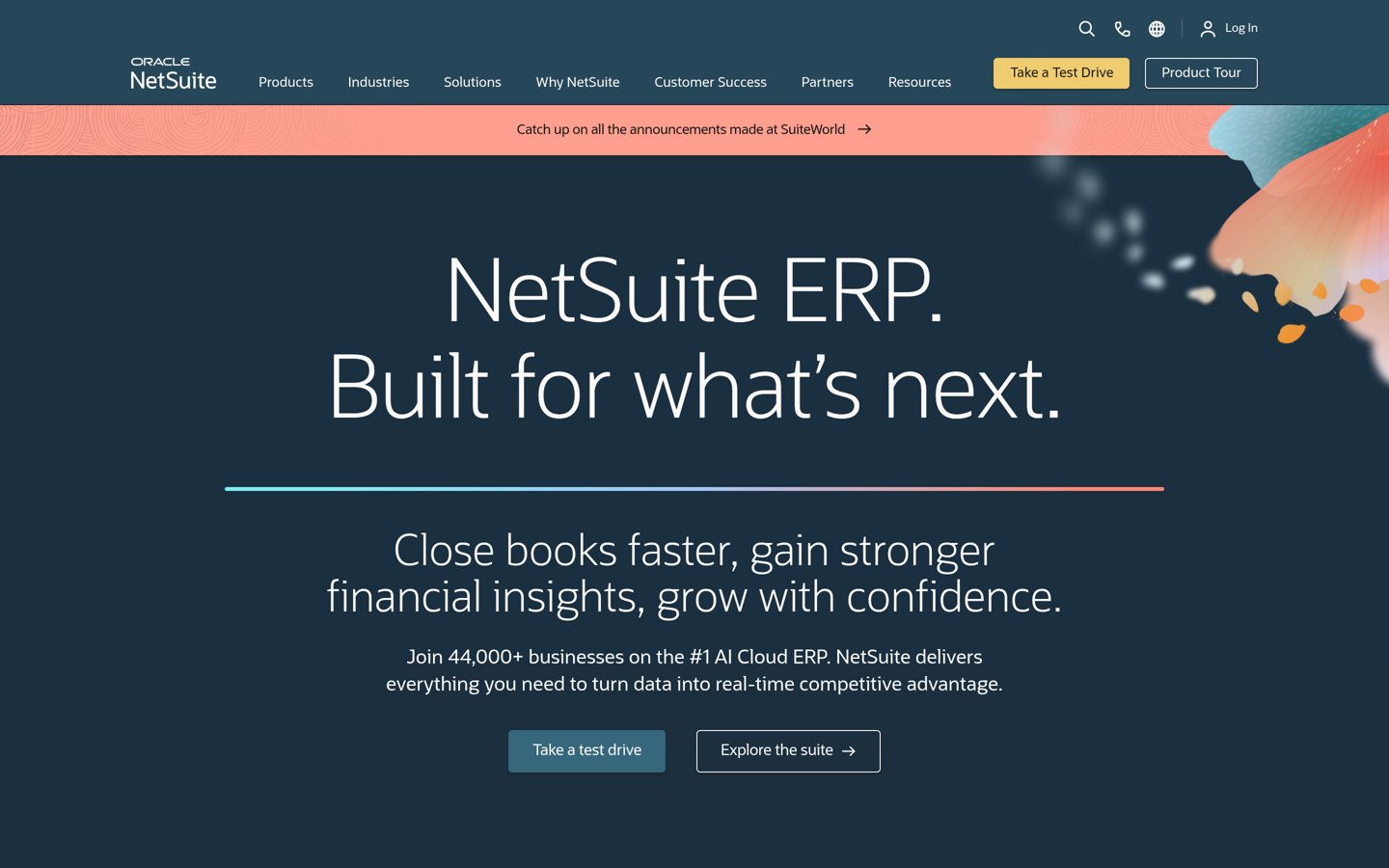
Oracle NetSuite is a cloud ERP that combines accounting with inventory, order management, CRM and e-commerce in one system. It covers multi-subsidiary consolidation, revenue recognition and real-time dashboards, and it holds a 4.1 out of 5 rating from 4,803 G2 reviews.
The trade off is cost and setup. NetSuite publishes no price, licences are quoted, and implementation usually needs a partner and a longer rollout. It suits medium-sized companies that want accounting inside a full ERP instead of a standalone ledger.
What we like
Full ERP breadth beyond accounting
Multi-subsidiary consolidation built in
Real-time dashboards and saved searches
Watch out for
No published price
Implementation usually needs a partner
More complex to set up than the simpler tools here
Quote covers licences, modules and implementation separatelyVisit netsuite.com
05
Zoho Books
4.4/5on G2 (329 reviews, checked Nov 2026)
Paid from$20/mo
Best value for growing teams
Cheapest paid planStandard, $20/mo
Free planYes, under $50,000 revenue
Users on Premium10
Invoices on Standard5,000 a year
zoho.com
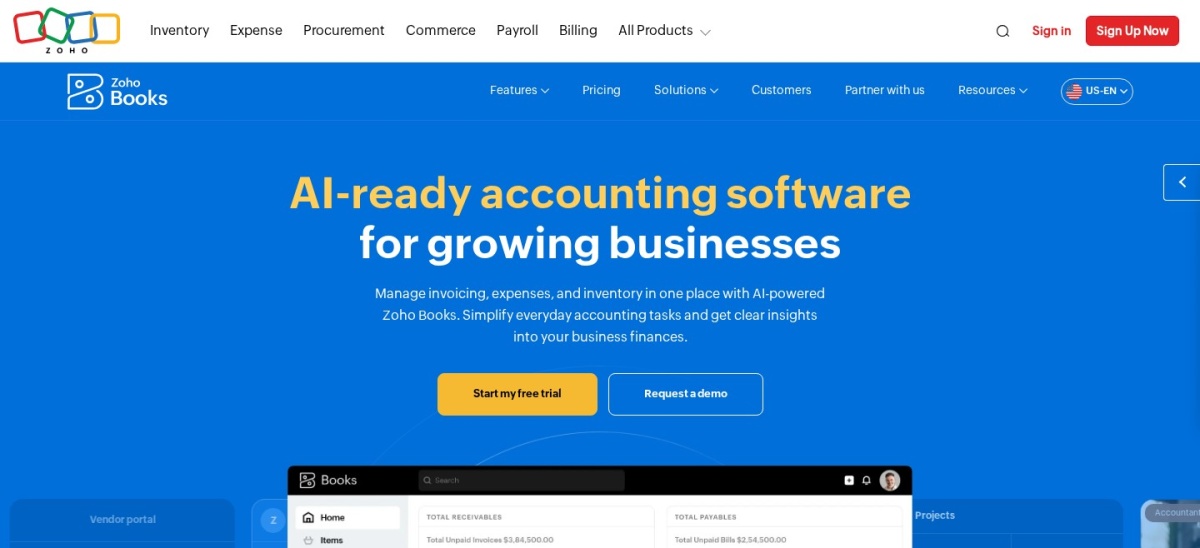
Zoho Books homepage, captured Nov 2026.
Zoho Books is cloud accounting software with invoicing, bank feeds, expenses, inventory and projects, and it works inside the wider Zoho suite. The free plan covers businesses under $50,000 in annual revenue with 1 user plus an accountant, and Standard costs $20 a month for 3 users.
The trade off is scale. Invoice and user caps rise with each plan, and the free plan ends once revenue passes $50,000 a year. It suits medium-sized teams that already use Zoho apps and want low per-organization pricing instead of per-user pricing.
What we like
Free plan for businesses under $50,000 revenue
Paid plans priced per organization, not per user
Premium covers 10 users at $70 a month
Watch out for
Free plan ends above $50,000 annual revenue
Invoice caps rise only on higher plans
Payroll needs a separate Zoho app
Premium adds budgeting, vendor portal and 25,000 invoices a yearVisit zoho.com
06
Microsoft Dynamics 365 Business Central
4/5on G2 (904 reviews, checked Nov 2026)
Starts at$80/user/mo
Best for Microsoft 365 teams
Cheapest full licenceEssentials, $80/user/mo
Team Members$8/user/mo
Premium$110/user/mo
Trial30-day free trial
microsoft.com
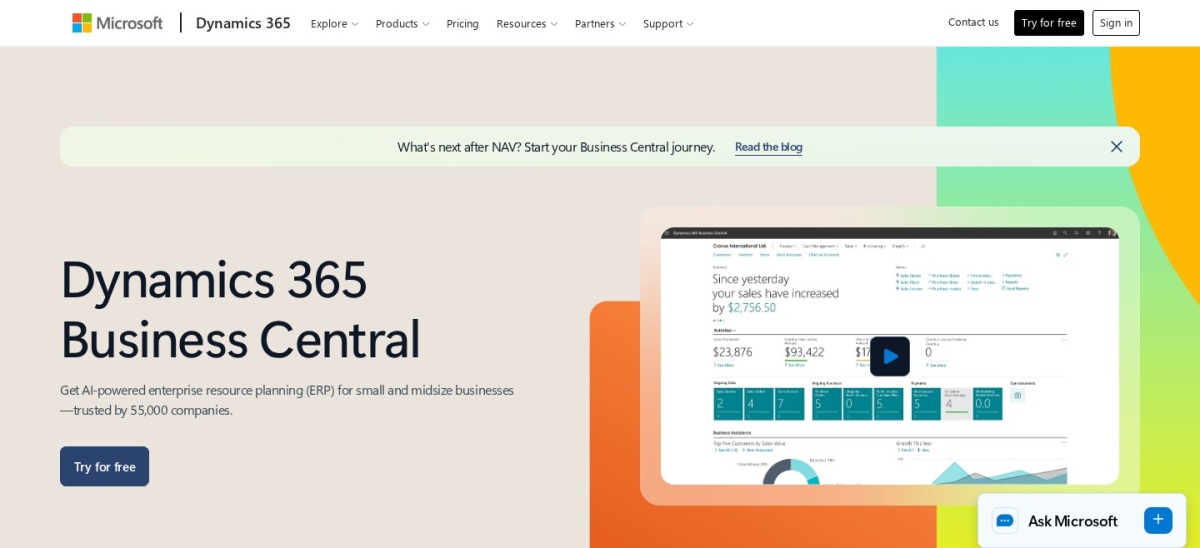
Microsoft Dynamics 365 Business Central homepage, captured Nov 2026.
Microsoft Dynamics 365 Business Central is a cloud ERP for small and mid-sized companies that covers finance, sales, purchasing, inventory and projects. Essentials costs $80 per user a month and includes Copilot, while Premium at $110 a user a month adds manufacturing and service management.
The trade off is per-user cost. Ten Essentials users cost $800 a month before implementation, which is usually handled by a partner. It suits medium-sized companies already running Microsoft 365, Teams and Power BI.
What we like
Deep fit with Microsoft 365, Teams and Power BI
Essentials covers finance, sales and inventory
Team Member licences at $8 a user a month for light users
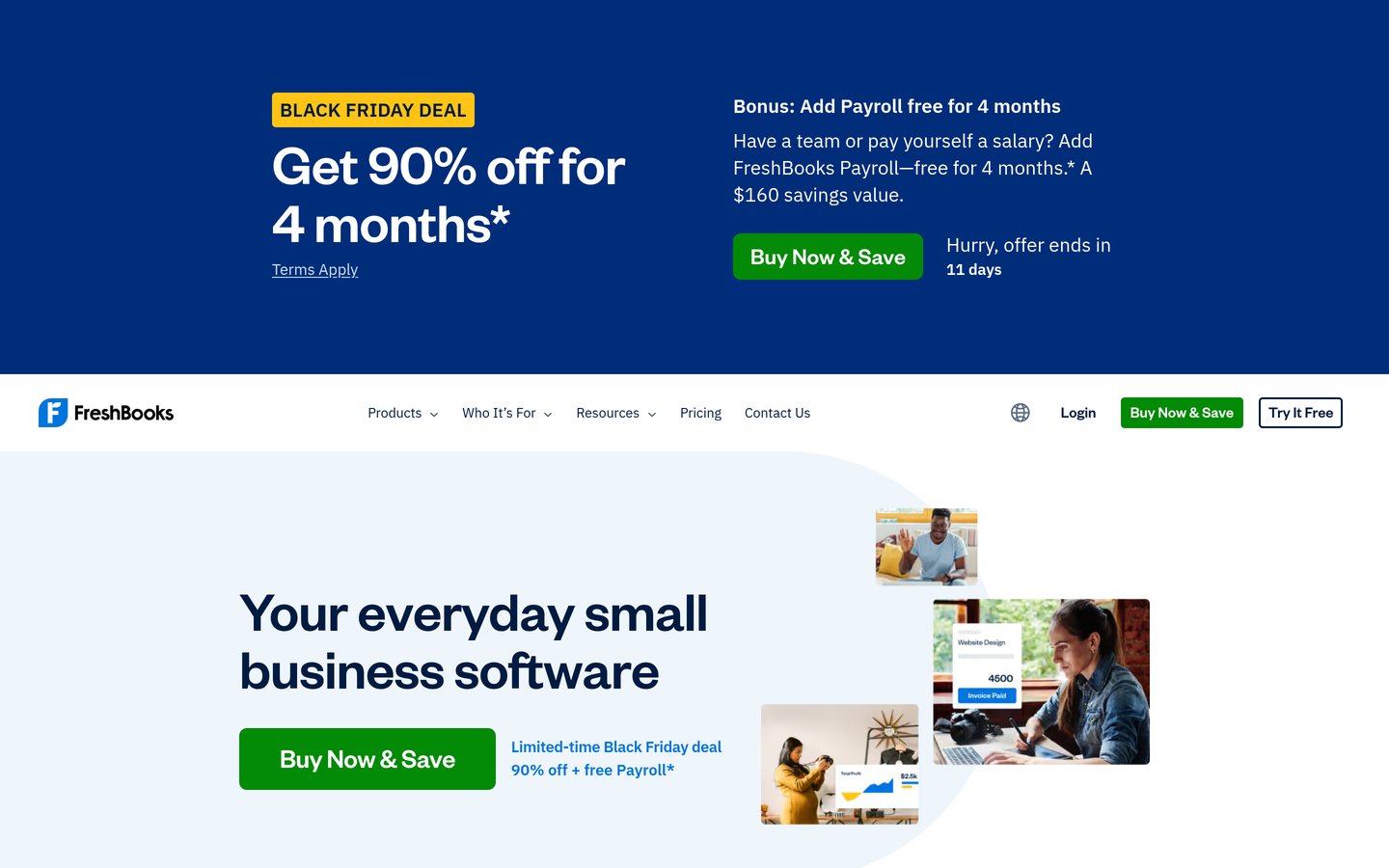
FreshBooks is cloud accounting software built around client billing, with invoicing, estimates, expense tracking and time tracking. Lite costs $23 a month for up to 5 billable clients, Plus costs $43 a month for 50 clients, and Premium at $70 a month covers unlimited clients.
The trade off is team cost. No plan below Select includes team members, so each extra user costs $11 a month on top of the plan. It suits medium-sized service businesses that bill clients by the project and want clean, simple invoices.
What we like
Highest G2 rating in this list at 4.5
Clean invoicing with proposals and retainers on Plus
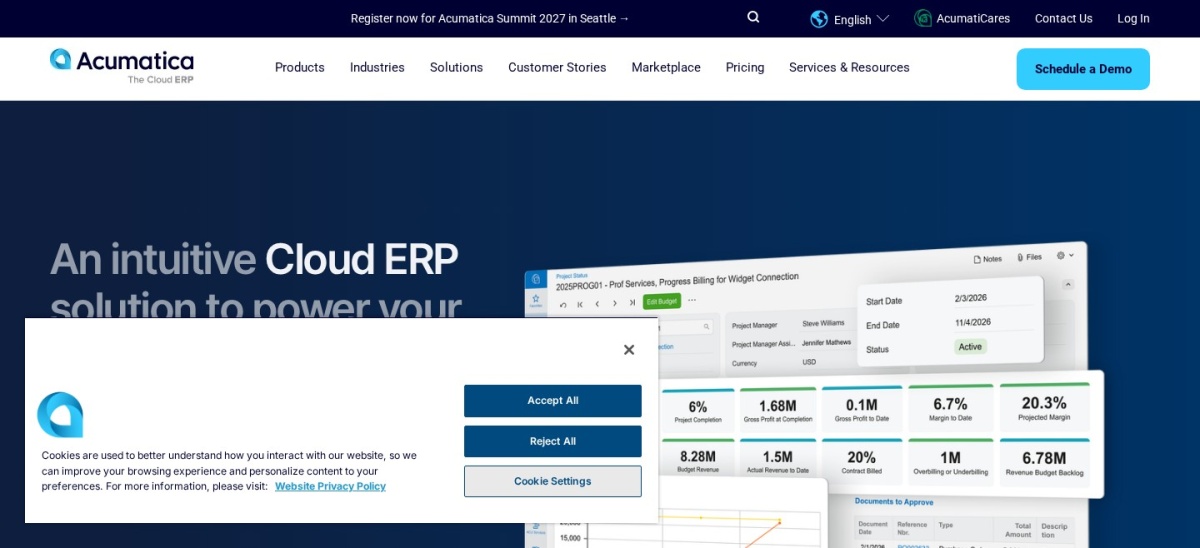
Acumatica is a cloud ERP with financial management, distribution, project accounting and CRM in one system. It charges by the computing resources used rather than per user, so every employee can log in, and it holds a 4.4 out of 5 rating from 2,007 G2 reviews.
The trade off is quoting. Acumatica publishes no price, so the annual cost depends on the modules and resources scoped with a partner. It suits medium-sized companies that want ERP depth without paying a licence for every user.
What we like
Unlimited users with no per-user licence fees
Strong project accounting and distribution modules
High G2 rating at 4.4 from 2,007 reviews
Watch out for
No published price
Quote and partner setup needed
Implementation takes longer than the simpler tools here
Sage Accounting is straightforward cloud accounting from a long-established vendor, with invoicing, bank reconciliation and expense tracking. Start costs $20 a month for 1 user, Standard costs $40 a month for 2 users, and Plus costs $50 a month for unlimited users with inventory and multi-currency.
The trade off is depth. Reporting and automation are plainer than QuickBooks Online or Xero, and there is no free plan, only a 30-day trial. It suits medium-sized teams that want simple books with unlimited users at a low fixed price.
What we like
Plus covers unlimited users for $50 a month
From a vendor accountants have used for decades
Inventory and multi-currency on Plus
Watch out for
No free plan, only a 30-day trial
Plainer reporting than QuickBooks or Xero
Lowest review count in this list at 76 G2 reviews
Plus adds inventory, multi-currency and budgetingVisit sage.com
Free vs paid: what the free plans actually cover
Only two tools here have a free plan: QuickBooks Online and Zoho Books.
QuickBooks Online has a free plan for 1 user with 2 invoices and 1 estimate a month, while Zoho Books is free for businesses under $50,000 in annual revenue.
Free plans cover basic invoicing and books. Multi-user access, inventory, projects and payroll all need a paid plan.
For a medium-sized team, a free plan is a trial in practice. Budget for the paid plan that covers your user count, not the free tier.
How we chose
We started from the most widely used cloud accounting tools for growing businesses, then kept the nine that fit medium-sized teams, with published prices or a clear quote model and real user ratings on G2.
Prices come from each vendor's pricing page, checked on 26 November 2026. Ratings and review counts come from G2 on the same day. Where a vendor shows a sale, the list shows the regular price.
We left out desktop-only accounting tools and bookkeeping services that do not sell software. No vendor paid for a place, and we do not claim to have used these tools ourselves.
How to choose cloud accounting software for a medium-sized business
Start with your user count and entity count, then match the pricing model to them.
Count the people who need access. Per-user pricing such as Business Central at $80 a user a month grows with headcount, while Xero and Acumatica put no cap on users.
List the entities you report on. One company fits any tool here. Two or more entities point to Sage Intacct or NetSuite, which consolidate books across subsidiaries.
Check the plan that fits your volume. Xero Early caps at 20 invoices a month and FreshBooks Lite at 5 billable clients, so growing volume can force a plan jump within months.
Add up the whole first-year cost. Licences, payroll add-ons, team-member fees and partner setup all sit outside the headline price, so price the plan your team will actually run on.
FAQ
What is the best cloud-based accounting software for a medium-sized business?
QuickBooks Online is the best pick for most medium-sized businesses. Its Advanced plan covers 25 users at $340 a month, it has the widest network of accountants who already use it, and it holds a 4.0 out of 5 rating from 3,870 G2 reviews.
How much does cloud accounting software cost for a medium-sized business?
Entry plans in this list run from $20 to $38 a month, while mid-market plans cost far more. QuickBooks Online Advanced is $340 a month, Business Central is $80 per user a month, and Sage Intacct, NetSuite and Acumatica are quoted per company with no published price.
Is QuickBooks Online good for medium-sized businesses?
Yes, up to a point. Simple Start covers 1 user and Plus covers 5, so a growing team needs Advanced at $340 a month for 25 users. Past that, Sage Intacct or NetSuite usually fit better because they are built for multi-entity finance teams.
Which accounting software has unlimited users?
Xero includes unlimited users on every plan, starting with Early at $27 a month. Acumatica also has no per-user licences and charges by resources used instead. Sage Accounting Plus covers unlimited users for $50 a month.
Do any of these tools have a free plan?
Yes, two do. QuickBooks Online has a free plan for 1 user with basic invoicing, and Zoho Books is free for businesses under $50,000 in annual revenue. Both free plans are narrow, so a medium-sized team should budget for a paid plan.
What is the difference between Sage Intacct and NetSuite?
Both are cloud systems for multi-entity companies, but Intacct focuses on finance, while NetSuite adds CRM, inventory and e-commerce in one ERP. Neither publishes a price, so both are quoted per company through partners.
SaaS SEO and WordPress specialist with about 8 years of experience. Rakib compares WordPress plugins, themes, hosting and software using public pricing, documentation and user reviews. See how we rank.