Best Cloud Accounting Software for Medium-Sized Business in 2026: 9 Tools Compared
WLWPLegible EditorsLast verified 24 Nov 2026How we rank8 min read
★ Short answer
QuickBooks Online is the best cloud accounting software for most medium-sized businesses, with plans from $38 a month and the widest accountant network. Xero suits teams that want unlimited users from $27 a month, while NetSuite fits businesses that need multi-entity consolidation.
How we make this list: we compare pricing pages, product documentation and public user reviews, then re-check every price before each update. No product paid for a place. Disclosure.
QuickBooks Online starts at $38 a month, and the Plus plan at $140 a month adds inventory, project tracking and 5 users.
Xero charges no per-user fees, and its Established plan at $97 a month adds multi-currency and project tracking.
NetSuite is the only quote-only tool here; Oracle publishes no price, so expect a sales conversation before you get a number.
Zoho Books, Wave and ZipBooks all have free plans; Zoho Books limits its free plan to businesses under $50,000 in yearly revenue.
Cheapest paid plans run from $15 a month for ZipBooks Smarter to $140 a month for QuickBooks Online Plus, before NetSuite's custom quote.
What medium-sized businesses should look for
A medium-sized business usually has more than one person touching the books, more than one bank account and a real month-end close. The tool has to handle that without forcing an upgrade every time headcount grows.
User limits matter more than the headline price. QuickBooks Online Plus stops at 5 users, while Xero, Patriot and Kashoo charge no per-user fees at all, so count seats before you compare monthly prices.
Multi-entity support is the line between small-business tools and mid-market ones. Only NetSuite in this list consolidates several companies, so businesses with subsidiaries should shortlist it first.
Budget for the whole year, not the first month. Most vendors discount the first 3 to 6 months, and payroll and payment processing are usually separate. Our guide on how to budget for a WordPress website shows the same yearly-cost habit applied to a website.
The 9 best cloud accounting software for medium-sized business
01
QuickBooks Online
4/5on G2 (3,825 reviews, checked Nov 2026)
Starts at$38/mo
Best cloud accounting software overall
Cheapest planSimple Start, $38/mo
Users on Plus5, plus 2 accountants
InventoryPlus and Advanced
Free trial30 days
quickbooks.intuit.com
QuickBooks Online homepage, captured Nov 2026.
QuickBooks Online is the cloud accounting tool most US accountants already know, with invoicing, expense tracking, bank feeds and reporting in every plan. Simple Start costs $38 a month for 1 user, Essentials costs $85 a month for 3 users, and Plus costs $140 a month for 5 users with inventory and project profitability.
The trade off is price. Plus costs nearly four times Simple Start, payroll is a separate add-on, and a sixth user forces a jump to Advanced at $340 a month. It suits medium-sized businesses that want the largest accountant network and the deepest reporting in this list.
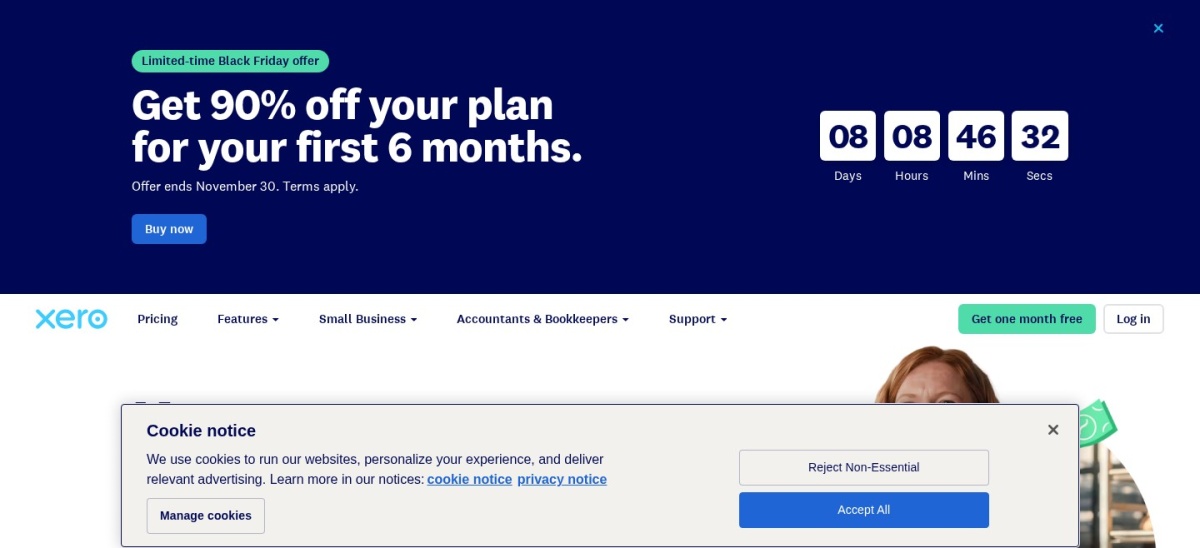
Xero is a cloud accounting platform with no per-user fees on any plan, so the whole team and the outside accountant can log in without extra seat charges. Early costs $27 a month with 20 invoices and 5 bills a month, Growing costs $59 a month with unlimited invoices, and Established costs $97 a month with multi-currency and project tracking.
The trade off is payroll. Xero has no built-in US payroll, so businesses that pay staff add Gusto as a separate paid service. It suits growing teams that want predictable pricing as headcount rises.
What we like
No per-user fees on any plan
Strong bank reconciliation and 30-day cash flow view
Established adds projects and expense claims
Watch out for
No built-in US payroll
Early caps at 20 invoices a month
Multi-currency needs the $97 plan
Established adds multi-currency, projects and analyticsVisit xero.com
03
NetSuite
4.1/5on G2 (4,972 reviews, checked Nov 2026)
PricingCustom/yr
Best for multi-entity finance teams
Cheapest planQuote only
Businesses on it44,000+
Multi-entityYes, consolidation
Free trialDemo only
netsuite.com
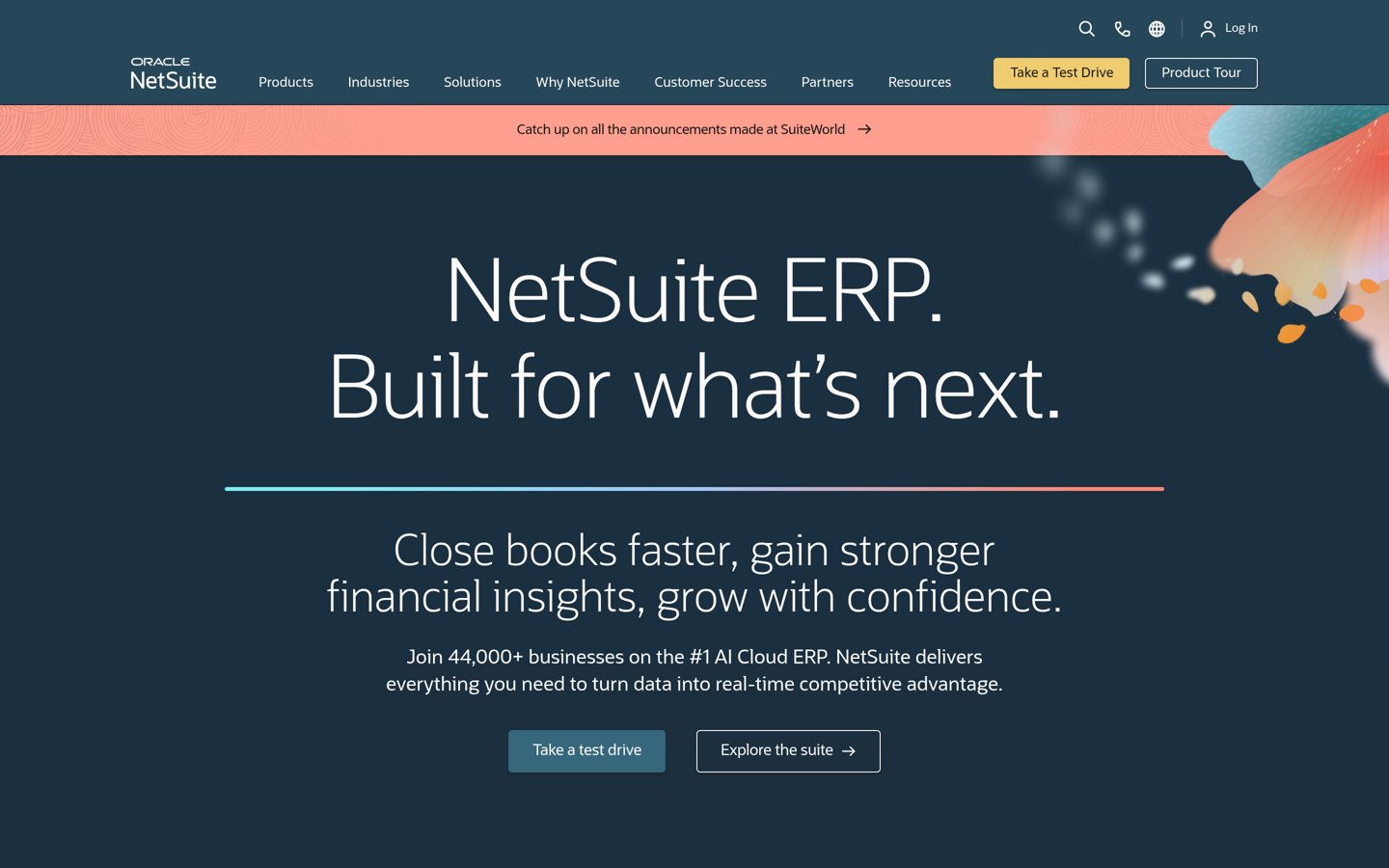
NetSuite homepage, captured Nov 2026.
NetSuite is Oracle's cloud ERP, and its financials cover general ledger, payables, receivables, inventory and revenue recognition in one system. Oracle says more than 44,000 businesses run on NetSuite, and it consolidates multiple subsidiaries with different currencies into one close.
The trade off is price. Oracle publishes no NetSuite price, so every deal is a custom quote based on users, subsidiaries and modules, and third-party estimates put entry pricing near $999 a month. It suits businesses that have outgrown small-business tools and need real consolidation.
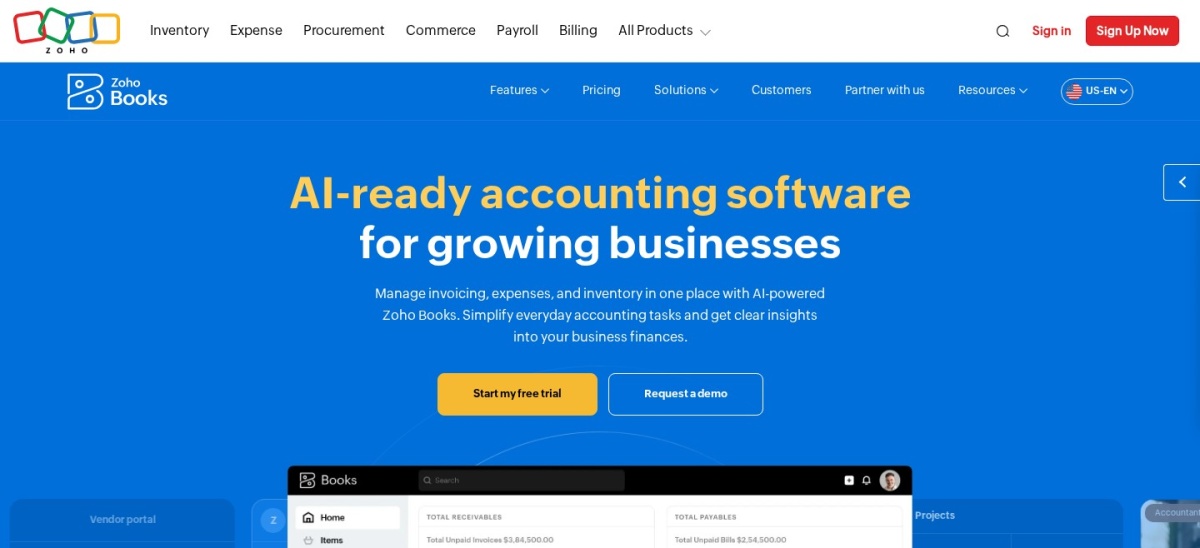
Zoho Books is a cloud accounting tool with a free plan for businesses under $50,000 in yearly revenue, covering 1 user plus an accountant and 1,000 invoices a year. Standard costs $20 a month for 3 users, Professional costs $50 a month with inventory and projects, and Premium costs $70 a month for 10 users with budgeting.
The trade off is the free plan's revenue cap. A business that passes $50,000 in yearly revenue has to move to a paid plan, and the deepest automation sits on Premium and above. It suits businesses already using Zoho apps that want low per-organization pricing.
What we like
Free plan for businesses under $50,000 revenue
Paid plans priced per organization, not per user
Inventory, projects and vendor portal on higher plans
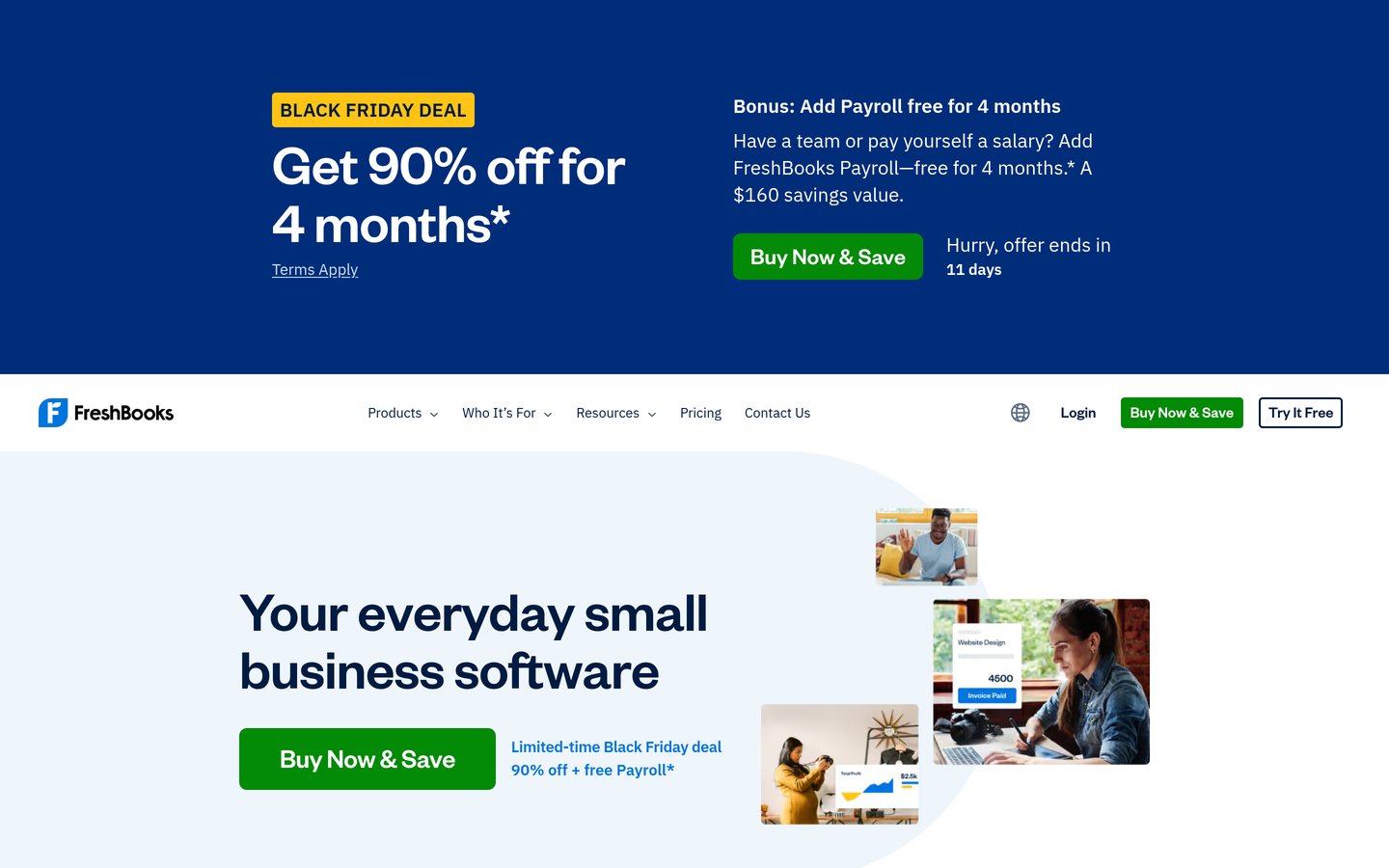
FreshBooks is an invoicing-first accounting tool built around getting paid, with estimates, time tracking, expenses and double-entry reports. Lite costs $23 a month for 5 billable clients, Plus costs $43 a month for 50 clients with proposals and retainers, and Premium costs $70 a month for unlimited clients.
The trade off is the client cap. Lite fits only 5 billable clients, and every team member costs $11 a month on top of the plan price. It suits service businesses that bill a steady client list and want polished invoices.
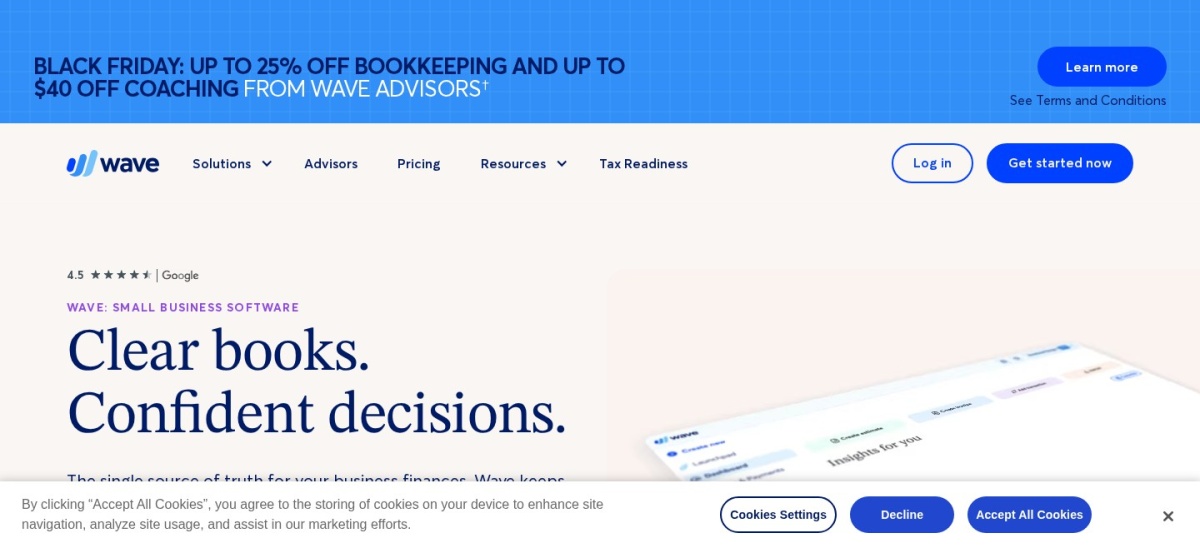
Wave is a free cloud accounting tool with double-entry bookkeeping, unlimited invoicing, expense tracking and basic reports on its Starter plan at no cost. Pro costs $16 a month billed yearly, or $19 month to month, and adds automatic bank imports, receipt scanning and priority support.
The trade off is scale. Wave has no inventory or project tracking, and payroll is a separate paid add-on, so a growing business can outgrow it. It suits very small teams that want real books at no monthly cost.
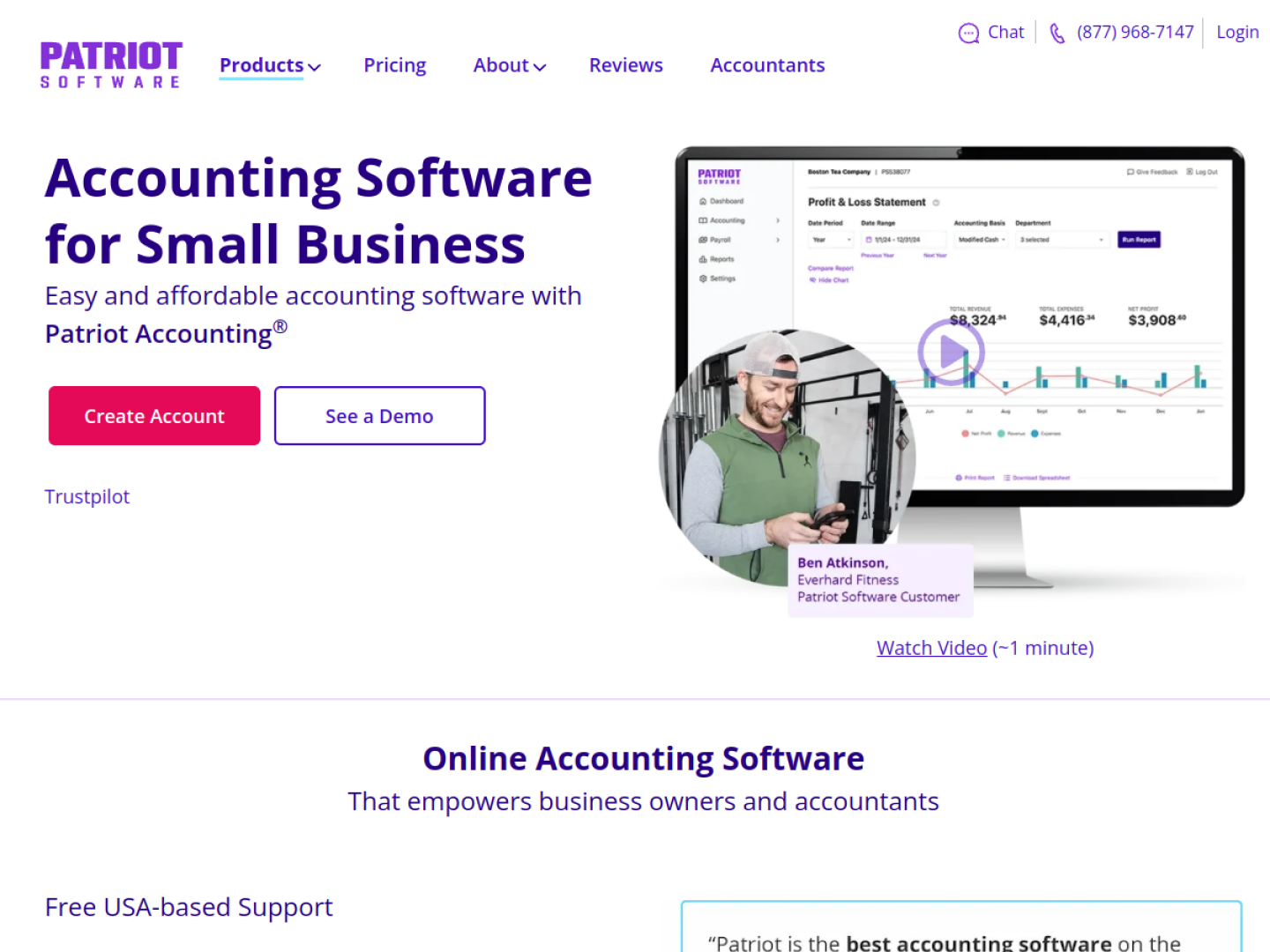
Patriot Accounting is a US accounting tool with flat monthly pricing and unlimited users on every plan, so the bill does not rise as the team grows. Basic costs $20 a month with invoicing and bank imports, and Premium costs $30 a month with estimates, recurring invoices and receipt management.
The trade off is depth. Patriot has a smaller integration list than QuickBooks or Xero, and payroll is a separate product from $17 a month plus per-worker fees. It suits small US teams that want a simple ledger and payroll from one vendor.
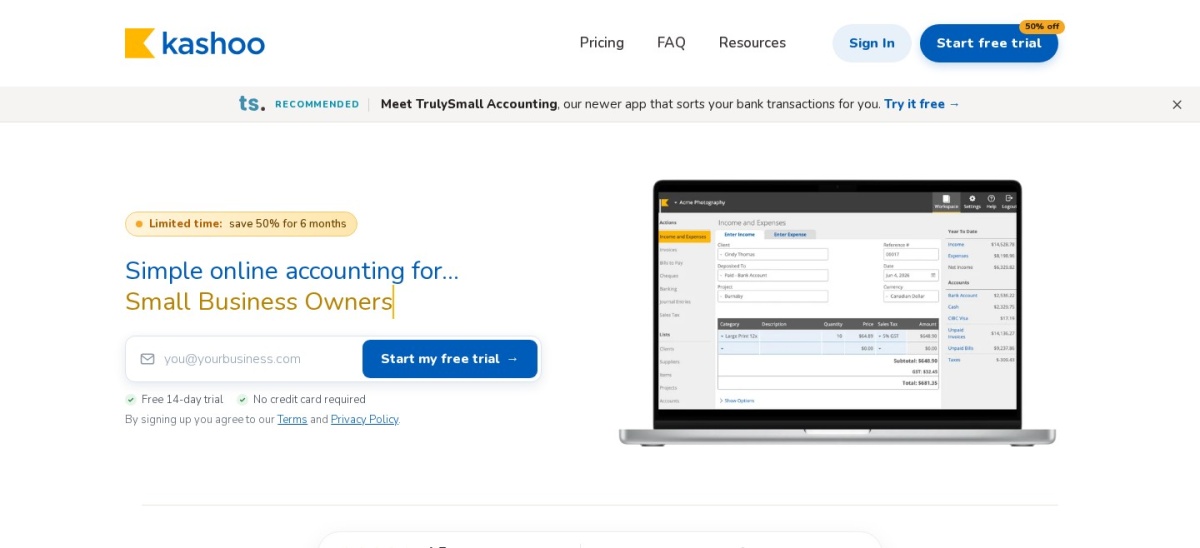
Kashoo is a simple cloud accounting tool with a single plan at $30 a month, or $324 a year, covering invoicing, expenses, bills, sales tax and multi-currency with no tiers to compare. Bank feeds run through Plaid, and the plan includes unlimited users, projects and inventory items.
The trade off is that Kashoo is small. Its G2 rating rests on only 55 reviews, and the vendor now promotes a newer app, TrulySmall Accounting, on its own pricing page. It suits first-time owners who want one flat price and no plan decisions.
What we like
One plan with everything included
Unlimited users at a flat $30 a month
Simple enough for owners with no bookkeeping background
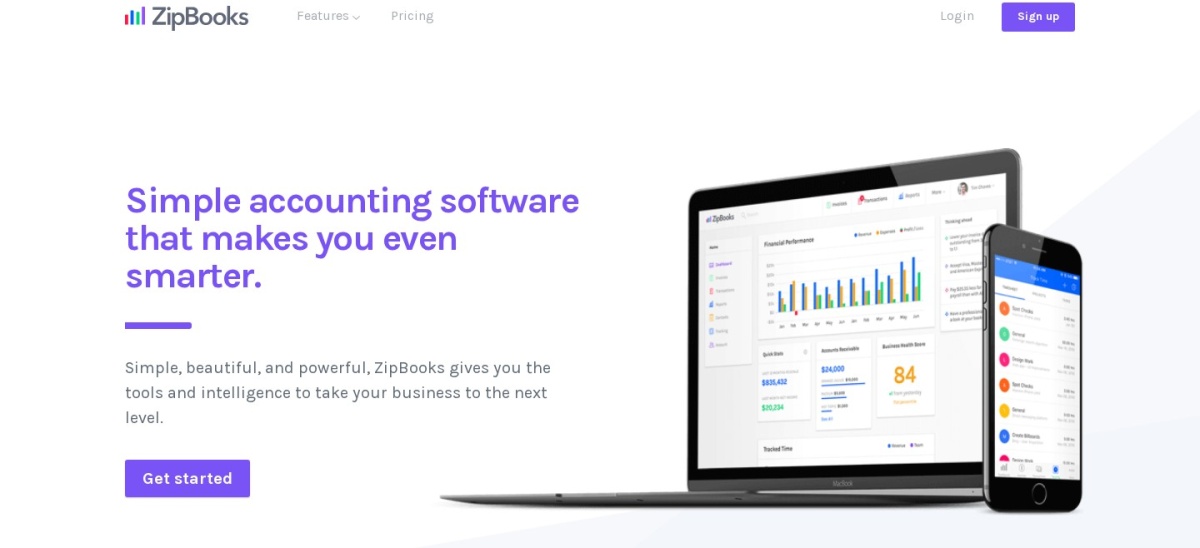
ZipBooks is a free-first accounting tool whose Starter plan costs nothing and includes unlimited invoices, customers and vendors, basic reports and one bank connection. Smarter costs $15 a month for up to 5 team members with recurring invoices, reminders and time tracking, and Sophisticated costs $35 a month for unlimited users.
The trade off is depth. Starter has no reconciliation or time tracking, and ZipBooks has the second-thinnest rating here at 86 G2 reviews. It suits small service teams that invoice a lot and want a free start.
What we like
Free Starter with unlimited invoices
Smarter adds time tracking for $15 a month
Highest G2 score here for a free-first tool at 4.7
Three tools here have free plans: Zoho Books, Wave and ZipBooks. All three cover invoicing and basic reports without a monthly bill.
Free plans usually give up the same things: automatic bank imports, reconciliation, receipt scanning and multi-user access. Wave keeps bank imports behind Pro, and ZipBooks keeps reconciliation behind Sophisticated.
A free plan fits a business with one bookkeeper and simple books. Once two people share the ledger or the month-end close matters, a paid plan pays for itself in saved hours.
How we chose
We started from the most widely used cloud accounting tools for growing businesses, then kept the nine with published prices or a clear quote model, plus real user ratings on G2.
Prices come from each vendor's pricing page, checked on 24 November 2026. Ratings and review counts come from G2 on the same day. Where a vendor shows a sale, the list shows the regular price.
We left out desktop-only accounting tools and bookkeeping services that do not sell software. No vendor paid for a place, and we do not claim to have used these tools ourselves.
How to choose cloud accounting software for a medium-sized business
Start with your user count and entity count, then match the plan to those numbers.
Count users and entities. Xero and Patriot charge no per-user fees, while QuickBooks Online Plus caps at 5 users. If you run more than one company, only NetSuite handles consolidation in this list.
List the features you cannot skip. Inventory, project tracking and multi-currency sit on higher plans. Check which plan holds them before you compare prices.
Add up the extras. Payroll, payment processing and extra users are usually separate. Wave charges card fees per transaction, and FreshBooks charges $11 a month per team member.
Try the free plan or trial first. Zoho Books, Wave and ZipBooks have free plans, and the rest offer trials. Import a month of real transactions before you commit.
FAQ
What is the best cloud accounting software for a medium-sized business?
QuickBooks Online is the best pick for most medium-sized businesses, with plans from $38 a month and the widest network of accountants who already use it. Xero is the best alternative for teams that want unlimited users, and NetSuite fits businesses with several entities.
How much does cloud accounting software cost for a medium-sized business?
Cheapest paid plans in this list run from $15 a month for ZipBooks Smarter to $140 a month for QuickBooks Online Plus. Most medium-sized businesses land between $27 and $97 a month on Xero or $38 to $140 a month on QuickBooks Online, while NetSuite is quote-only.
Is Xero or QuickBooks better for a medium-sized business?
QuickBooks Online wins on accountant support and reporting depth, and its Plus plan adds inventory and project tracking. Xero wins on pricing structure, because every plan includes unlimited users and no seat fees, so growing teams pay less as headcount rises.
Does NetSuite publish its prices?
No. Oracle sells NetSuite by custom quote, with the price set by users, subsidiaries and modules. Third-party estimates put entry pricing near $999 a month, so get a written quote and ask what implementation adds before you budget.
Is there a free cloud accounting option for a medium-sized business?
Wave, Zoho Books and ZipBooks all have free plans, and Wave's free Starter covers unlimited invoicing with no revenue cap. Free plans suit very small teams, but a medium-sized business usually needs paid features such as automatic bank imports, reconciliation and multi-user access.
Do I need to pay extra for payroll?
Yes, in most cases. Payroll is a separate add-on in QuickBooks Online, Xero, Wave, Zoho Books and Patriot, usually priced per month plus a fee per worker. FreshBooks sells payroll as an add-on too, so add that line to the yearly cost before you compare plans.