Best Clinical Trial Compliance Platform in 2026: 9 Tools Compared
WLWPLegible EditorsLast verified 24 Nov 2026How we rank13 min read
★ Short answer
Medidata Rave is the best clinical trial compliance platform for most large trials, rated 4.7 out of 5 on G2. Pick Castor for faster study builds, Florence eBinders for site regulatory binders, or REDCap when a free academic option fits.
How we make this list: we compare pricing pages, product documentation and public user reviews, then re-check every price before each update. No product paid for a place. Disclosure.
Medidata Rave leads with a 4.7 out of 5 G2 rating, but pricing is quote-based and costs rise fast for small sponsors.
Castor pairs a 4.6 out of 5 G2 rating from 126 reviews with a 2-month typical implementation time on G2.
Florence eBinders is the strongest site-side pick, rated 4.5 out of 5 on G2 from 109 reviews.
REDCap is the only free option here, used by 8,547 institutions according to its homepage.
Clinion is the only tool with a public starting price: $1,000 per feature per month on Capterra.
Seven of the nine tools publish no prices, so budget for quotes, validation and training on top of licences.
What a clinical trial compliance platform should cover
A clinical trial compliance platform keeps study data, documents and signatures audit-ready. It should record who did what and when, control document versions and support electronic signatures under 21 CFR Part 11.
Most teams need two halves: data capture for case report forms and a trial master file for regulatory documents. Some tools cover both, while others cover one half well and need a partner for the other.
Check the audit trail before the feature list. Ask whether every change is logged with a user, a time and a reason, and whether the log can be exported for an inspector.
Data protection rules apply to trial data too. Our guide on GDPR compliance for WordPress explains the same consent and access-control ideas in plain terms.
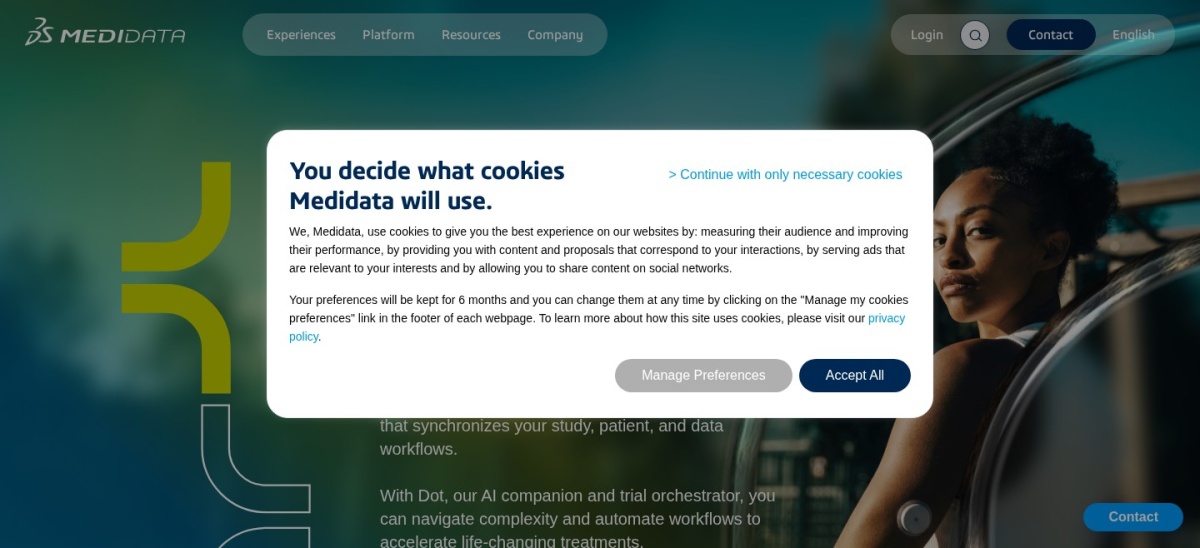
Medidata Rave is the electronic data capture system most large sponsors and CROs already know, and it sits inside the wider Medidata Clinical Cloud with CTMS and eTMF modules. It covers study build, data capture, query management and monitoring in one regulated environment, and it is rated 4.7 out of 5 on G2 from 27 reviews.
The trade off is cost and setup. Pricing is quote-based, reviewers call it expensive for small companies, and smaller teams often need admin help for advanced setup. It suits large, multi-site trials where site staff already know Rave and the sponsor can fund validation and training.
Castor is a cloud EDC platform that combines data capture with eConsent and ePRO on one system, so smaller sponsors can run a compliant study without stitching three vendors together. It is rated 4.6 out of 5 on G2 from 126 reviews, and G2 lists a typical implementation time of 2 months.
The trade off is scope. Castor is not a full CTMS or eTMF replacement, so very large enterprises may pair it with separate trial operations tools. It suits academic teams, biotech and device firms that want a study running in weeks rather than quarters.
What we like
Self-service study builds with no-code forms
EDC, eConsent and ePRO on one platform
Strong ratings: 4.7 out of 5 on Capterra from 204 reviews
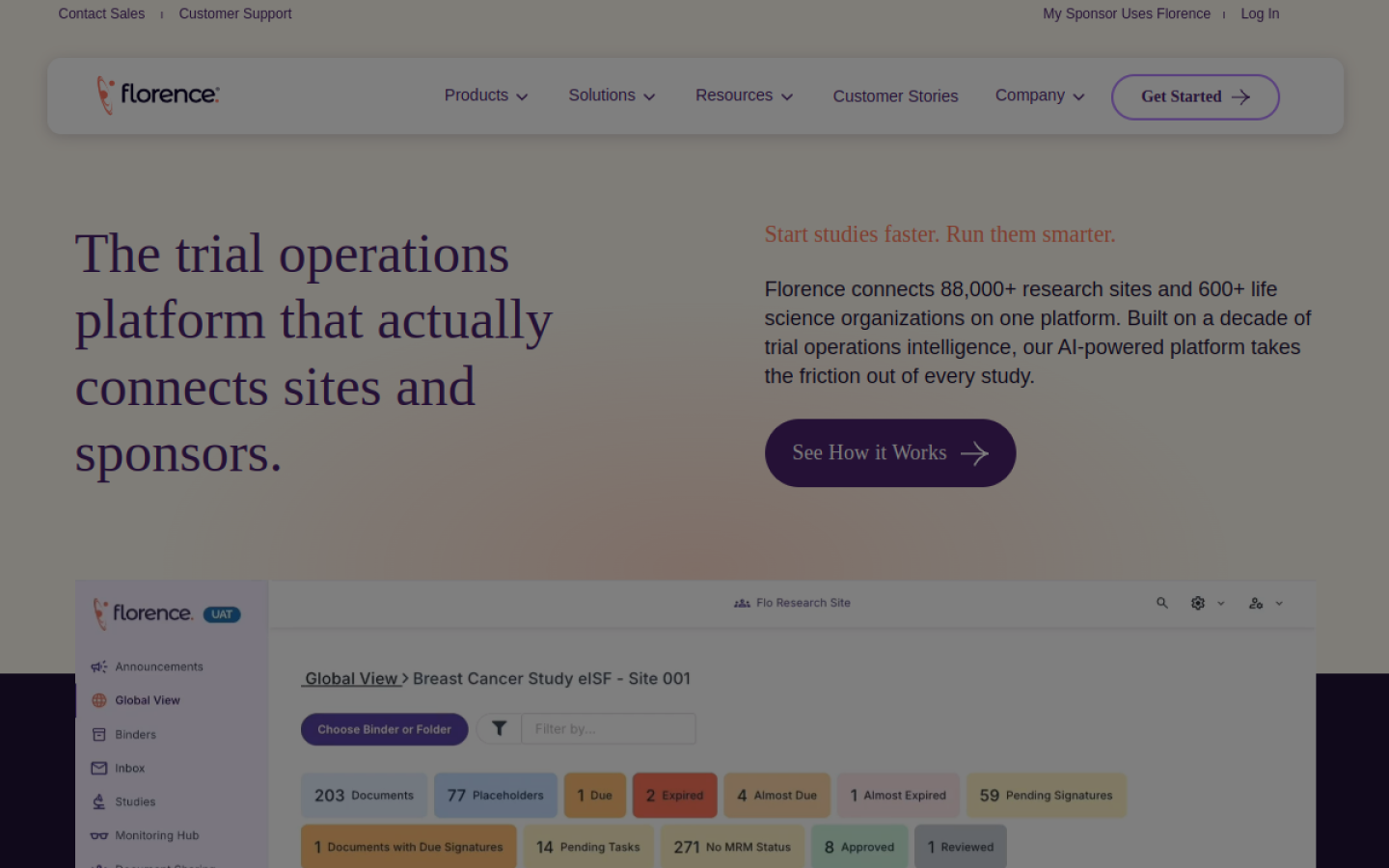
Florence eBinders is the site-side compliance tool in this list: it replaces paper regulatory binders with an electronic investigator site file, with eConsent and remote monitoring for sponsors. It is rated 4.5 out of 5 on G2 from 109 reviews, and reviewers praise how it simplifies document management at sites.
The trade off is that it is not an EDC or a full CTMS. Pricing is quote-based, G2 lists a typical implementation time of 6 months, and reviewers describe it as expensive. It suits research sites and sponsors that need inspection-ready binders and faster remote monitoring.
Clinion EDC is an AI-assisted data capture platform with built-in RTSM, so randomisation and data capture sit in one system instead of two. Capterra lists a starting price of $1,000 per feature per month, and rates it 4.7 out of 5 from 30 reviews on its main listing.
The trade off is that the $1,000 figure is a per-feature starting price from Capterra, not a full quote from the vendor, so the total depends on which features a study needs. It suits mid-size sponsors that want a published price anchor and faster data review.
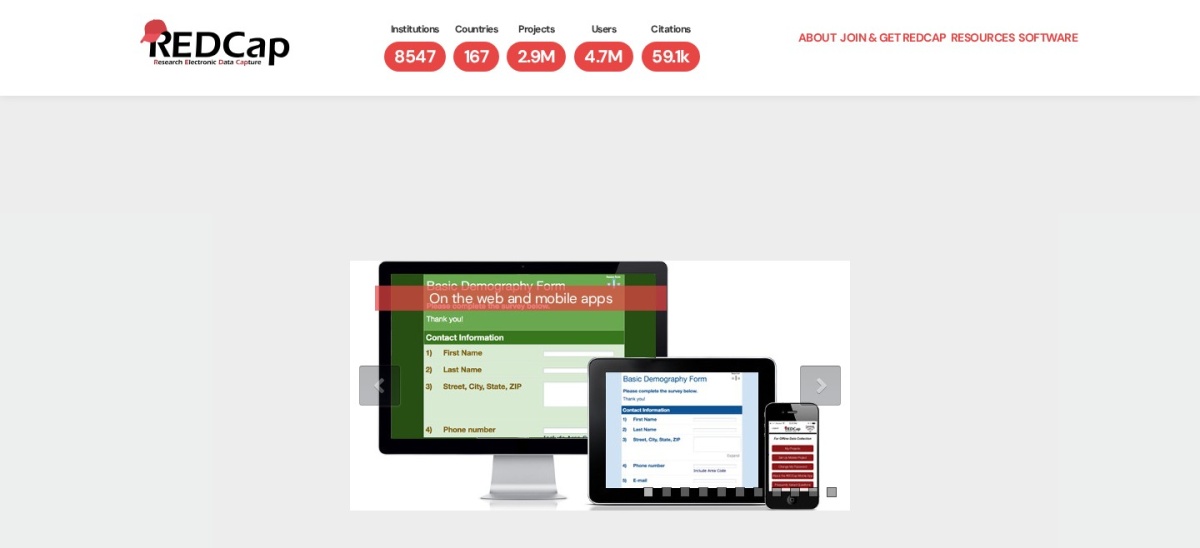
REDCap is a free, web-based data capture system for non-profit and academic research, provided at no cost to consortium partner sites. Its homepage counts 8,547 institutions, 167 countries and 2.9 million projects, and it is rated 4.3 out of 5 on G2 from 221 reviews.
The trade off is self-service. Setup, hosting and validation fall to the local team, and reviewers note a learning curve for complex projects. It suits academic medical centres and grant-funded studies that need compliant data capture without a licence fee.
What we like
Free for consortium partner organisations
Largest review base in this list at 221 G2 reviews
MasterControl is an enterprise quality management system that covers controlled documents, training records, change control and quality events in one place. It is rated 4.3 out of 5 on G2 from 528 reviews, the largest review count in this list, and reviewers praise its document and training workflows.
The trade off is price and effort. Pricing is quote-based, reviewers describe it as expensive for small businesses, and teams report a large training burden. It suits mid-size and large life sciences firms that need quality processes beside their trial systems.
Medrio EDC is a data capture system aimed at biotech and device teams that need a study built fast, with drag-and-drop forms and skip logic that reviewers call easy to use. It is rated 4.2 out of 5 on G2 from 263 reviews, and reviewers praise its support and ease of use.
The trade off is polish. Some reviewers call the interface poor and slow, and pricing is quote-based with no public price list. It suits smaller sponsors that value quick builds and responsive support over a modern interface.
OpenClinica is a long-running EDC platform for academic centres and mid-size sponsors, with ePRO and RTSM beside core data capture. It is rated 4.2 out of 5 on G2 from 24 reviews, and reviewers describe it as cost-effective, with user-friendly setup and responsive support.
The trade off is depth in places. Reviewers note limits in the ePRO module for patient diaries and in built-in edit checks. It suits grant-funded and mid-size teams that want a capable EDC at a lower cost than the enterprise incumbents.
Veeva Vault is a cloud platform for life sciences that puts Vault EDC, Vault CTMS and Vault eTMF on one system with shared data and documents. It is rated 4.1 out of 5 on G2 from 54 reviews, and reviewers praise the unified CTMS and eTMF for inspection readiness.
The trade off is price. Veeva publishes no prices, reviewers call full-access licences pricey, and smaller sponsors are quoted accordingly. It suits mid-size to large pharma teams that already use Veeva and want one platform for trial operations.
What we like
EDC, CTMS and eTMF on one shared platform
Strong inspection-readiness story in reviews
Widely used across pharma and biotech
Shared data removes handoffs between modules
Watch out for
No public prices; pricing is quote-based
Full-access licences described as pricey
Lowest G2 rating in this list at 4.1 out of 5
Paid plans are custom quotes by application and userVisit veeva.com
Quote-based pricing: what to budget for
Seven of the nine tools in this list publish no prices. Expect a quote based on study count, sites, participants and modules, and treat any directory estimate as a starting point, not a price.
Licences are only part of the spend. Implementation, validation, migration and training are usually quoted separately, and they can cost more than the first year of licences.
Ask each vendor for the same scope in writing: number of studies, users, sites and modules, plus validation and support. That makes the quotes comparable instead of guesswork.
How we chose
We started from the clinical trial platforms with the most G2 and Capterra reviews in EDC, CTMS, eTMF and site regulatory work, then kept nine that cover data capture, trial files and quality documents.
Prices and ratings were checked on 24 November 2026. Ratings come from G2 or Capterra on that day, and prices come from vendor pages or Capterra listings where the vendor publishes no price. Where a vendor shows no price, the list says Custom.
We left out tools with no usable public rating and tools built only for one narrow job, such as standalone eConsent. No vendor paid for a place, and we do not claim to have used these tools ourselves.
How to choose a clinical trial compliance platform
Start with the job you need done, then check the audit trail before the price.
Name the job first. Decide whether you need EDC, a trial master file, site binders or quality documents, because no single tool here does all four equally well.
Check the audit trail and Part 11 support. Ask for a live look at the change log, electronic signatures and version control, and confirm they meet your quality team's requirements.
Get comparable quotes in writing. Give every vendor the same study, site and user counts, and ask what validation, migration and training cost on top of licences.
Run a pilot study build. Build one real study with your forms and checks before signing, and time how long it takes your team to finish it.
FAQ
What is the best clinical trial compliance platform?
Medidata Rave is the best pick for most large trials, rated 4.7 out of 5 on G2. Castor suits faster builds, Florence eBinders suits site binders, and REDCap suits academic teams that need a free option.
How much does clinical trial compliance software cost?
Most enterprise tools are priced by custom quote, so there is no standard price. Clinion lists a starting price of $1,000 per feature per month on Capterra, and REDCap is free for consortium partner sites.
What is 21 CFR Part 11 compliance?
It is the US rule for electronic records and electronic signatures in regulated trials. A compliant system keeps a full audit trail, controls who can sign, and protects records from unrecorded changes.
Do I need both EDC and eTMF software?
Many teams do. EDC captures patient and study data, while eTMF stores the regulatory documents that prove the trial ran correctly. Some platforms cover both, and others need a partner tool.
Is REDCap really free?
REDCap is provided at no cost to consortium partner sites, which are usually non-profit or academic organisations. Each site hosts and maintains its own system, so support and validation are local responsibilities.
Which platform is best for small biotech teams?
Castor and Medrio suit smaller sponsors because they build studies fast and need less admin help. OpenClinica is another lower-cost option, while Medidata Rave and Veeva Vault fit larger programmes better.