WLWPLegible EditorsLast verified 24 Nov 2026How we rank12 min read
★ Short answer
WordPress.com is the best blog site for most bloggers, with a free plan, 6 GB of storage and plugin access on its $4-a-month Personal plan, and a 4.4 out of 5 G2 rating. Pick Wix for the easiest drag-and-drop builder, Ghost for paid newsletters, or Medium if you want a built-in audience.
How we make this list: we compare pricing pages, product documentation and public user reviews, then re-check every price before each update. No product paid for a place. Disclosure.
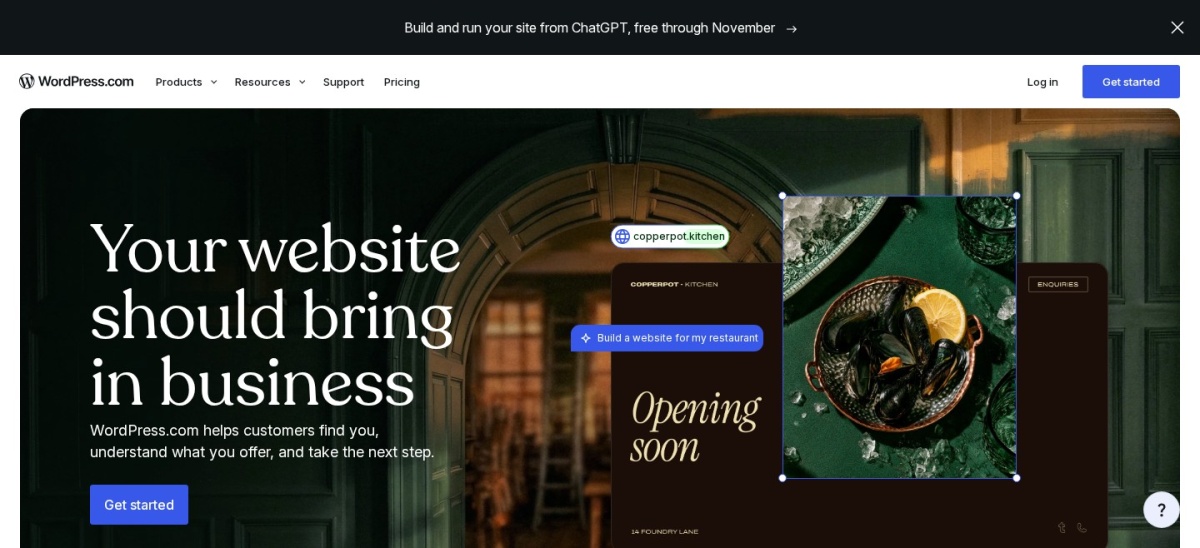
WordPress.com gives the most room to grow: a free plan, then Personal at $4 a month billed yearly.
Wix is the easiest builder here, with a free plan and 800+ templates, but Light starts at $17 a month.
Squarespace has the strongest design, yet it has no free plan, only a 14-day trial, and Basic is $19 a month.
Ghost and beehiiv are built for paid newsletters, but Ghost Starter has no paid subscriptions, so charging readers starts at $29 a month.
Medium and Tumblr cost nothing to publish on, but you do not own the audience the way you do on WordPress.com or Ghost.
What to look for in a blog site
A blog site should let you publish fast, keep your posts findable in search, and grow with you. The editor, the free plan limits and the price of the first paid plan matter more than a long feature list.
Free plans differ a lot. Some give you a subdomain and show ads, some cap storage at 500 MB, and some, like Squarespace and Ghost, have no free plan at all, only a 14-day trial.
If you plan to earn from the blog, check how the platform takes its cut before you build an audience there. Our guide on making money blogging with WordPress explains the common routes, from ads to paid subscriptions.
Ownership is the other split. On WordPress.com, Ghost, beehiiv and Hashnode your posts sit on your own site or domain, while on Medium and Tumblr your work lives inside someone else's feed.
WordPress.com is the hosted version of WordPress, run by Automattic, with a free plan that gives you a wordpress.com address, 1 GB of storage and unlimited posts. Paid plans start with Personal at $4 a month billed yearly, which removes the ads, adds a custom domain for the first year and 6 GB of storage, and opens plugin installs.
The trade off is the renewal price. Personal renews at $5 a month billed yearly, and the features bloggers often want next, such as advanced SEO tools and real-time backups, sit on Premium at $8 a month and Business at $25 a month. It suits bloggers who want WordPress without managing hosting.
Wix is a drag-and-drop website builder with a built-in blog, more than 800 templates and a free plan with 500 MB of storage. The free plan shows Wix ads and uses a Wix address, while Light at $17 a month billed yearly adds a custom domain, free for the first year, and 2 GB of storage.
The trade off is price. Light is the cheapest paid plan, yet it costs more than three times the WordPress.com Personal plan, and the blog tools are simpler than a dedicated publishing platform. It suits beginners who want to design pages by dragging blocks into place.
Squarespace is a design-led website builder with built-in blogging, SEO tools and mobile optimisation on every plan. There is no free plan, only a 14-day trial, and Basic starts at $19 a month billed yearly, with a free custom domain for the first year, 2 contributors and a 2% fee on store sales.
The trade off is cost and control. Basic is the dearest starting price in this list for a personal blog, and you cannot add plugins the way WordPress.com lets you. It suits bloggers who care most about how the site looks and want blogging, pages and a store in one place.
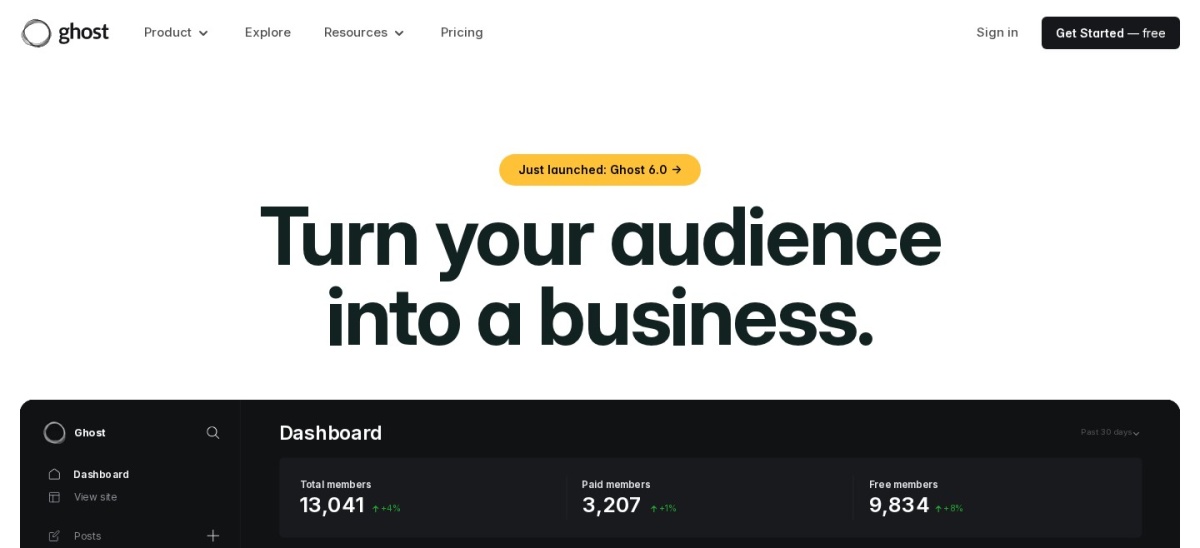
Ghost is an open-source publishing platform for blogs and newsletters, with memberships, email newsletters and SEO tools built in. Ghost(Pro), the hosted version, starts with Starter at $18 a month billed yearly, which covers 1,000 members, 1 staff user, a custom domain and unlimited email sends.
The trade off is monetisation. Starter does not allow paid subscriptions, tips or custom themes, so charging readers means Publisher at $29 a month billed yearly. It suits independent writers who want to own their site and their subscriber list.
Medium is a publishing platform where writers reach readers without building a website or an email list first. Publishing is free, and a Member plan at $5 a month, or $50 a year, unlocks member-only stories, audio versions, offline reading and a custom domain for your profile.
The trade off is ownership. Your posts live on Medium, readers find you through its feed and recommendations, and earning through the Partner Program depends on member reading time. It suits writers who want readers now and do not need their own site.
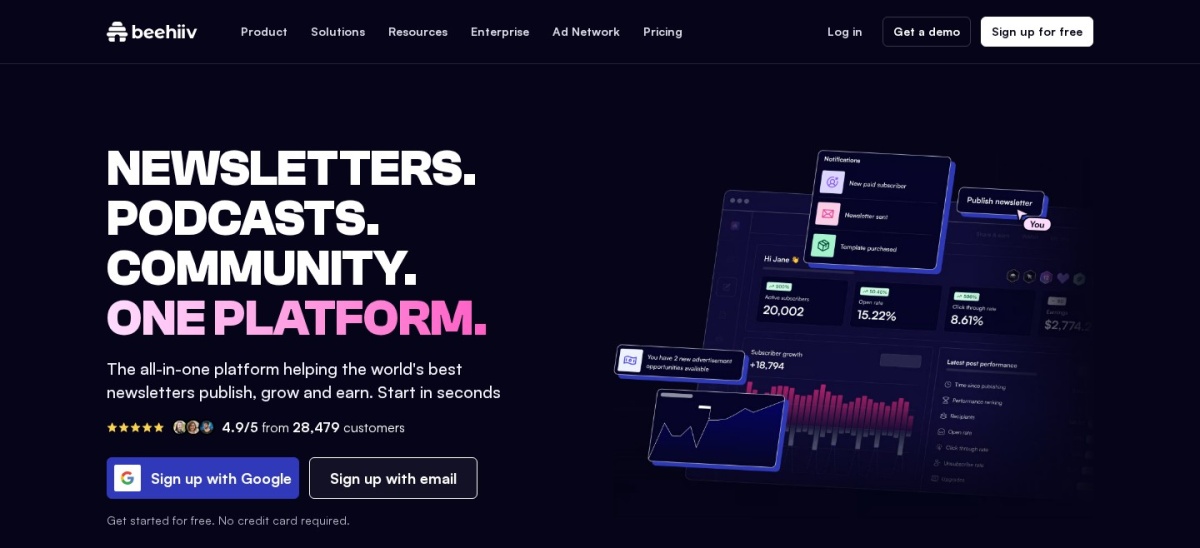
beehiiv is a newsletter platform with a hosted website, so each issue can also live as a blog post. The free Launch plan covers up to 2,500 subscribers with unlimited sends, and Scale starts at $49 a month, adding paid subscriptions with a 0% platform fee, automations and the ad network.
The trade off is the price jump. Moving from free to Scale costs $49 a month at the smallest list size, and the price rises as the list grows past 2,500 subscribers. It suits creators who treat the newsletter as the blog and want growth tools built in.
4.9/5on Product Hunt (16 reviews, checked Nov 2026)
Paid from$5/mo
Best free blog for developers
Free planYes, unlimited posts
Cheapest paidPro, $5/mo
Custom domainPro only
EditorMarkdown, code blocks
hashnode.com
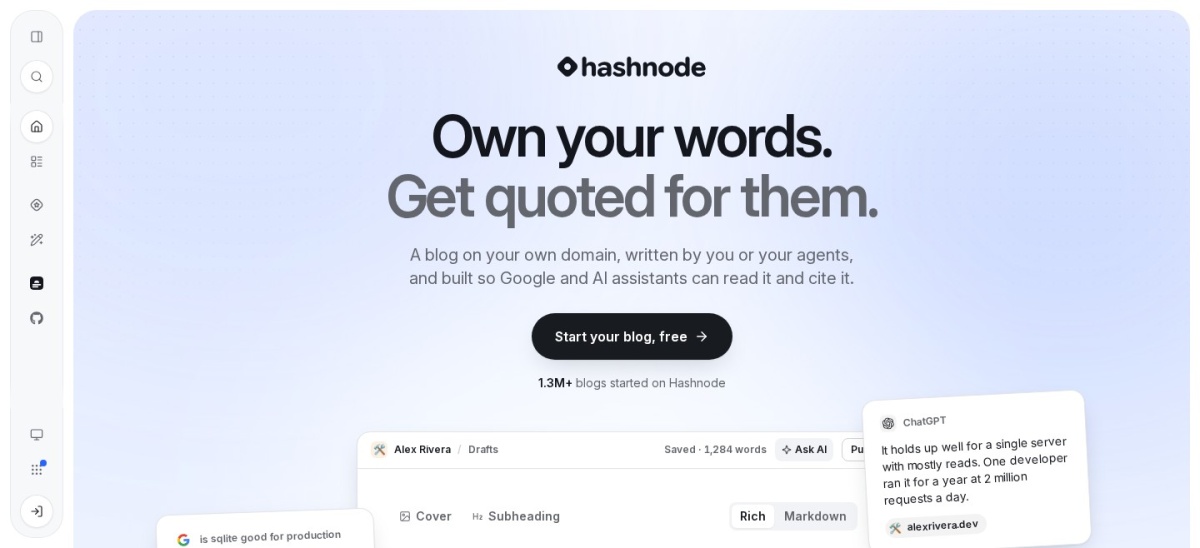
Hashnode homepage, captured Nov 2026.
Hashnode is a blogging platform for developers, with a free blog on a hashnode.dev address, unlimited posts, a Markdown editor and a community feed where developers find new posts. Pro costs $5 a month per seat and adds a custom domain with SSL, the GraphQL API, headless mode and AI writing tools.
The trade off is focus. Hashnode is built for technical writing, with code blocks and LaTeX, so it fits developers better than general bloggers, and the custom domain sits behind the paid plan. It suits developers who want a free, search-friendly blog on their own domain.
1.2/5on Trustpilot (196 reviews, checked Nov 2026)
Paid from$6.99/mo
Best for short visual posts
Free planYes, unlimited posts
Cheapest paidPremium, $6.99/mo
Annual option$69.99/yr
Custom domainPaid connection
tumblr.com
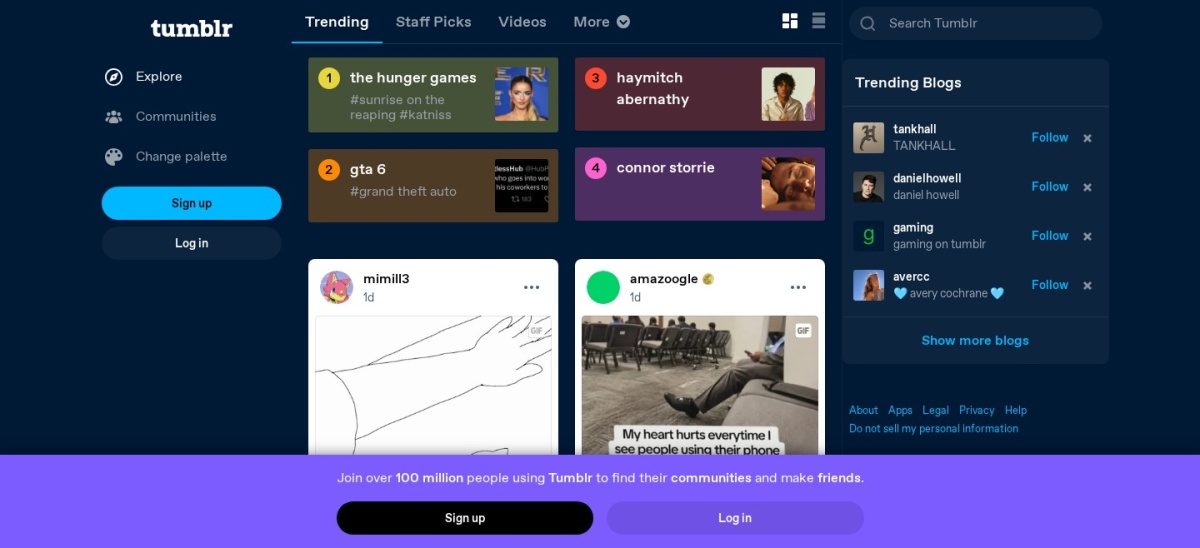
Tumblr homepage, captured Nov 2026.
Tumblr is a free microblogging platform where short posts, photos, GIFs and reblogs sit beside a built-in social feed. A free blog on a tumblr.com address has unlimited posts, and Premium at $6.99 a month, or $69.99 a year, adds ad-free browsing and higher posting, liking and upload limits.
The trade off is control. Tumblr has limited design options, no SEO meta-field control, and connecting your own domain goes through a paid checkout. It suits visual creators and fan communities who want social reach more than search traffic or a standalone site.
Free plans cover publishing well. Most let you post without a time limit, and several include a custom domain path or a newsletter.
Paid plans mostly add ownership and earning. You get your own domain, no ads, and the right to charge readers or run a store.
If you only want to write, a free plan is enough to start. Our guide on starting a blog with WordPress shows the setup steps for the most flexible free route.
If the blog is a business, budget for the first paid year, not just the first month, since renewal prices are often higher.
How we chose
We started from the blog sites that appear most often in blogging guides and review round-ups, then kept eight that cover the main ways people blog: hosted builders, publishing platforms, newsletters and developer blogs.
Prices come from each vendor's pricing page or help page, checked on 24 November 2026, with the regular monthly rate shown and yearly totals worked out from it. Ratings come from G2, Capterra, Trustpilot or Product Hunt on the same day, and the source is named on each tool.
We left out tools that need a developer to set up hosting, and tools with no usable free or trial route. No vendor paid for a place, and we do not claim hands-on testing for this list.
How to choose a blog site
Start with how you want to publish, then check the price of the plan you will actually need.
Decide who owns the audience. If you want your own domain and subscriber list, pick WordPress.com, Ghost, beehiiv or Hashnode. If you want readers first, Medium or Tumblr will do.
Check the free plan limits. Look at storage, ads and whether you can use your own domain. Squarespace and Ghost have no free plan, only a 14-day trial.
Price the plan that earns money. Ghost Starter cannot take payments, and beehiiv Launch cannot sell subscriptions, so cost the upgrade, not just the free tier.
Try the editor before you commit. Write two or three posts on the free plan or trial and check how they look on a phone before you pay for a year.
FAQ
What is the best blog site for beginners?
WordPress.com is the best pick for most beginners. It has a free plan with unlimited posts, a custom domain on paid plans, and plugin installs from the $4-a-month Personal plan, so the blog can grow without moving.
Which blog site is completely free?
Tumblr, Medium, Hashnode and beehiiv all let you publish free with unlimited posts, and WordPress.com and Wix have free plans too. Squarespace and Ghost are the exceptions here, since they offer a 14-day trial instead of a free plan.
Is WordPress.com or Medium better for blogging?
WordPress.com is better if you want your own site, domain and plugins, while Medium is better if you want readers without building anything. Medium gives you a built-in audience, but your posts live on its platform and you do not own the reader list.
Can I make money from a free blog?
Yes, but the route depends on the platform. Medium pays through its Partner Program based on member reading time, while beehiiv and Ghost need a paid plan before you can sell subscriptions. Affiliate links work on most free blogs.
Which blog site is best for paid newsletters?
Ghost is the strongest pick for paid newsletters, since it combines a blog, memberships and email in one place with a 0% fee on subscriptions. Beehiiv is the main alternative, with a free plan to 2,500 subscribers and the same 0% fee on paid plans.
Do I need to pay for a custom domain?
Not always. WordPress.com, Squarespace and Ghost include a free custom domain for the first year on paid plans, while Hashnode adds it on Pro at $5 a month. Medium includes a custom domain on its Member plan, and Tumblr charges for the domain connection.