Best Blockchain Software in 2026: 9 Tools Compared
WLWPLegible EditorsLast verified 23 Nov 2026How we rank7 min read
★ Short answer
Alchemy is the best blockchain software for most developers, with a free plan of 30 million compute units a month and pay-as-you-go pricing after that. Pick QuickNode for fixed monthly billing, or Chainstack for the lowest cost per request.
How we make this list: we compare pricing pages, product documentation and public user reviews, then re-check every price before each update. No product paid for a place. Disclosure.
Alchemy gives the largest free tier: 30M compute units a month, then $0.52 per million.
QuickNode and Chainstack both start paid plans at $49 a month, but QuickNode has no permanent free plan.
Infura's free Core plan gives 3M credits a day, with Developer at $50 a month.
Moralis is the only pick built for decoded wallet and token data, not raw node access.
Kaleido is the only private-network platform here, and its hourly billing starts near $110 a month per node.
What to look for in blockchain software
Most blockchain apps need two things: a way to read and write to a chain, and a way to make sense of the data that comes back. A node API handles the first job, and a data API handles the second.
Free tiers differ a lot. Some give a monthly allowance that never expires, some give a one-month trial, and some give daily credits that reset at midnight. Check which kind you get before you build on it.
Pricing units also differ. Alchemy bills compute units, QuickNode and Chainstack bill credits or request units, and Infura bills daily credits. Compare what a typical call costs, not just the plan price.
For private networks the choice is different. Public RPC providers cannot run a permissioned chain, so teams building one need a managed platform such as Kaleido instead.
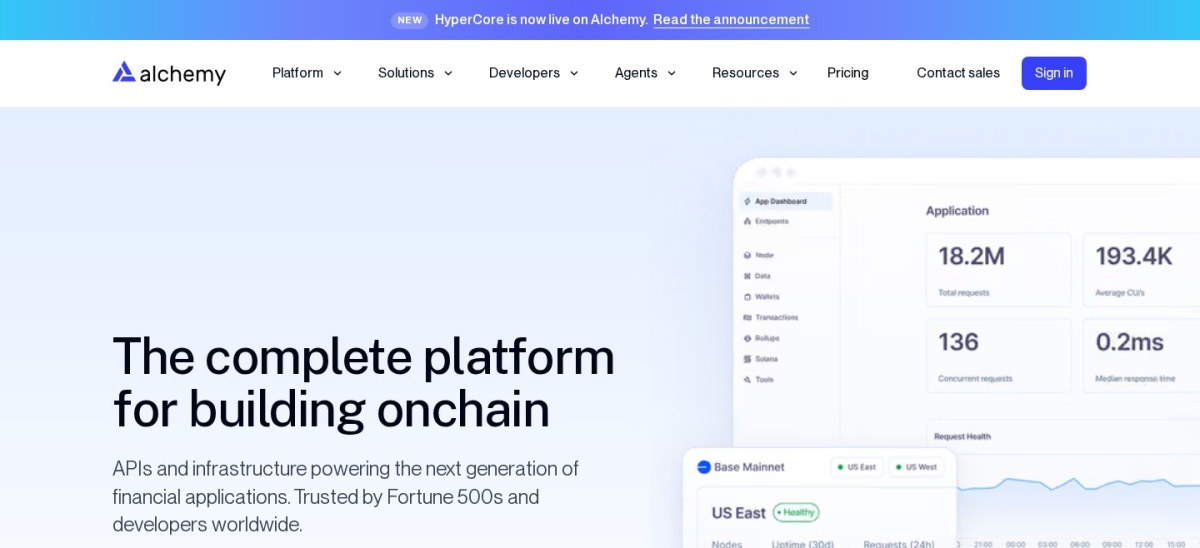
Alchemy is a web3 developer platform with hosted node APIs, token, NFT and price data APIs, webhooks and wallet tools. The free plan includes 30 million compute units a month at about 15 requests a second, with 5 apps and 5 webhooks.
The trade off is that paid use is metered, so a busy app pays per million compute units with no fixed monthly cap unless you set one. It suits teams that want a large free tier and pay only for what they use.
What we like
Largest free allowance in this list
Node, data and wallet APIs in one place
Archive data on every plan
Watch out for
Costs are hard to predict before you measure usage
Throughput add-ons cost $160 a month per block
Pay as you go adds gas sponsorship and higher throughputVisit alchemy.com
02
QuickNode
4.5/5on G2 (107 reviews, checked Nov 2026)
Starts at$49/mo
Best for predictable monthly plans
Free trial1 month, 10M credits
Build plan$49/mo, 80M credits, 50 RPS
Chains80+ chains, 135+ networks
Support SLA24 hours on Build
quicknode.com
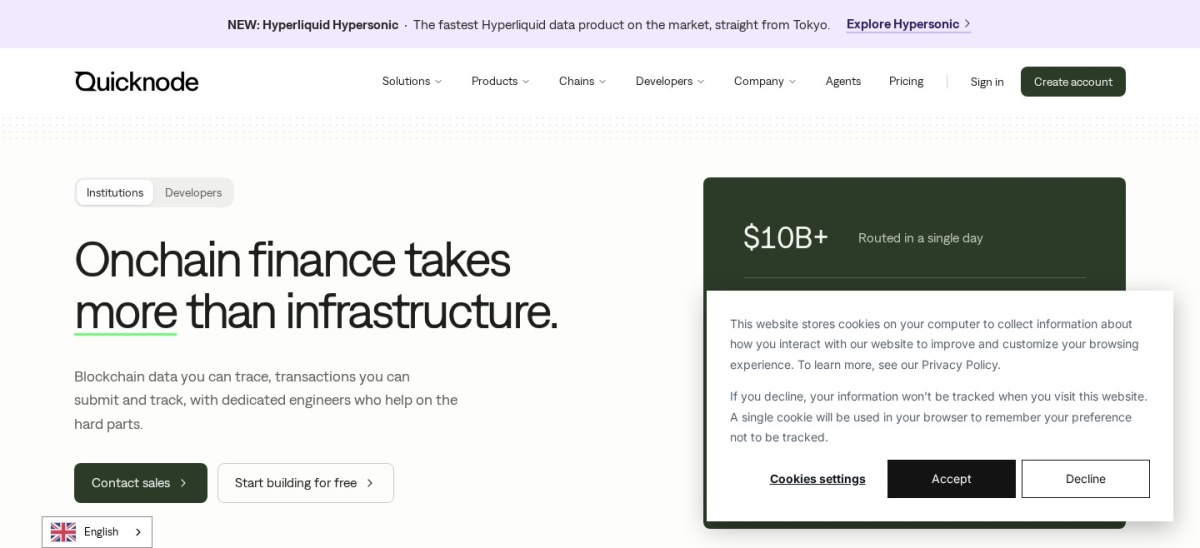
QuickNode homepage, captured Nov 2026.
QuickNode is a blockchain infrastructure platform selling RPC endpoints, streams and marketplace add-ons across more than 80 chains. The one-month free trial includes 10 million API credits, and the Build plan costs $49 a month for 80 million credits at 50 requests a second.
The trade off is that there is no permanent free plan, so the trial ends after a month and you must pay to keep endpoints live. It suits teams that want a fixed monthly bill and clear support times.
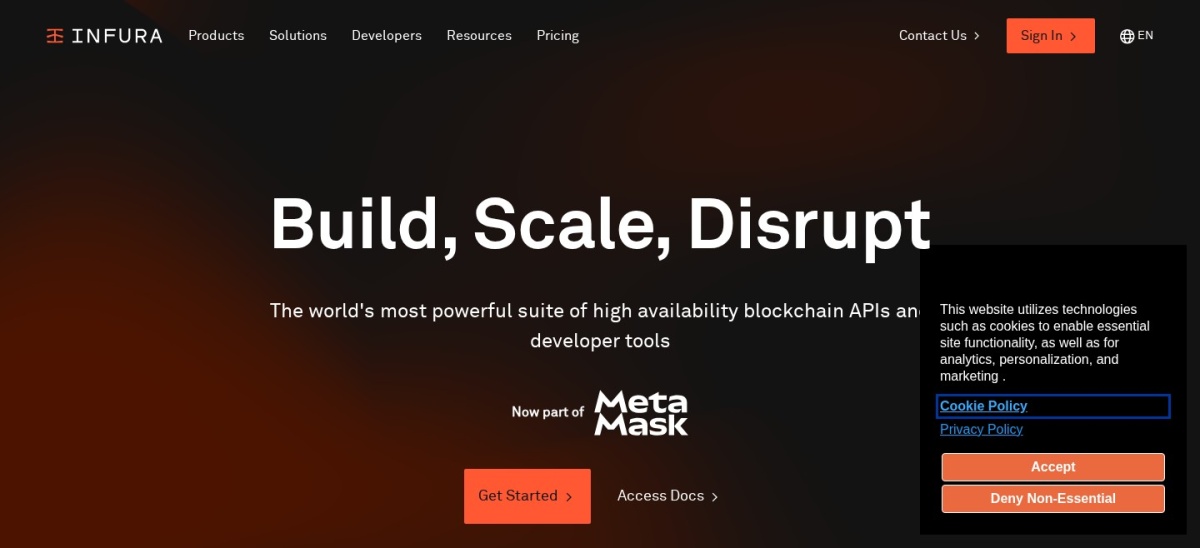
Infura is the RPC service behind MetaMask, run by Consensys, with endpoints for Ethereum and more than 40 networks. The free Core plan gives 3 million credits a day, and the Developer plan costs $50 a month for 15 million credits a day plus the Debug and Trace APIs.
The trade off is that quotas reset daily, so a busy day can stop your app until the next day unless you buy extra credits. It suits Ethereum-first teams that already use MetaMask.
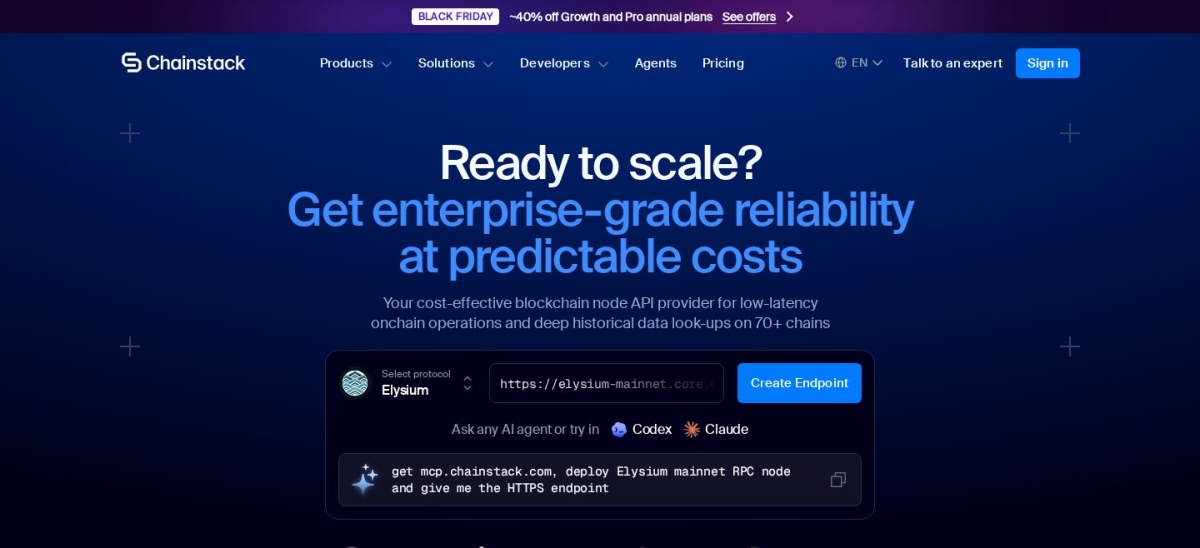
Chainstack is a managed node platform with RPC endpoints across more than 70 chains, plus dedicated and elastic nodes. The free Developer plan gives 3 million request units a month, and Growth costs $49 a month for 20 million units with archive data and debug tools.
The trade off is that each call costs request units, so archive calls cost double and heavy methods add up fast. It suits teams that want flat, predictable billing with compliance paperwork.
Moralis is a data API platform that returns decoded wallet balances, token prices, NFT ownership and DeFi positions ready to show in an app. Data Feeds start at $10 a month for 10 GB, while full API plans start at $149 a month for 2 million compute units.
The trade off is price. The old free plan stopped working on 1 September 2026, so new users need a paid plan or a trial on request. It suits apps that need clean data, not raw node access.
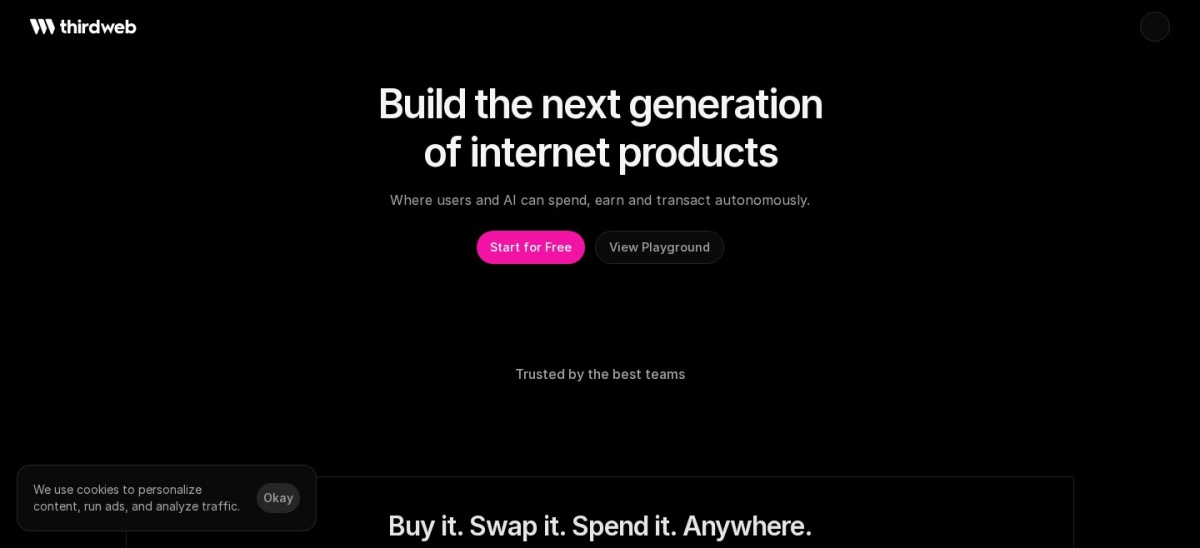
thirdweb is a full-stack toolkit for shipping a blockchain app, with in-app wallets, account abstraction, gas sponsorship, audited smart contracts and managed RPC. The Starter plan costs $5 a month, and Growth costs $99 a month with usage fees on top.
The trade off is that usage fees stack up: wallets cost $0.015 per monthly active wallet after the first 1,000, and RPC costs $8 per million requests after the first million. It suits app teams that want one SDK for wallets and contracts.
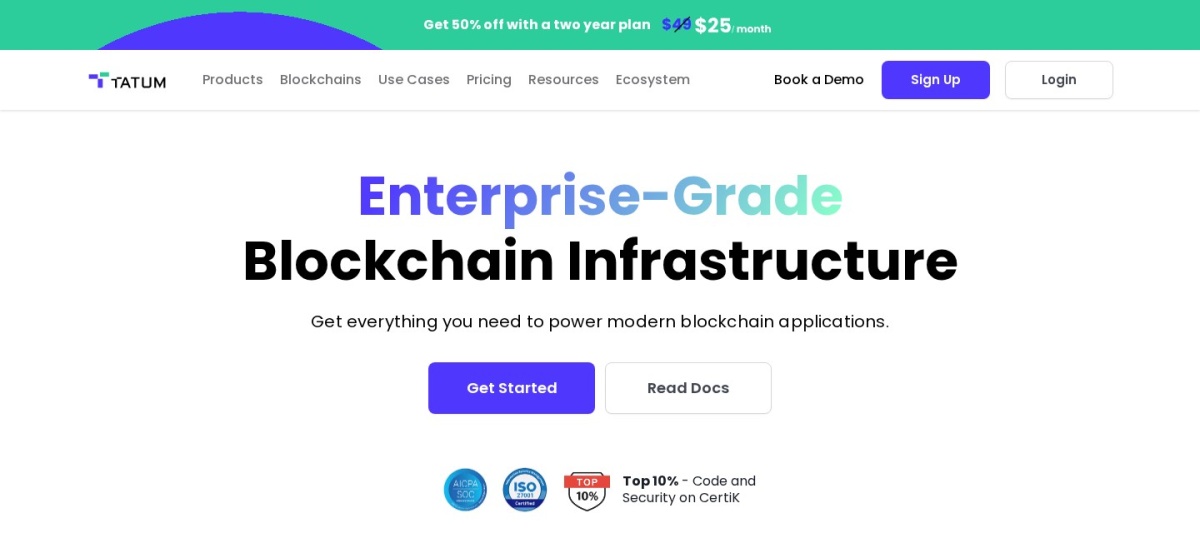
Tatum is an API platform that combines RPC gateways with data APIs, notifications and smart wallets on one key, across more than 100 networks. New accounts get 100,000 lifetime credits, and the Starter plan costs $49 a month for 4 million credits at 200 requests a second.
The trade off is that the free allowance is small and one-off, so real testing burns through it quickly. It suits teams that want RPC, indexed data and alerts without juggling vendors.
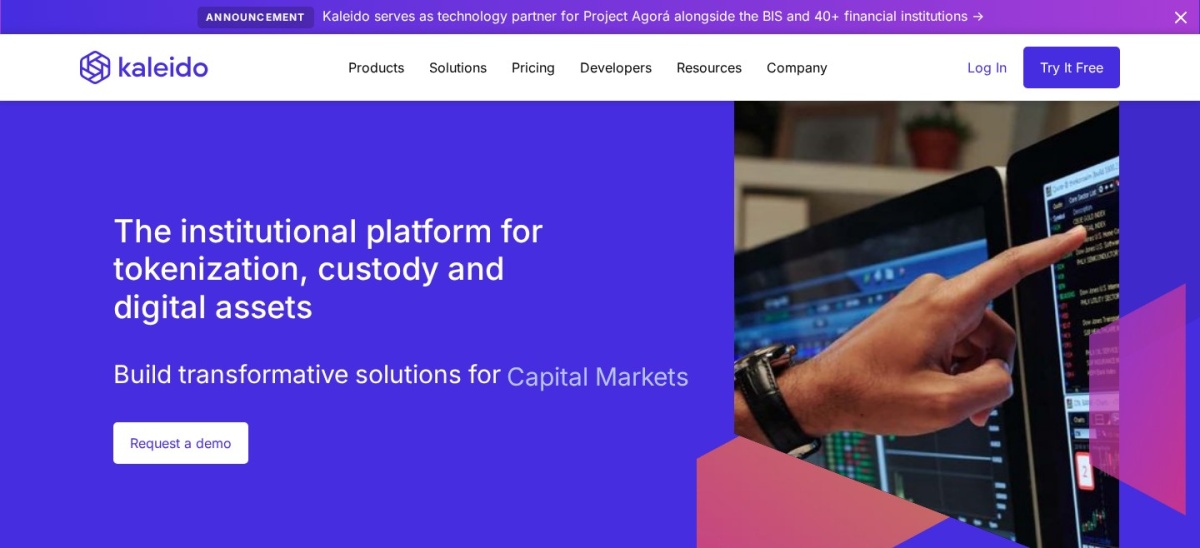
Kaleido is blockchain-as-a-service for private and consortium networks. You pick an Ethereum client such as Geth, Quorum or Besu, or Hyperledger Fabric or Corda, and launch nodes in AWS or Azure with explorers and contract tools included.
The trade off is cost: the Starter plan is free for up to 2 nodes, but a single small Developer node at $0.15 an hour runs about $110 a month. It suits enterprises building permissioned networks.
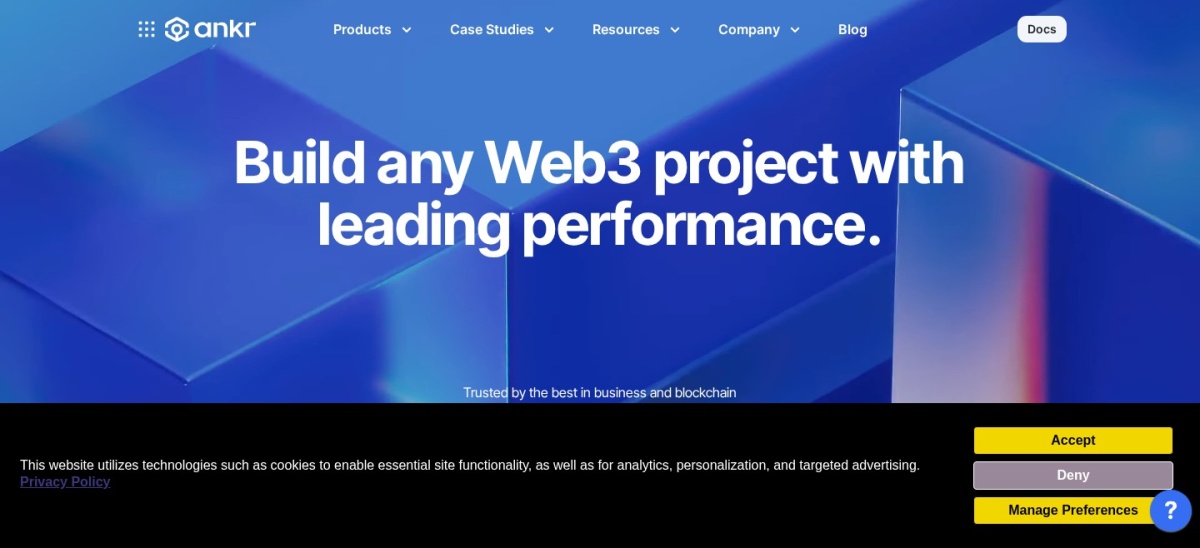
Ankr is a Web3 infrastructure provider with RPC endpoints and indexed APIs across more than 75 chains. The Freemium plan gives 200 million API credits a month, and Premium pay as you go starts with a $10 minimum deposit at $0.10 per million credits.
The trade off is that WebSocket, trace and debug tools are Premium-only, and Deal subscriptions start at $500 a month. It suits teams that want a large free credit pool and prepaid usage.
What we like
Largest free credit pool in this list
Prepaid balance, no monthly bill
Flat 200 credits per EVM call
Watch out for
Key features sit behind the paid tier
Deal subscriptions start at $500 a month
Premium Deal adds a monthly subscription with extra creditsVisit ankr.com
Free vs paid: what the free tier really covers
Free tiers cover learning and small apps well. Alchemy gives 30M compute units a month, Chainstack gives 3M request units, and Ankr gives 200M credits.
Paid plans mostly add throughput, support and archive access. QuickNode puts archive data on every plan, while Chainstack unlocks it from Growth at $49 a month.
Watch the meter. Usage-based pricing can stay cheap for months and then jump when traffic grows, so set a spend cap where the platform allows one.
How we chose
We started from the node and data platforms with public pricing pages and a free way in, then kept the nine with the clearest plans for developers.
Prices come from each vendor's pricing page, checked on 23 November 2026. Ratings come from G2, except Tatum, which uses SourceForge. Where a vendor shows a sale, the list shows the regular price.
We left out providers with no published prices and trading apps, since this list covers software for building on blockchains. No vendor paid for a place, and we do not claim hands-on testing for this list.
How to choose blockchain software
Start with the chain you build on, then match the billing model to your traffic.
List the chains you need. If you build on one chain, a focused provider may cost less. For many chains, pick a platform that covers them all on one key.
Work out your monthly calls. Estimate requests per day, then check what they cost in the vendor's own unit. A cheap plan with costly methods can beat a dear plan with cheap ones.
Check the free tier type. A monthly allowance suits steady apps, a daily quota suits steady traffic, and a one-month trial suits a short build.
Plan for growth. Make sure the next plan up is one you can afford, and that archive data and support improve with it.
FAQ
What is the best blockchain software?
Alchemy is the best pick for most developers. Its free plan gives 30 million compute units a month, and pay as you go costs $0.52 per million after that, with node, data and wallet APIs in one place.
Is blockchain software free to start?
Most platforms here have a free tier or trial. Alchemy, Infura, Chainstack, Kaleido and Ankr all let you start free, while QuickNode offers a one-month trial instead and Moralis needs a paid plan.
What is the difference between RPC and data APIs?
An RPC API talks to a node so your app can read chain state and send transactions. A data API returns decoded balances, prices and NFT data ready to display, which is what Moralis sells.
How much does blockchain software cost per month?
Entry paid plans run from $5 a month for thirdweb Starter to $149 a month for Moralis API plans. Most RPC providers start at $49 or $50 a month, and usage-based plans vary with traffic.
Do I need a private blockchain platform?
Only if you run a permissioned network for a business or consortium. Public apps use public RPC providers, while private networks need a managed platform such as Kaleido.
Which blockchain software is best for enterprises?
Kaleido suits private networks, Blockdaemon-style institutional setups suit regulated teams, and Chainstack suits teams that need compliance paperwork with public chains.