Hacken is the best blockchain security software for most teams, with double manual review, 2,215 public assessments and a 4.9 out of 5 Clutch rating. CertiK suits teams wanting the largest audit volume, and TRM Labs suits teams needing compliance screening.
How we make this list: we compare pricing pages, product documentation and public user reviews, then re-check every price before each update. No product paid for a place. Disclosure.
Hacken leads on audit quality signals: double manual review, 2,215 public assessments and a 4.9 out of 5 Clutch rating.
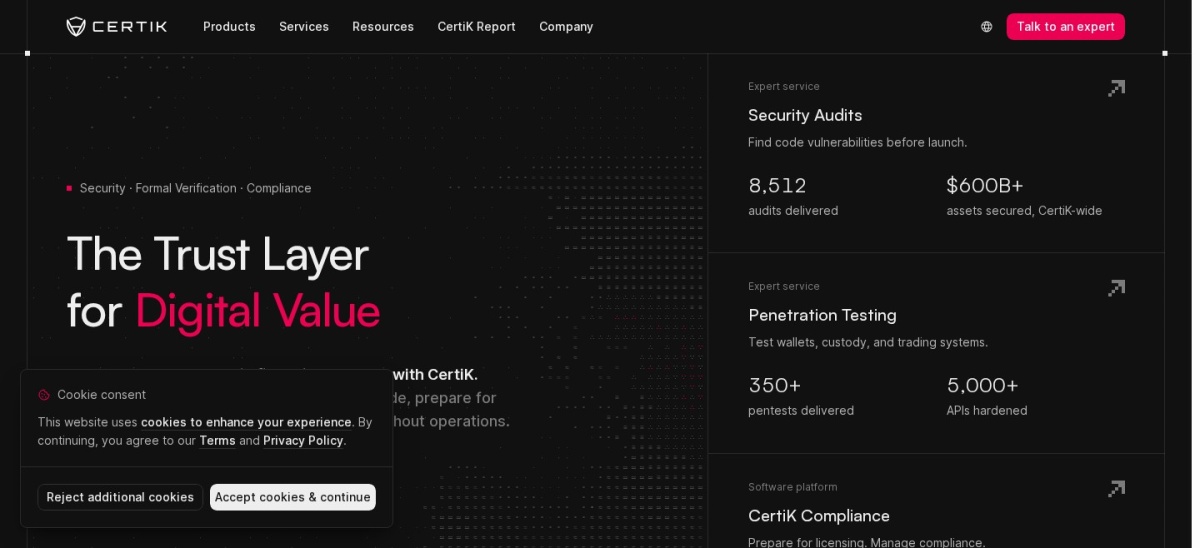
CertiK is the largest auditor here, with 8,512 audits delivered and more than $600 billion in assets secured, per its own homepage.
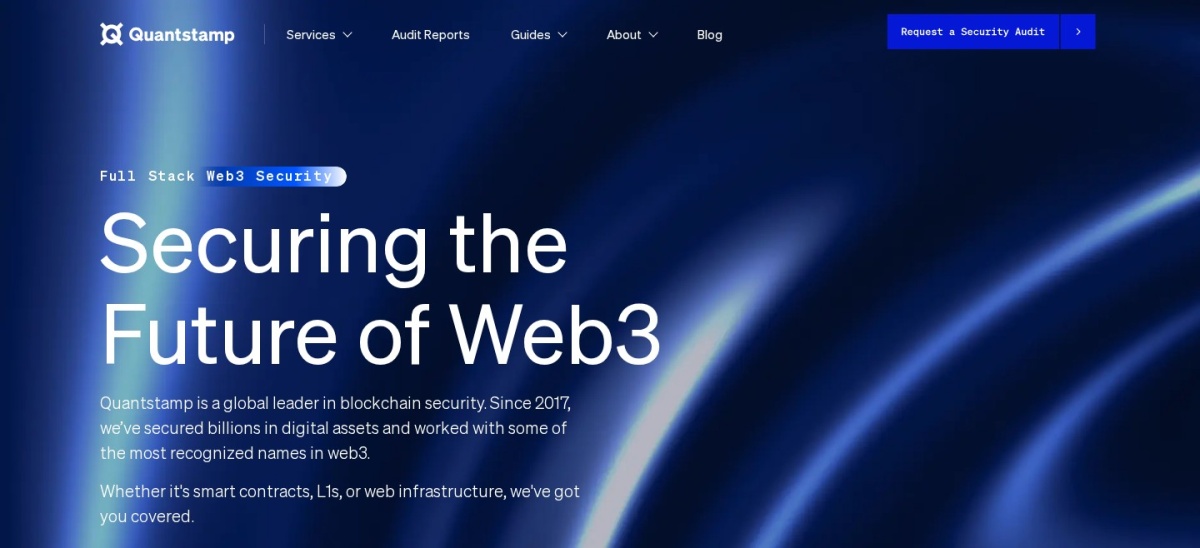
Quantstamp is the veteran pick, with 1,400+ audits across 60+ ecosystems and $500 billion-plus in assets secured.
Immunefi is the only bug bounty platform in the list, with 83,000+ researchers and $125 million-plus paid in bounties.
Seven of the nine tools publish no list price, so budget for a quoted engagement and use GoPlus at $199 a month for a priced API entry point.
What blockchain security software should cover
A smart contract bug can drain funds in minutes, and a fix after launch does not undo the loss. Security work therefore splits into three jobs: check the code before launch, watch it after launch, and pay researchers who find holes first.
An audit is the pre-launch check. A good one combines automated scanning with manual review, and the report names the exact code version it covers. Our guide on the most common WordPress vulnerabilities shows the same pattern in another stack: known flaws keep getting reused because nobody checked.
Monitoring is the after-launch job. It watches transactions, governance changes and wallet risk, and alerts the team while funds can still be paused or moved.
Bug bounties and compliance screening cover the gaps audits miss. Bounties keep researchers looking at live code, while screening checks wallets and transactions against sanctions and scam lists.
Hacken is a blockchain security firm founded in 2017 that audits smart contracts with two senior auditors reviewing the code in parallel. Its own audit page lists 1,500+ clients, 2,215 public assessments and 17,634 vulnerabilities found, and it also sells penetration tests and proof-of-reserves work.
The trade off is price. Hacken publishes no fixed plan price; its own FAQ puts most audits at $5,000 to $100,000+, depending on code size, complexity and launch date. It suits teams that want a named auditor with a public report they can show partners and exchanges.
CertiK is the largest Web3 security firm by audit volume, founded in 2017 by professors from Columbia and Yale. Its homepage lists 8,512 audits delivered, 120,000+ findings and $600 billion-plus in assets secured, and its Skynet platform scores 17,000+ projects for the public.
The trade off is trust in the review score. CertiK is rated 2.0 out of 5 on Trustpilot from 378 reviews, and many of those reviews describe impersonation scams rather than audit work, so read them with care. It suits well-funded launches that want a widely recognised name and a public Skynet score.
What we like
Largest audit volume in this list
Formal verification available on premium work
Skynet gives projects a public security score
Covers audits, pentests and compliance
Watch out for
No published list price for audits
Trustpilot score is dragged down by scam reports
Audit quality has drawn public criticism in the past
Quantstamp is a blockchain security firm founded in 2017 that audits smart contracts, protocols and web infrastructure. Its company page lists 1,400+ audits conducted, 60+ ecosystems and $500 billion-plus in digital assets secured, including work on the Ethereum 2.0 deposit contract.
The trade off is price and booking. Quantstamp publishes no standard prices, so every engagement is quoted, and booking windows can run 4 to 8 weeks for novel protocols. It suits teams that want a long-running auditor with a deep public report archive.
Immunefi is a bug bounty platform for Web3 that connects protocols with whitehat researchers who report vulnerabilities for rewards. Its own bug bounty page lists 83,000+ registered researchers, 1,600+ critical mainnet bugs found, $125 million-plus paid in bounties and $190 billion-plus in funds protected.
The trade off is that bounties are reactive. A bug must be found and reported, and running a program needs real bounty capital plus a 10% platform fee unless the annual BBP Subscription removes it. It suits live protocols that already audited and want continuous eyes on changing code.
PeckShield is a blockchain security firm founded in 2018 that combines smart contract audits with on-chain monitoring and incident response. It reports 5,000+ completed audits, and its PeckShield Alert feed is widely followed for real-time exploit reports across DeFi.
The trade off is price opacity. PeckShield publishes no list price and quotes by project size and complexity, with fast-track options for urgent audits. It suits DeFi teams that want one firm for the audit and for watching the protocol after launch.
What we like
Audit plus live monitoring from one firm
Fast exploit alerts through PeckShield Alert
Covers wallets, exchanges and DeFi
Incident response available around the clock
Watch out for
No published list price
Highest count of post-audit incidents in one directory
TRM Labs is a blockchain intelligence platform that helps financial institutions, crypto firms and government agencies detect crypto fraud and financial crime. It serves 600+ agencies and institutions across 75 countries, with wallet screening, transaction monitoring and fund tracing in one platform.
The trade off is enterprise pricing. TRM Labs sells through sales quotes with no public price list, so small teams cannot see costs upfront. It suits exchanges, fintechs and banks that need defensible compliance screening and investigation workflows.
Chainalysis is a blockchain data platform whose Reactor tool traces funds across 27+ blockchains and 40 million-plus assets, following them through 325 million-plus swaps and 300+ bridges and decentralised exchanges. Its KYT product monitors transactions in real time for compliance teams.
The trade off is that it is a quote-based enterprise platform. Chainalysis publishes no list prices, and its G2 rating of 4.7 out of 5 rests on only 3 reviews. It suits law enforcement, exchanges and financial institutions that need court-ready tracing evidence.
What we like
Deepest tracing coverage in this list
KYT plus Reactor cover monitoring and investigation
Crystal Blockchain is a blockchain intelligence platform founded in 2018 by the Bitfury Group that helps banks, crypto firms and law enforcement trace illicit finance. It holds 100,000+ verified entities and 210 million-plus verified transfers, and its Crystal Expert product covers monitoring, risk scoring and case work.
The trade off is thin public proof. Its G2 rating of 4.5 out of 5 rests on a single review, and the main platform price is quoted on request. It suits investigation teams that want entity attribution and a free Bitcoin explorer, Crystal Lite, beside the paid platform.
What we like
Strong entity database for attribution
Free Crystal Lite Bitcoin explorer
Covers compliance, investigation and training
Work cited in major ransomware cases
Watch out for
G2 rating rests on a single review
Main platform price is quoted on request
Smaller review footprint than TRM Labs or Chainalysis
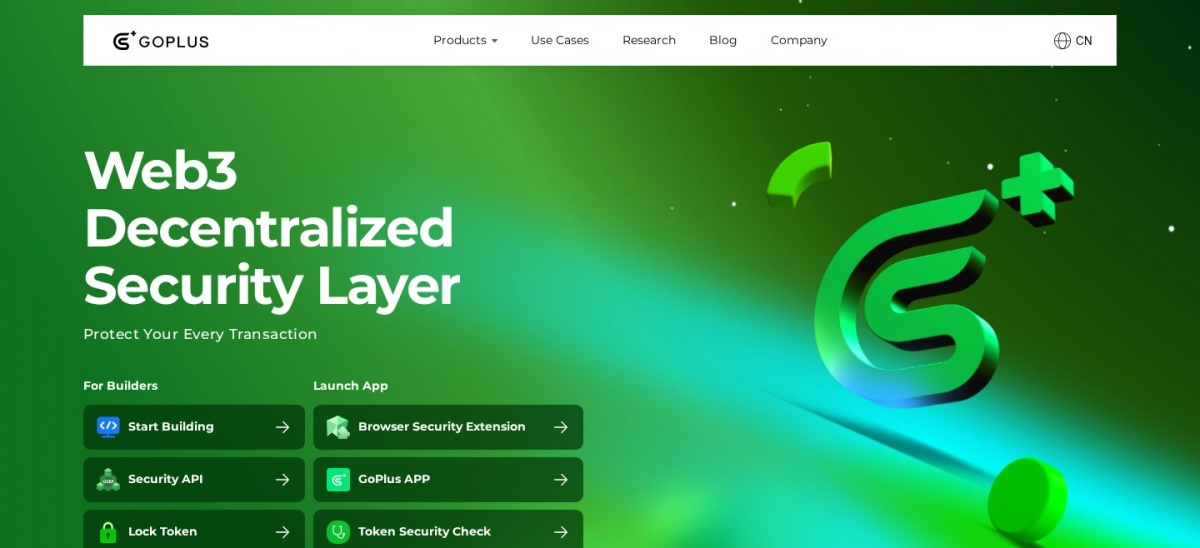
GoPlus Security is a Web3 security API that returns machine-readable risk data for tokens, NFTs, addresses, approvals and phishing sites. Its free tier covers 150,000 compute units a month, paid packages start at $199 a month, and it covers 40+ chains with 10 million-plus daily API calls.
The trade off is that it is an API, not an audit. It flags contract controls, honeypot behaviour and malicious addresses, but it cannot review business logic the way a manual audit can. It suits wallets, trading apps and developers that need a risk check inside a product flow.
An audit checks one version of the code before launch. Once the code changes, the report no longer covers the new version, so teams re-audit the changed parts.
Monitoring watches live activity after launch. It catches governance changes, suspicious approvals and abnormal fund flows, and it is the layer that can trigger a pause before funds move on.
Bug bounties sit between the two. They keep researchers looking at live code for as long as the program runs, which is why most large protocols run an audit first and a bounty after. The website security statistics guide shows how often attacks follow known patterns rather than new ones.
How we chose
We started from the audit firms, monitoring platforms and bug bounty services most often named for blockchain security, then kept nine with a verifiable public price or quote model and a public review rating.
Prices and ratings were checked on 24 November 2026. Seven of the nine publish no list price, so those entries show Custom and the body states the range or fee the vendor does publish. Ratings come from different platforms because Web3 tools have thin G2 coverage, and the count beside each rating shows how thin it is.
We left out OpenZeppelin and Elliptic because no verifiable public user rating was found for either, and Forta and Hypernative because they publish no USD price and no public rating. No vendor paid for a place, and we do not claim hands-on testing for this list.
How to choose blockchain security software
Match the tool to the job your code is at right now, not to the brand name.
Start with an audit before launch. Book a manual audit for any contract that will hold user funds, and keep the report with the exact code version it covers.
Add monitoring on launch day. Watch transactions, governance actions and wallet risk from day one, so an alert can trigger a pause before funds move.
Check the code you depend on. Read the audit reports of the protocols you integrate with, and run the same checks on your own contracts. See how to check a plugin for vulnerabilities for the same habit in another stack.
Open a bounty once the code is live. Set a bounty budget that matches the value at risk, and use managed triage so engineers only see reports worth acting on.
FAQ
What is the best blockchain security software?
Hacken is the best pick for most teams, with double manual review, 2,215 public assessments and a 4.9 out of 5 Clutch rating. CertiK suits teams that want the largest audit volume, and TRM Labs suits teams that need compliance screening.
How much does a smart contract audit cost?
Most audits in this list are quoted per engagement, with Hacken putting most audits at $5,000 to $100,000+ on its own FAQ page. Simple token contracts sit at the low end, while complex DeFi protocols with many contracts cost far more.
Is a smart contract audit enough on its own?
No. An audit checks one code version before launch, and it cannot cover later changes or live attacks. Add monitoring after launch and a bug bounty so researchers keep checking the code while it runs.
What is the cheapest blockchain security tool here?
GoPlus Security is the cheapest priced entry, with a free tier of 150,000 compute units a month and paid packages from $199 a month. The other tools are mostly quoted, so ask for a written quote before budgeting.
Do these tools work for small teams?
GoPlus and Crystal Lite work for small teams, because both have a free tier. Audit firms such as Hacken, CertiK and Quantstamp are priced for funded launches, and compliance platforms such as TRM Labs and Chainalysis are built for institutions.
What is the difference between CertiK and Hacken?
CertiK is the larger auditor by volume, with 8,512 audits delivered and a public Skynet score for projects. Hacken is smaller but has the stronger review rating at 4.9 out of 5 on Clutch, with double manual review on its audits.
SaaS SEO and WordPress specialist with about 8 years of experience. Rakib compares WordPress plugins, themes, hosting and software using public pricing, documentation and user reviews. See how we rank.