Best Big Data Analytics Software in 2026: 9 Tools Compared
WLWPLegible EditorsLast verified 23 Nov 2026How we rank12 min read
★ Short answer
Databricks is the best big data analytics software for most teams, with engineering, SQL and AI on one lakehouse, rated 4.6 out of 5 on G2 from 1,366 reviews. Pick Snowflake for a governed warehouse and BigQuery for serverless SQL.
How we make this list: we compare pricing pages, product documentation and public user reviews, then re-check every price before each update. No product paid for a place. Disclosure.
Databricks and Snowflake both hold 4.6/5 on G2, with 1,366 and 763 reviews.
BigQuery charges $6.25 per TiB scanned, with the first 1 TiB each month free.
Redshift Serverless starts at $1.50 an hour for AWS teams, with no multi-cloud option.
Apache Spark is free and open source, but you run the clusters yourself.
Splunk and SAS Viya publish no list price, so budget for a sales conversation.
What big data analytics software should cover
Big data software handles volumes, speeds and formats that break spreadsheets and small databases. It stores, processes and analyses data at a scale where a single machine is not enough.
Start with where your data lives. AWS teams suit Redshift, Google Cloud teams suit BigQuery, Microsoft shops suit Fabric, and multi-cloud teams suit Snowflake or Databricks.
Check how you pay. Some tools bill per seat, some per credit or per TiB scanned, and some per hour of compute, so two tools can cost very different amounts for the same workload.
Plan for governance from the start. At big-data scale, access controls, audit logs and data quality matter as much as query speed.
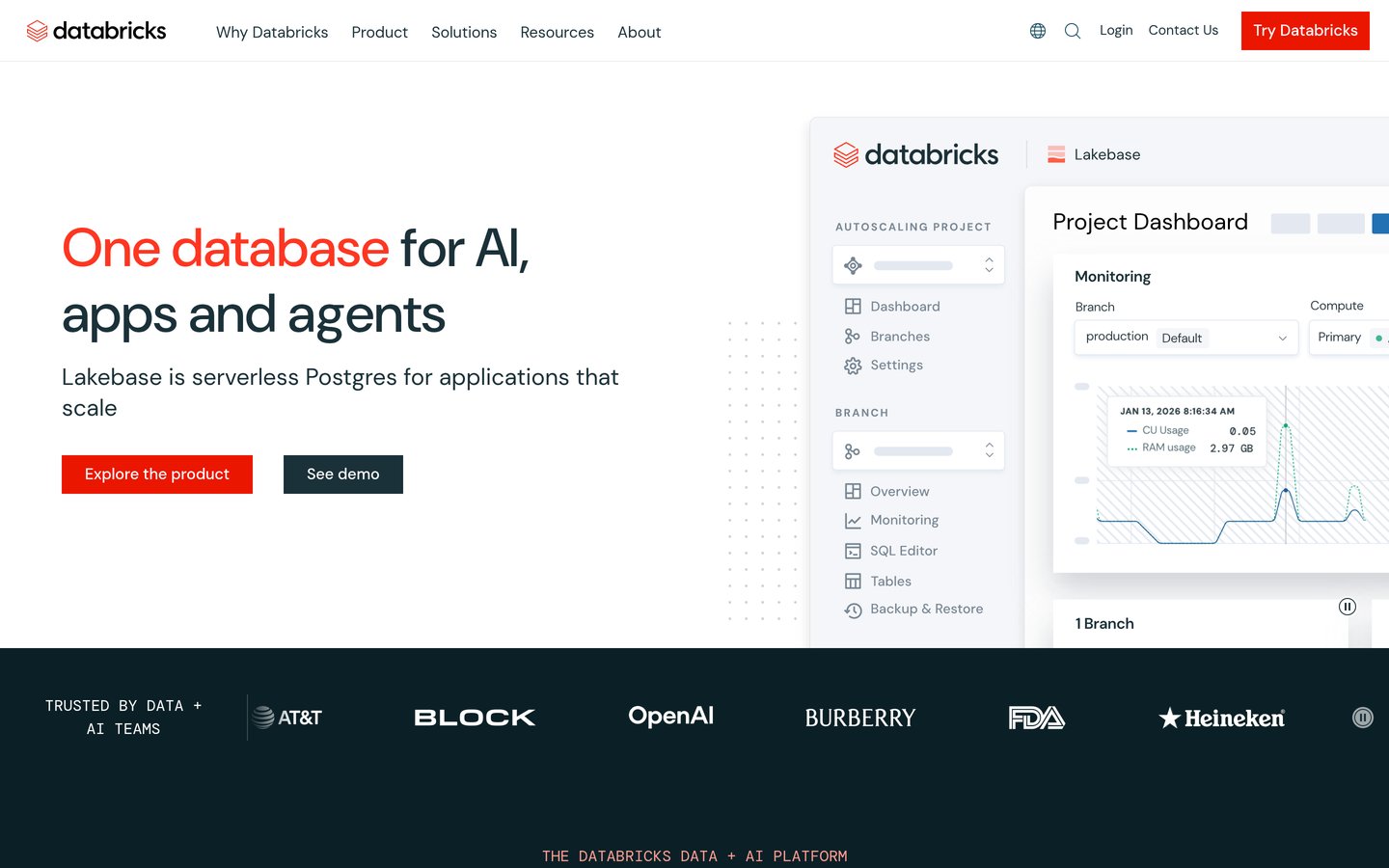
Databricks is a lakehouse platform that combines data engineering, SQL analytics and machine learning on open storage formats. The Basic tier starts at $99 a month, and it is rated 4.6 out of 5 on G2 from 1,366 reviews.
The trade off is cost control. Pay-as-you-go billing climbs fast without cluster policies, and cloud infrastructure adds to the bill. It suits engineering teams that build pipelines and models on one platform.
Snowflake is a cloud data platform that stores, shares and analyses data in one managed service, with storage and compute billed separately. Storage starts at $23 per terabyte a month, and it is rated 4.6 out of 5 on G2 from 763 reviews.
The trade off is credit burn. Compute costs $2 per credit on Standard, and unmonitored queries can spike the bill. It suits teams that need one governed warehouse for many users.
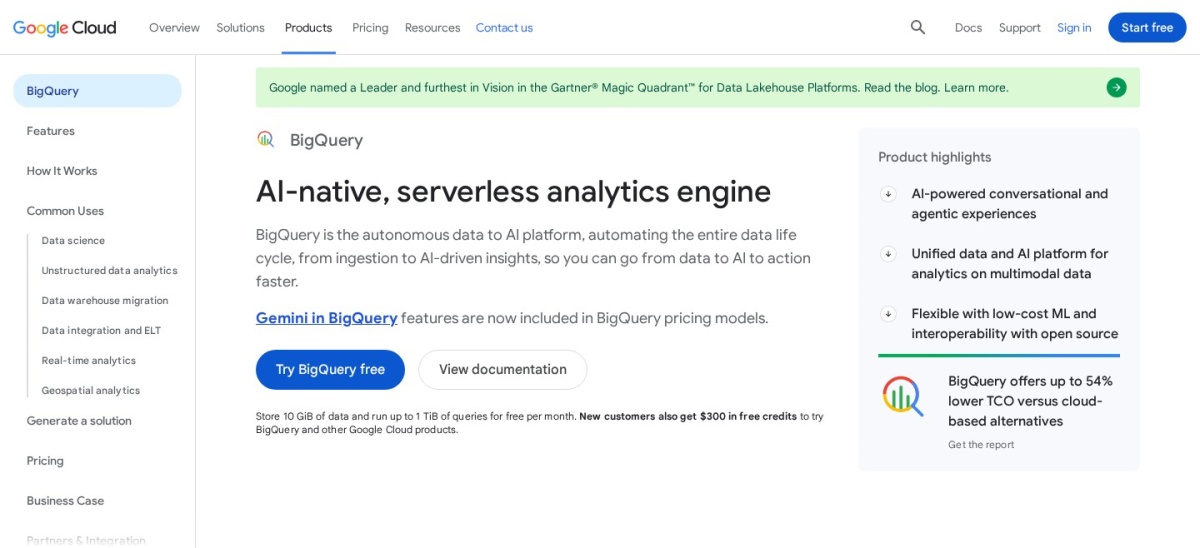
Google BigQuery is a fully managed, serverless data warehouse for SQL analytics at large scale, with no clusters to size or manage. On-demand queries cost $6.25 per TiB scanned, with the first 1 TiB a month free, and it is rated 4.5 out of 5 on G2 from 1,223 reviews.
The trade off is query discipline. A badly written query can scan costly amounts of data, so costs depend on how you query. It suits Google Cloud teams with spiky, irregular workloads.
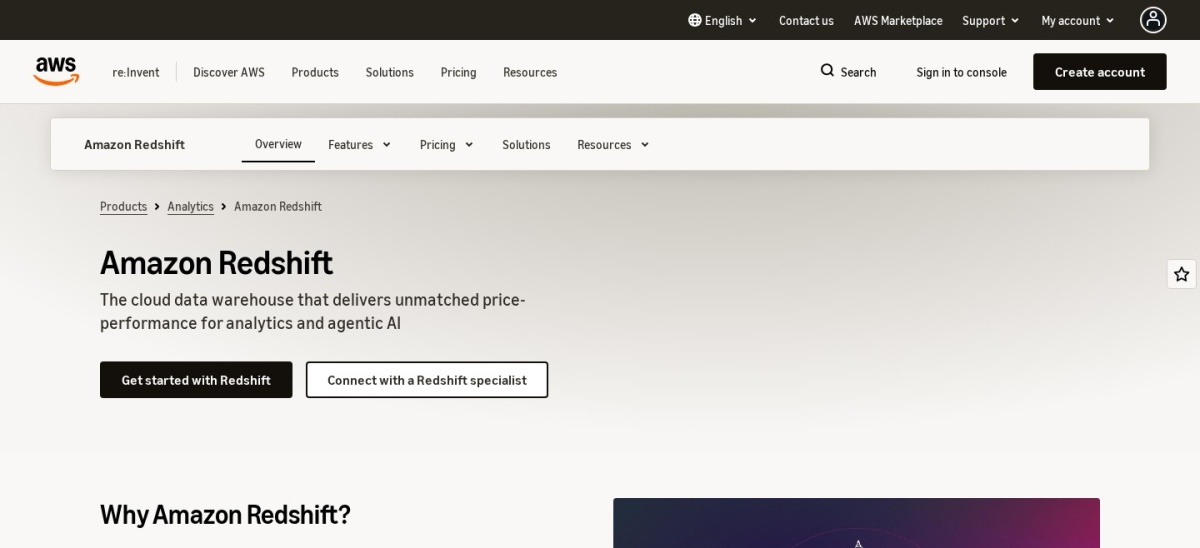
Amazon Redshift is a cloud data warehouse from AWS with provisioned and serverless options and zero-ETL links to other AWS services. Serverless starts at $1.50 an hour, and it is rated 4.3 out of 5 on G2 from 404 reviews.
The trade off is the cloud lock-in. Redshift runs on AWS only, and provisioned nodes bill every hour even when idle. It suits teams whose data already lives in S3 and AWS.
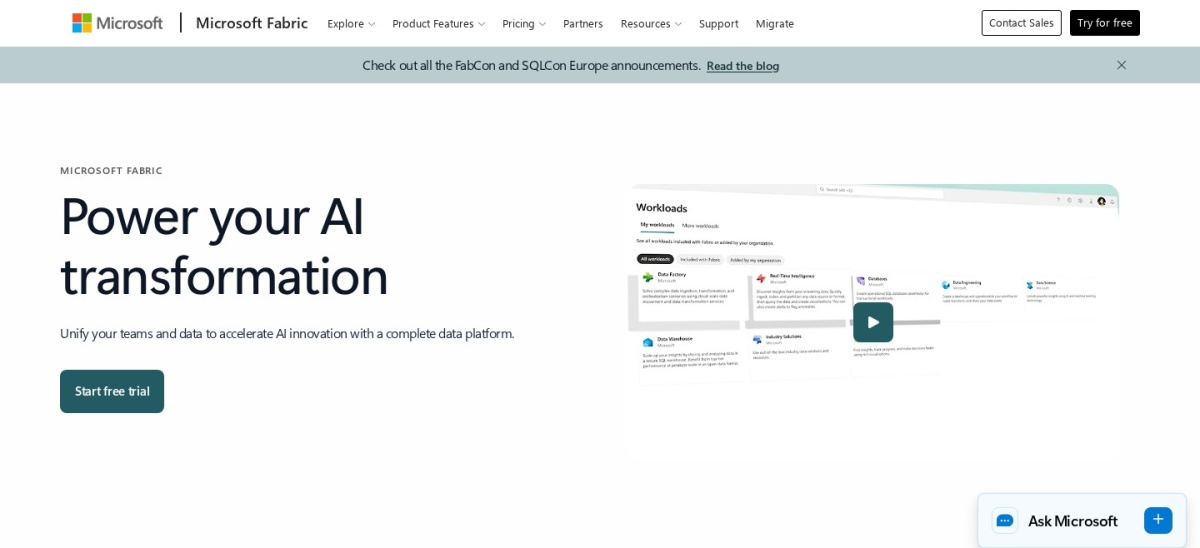
Microsoft Fabric is a unified analytics platform that covers data engineering, data science, real-time analytics and Power BI in one service. F2 capacity costs $262.80 a month, and it is rated 4.6 out of 5 on G2 from 47 reviews.
The trade off is the entry price. The smallest capacity still costs $262.80 a month, and viewers need Pro below F64. It suits Microsoft 365 shops that want one vendor for everything.
Apache Spark is a free, open-source engine for batch and streaming data processing, machine learning and graph jobs, running on single machines or clusters. It costs nothing to licence, and it is rated 4.3 out of 5 on G2 from 55 reviews.
The trade off is operations. You run the clusters yourself, so it needs real engineering time. It suits teams with engineers who want a free engine with no vendor lock-in.
Splunk Enterprise is a platform for searching, monitoring and analysing machine data and logs in real time, with alerts and dashboards built in. Pricing is by custom quote, and it is rated 4.3 out of 5 on G2 from 434 reviews.
The trade off is the price model. There is no published list price, and ingestion costs grow with data volume. It suits security and operations teams that live in log data.
Cloudera is a hybrid data platform that runs the same tools on-premises and in the cloud, with built-in Spark and Airflow for pipelines. The Basic tier starts at $10,000 a year, and it is rated 4.1 out of 5 on G2 from 136 reviews.
The trade off is price and complexity. The starting price is high for small teams, and deployment takes real effort. It suits large organisations that must keep some data on-premises.
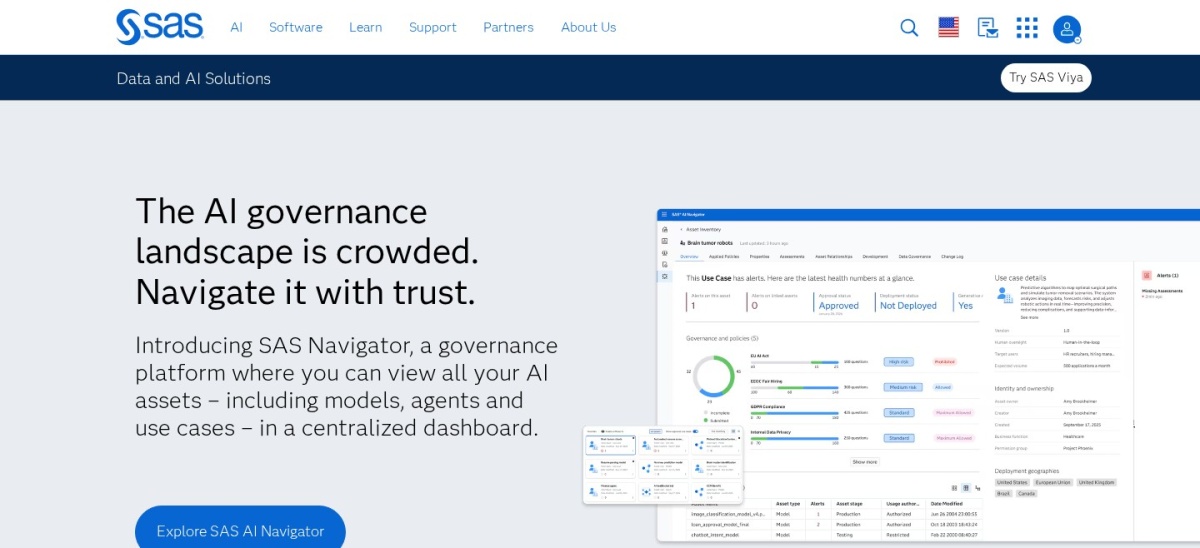
SAS Viya is a cloud-native analytics platform for large-scale enterprise analytics, AI and machine learning, with strong governance. Pricing is by custom quote, and it is rated 4.3 out of 5 on G2 from 818 reviews.
The trade off is cost and time. There is no published price, and implementation averages 7 months. It suits banks, insurers and pharma teams with regulated, high-volume data.
What we like
Strongest advanced analytics here
Proven in banking and pharma use
Cloud-native and built to scale
Watch out for
No published list price
Implementation averages 7 months
Pricing is custom and takes a sales conversationVisit sas.com
Free vs paid: what you give up
Free options cover the basics well. Apache Spark is free and open source, and BigQuery gives 1 TiB of queries and 10 GiB of storage free each month.
Paid platforms mostly add management, governance and scale. You get managed clusters, security controls, support and tools that hide the infrastructure.
The line between free and premium is the same trade-off in every category. Our guide to free vs premium plugins explains how to weigh a free plan against a paid upgrade before you commit.
If big data earns you money, a managed platform usually pays for itself in saved engineering time. If you are learning, start with Spark or the BigQuery free tier.
How we chose
We started from the big data analytics software tools most often named in 2026 comparisons, then kept 9 established products with published prices or a clear quote process and a public review footprint on G2.
Prices come from each vendor's pricing page, checked on 23 November 2026, with the top 3 read on their official pages. Ratings are G2 scores from the same week. Where a vendor shows a sale, the list shows the regular price.
We left out tools with no published price and no clear quote route, and niche tools with too few reviews to judge. No vendor paid for a place, and we do not claim hands-on testing for this list.
How to choose big data analytics software
Start with the data you already have, then check price, skills and scale before you commit.
List your data sources first. If your data lives in Google tools, a Google-native option wins. If it lives in Microsoft 365, a Microsoft tool wins.
Count the people who will build, not just view. Creator and author seats cost far more than viewer seats, so price the builders first.
Try the free tier or trial on real data. A demo with sample data hides slow queries and missing connectors, so load your own data.
Add up the real first-year cost. A $10 monthly seat costs $120 a year, while a quote-only platform can cost thousands before anyone builds a dashboard.
FAQ
What is the best big data analytics software?
Databricks is the best pick for most teams, with engineering, SQL and AI on one lakehouse, rated 4.6 out of 5 on G2 from 1,366 reviews. Snowflake is the best pure warehouse, and BigQuery is the best serverless option.
Is Databricks or Snowflake better?
Databricks suits teams that also build pipelines and machine learning models, while Snowflake suits teams that mainly need a governed warehouse. Both hold 4.6/5 on G2, so the choice depends on your workload.
How much does big data analytics software cost?
It varies widely. BigQuery starts at $6.25 per TiB scanned, Snowflake compute starts at $2 per credit, and Databricks bills per DBU on top of cloud costs. Cloudera starts at $10,000 a year.
Is Apache Spark still worth using?
Yes, for teams with engineers. Spark is free, open source and runs batch, streaming and ML jobs, but you operate the clusters yourself. Managed Spark on a cloud adds hosting costs.
Do I need big data software for a small dataset?
No. If your data fits in a spreadsheet or a normal database, a BI tool such as Power BI or Tableau is enough. Big data tools earn their keep at millions of rows and above.
What is the cheapest way to start with big data?
Start with the BigQuery free tier, with 1 TiB of queries a month free, or run Apache Spark yourself at no licence cost. Both need technical skill, but neither needs a sales call.