Best Benefits Support Software in 2026: 9 Tools Compared
WLWPLegible EditorsLast verified 24 Nov 2026How we rank13 min read
★ Short answer
Gusto is the best benefits support software for most small teams, at $49 a month plus $6 per person for payroll with health, dental and 401(k) administration in one login, rated 4.6 out of 5 on G2. Pick Rippling for a growing team that wants HR, IT and finance on one record, or Ease if a broker runs enrollment.
How we make this list: we compare pricing pages, product documentation and public user reviews, then re-check every price before each update. No product paid for a place. Disclosure.
Gusto is the cheapest direct route for a small team: $49 a month plus $6 per person, with payroll and benefits in one login.
Rippling starts at $8 per user a month plus a $40 base fee, but payroll and benefits are separate modules on top.
Justworks PEO Plus at $124 per employee a month is the only plan here that bundles large-group health plans by itself.
Ease and Employee Navigator are built for brokers: Ease lists Pro at $530 a month, while Employee Navigator quotes every plan.
TriNet Zenefits has the lowest G2 rating here at 3.9 out of 5, and payroll costs $6 more per person on its entry plan.
What benefits support software should cover
Benefits support software runs open enrollment, tracks who chose which plan, and sends the right deductions to payroll. The best tools also handle life events, COBRA and ACA reporting without spreadsheets.
Most tools in this list are HR platforms with benefits built in, not benefits-only software. That matters because enrollment data is only useful when it flows into payroll and the carrier without re-keying.
Check three things before you pay: whether your broker can work in the tool, which carriers it connects to, and whether payroll is included or an add-on. A low per-person price can hide a quoted payroll or benefits module.
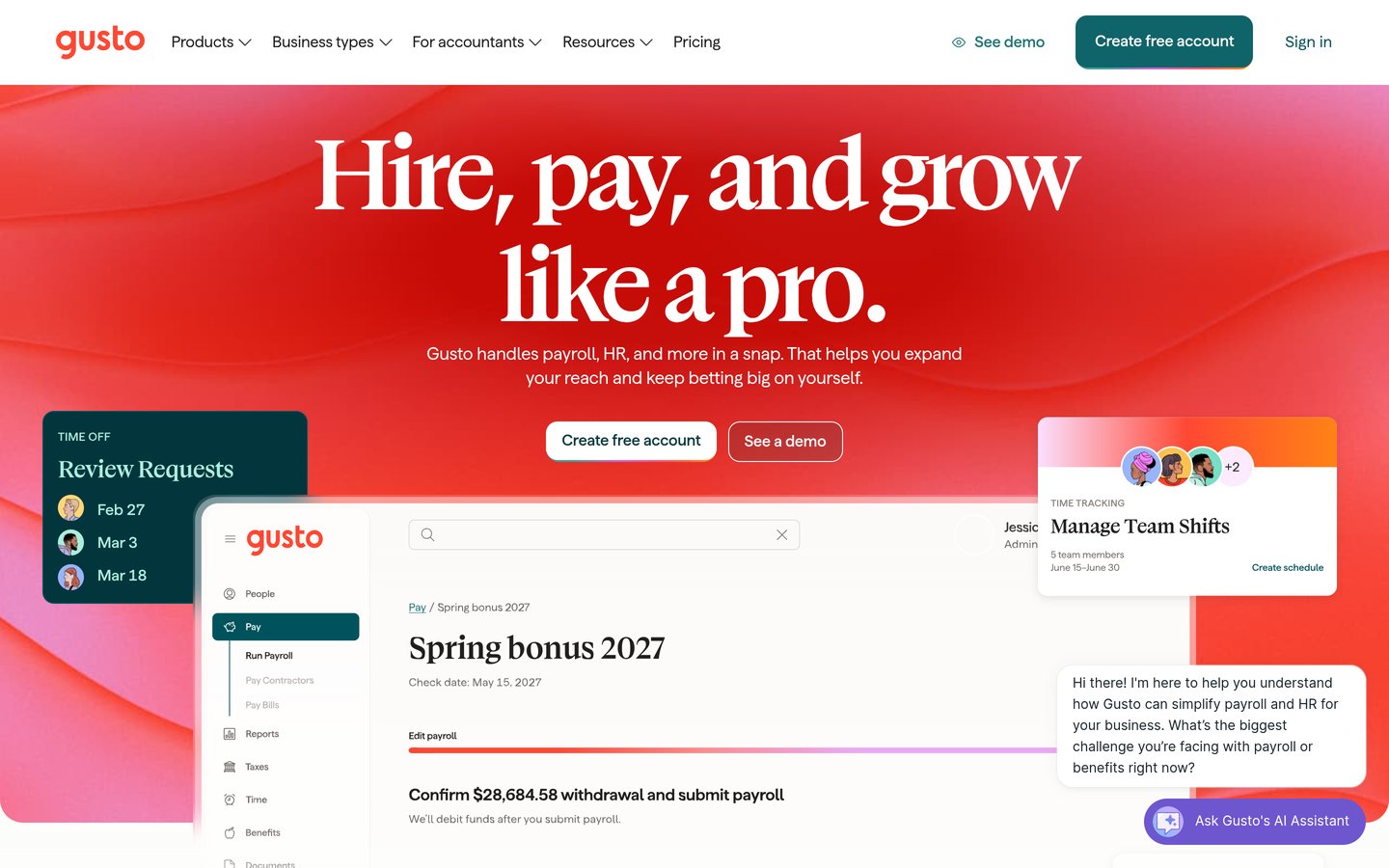
Gusto is a payroll and HR platform for small teams that puts benefits administration beside payroll in one login. The Simple plan costs $49 a month plus $6 per person and covers unlimited payroll runs, tax filing, employee self-service and health, dental, vision and 401(k) administration through Gusto's broker partners.
The trade off is scope. Simple covers payroll in one state only, so a second state forces Plus at $80 a month plus $12 per person, and health insurance depends on Gusto acting as your broker. It suits single-state teams under 50 people that want payroll and benefits handled together.
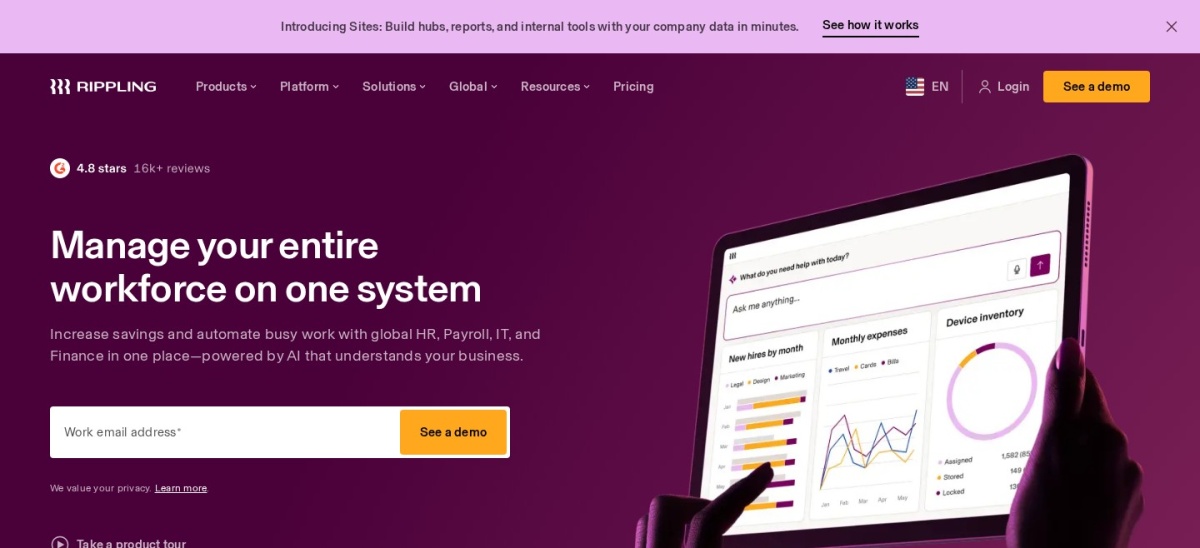
Rippling is a workforce platform where HR, payroll, IT and finance share one employee record. The platform starts at $8 per user a month plus a $40 monthly base fee, and a change to an employee record flows into payroll, benefits enrollment, device access and app permissions from the same onboarding event.
The trade off is price. Payroll costs another $8 per person on annual billing, benefits administration is a quoted module, and Rippling's own pages give two base fees, $35 and $40. It suits growing teams that want one record driving HR, IT and finance.
What we like
One record updates payroll, benefits and IT together
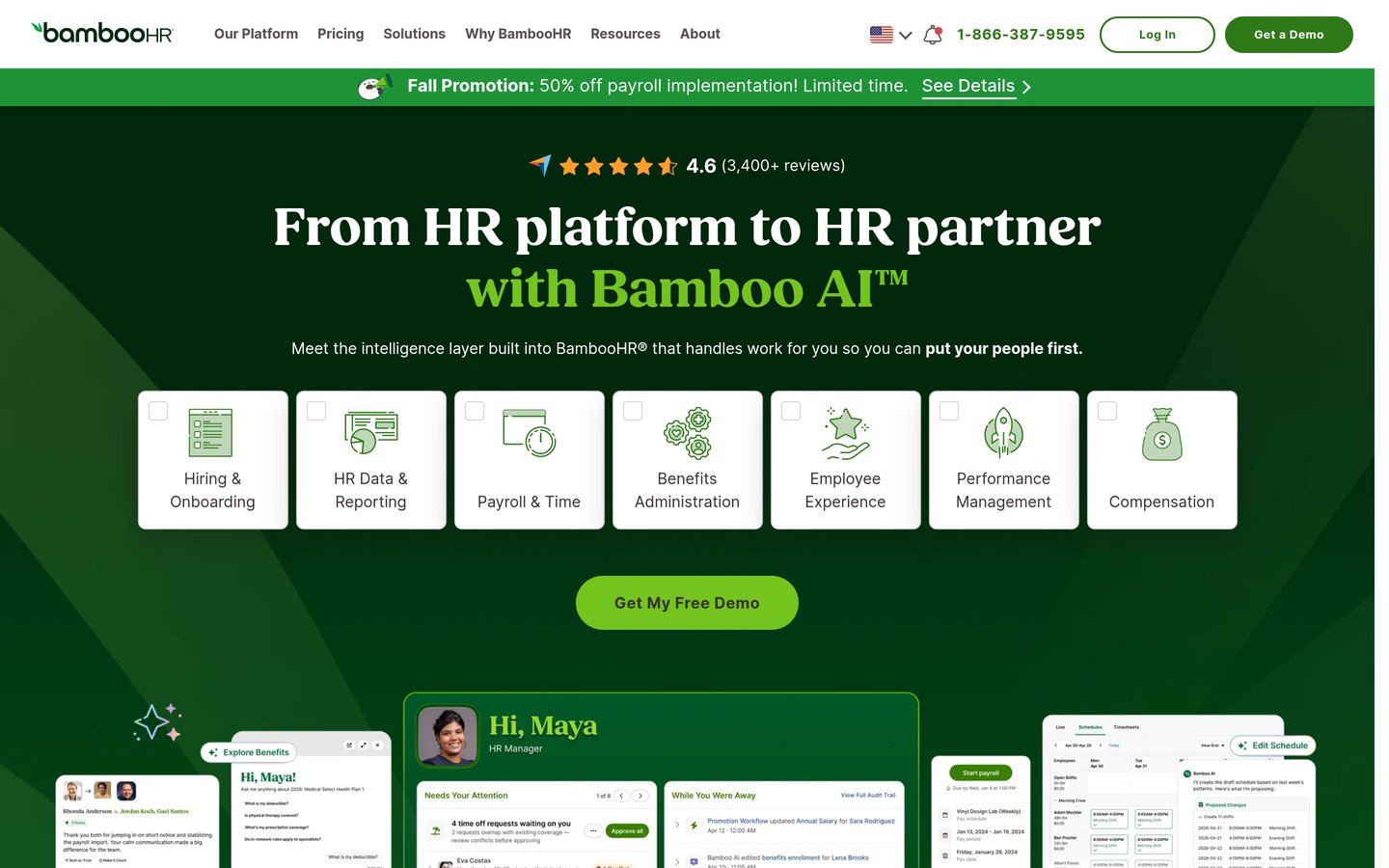
BambooHR is an HR system for small and mid-size teams that keeps employee records, hiring, onboarding, time off and benefits tracking in one place. Core starts at $10 per employee a month for teams over 25 people, or a flat $250 a month for 25 or fewer, and includes hiring for up to 5 open jobs.
The trade off is that benefits administration and payroll are quoted add-ons, not part of Core, so the $10 starting price is only the HR record. It suits a one-person HR team that wants an easy system of record and will buy payroll and benefits separately.
What we like
Easiest HR system to set up in this list
Published starting price with a flat small-team rate
Justworks is a professional employer organization that bundles payroll, compliance and benefits into one subscription. The Payroll plan costs $50 a month plus $8 per employee, while PEO Basic at $79 per employee a month adds co-employment, and PEO Plus at $124 adds access to medical, dental and vision plans.
The trade off is cost at scale. PEO pricing is per employee with no base fee, so the bill grows with every hire, and the cheapest PEO tier has no medical plan access. It suits small teams that want big-company health plans without running benefits themselves.
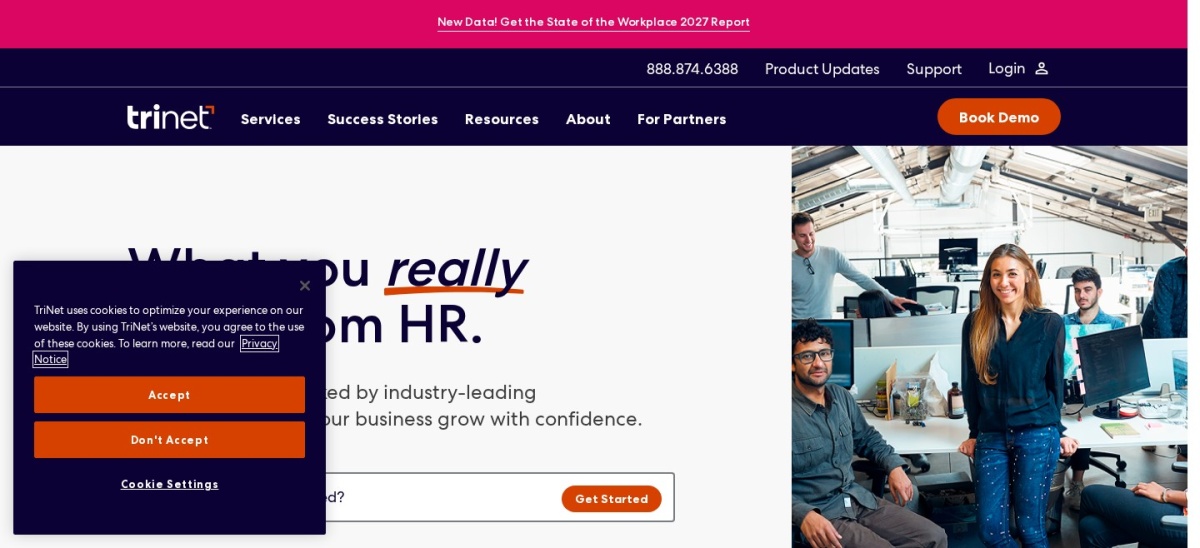
TriNet Zenefits is an all-in-one HR platform, now sold as the TriNet HR Platform, that pairs benefits administration with access to HR experts. Essentials starts at $8 per employee a month on annual billing and covers core HR, onboarding, benefits administration and time-off tracking, with a five-employee minimum.
The trade off is payroll. It costs $6 more per employee on Essentials and Growth, so the real entry price with payroll is $14 a person, and only the Zen plan at $27 includes it. It suits small teams that want compliance help beside their benefits software.
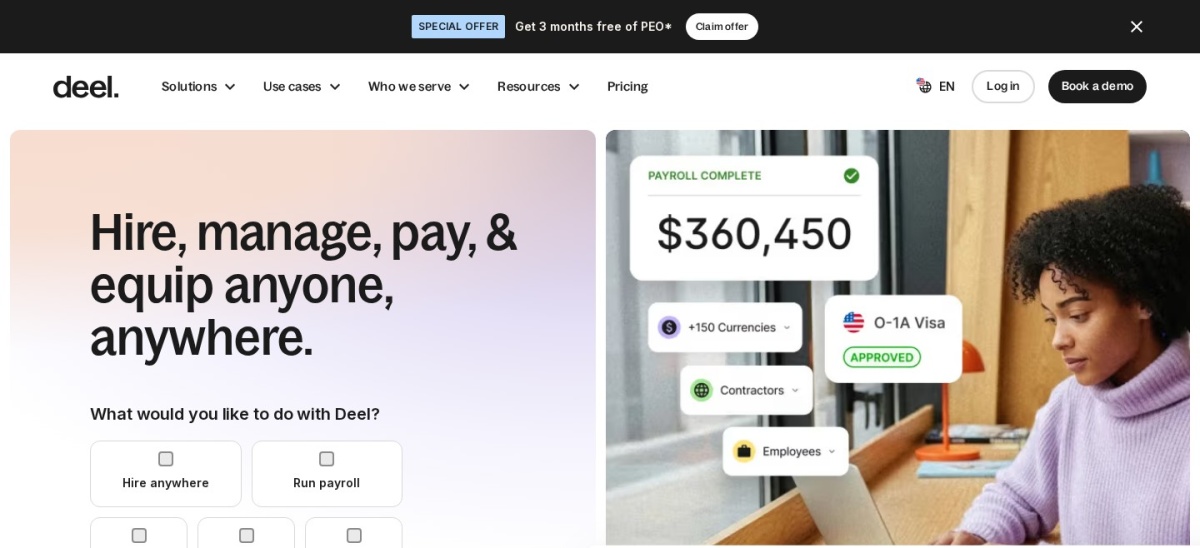
Deel is a global HR platform that manages employees and contractors in many countries from one record. Deel HR Core starts at $5 per employee a month and covers worker profiles, org chart, time off and documents, while Advanced at $19 adds performance reviews and Elite at $29 adds pay bands and headcount planning.
The trade off is that benefits are not the core product. Health and benefits support comes through Deel's bundles and PEO or EOR services, which are priced separately from HR Core. It suits teams with staff in more than one country that need one HR record first.
What we like
Lowest entry price in this list at $5 per person
One record for employees and contractors worldwide
Published three-tier HR pricing
Watch out for
Benefits come through separate bundles or services
Payroll is priced separately from HR Core
No free plan or self-serve trial
Bundles add payroll or PEO from $22 per personVisit deel.com
07
Ease
4.6/5on G2 (1,449 reviews, checked Nov 2026)
Starts at$530/mo
Best for broker-led enrollment
Entry planPro, $530/mo
Agency$840/mo
EnterpriseQuote only
G2 rating4.6/5, 1,449 reviews
ease.com
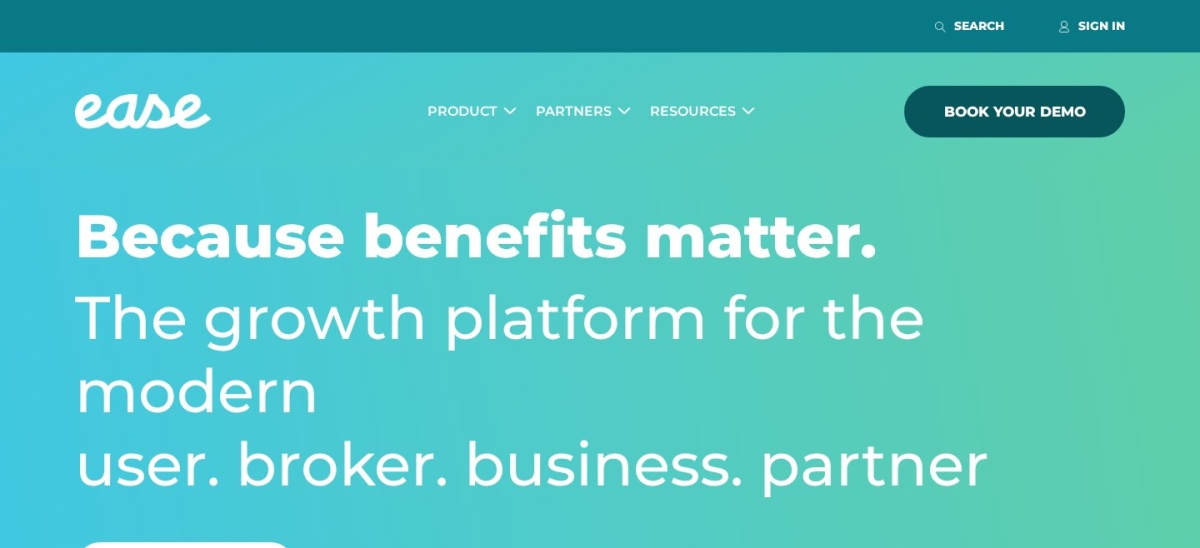
Ease homepage, captured Nov 2026.
Ease is benefits enrollment software built for insurance brokers and the small employers they serve. The Pro plan costs $530 a month and covers online enrollment, rate quoting, onboarding and carrier connections for up to 2,000 employees, with an Agency plan at $840 a month for larger broker teams.
The trade off is the buyer. Employers usually reach Ease through a broker rather than buying direct, and the monthly agency price is high for a very small team. It suits brokers running open enrollment for many small groups at once.
What we like
Built for open enrollment, not adapted to it
Flat monthly price, not per employee
1,449 G2 reviews, the most of any broker tool here
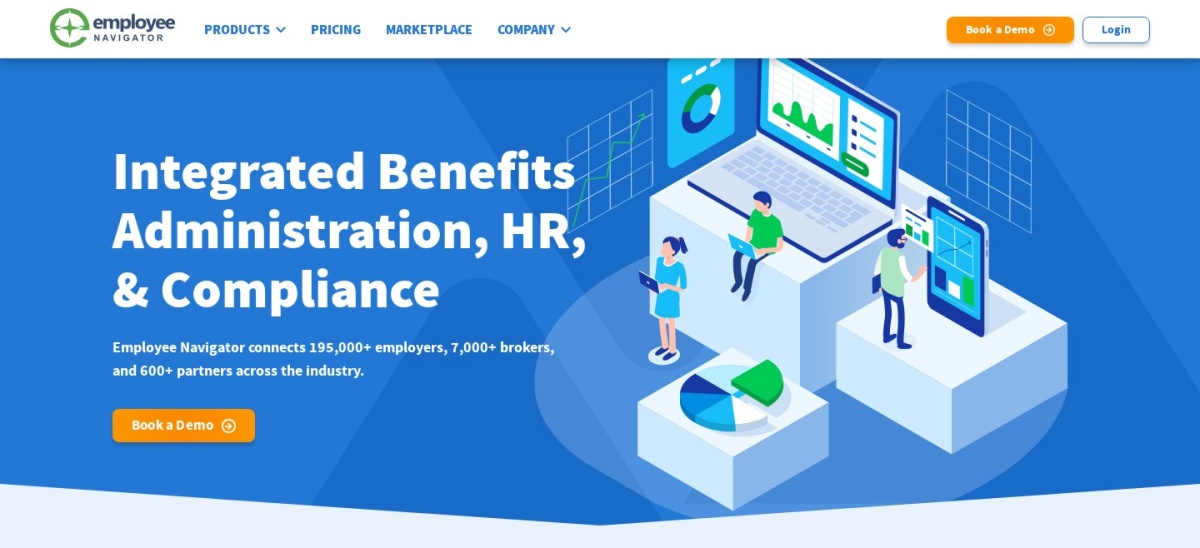
Employee Navigator is a benefits administration platform sold through insurance brokers, with online enrollment, carrier and payroll integrations and ACA reporting. It works with more than 400 carriers, and its four plans run from Enhanced to Platinum, with higher tiers adding 834 EDI feeds, onboarding and PTO tracking.
The trade off is price transparency. Every plan is quoted through sales, and only add-on fees such as $0.45 per employee a month for 834 EDI feeds on the mid tiers are published. It suits employers whose broker already runs Employee Navigator for their group.
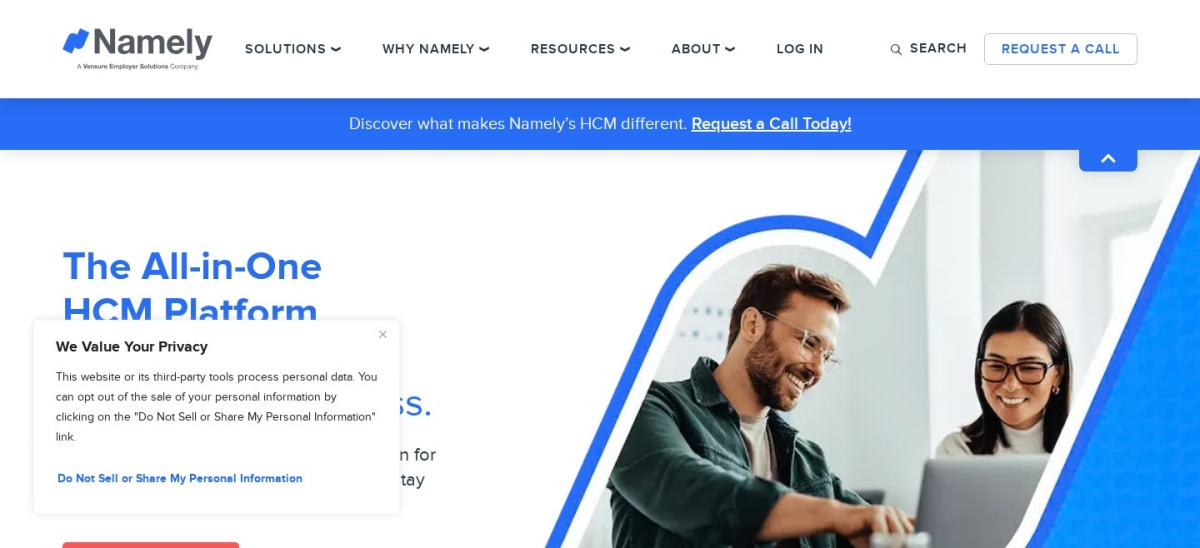
Namely is a cloud HR and payroll platform for mid-size employers, with HR, payroll, time and benefits in one system. Namely Now starts at $9 per employee a month and covers self-managed payroll and HR basics, while higher plans add talent, time and managed payroll and benefits services.
The trade off is that only the entry plan publishes a price. Plus, Plus People and Complete are quoted after a needs review, and benefits administration starts on the Plus plan. It suits mid-size teams that want managed benefits services on top of HR software.
A PEO such as Justworks becomes a co-employer, so your staff joins its large-group health plans. That is the fastest route to big-company benefits, but you pay per employee every month and give up some control over plan choice.
Software-only tools such as Gusto, Rippling and BambooHR keep you as the employer and administer the plans you choose, often through your own broker. The software costs less per person, but you still shop for the plans yourself.
Broker-led tools such as Ease and Employee Navigator sit between the two. Your broker picks the plans and runs enrollment in the software, so ask the broker which plan covers you and what fees pass through before you sign.
How we chose
We started from the benefits administration and HR platforms most often compared for small and mid-size employers, then kept nine with a real benefits enrollment or administration product.
Prices come from each vendor's pricing page or, where a vendor quotes, from its G2 pricing page, checked in November 2026. Ratings come from G2, checked in the same month. Where a vendor shows a sale, the list shows the regular price.
We left out benefits-only point tools with no published price or rating base, and enterprise suites sold only by quote with no small-team plan. No vendor paid for a place, and we do not claim hands-on testing for this list.
How to choose benefits support software
Start with who buys the plans, then match the software to that buyer.
Ask who shops for the plans. If a broker buys them, pick a tool your broker already uses, such as Ease or Employee Navigator. If you buy them, pick a platform with benefits built in, such as Gusto or TriNet Zenefits.
Check payroll is included or priced. Some entry prices cover HR only, and payroll or benefits administration is a quoted add-on. Get the combined per-person price in writing before you compare.
Confirm your carriers connect. Ask whether the tool sends enrollment data to your carriers by EDI or file feed, and whether that feed costs extra. A tool without your carrier means manual work at every enrollment.
Run one open enrollment on paper first. List your plans, eligibility rules and life events, then check each one is covered in the tool. Gaps found during enrollment are the expensive kind.
FAQ
What is the best benefits support software?
Gusto is the best pick for most small teams. Its Simple plan costs $49 a month plus $6 per person and covers payroll with health, dental and 401(k) administration in one login, rated 4.6 out of 5 on G2.
How much does benefits support software cost?
Entry prices in this list run from $5 per person a month for Deel HR Core to $530 a month for Ease Pro. Most HR platforms charge per person plus a base fee, and payroll or benefits modules are often quoted separately.
Do I need a PEO for employee benefits?
No. A PEO such as Justworks is one route to large-group health plans, but software such as Gusto or TriNet Zenefits administers plans you buy yourself or through your own broker, usually for less per person.
What is the difference between Ease and Employee Navigator?
Both are broker-led enrollment tools. Ease lists flat monthly prices from $530 a month, while Employee Navigator quotes every plan and leans on its network of more than 400 carriers and ACA reporting.
Can benefits software handle COBRA and ACA reporting?
Most tools in this list cover one or both. Employee Navigator includes ACA reporting from its entry tier, and TriNet Zenefits covers compliance reporting with HR expert help. Ask the vendor which forms it files before you buy.
Does benefits software include payroll?
Sometimes. Gusto and Justworks include payroll in their entry plans, while BambooHR, Rippling and TriNet Zenefits charge for payroll as an add-on or a separate module, so check the combined price.