WLWPLegible EditorsLast verified 22 Nov 2026How we rank12 min read
★ Short answer
BarTender is the best barcode software for most operations, with 400-plus symbologies and automation from $199 a year. Pick Loftware NiceLabel for cloud label management across sites, and ZebraDesigner free if you already own Zebra printers.
How we make this list: we compare pricing pages, product documentation and public user reviews, then re-check every price before each update. No product paid for a place. Disclosure.
BarTender starts at $199 a year for the Workstation edition, with 400-plus barcode symbologies and the largest printer driver library.
Loftware NiceLabel leads cloud label management, with browser design and approval workflows, priced by quote.
TEKLYNX CODESOFT costs $492 one-time and is the pick for complex GS1, HIBC and RFID label work.
ZebraDesigner Essentials is free for Zebra printer owners, with Professional around $228 through resellers.
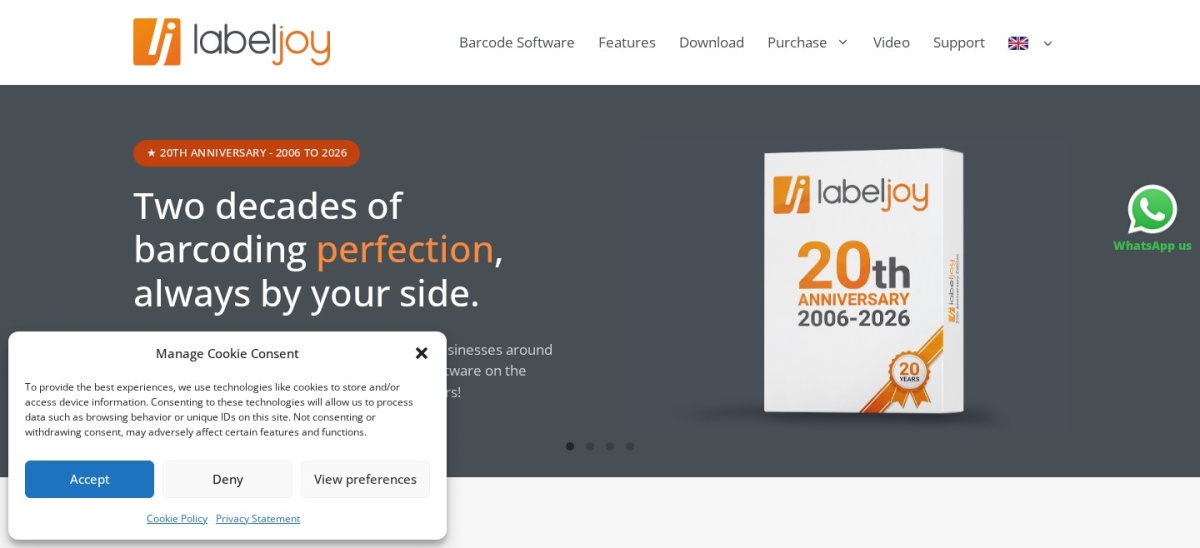
LabelJoy costs $39 one-time and is the cheapest capable designer for small businesses that outgrow free tools.
IronBarcode costs $999 per developer as a one-time licence and is the pick for .NET teams embedding barcode generation.
What barcode software should cover
Barcode software designs and prints labels with barcodes, text and graphics, and often manages label templates across an organization. It ranges from desktop designers for a single printer to enterprise platforms controlling thousands of print stations.
Count printers and sites first. One printer needs only a designer like ZebraDesigner or LabelJoy. Dozens of printers across sites need centralized management from BarTender, Loftware or TEKLYNX.
Label design software creates the whole label including barcodes. Barcode fonts and components generate just the barcode for developers. Most businesses need label software; only software teams need developer libraries, and teams with no budget can start free with Zint.
Compliance changes the shortlist. Food, pharma and medical device labels need GS1, FDA, UDI or GHS support, which the professional platforms build in and the free tools do not. Our guide to free vs premium plugins covers the same free-versus-paid thinking for software in general.
BarTender is the label software most enterprises standardize on. It designs labels with 400-plus barcode symbologies, automates printing from ERP and database triggers, and manages templates centrally, with a printer driver library that is unmatched.
The trade off is licensing. BarTender licenses by printer, not by user, which is fair for a five-printer warehouse but becomes a real budget item at two hundred printers. It suits serious labeling operations where a misprint can stop a production line.
Loftware NiceLabel is the cloud-native counterpart to BarTender's on-premises heritage. It leads cloud label management: design in the browser, control templates with approval workflows, and print consistently across global sites. Regulated industries use it for validated labeling.
The trade off is the cloud shift. It means subscriptions and change management for desktop users, and simple single-printer needs are overkill here. It suits multi-site operations that need centralized, consistent labeling.
TEKLYNX CODESOFT is TEKLYNX's flagship designer for demanding label work: complex barcodes including GS1 and HIBC, RFID encoding, database-driven variable data and precise layout control. It costs $492 as a one-time license.
The trade off is the channel. CODESOFT is most often sold through barcode equipment resellers rather than bought directly, and BarTender's driver library and third-party ecosystem are larger. It suits integrators and mid-market companies outgrowing basic tools.
ZebraDesigner is Zebra's label design software, free in its Essentials edition for Zebra printer owners. It designs labels with barcodes quickly, optimized for Zebra hardware and speaking Zebra's ZPL printer language natively.
The trade off is the hardware tie. It naturally favors Zebra printers, so mixed fleets need broader tools, and database connectivity sits in the Professional edition at around $228 through resellers. It suits Zebra shops that should start here free.
TEKLYNX Labelview is the mid-market label designer in the TEKLYNX range. It designs labels with database connections and drag-and-drop templates, for teams outgrowing basic tools.
The trade off is depth. It has fewer advanced data features than CODESOFT and no multi-site management story, and it is usually sold through resellers. It suits growing teams that need database-driven labels without enterprise pricing.
WaspLabel is Wasp Barcode Technologies' label design software for small businesses, sold with scanners and printers as complete systems. A small warehouse can buy the software, scanner and printer from one vendor with one support number, and be labeling the same week.
The trade off is depth. As pure labeling software it is simpler than BarTender, with fewer advanced data features and no multi-site management story. It suits small businesses that need barcode basics quickly, with hardware included.
LabelJoy is affordable Windows label design software for small businesses: barcodes, text and graphics with database connections for small print runs, at $39 for a one-time license. It is the cheapest capable barcode designer for small businesses that outgrow free tools.
The trade off is scope. Automation and enterprise features are limited, and it is Windows-only. It suits basic label printing on a budget, where a $39 one-time price beats a subscription.
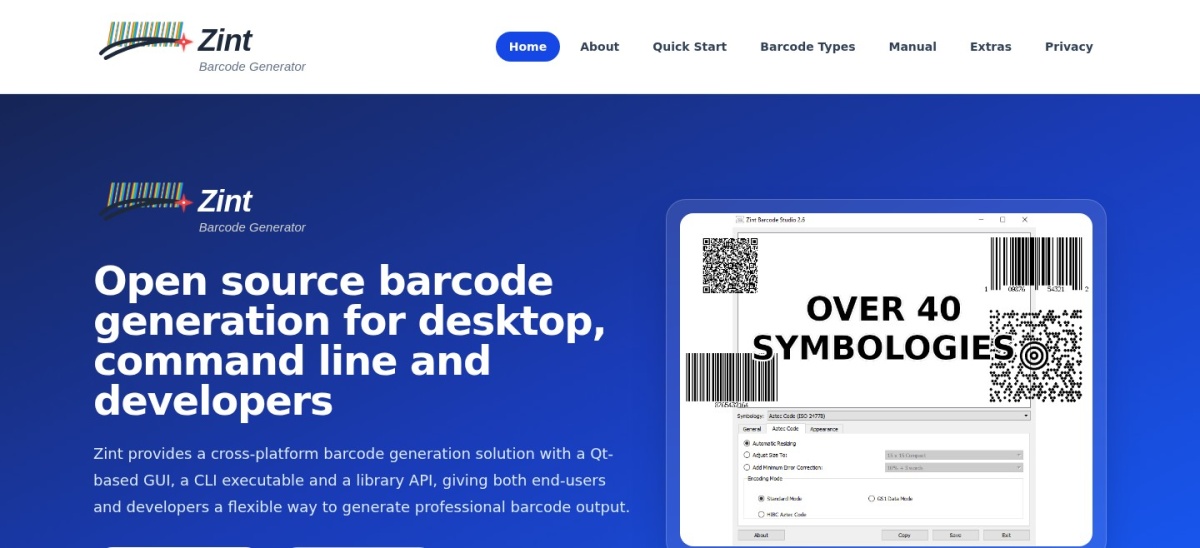
Zint Barcode Studio is a free, open source barcode generator for desktop users, command line workflows and developers. It covers more than 50 symbologies, from QR Code and Data Matrix to GS1 formats, and exports PNG, SVG and EPS files.
The trade off is polish. The interface is plain next to paid tools, there is no commercial support contract, and the Windows binary is unsigned, so SmartScreen warns on install. It suits teams with no budget that need correct barcodes.
IronBarcode is a .NET barcode library for developers who want to buy once and own the licence. A Lite licence starts at $999 per developer as a one-time purchase, and it reads and writes barcodes inside .NET applications, including PDFs.
The trade off is scope. IronBarcode is .NET only, so Java, Python and PHP teams need a different library, and it is a code library rather than a desktop tool. It suits .NET teams embedding barcode generation and reading in their own software.
What we like
Perpetual licence, no renewal
Auto-detects barcode formats
Reads PDFs natively
Engineering support included
Watch out for
.NET only
Steeper learning curve than a desktop tool
Older listing shows $749, which conflicts with $999
Unreadable barcodes cause expensive problems: rejected shipments, checkout delays and compliance failures. Print barcodes at adequate size with quiet zones, the blank margins scanners need, intact.
Match barcode type to the use: UPC for retail, Code 128 for logistics, Data Matrix for small parts. Test with actual scanners, not phone apps, before production runs.
Thermal transfer printing beats direct thermal for durability. Verify first articles against GS1 specifications if retail compliance matters; chargebacks for bad barcodes are real.
How we chose
We started from the barcode and label tools reviewers recommend most: BarTender, Loftware NiceLabel, TEKLYNX CODESOFT, ZebraDesigner, TEKLYNX Labelview, WaspLabel, LabelJoy, Zint Barcode Studio and IronBarcode.
Prices come from vendor pricing pages and published listings, checked on 22 November 2026. Ratings are G2 scores from the same period. Where a vendor publishes no price, the list says quote-based rather than repeating an estimate.
We left out pure scanner hardware without software. No vendor paid for a place, and we do not claim hands-on testing for this list.
How to choose barcode software
Count your printers and sites, then match the tool to that scale.
Count printers and sites. One printer needs only a designer like ZebraDesigner or LabelJoy. Dozens of printers across sites need centralized management from BarTender, Loftware or TEKLYNX.
Check ERP and database integration. Automated labeling pulls data from business systems, so verify connectors for yours before buying. Manual label design has simpler requirements.
Consider compliance needs. Regulated industries need validation, audit trails and approval workflows that only enterprise platforms provide. Factor validation effort into the decision.
Test with your real scanner. Print a test batch and scan it with the scanner you use in production, not a phone app. Check quiet zones and GS1 rules before you commit.
FAQ
What is the best barcode software?
BarTender is the best pick for enterprise labeling, Loftware NiceLabel leads cloud label management, and TEKLYNX covers the mid-market. ZebraDesigner is free for Zebra printer owners.
How much does BarTender cost?
BarTender starts at $199 a year for the Workstation edition, which covers a single user and one printer setup. Higher editions add automation and centralized management, and enterprise tiers are quote-based, so confirm the edition you need with the vendor.
Is there free barcode software?
ZebraDesigner Essentials is free for Zebra printer owners and covers basic label design with barcodes. Zint Barcode Studio is free and open source for generating barcode images. Online barcode generators handle one-off codes for free, but serious labeling at volume needs paid software with database and automation features.
What is the difference between BarTender and NiceLabel?
Both are enterprise label platforms with template management and database connections. BarTender leads in traditional enterprise deployments with the largest driver library, while NiceLabel, now Loftware, leads cloud-native label management across multiple sites.
Can I print barcodes from Excel?
Yes. Most label software including BarTender, TEKLYNX and LabelJoy connects to Excel and databases to print variable-data labels. You map spreadsheet columns to label fields, and each row prints as one label.
Do I need special printers for barcodes?
Thermal label printers from Zebra and others produce the best barcode labels, but laser printers work for basic needs. Software matters more than the printer for quality.