Best Backend as a Service in 2026: 8 Tools Compared
WLWPLegible EditorsLast verified 22 Nov 2026How we rank12 min read
★ Short answer
Supabase is the best backend as a service for most teams: real PostgreSQL, auth and storage from $25 a month, rated 4.6/5 on G2. Pick Firebase for mobile apps on Google Cloud and Back4App for a managed Parse backend from $15 a month.
How we make this list: we compare pricing pages, product documentation and public user reviews, then re-check every price before each update. No product paid for a place. Disclosure.
Supabase leads with real PostgreSQL and a flat $25 Pro plan, rated 4.6/5 on G2 from 243 reviews.
Firebase has no flat price: Blaze bills per read, write and function call, so costs can spike with traffic.
Appwrite and Convex also start at $25 a month, while Backendless and Back4App are cheapest at $15.
Back4App has the highest G2 rating here at 4.8/5 from 74 reviews, for managed Parse hosting.
Xano is the most expensive fixed plan at $85 a month billed annually, rated 4.7/5 on G2 from 67 reviews.
Appwrite and Convex have thin G2 bases of 4 and 5 reviews, so treat their 4.6 and 4.5 scores with care.
What a backend as a service should cover
A backend as a service gives your app a database, user login, file storage and server functions without you running servers. You write the front end and call its APIs.
Start with the database. Postgres suits relational data and SQL queries, while Firestore suits document data and realtime sync, so the data model decides the platform.
Price models split in two. Supabase, Appwrite and Backendless charge a flat monthly price, while Firebase and AWS Amplify bill per use, which is harder to forecast.
Check the exit route too. Open-source platforms such as Supabase and Appwrite let you self-host your data, while managed platforms keep you inside one cloud.
Supabase is an open-source backend built on PostgreSQL, with auth, file storage, realtime data and auto-generated REST and GraphQL APIs. The free plan covers 2 projects, 500 MB of database and 50,000 monthly active users, and Pro costs $25 a month per project. It is rated 4.6 out of 5 on G2.
The trade off is usage above the included quotas, since compute and egress are billed on top of the $25 base price. It suits web and SaaS teams that want real SQL data they can move elsewhere.
Firebase is Google's backend platform, with Firestore, Authentication, Cloud Storage, hosting and Cloud Messaging in one place. The free Spark tier covers 50,000 document reads a day and 50,000 auth users a month, and Blaze bills per operation above the free quotas. It is rated 4.5 out of 5 on G2 from 306 reviews.
The trade off is unpredictable billing, since Blaze has no flat monthly price and a traffic spike can raise the bill fast. It suits mobile-first apps that need realtime sync and deep Google Cloud integration.
Appwrite is a self-host-first open-source backend with auth, databases, storage, functions, messaging and site hosting under one subscription. The free plan covers small projects, and Pro starts at $25 a month with allowances including 200,000 monthly active users and 2 TB of bandwidth. It is rated 4.6 out of 5 on G2.
The trade off is database billing, since each database you run is billed separately on top of the Pro subscription. It suits developer teams that want a capped bill or a self-hosted backend.
AWS Amplify is Amazon's full-stack backend, built from Cognito for auth, AppSync or API Gateway for APIs, DynamoDB for data, Lambda for functions and S3 for storage. Gen 2 defines the backend in TypeScript and bundles CI/CD hosting, and there is no per-seat fee. New accounts get free-tier credit, and every service bills by use.
The trade off is billing complexity, since each AWS service behind Amplify bills on its own and the total is hard to forecast. It suits teams already running on AWS that want the backend inside their cloud account.
Backendless is a low-code backend with a database, auth, file storage, push notifications and a drag-and-drop UI builder, so one platform can cover the pages and the data. The free plan covers small apps, and Scale costs $15 a month per app. It is rated 4.4 out of 5 on G2.
The trade off is API limits on the free plan, since free apps are capped at 50 API requests a minute. It suits agencies running many small client apps under one account.
What we like
Joint-cheapest fixed paid plan here at $15 a month
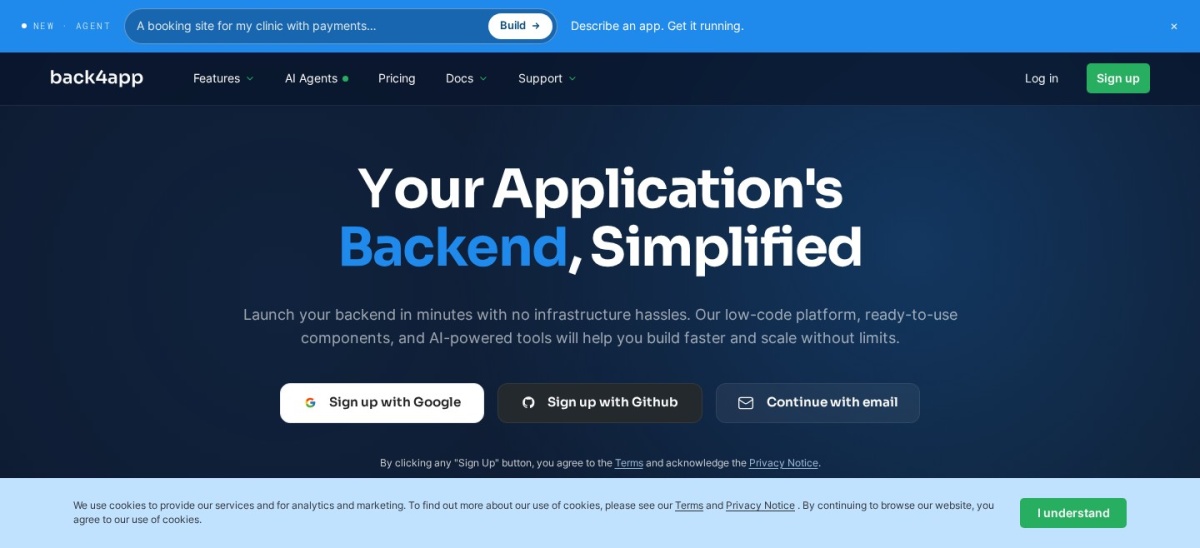
Back4App is a managed backend built on Parse Server, with a database, auth, cloud functions, file storage and auto-generated REST and GraphQL APIs. The free plan covers 25,000 requests a month, and MVP costs $15 per app a month billed annually. It is rated 4.8 out of 5 on G2 from 74 reviews.
The trade off is the per-app price, since each app needs its own subscription and the next step after MVP is $80 a month. It suits teams that already run Parse apps and want hosting with support.
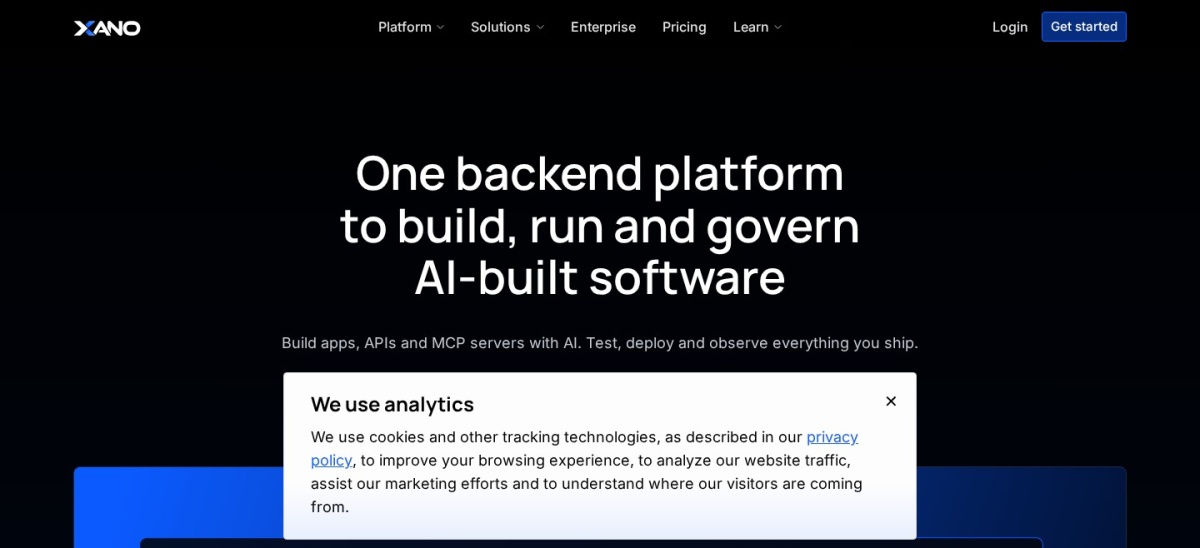
Xano is a no-code backend for building APIs, with a visual function stack, a scalable PostgreSQL database, auth and an AI agent builder on every plan. The free plan covers 1 workspace, and Launch costs $85 a month billed annually, or $99 month to month. It is rated 4.7 out of 5 on G2.
The trade off is price, since $85 a month is the highest fixed entry price here and the free plan limits API calls. It suits marketing and product teams that need logins and logic with no developer.
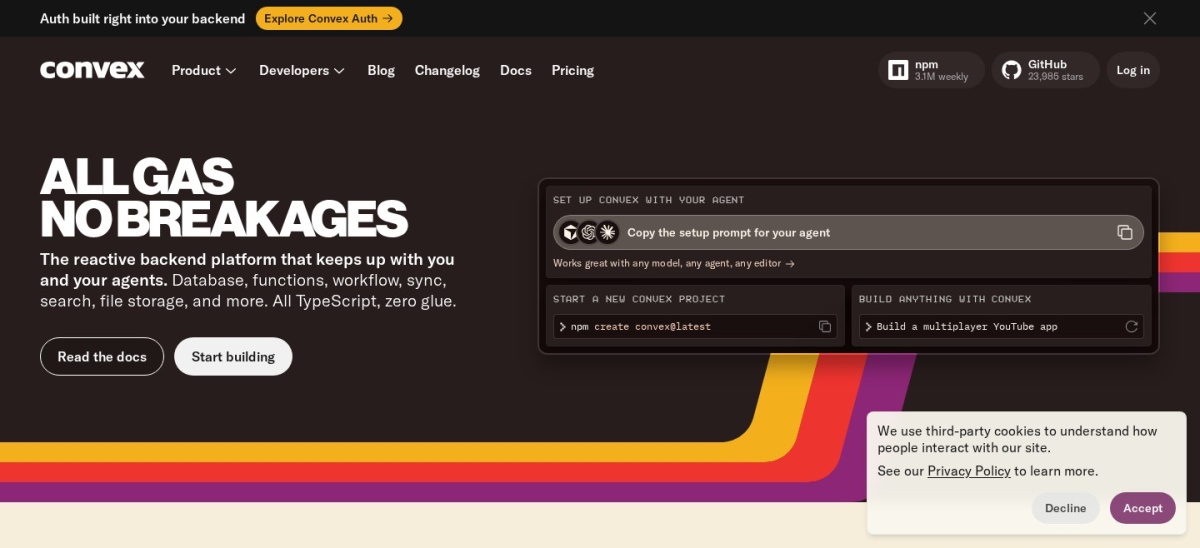
Convex is a backend for TypeScript apps where you write functions and the platform handles reactivity, caching and consistency underneath. The free plan covers small apps, and Professional costs $25 a developer a month. It suits teams building reactive apps that update live without manual cache work.
The trade off is the programming model, since you query through TypeScript functions rather than SQL or a REST API. It suits TypeScript teams building live, collaborative apps.
Flat pricing is easier to budget. Supabase Pro at $25 a month covers a project with known limits, and usage above the quotas is the only extra.
Usage pricing starts free and scales with traffic. Firebase Blaze costs nothing for a small app, but a traffic spike can raise the bill with no warning.
Self-hosting removes the monthly fee but adds your time. Appwrite is open source and can be self-hosted, yet you pay for the server and handle backups yourself.
For a production app, a flat plan with a spending cap is usually the safest start. You can move to usage billing once you know your real traffic.
How we chose
We started from the tools most often named in 2026 comparisons for this keyword, then kept 8 established products with published pricing and a public review footprint.
Prices come from each vendor's pricing page, checked on 22 November 2026, with the top 3 read on their official pages. Ratings are G2 scores from the same week. Where a vendor shows a sale, the list shows the regular price.
We left out tools with no published price and niche products with too few reviews to judge. No vendor paid for a place, and we do not claim hands-on testing for this list.
How to choose backend as a service
Start with the job you do most, then check price, limits and trial terms before you commit.
List the features you need first. Write down the 3 features you will use weekly, then ignore tools that charge extra for them.
Check the entry plan limits. Seat counts, contact caps and usage limits decide the real cost more than the headline price.
Use the free plan or trial. A free plan or 14-day trial shows whether the interface fits your team before you pay.
Add up the first-year cost. Multiply the monthly price by 12 and add any onboarding fee, then compare that total across tools.
FAQ
What is the best backend as a service?
Supabase is the best backend as a service for most teams. Its free plan covers 2 projects and Pro costs $25 a month, with real PostgreSQL, auth and storage, rated 4.6 out of 5 on G2.
Is Firebase or Supabase better?
Supabase suits web and SaaS apps that want SQL data and a flat $25 price. Firebase suits mobile apps that need realtime sync and deep Google Cloud integration, with pay-as-you-go billing.
Is there a free backend as a service?
Yes. Supabase, Firebase, Appwrite, Backendless, AWS Amplify, Xano and Convex all offer free plans. Free plans cap projects, users or API calls.
How much does a backend as a service cost?
Fixed paid plans here run from $15 to $85 a month. Backendless starts at $15, Supabase, Appwrite and Convex at $25, and Xano at $85 billed annually. Firebase and AWS Amplify bill by use.
Can I self-host a backend as a service?
Yes. Supabase and Appwrite are open source and self-hostable, so you can run the backend on your own server instead of a managed cloud.
Which BaaS is best for beginners?
Supabase and Appwrite are the easiest starts, with clear docs and a $25 Pro plan. Xano suits non-developers who want a visual builder instead of code.