Best AVD Management Platforms in 2026: 9 Tools Compared
WLWPLegible EditorsLast verified 24 Nov 2026How we rank13 min read
★ Short answer
Nerdio Manager is the best AVD management platform for most teams. It automates provisioning, image management and autoscaling for Azure Virtual Desktop at $6 per user a month, and it is rated 4.7 out of 5 on G2. Pick Citrix DaaS for large multi-cloud fleets and Parallels RAS for simpler app delivery.
How we make this list: we compare pricing pages, product documentation and public user reviews, then re-check every price before each update. No product paid for a place. Disclosure.
Nerdio Manager leads on AVD automation: provisioning, image management and autoscaling from $6 per user a month.
Citrix DaaS is the pick for large multi-cloud fleets, with HDX performance and deep policy controls from $10 per user a month.
Omnissa Horizon has the lowest entry desktop price here at $5.79 per user a month, and it covers on-premises desktops too.
Parallels RAS and Parallels DaaS are the simple options, at $120 per concurrent user a year and $9 per user a month.
ControlUp, Lakeside SysTrack and eG Enterprise are monitoring tools, not full provisioning platforms, and two of them publish no price.
Azure compute, storage and networking are always separate from the platform fee, so budget the two parts apart.
What an AVD management platform should cover
AVD stands for Azure Virtual Desktop, Microsoft's cloud desktop service. A management platform sits on top of it and adds provisioning, image management, autoscaling and monitoring beyond what the Azure portal offers on its own.
Autoscaling matters most. Session hosts that sit idle overnight still bill for Azure compute, so a platform that shuts them down and starts them before peak hours can cut a large share of the monthly Azure bill.
Image management is the second test. A good platform updates one golden image and pushes it to every host pool, instead of leaving each pool on a different patch level.
Sizing still starts with the workload. Our guide on reading a hosting plan's CPU and RAM limits explains the same sizing logic that applies when you pick session host sizes for a pool.
Some tools here manage the whole desktop estate, while others only watch it. Monitoring tools such as ControlUp and SysTrack pair with a provisioning platform rather than replacing one.
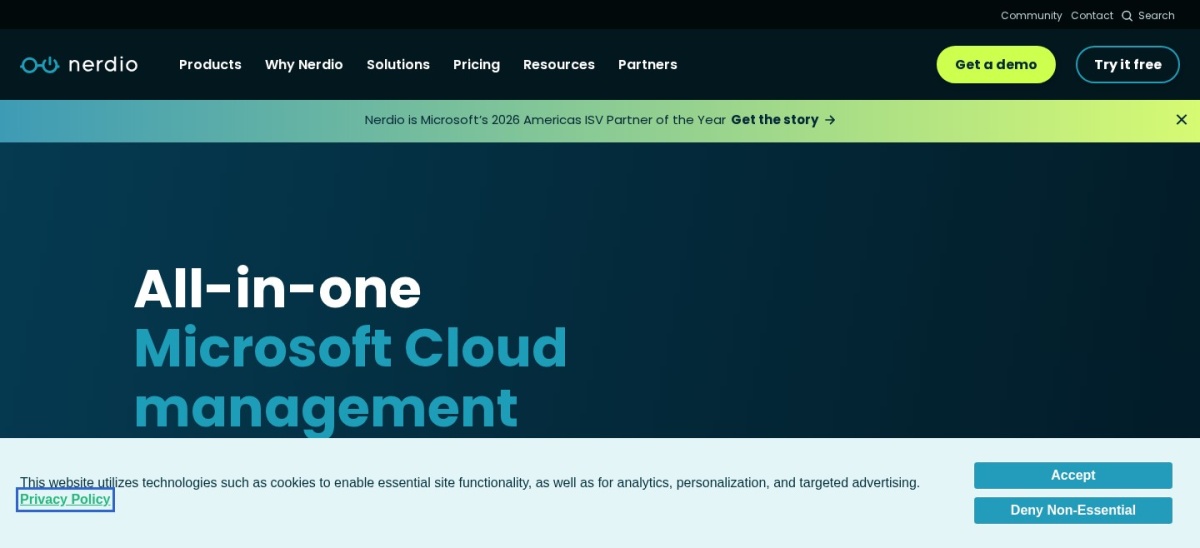
Nerdio Manager is a management layer built for Azure Virtual Desktop and Windows 365. The Core plan at $6 per user a month covers provisioning, host pool management, image management and autoscaling, with a $1,000 a month minimum. It is rated 4.7 out of 5 on G2 from 238 reviews.
The trade off is scope. Nerdio Manager is Azure only, so it does not manage on-premises desktops or other clouds, and the full feature set takes time to learn. It suits IT teams that run AVD as their main desktop platform and want Azure costs under control.
What we like
Deep AVD automation with autoscaling
Image management across host pools
Highest G2 rating among the provisioning tools here
Cost reports show Azure spend and savings
Watch out for
Azure only, no on-premises or multi-cloud desktops
Clouds coveredAzure, AWS, Google Cloud, on-premises
ProtocolHDX
Free trialYes
citrix.com
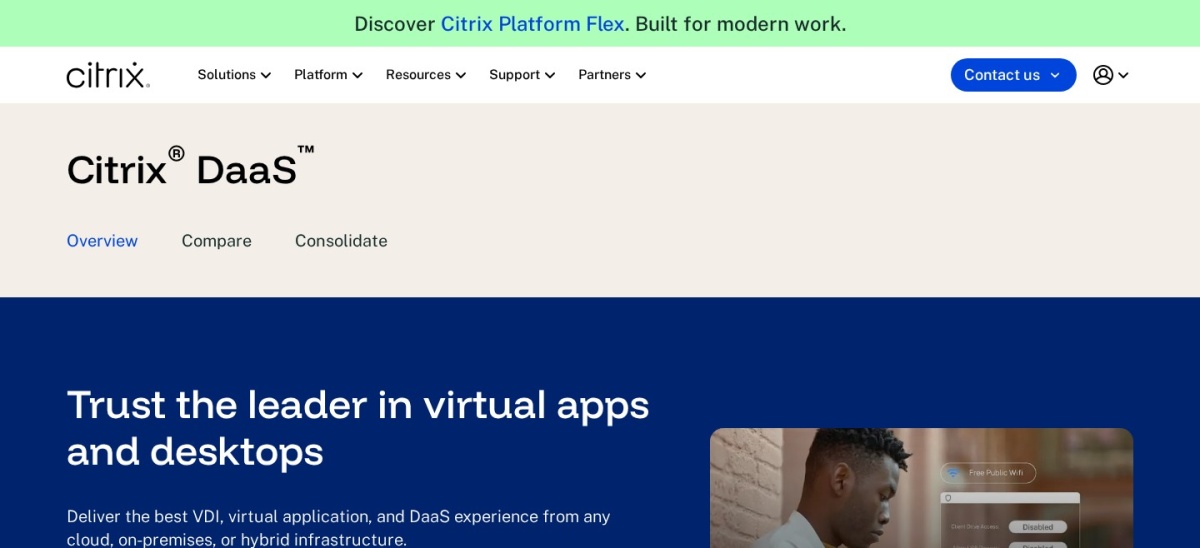
Citrix DaaS homepage, captured Nov 2026.
Citrix DaaS is the enterprise desktop platform from Citrix, and it manages Azure Virtual Desktop alongside on-premises, AWS and Google Cloud desktops under one console. The Standard edition starts at $10 per user a month, and the HDX protocol holds up well on poor networks. It is rated 4.1 out of 5 on G2 from 546 reviews.
The trade off is price and complexity. Higher editions run to about $23 per user a month, setup takes longer than the simpler tools here, and Azure compute is billed apart. It suits large enterprises with mixed fleets and strict policy needs.
What we like
One console for Azure, AWS, Google Cloud and on-premises
HDX protocol for weak networks and graphics work
Granular policy controls for devices and clipboard
Largest review base in this list
Watch out for
Higher editions cost more than twice the entry price
Setup is complex and takes longer
Azure compute costs are separate
Advanced Plus, Premium and Premium Plus add features up to about $23 per user a monthVisit citrix.com
03
Parallels RAS
4.2/5on G2 (68 reviews, checked Nov 2026)
Starts at$120/yr
Best for simple AVD and app delivery
Entry price$120 per concurrent user/yr
LicensingConcurrent users, one edition
AVD supportYes, plus AVD Hybrid
Free trialYes
parallels.com
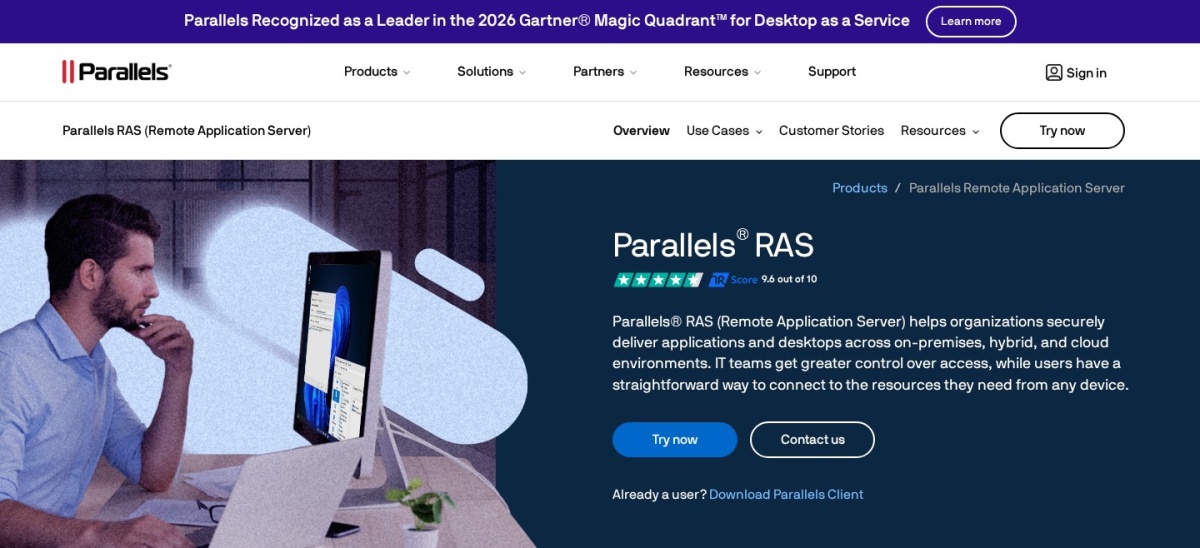
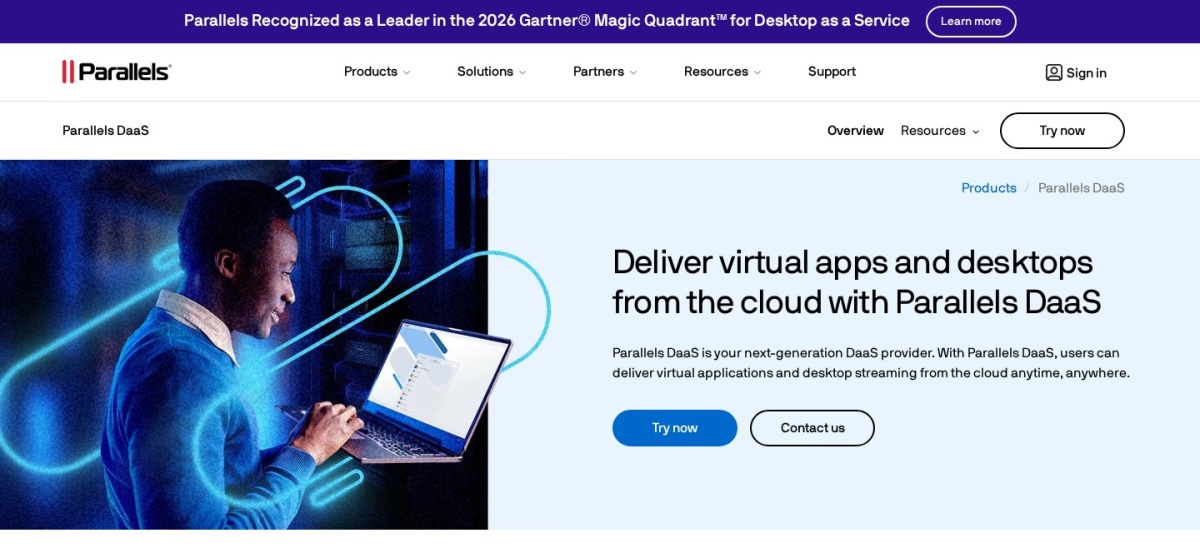
Parallels RAS homepage, captured Nov 2026.
Parallels RAS is a virtual app and desktop delivery platform with a single console for administration, app publishing, load balancing and gateway access. It manages AVD workloads from the same console, including Windows 10 and 11 multi-session hosts. The 1-year subscription lists at $120 per concurrent user a year, and it is rated 4.2 out of 5 on G2 from 68 reviews.
The trade off is scale and depth. Concurrent-user licensing suits shift work, but the policy set is thinner than Citrix, and very large fleets may outgrow it. It suits small and mid-size teams that want simple AVD and app delivery.
Omnissa Horizon is the former VMware Horizon, now sold by Omnissa after Broadcom sold the end-user computing business. It delivers virtual desktops and published apps across on-premises and Azure environments, with the Blast Extreme protocol and instant clones. The Standard Plus desktop plan lists at $5.79 per user a month, and it is rated 4.4 out of 5 on GetApp from 28 reviews.
The trade off is complexity and change. Its VMware heritage brings a heavier setup, AVD is one of many platforms it supports, and list prices have risen for some buyers. It suits teams with existing VMware estates that run desktops both on-premises and in Azure.
What we like
Lowest entry desktop price in this list
Hybrid on-premises and Azure support
Blast Extreme protocol and instant clones
Deep integration with vSphere and vSAN
Watch out for
Heavier setup than the AVD-only tools
AVD is one of many platforms, not the sole focus
Price rises reported for new and expanding buyers
Apps-only plans start at $4.67 per user a month; Universal runs to $12.50Visit omnissa.com
05
Workspot
4.8/5on G2 (19 reviews, checked Nov 2026)
Starts at$15/mo
Best for turnkey managed AVD
Entry planBasic, $15/user/mo
DeliveryManaged control plane
Clouds coveredAzure, AWS, Google Cloud
Free trialYes
workspot.com
Workspot homepage, captured Nov 2026.
Workspot is a managed desktop platform that provisions, updates and monitors AVD desktops so the IT team does less day-to-day work. Its control plane runs across Azure, AWS and Google Cloud, and deployment is fast compared with building the stack by hand. The Basic plan lists at $15 per user a month, and it is rated 4.8 out of 5 on G2 from 19 reviews.
The trade off is control and price. Workspot publishes no price page of its own, so the $15 figure comes from directory listings, and the managed model gives less direct control than Nerdio. It suits teams that want AVD as a managed service rather than a platform to run.
Parallels DaaS is a cloud-native desktop service built on Microsoft Azure, aimed at small and mid-size businesses and the MSPs that serve them. Users reach published apps and desktops through a browser, and the bring-your-own-Azure model keeps compute billing in the customer's own Azure account. The MSRP is $9 per user a month on an annual subscription with a 15-user minimum, and it is rated 4.5 out of 5 on G2 from 1 review.
The trade off is evidence and scale. The G2 rating rests on a single review, and the platform fits pooled desktops better than large enterprise estates. It suits MSPs and smaller teams that want a plain per-user price for AVD.
What we like
Plain $9 per user a month MSRP
Browser access with no thick client
Multi-tenant management for MSPs
Azure billing stays in the customer account
Watch out for
G2 rating is based on a single review
15-user minimum on the annual plan
Built for smaller estates, not large enterprises
Azure infrastructure and Microsoft licensing are billed separatelyVisit parallels.com
07
ControlUp
4.7/5on G2 (11 reviews, checked Nov 2026)
PricingQuote/yr
Best for AVD monitoring and remediation
Entry priceQuote only
MonitoringReal-time, session level
RemediationYes, scripted fixes
Free trialYes, 21 days, 50 endpoints
controlup.com
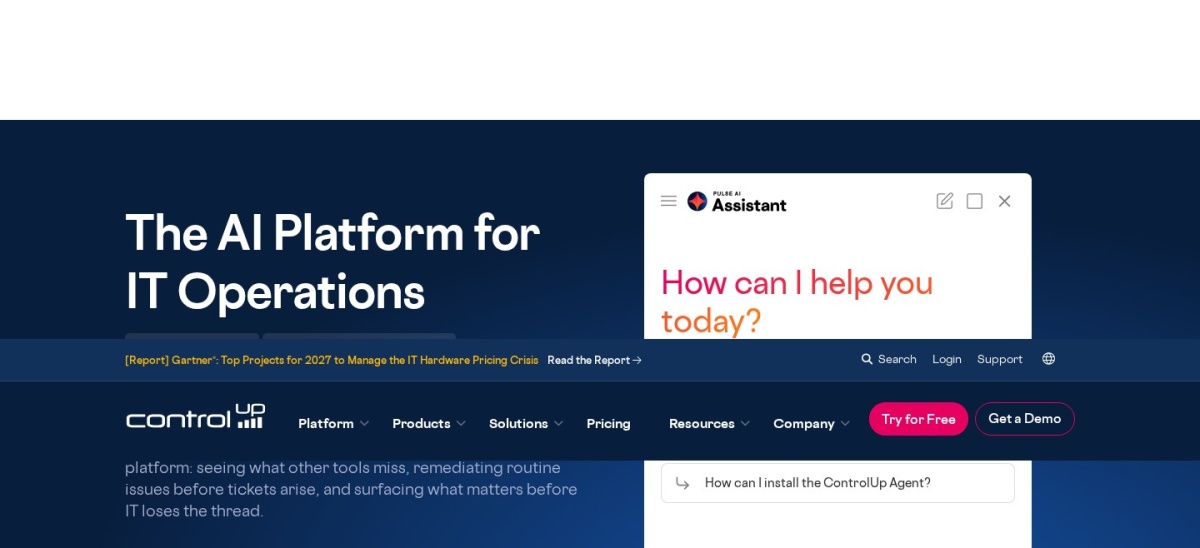
ControlUp homepage, captured Nov 2026.
ControlUp is a digital employee experience platform that watches AVD, Citrix and Horizon sessions in real time. It tracks logon times, session hosts and app performance, and its scripted fixes resolve common problems without a manual login. It is rated 4.7 out of 5 on G2 from 11 reviews, and a 21-day trial covers up to 50 endpoints.
The trade off is scope and price. ControlUp monitors and fixes sessions, but it does not deploy host pools, manage images or autoscale, so it pairs with a provisioning platform. It suits teams that already run AVD and need to find slow logons fast.
What we like
Real-time session-level monitoring
Automated fixes for common problems
Covers AVD, Citrix, Horizon and physical endpoints
Lakeside SysTrack is a digital employee experience platform built on endpoint telemetry. It collects data from devices, builds persona models, tracks which apps users run, and forecasts capacity needs for AVD fleets. It is rated 4.5 out of 5 on G2 from 22 reviews.
The trade off is scope and price. SysTrack watches and plans, but it does not provision host pools or autoscale them, and pricing is quote-based with no public list. It suits teams that need experience data to guide AVD capacity decisions.
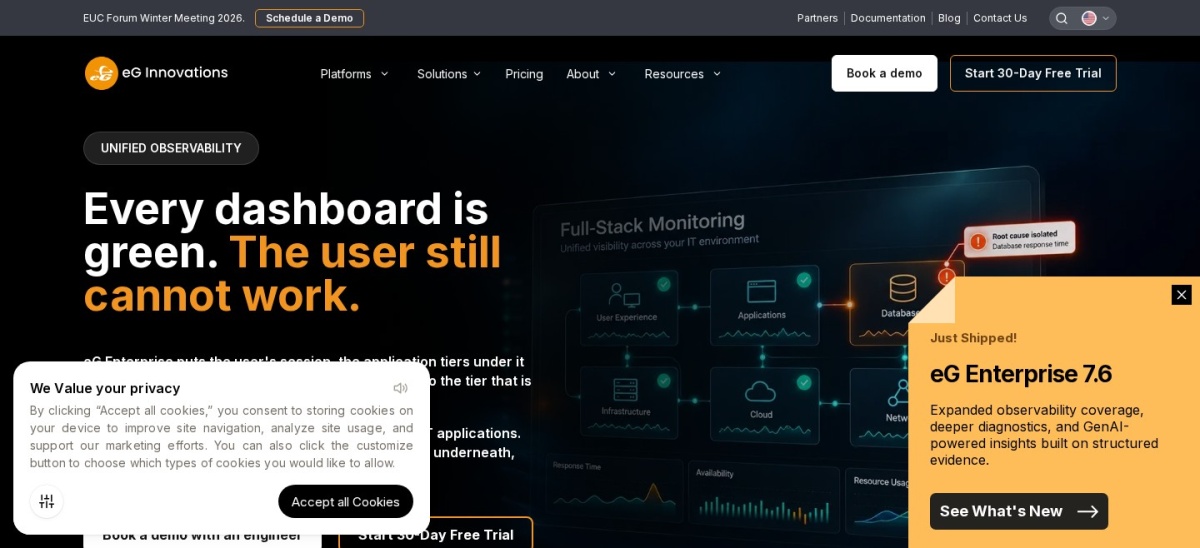
eG Enterprise is a performance monitoring platform from eG Innovations that traces AVD problems across session hosts, Azure infrastructure, Active Directory and apps. Its multi-tier views follow a slow logon from the user device through the network to the session host. The Basic plan lists at $300 a month on G2, and it is rated 4.5 out of 5 on G2 from 13 reviews.
The trade off is price and complexity. The $300 a month Basic plan is a flat platform fee rather than a per-user price, and setup is complex for large estates. It suits teams that need deep root-cause data for AVD performance problems.
What we like
Deep performance data across the whole stack
Root-cause analysis for slow logons
Multi-tier views separate Azure from app problems
Agentless and agent-based monitoring in one console
Provisioning platforms deploy and run the desktops. Nerdio Manager, Citrix DaaS, Parallels RAS, Omnissa Horizon, Workspot and Parallels DaaS all create host pools, manage images and deliver sessions to users.
Monitoring tools watch desktops that already exist. ControlUp, Lakeside SysTrack and eG Enterprise measure logons, sessions and app performance, then help you fix or plan around what they find.
Most large fleets end up with one of each. A provisioning platform keeps the estate running, and a monitoring tool explains why a logon was slow when users complain.
How we chose
We started from the platforms most often named for Azure Virtual Desktop management, then kept those with a real product, public reviews and a clear AVD role, whether provisioning or monitoring.
Prices come from vendor pages, vendor datasheets and G2 vendor-supplied listings, checked on 24 November 2026. Ratings come from G2 on the same day, except Omnissa Horizon, which uses GetApp because its G2 base is only 6 reviews. Where a vendor shows a sale, the list shows the regular price.
We left out tools with no usable review base and generic remote desktop tools that do not manage AVD host pools. No vendor paid for a place, and we do not claim to have used these tools ourselves.
How to choose an AVD management platform
Count your users and peaks first, then match the platform to the job, not the other way round.
Size the fleet and its peaks. Count concurrent users, peak hours and app types. A fleet with sharp peaks gains most from autoscaling, while a flat fleet gains less.
Separate platform fees from Azure costs. Platform fees here run $5.79 to $15 per user a month, while Azure compute, storage and networking vary with host size and usage. Ask each vendor for a total cost model at your user count.
Pilot image management and autoscaling. Build a golden image, update it, push it to a test pool, and watch autoscaling respond to a simulated peak. Our guide on testing a host's speed before you buy covers the same prove-it-first habit.
Check identity and monitoring needs. Confirm the platform supports your Entra ID setup, conditional access and compliance needs, and decide whether you also need a monitoring tool beside it.
FAQ
What is an AVD management platform?
An AVD management platform automates Azure Virtual Desktop tasks such as provisioning host pools, managing images, autoscaling session hosts and monitoring user sessions, beyond what the native Azure portal offers. It cuts manual work and Azure costs.
How much does AVD management cost?
Platform fees in this list run $5.79 to $15 per user a month for the priced tools, plus $300 a month for eG Enterprise as a flat fee. Azure compute, storage and networking are separate, so total cost depends on host pool size and usage.
Does Nerdio Manager replace the Azure portal?
No. Nerdio Manager runs on top of Azure and automates portal tasks, but Azure still hosts the desktops and bills compute separately. Teams still use Azure for billing, networking and some advanced settings.
Can Citrix DaaS manage AVD and on-premises desktops together?
Yes. Citrix DaaS manages AVD plus on-premises, AWS and Google Cloud desktops under one console, which suits enterprises with mixed fleets. Its HDX protocol also helps performance on poor networks.
Do I need a monitoring tool if I have Nerdio Manager?
Not always. Nerdio Manager includes monitoring, but ControlUp, SysTrack and eG Enterprise offer deeper performance and experience data. Large fleets often pair a provisioning platform with a monitoring tool.
What is autoscaling in AVD?
Autoscaling starts and stops session hosts based on demand, shutting down idle hosts at night and scaling up before peak hours. It cuts Azure compute costs, with users reporting savings of up to 55% in some fleets.