Best Automation Tools for Marketing in Healthcare in 2026: 9 Tools Compared
WLWPLegible EditorsLast verified 22 Nov 2026How we rank13 min read
★ Short answer
HubSpot is the best automation tool for marketing in healthcare for most teams, with a free CRM, forms and email, and Starter at $15 per seat a month. Pick ActiveCampaign for deeper automation flows, or Salesforce Marketing Cloud for large health systems.
How we make this list: we compare pricing pages, product documentation and public user reviews, then re-check every price before each update. No product paid for a place. Disclosure.
HubSpot is the best all-round pick: a free CRM and email plan, with Starter at $15 per seat a month.
ActiveCampaign has the deepest automation builder in the mid-market, from $15 a month at 1,000 contacts, and HIPAA support on Enterprise.
Salesforce Marketing Cloud Next Growth starts at $1,500 a month billed annually, with consent management built in.
Mailchimp is the cheapest paid start at $13 a month, but its bill climbs fast as a patient list grows.
Marketo, Braze and Iterable publish no prices, so get a written quote before you plan a budget around them.
What healthcare marketing automation needs to do
Healthcare marketing is mostly reminders, education and follow-up: appointment reminders, screening prompts, new-patient welcome series and seasonal vaccine messages. The tool has to send the right message at the right time without a staff member doing it by hand.
Consent matters more here than in most fields. Patients should be able to opt in and out easily, and every list should record how consent was given. Our guide on how much email marketing costs shows how list size drives the bill on most of these tools.
Look for multi-channel reach. Email alone misses patients who read texts or use a clinic app, so SMS, push and in-app messages matter for reminders that cannot wait.
Finally, check how the tool handles patient data before you connect it to anything clinical. Ask the vendor for a signed business associate agreement and keep health details out of marketing lists unless the vendor confirms it is covered.
The 9 best automation tools for marketing in healthcare
01
HubSpot
4.4/5on G2 (16,090 reviews, checked Nov 2026)
Paid from$15/mo
Best automation tool for healthcare marketing overall
Free planYes, CRM and email
Cheapest paid planStarter, $15/seat/mo
Marketing contacts1,000 on Starter
ChannelsEmail, SMS, social, ads
hubspot.com
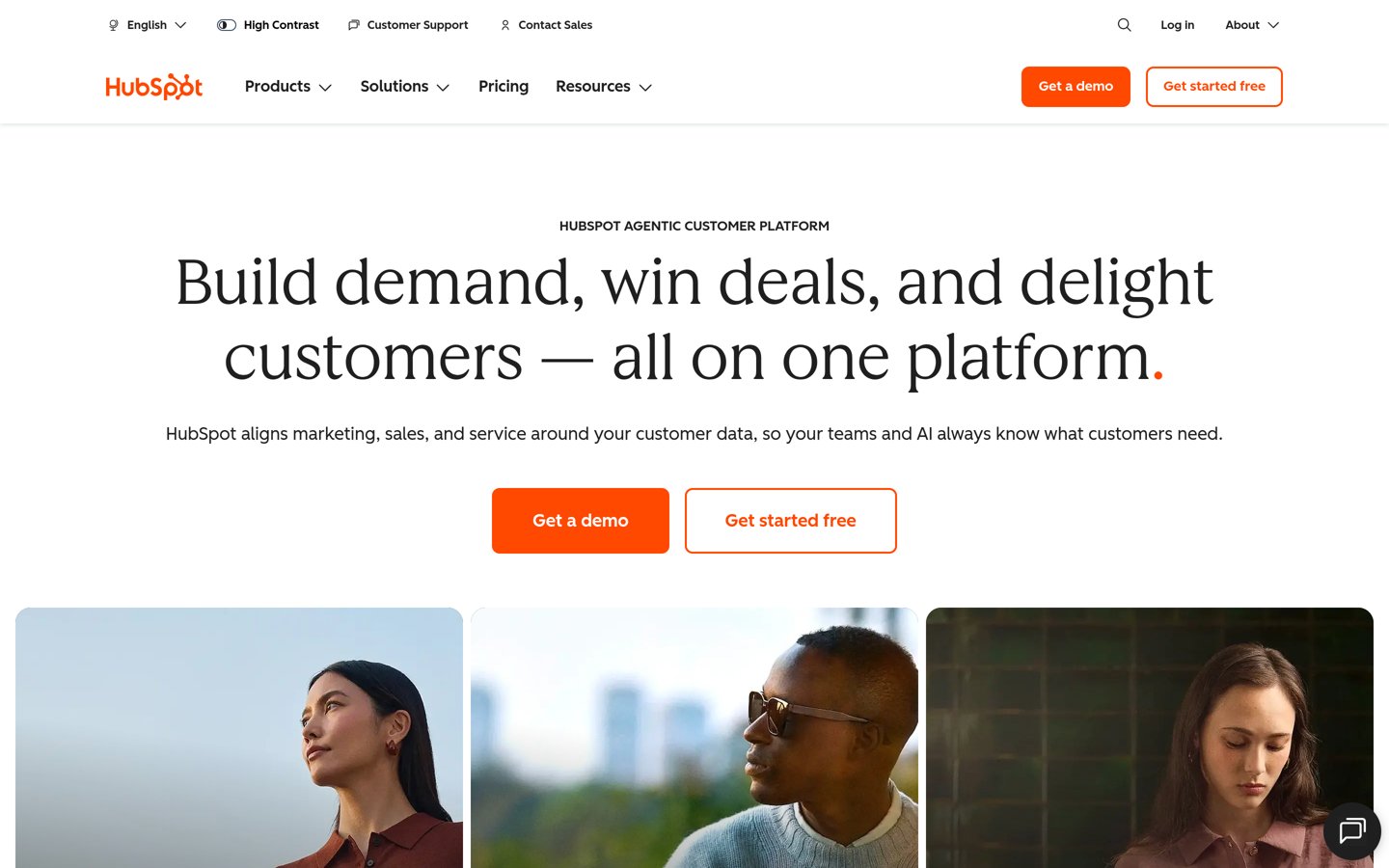
HubSpot homepage, captured Nov 2026.
HubSpot is a CRM with marketing automation built around it, which fits clinics that want patient contacts, forms and email in one place. The free plan covers a CRM, forms and up to 2,000 email sends a month, and Starter at $15 per seat a month adds 1,000 marketing contacts and removes HubSpot branding.
The trade off is the jump to Professional. Full workflows, lead scoring and custom reporting start at $800 a month billed annually, plus a $3,000 one-time onboarding fee. It suits small clinics and health teams that want one system for contacts and campaigns.
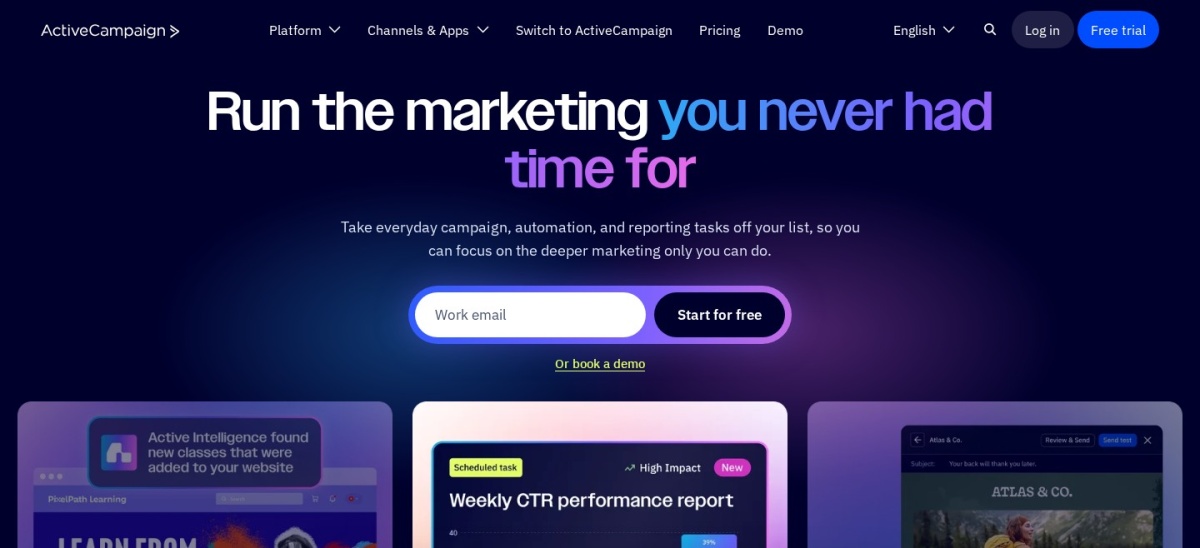
ActiveCampaign is an email and automation platform known for its visual automation builder, which handles multi-step patient journeys such as welcome series, screening reminders and re-engagement. Starter costs $15 a month on annual billing at 1,000 contacts, with up to 5 actions per automation.
The trade off is that the useful plans cost more. Plus at $49 a month adds unlimited automation actions and landing pages, and HIPAA support is only on Enterprise at $145 a month. It suits teams that want detailed flows and can live with a learning curve.
Salesforce Marketing Cloud homepage, captured Nov 2026.
Salesforce Marketing Cloud is the enterprise marketing platform on the Salesforce CRM, now sold as Marketing Cloud Next. Growth costs $1,500 per org a month billed annually and includes multi-channel journeys, forms and landing pages, consent management and campaign attribution reporting.
The trade off is cost and complexity. Growth is $18,000 a year before SMS or add-ons, and Advanced is $3,250 a month. It suits large health systems already on Salesforce that need journeys across email, SMS and WhatsApp.
Mailchimp is an email marketing platform with automation flows, templates and more than 300 integrations. The free plan covers 250 contacts and 500 sends a month, and Essentials starts at $13 a month for 500 contacts with 3 seats.
The trade off is price growth. Standard at $20 a month for 500 contacts rises to $100 a month at 5,000 contacts, and phone support is only on Premium at $350 a month. It suits small clinics that mainly need email and simple flows.
Adobe Marketo Engage is an enterprise B2B marketing automation platform for email, lead scoring, nurture programs and account-based marketing. Adobe lists four packages, Growth, Select, Prime and Ultimate, and publishes no prices, so every deal is a custom quote.
The trade off is price and setup time. Third-party estimates put entry costs at about $1,500 to $2,500 a month for 10,000 contacts, and G2 reviewers report about 3 months to implement. It suits large healthcare vendors selling to hospitals and health systems.
Zoho Marketing Automation homepage, captured Nov 2026.
Zoho Marketing Automation is a low-cost automation tool for email, SMS and social campaigns, with lead nurturing and scoring on higher plans. Standard starts at $19 a month, Professional at $29 adds lead scoring and A/B testing, and Enterprise at $59 adds attribution and webhooks.
The trade off is a smaller review base and a narrower ecosystem. It is rated 4.2 out of 5 on G2 from only 116 reviews, and it works best inside Zoho CRM. It suits small clinics already using Zoho that want cheap automation.
What we like
Lowest paid start after Mailchimp
Lead scoring from $29 a month
Strong fit with Zoho CRM
Watch out for
Only 116 G2 reviews, a thin record
Fewer integrations than HubSpot or Mailchimp
Enterprise adds attribution, webhooks and custom rolesVisit zoho.com
07
Braze
4.5/5on G2 (1,689 reviews, checked Nov 2026)
Starts atCustom/mo
Best for patient app messaging
Free planNo, free trial
Cheapest paid planCustom quote
ChannelsEmail, push, in-app, SMS
TiersGo, Select, Pro, Enterprise
braze.com
Braze homepage, captured Nov 2026.
Braze is a customer engagement platform for email, mobile push, in-app messages, SMS and WhatsApp, built around its Canvas journey builder. It is rated 4.5 out of 5 on G2 from 1,689 reviews, the highest rating in this list, and fits health systems with a patient app.
The trade off is price. Braze publishes no prices and third-party reports put starting contracts at about $60,000 a year, with billing by data points and message volume. It suits large teams with the volume and staff to use every channel.
What we like
Highest G2 rating in this list at 4.5
Strongest push and in-app messaging here
Real-time journey builder across channels
Watch out for
No published prices, quote only
Metered pricing is hard to forecast
Pro adds AI personalisation; Enterprise adds dedicated supportVisit braze.com
08
Iterable
4.4/5on G2 (825 reviews, checked Nov 2026)
Starts atCustom/mo
Best for multi-channel patient journeys
Free planNo
Cheapest paid planCustom quote
TiersGrowth, Enterprise, Enterprise Plus
ChannelsEmail, SMS, push, in-app
iterable.com
Iterable homepage, captured Nov 2026.
Iterable is a customer engagement platform that runs personalised journeys across email, SMS, push and in-app messages, with AI tools for send-time and content choices. G2 reviewers praise its support most, and it is rated 4.4 out of 5 from 825 reviews.
The trade off is that it is quote-only and priced for scale. Third-party reports put Growth deployments at about $50,000 to $130,000 a year, and there is no free trial or self-serve plan. It suits mid-size to large health teams running high-volume lifecycle messages.
Klaviyo is a marketing platform for email, SMS and push, known for segmentation and behaviour-based flows such as welcome series and win-back campaigns. The free plan covers 250 active profiles and 500 emails a month, and Email starts at $20 a month for 500 profiles.
The trade off is that it is built for ecommerce, not clinics. The bill follows active profiles, so it jumps from $150 a month at 10,000 profiles to $350 at 15,000. It suits wellness brands and supplement sellers more than hospitals.
Marketing lists in healthcare need clear consent. Use double opt-in for email where you can, record the date and source of each consent, and make unsubscribing one click.
Keep clinical details out of marketing tools unless the vendor has signed a business associate agreement with you. Appointment reminders can use dates and locations, but they should not name a diagnosis or treatment.
Ask each vendor three questions before you buy: do you sign a business associate agreement, where is patient data stored, and how do you handle deletion requests. If the answers are vague, pick a different tool.
How we chose
We started from the marketing automation tools most often named for healthcare teams, then kept nine established products with public G2 ratings and a real automation builder, covering free plans, mid-market tools and enterprise platforms.
Prices come from each vendor's pricing page, checked on 22 November 2026. Ratings and review counts come from G2 on the same day. Marketo, Braze and Iterable publish no prices, so their yearly figures are third-party reported starting points, not vendor list prices.
We left out tools with no public rating record and tools built only for one clinic software package. No vendor paid for a place, and we do not claim hands-on testing for this list.
How to choose an automation tool for healthcare marketing
Start with your list size and your consent rules, then match the tool to the channels your patients actually read.
Count your contacts and your messages. Most of these tools bill by contacts or profiles, so a 5,000-person patient list costs far more than a 500-person one. Check the price at your real list size, not the headline price.
Check consent and privacy handling first. Confirm opt-in records, unsubscribe handling and whether the vendor will sign a business associate agreement before you import any patient list.
Pick channels your patients use. If reminders need to reach phones fast, SMS and push matter more than email design. See how to grow an email list with WordPress for the list-building side.
Run one real campaign before you commit. Build a welcome series and a reminder flow on a trial or free plan, then check deliverability, reporting and how long each message takes to build.
FAQ
What is the best automation tool for marketing in healthcare?
HubSpot is the best pick for most teams. Its free CRM, forms and email cover patient outreach basics, and Starter costs $15 per seat a month. ActiveCampaign fits teams that want deeper flows, and Salesforce suits large health systems.
Can I use these tools for appointment reminders?
Yes, most of them can send reminders by email or SMS. Check whether SMS is included or a paid add-on, and keep reminder text free of diagnosis or treatment details unless your vendor agreement covers it.
Do I need a business associate agreement?
Ask the vendor before you import patient data. ActiveCampaign offers HIPAA support on Enterprise, and Salesforce includes consent management, but a signed agreement is a separate step you must request from the vendor.
What is the cheapest automation tool for a small clinic?
Mailchimp Essentials starts at $13 a month for 500 contacts, and HubSpot and ActiveCampaign both start at $15 a month. Compare the price at your real list size, since all three charge more as contacts grow.
Is HubSpot or ActiveCampaign better for healthcare?
HubSpot is better when you want a CRM, forms and email in one place with a free start. ActiveCampaign is better when automation depth matters most, with a stronger flow builder and more steps per journey.
Why do some tools show no price?
Marketo, Braze and Iterable sell by quote only, with prices set by contacts, volume and features. Get a written quote at your real list size and ask what counts toward the meter before you sign.