Playwright is the best automation testing tool for web applications for most teams: it is free, drives Chromium, Firefox and WebKit from one API, and is rated 4.8 out of 5 on G2. Pick Cypress for a hosted dashboard with test replay, or Katalon if your testers prefer low-code authoring.
How we make this list: we compare pricing pages, product documentation and public user reviews, then re-check every price before each update. No product paid for a place. Disclosure.
Playwright is free, covers three browsers and is rated 4.8/5 on G2, though that rating rests on only 15 reviews.
Cypress Cloud Team costs $799 a year and adds test replay, flake detection and 120,000 test results a year.
Selenium is still the free multi-language standard, rated 4.5/5 on G2, but needs more setup than Playwright.
Katalon Studio Professional costs $1,800 a seat a year after a free plan with record-and-playback authoring.
Cloud grids start at $39 a month for Sauce Labs and $59 a month for BrowserStack Automate Chrome.
mabl publishes no price and is quote-only, reported at about $500 a month, so budget a sales call.
What to look for in a web automation testing tool
Web applications break in ways a human clicking through cannot catch on every release. Automated tests replay the same journeys after each change, so a broken login or checkout shows up before users see it.
The tools split into two groups. Frameworks such as Playwright, Cypress and Selenium run tests on your machines and are free. Cloud grids such as BrowserStack and Sauce Labs run the same tests on real browsers and devices, and charge for the capacity.
Low-code and AI tools sit between the two. Katalon, testRigor, Functionize and mabl write or maintain tests with less code, which suits teams where testers are not developers.
Pick the tool your team will actually maintain. Our guide on testing WordPress plugins with PHPUnit shows the same rule: a small suite that runs on every change beats a large one nobody maintains.
The 9 best automation testing tools for web applications
01
Playwright
4.8/5on G2 (15 reviews, checked Nov 2026)
PriceFree
Best automation testing tool overall
BrowsersChromium, Firefox, WebKit
LanguagesTypeScript, Python, .NET, Java
Free planYes, fully free
Paid planNone, open source
playwright.dev
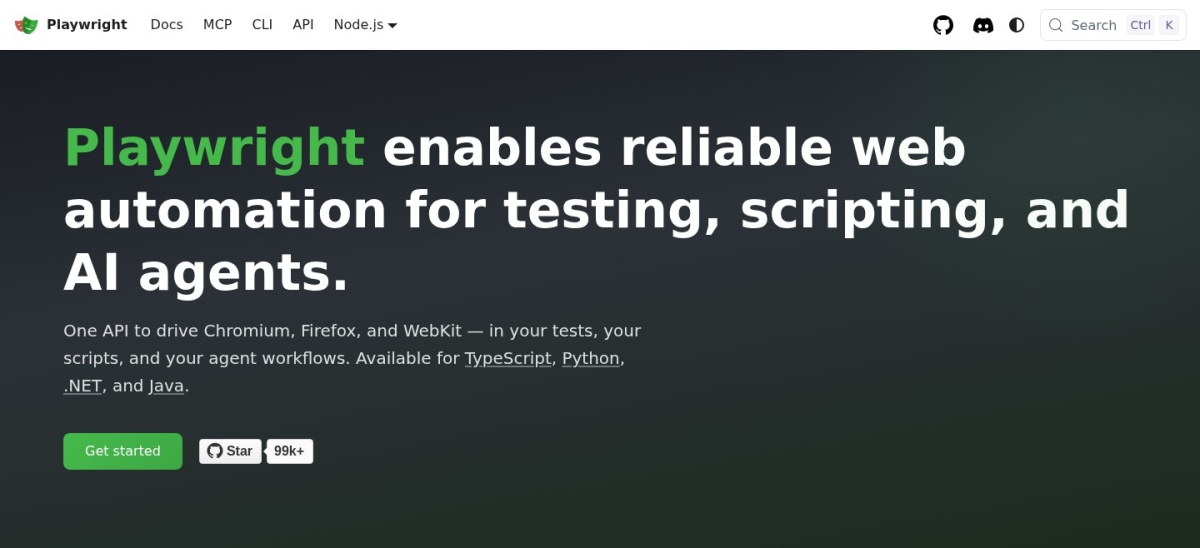
Playwright homepage, captured Nov 2026.
Playwright is Microsoft's free, open-source framework for driving Chromium, Firefox and WebKit from one API. It includes auto-waiting, a built-in test runner, a test generator, tracing and parallel runs, with no licence fee and no paid tier, and it shows 99,000+ GitHub stars on its homepage.
The trade off is that everything is code. There is no record-and-playback authoring and no hosted dashboard, so teams add their own reporting and CI wiring. It suits developers and QA engineers who are comfortable writing tests in TypeScript, Python, .NET or Java.
What we like
Free with no paid tier
Covers three browsers from one API
Auto-waiting and trace viewer cut flaky-test debugging
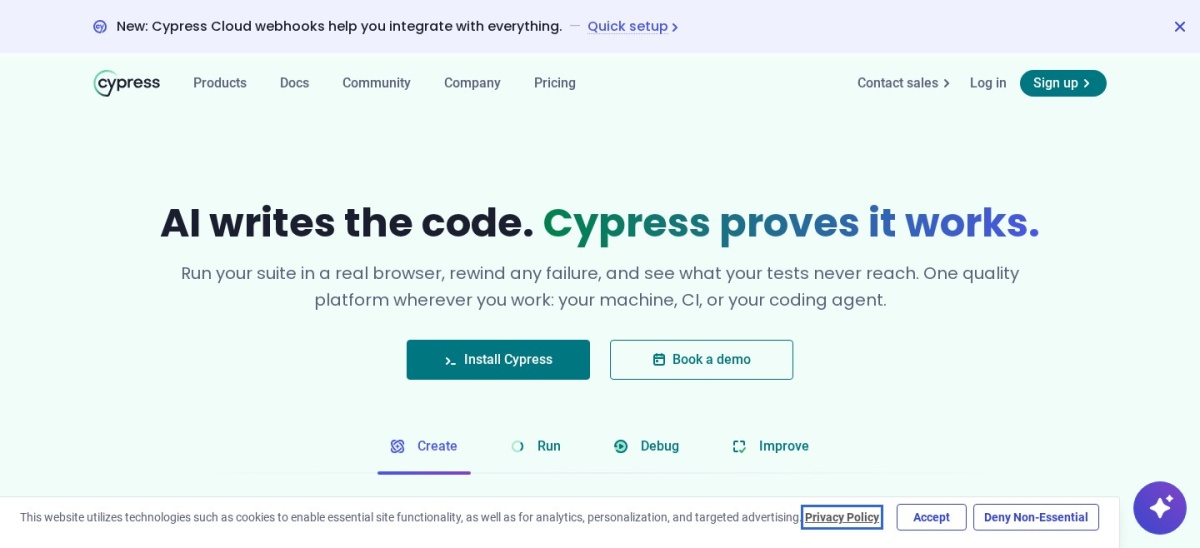
Cypress is an open-source test runner for modern web apps that runs inside the browser, with time travel, live reload and a readable JavaScript API. The free Cloud Starter plan covers 10 users and 500 test results a month, and the app itself is free under the MIT licence.
The trade off is the cloud bill. Test Replay, flake detection and 120,000 test results a year come with Team at $67 a month billed annually at $799, and extra results cost $6 per 1,000. It suits JavaScript teams that want fast feedback and a hosted dashboard.
What we like
Runs in the browser with time travel
Free app and a usable free cloud plan
Clear pricing with a $799-a-year Team plan
Large community and strong docs
Watch out for
JavaScript and TypeScript only
No multi-tab testing
Cloud costs grow with test volume
Team adds Test Replay, flake detection and 120,000 results a yearVisit cypress.io
03
Selenium
4.5/5on G2 (26 reviews, checked Nov 2026)
PriceFree
Best free classic for any language
BrowsersChrome, Firefox, Edge, Safari
LanguagesJava, Python, C#, Ruby, JS, Kotlin
Free planYes, fully free
Paid planNone, open source
selenium.dev
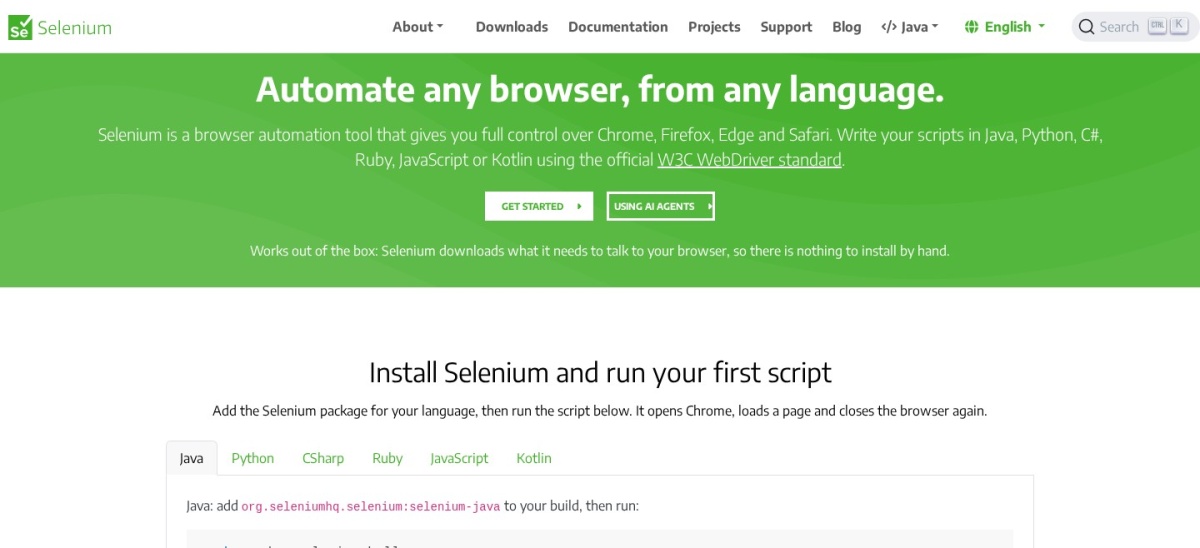
Selenium homepage, captured Nov 2026.
Selenium is the long-running open-source standard for browser automation, built on the W3C WebDriver standard. It drives Chrome, Firefox, Edge and Safari from Java, Python, C#, Ruby, JavaScript or Kotlin, and it works with every major cloud grid.
The trade off is setup. Selenium ships no built-in runner, no auto-waiting and no reporting, so teams assemble those pieces themselves or pay for a grid. It suits teams with existing frameworks, or any team that needs the widest language and browser support.
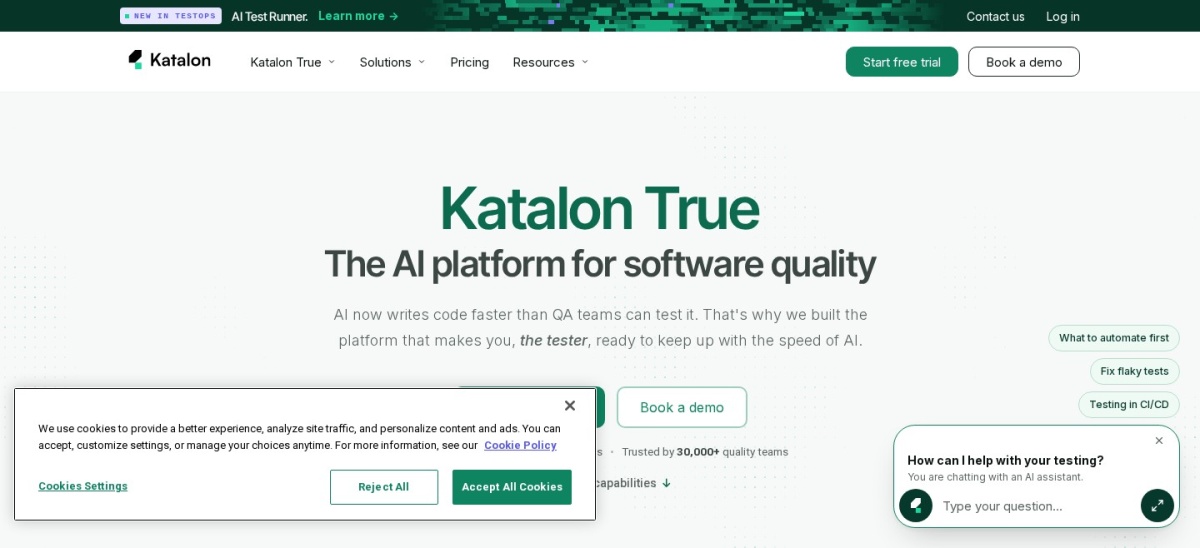
Katalon Studio is a low-code automation platform for web, mobile, API and desktop testing, with record-and-playback authoring, AI agents that generate scripts and self-healing locators. The free plan covers local authoring, record and playback, local execution and up to 40 static test suites.
The trade off is the seat price. Professional costs $1,800 a seat a year as the online price, against a $2,199 standard price for sales-assisted purchases, and CI execution needs the Runtime Engine add-on. It suits mixed teams where manual testers and developers share one platform.
What we like
Low-code authoring for non-developers
AI script generation and self-healing
Covers web, mobile, API and desktop
Free plan is genuinely usable
Watch out for
Paid seats are costly at scale
CI runs need a paid add-on
Heavier install than a code framework
Professional adds AI agents, parallel runs and unlimited suitesVisit katalon.com
05
BrowserStack
4.4/5on G2 (3,366 reviews, checked Nov 2026)
Starts at$59/mo
Best cloud grid for real devices
Real devices35,000+ iOS and Android
Browsers3,500+ combinations
Free planNo, trial only
Paid planAutomate Chrome, $59/mo
browserstack.com
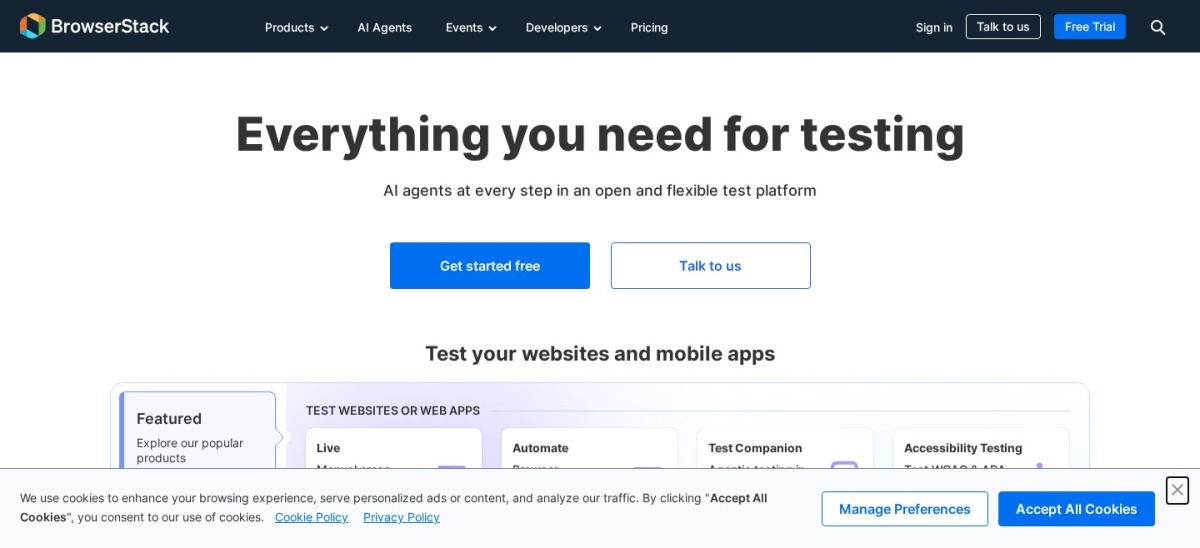
BrowserStack homepage, captured Nov 2026.
BrowserStack is a cloud platform that runs automated tests on 35,000+ real iOS and Android devices and more than 3,500 browser combinations. It runs Selenium, Playwright, Cypress and Appium suites without a device lab, with unlimited testing minutes on paid plans. Automate Chrome starts at $59 a month billed annually.
The trade off is that the cheapest Automate plan covers Chrome only, and full desktop and mobile coverage costs $175 a month billed annually. It suits teams that need real-device coverage without buying and maintaining phones and tablets.
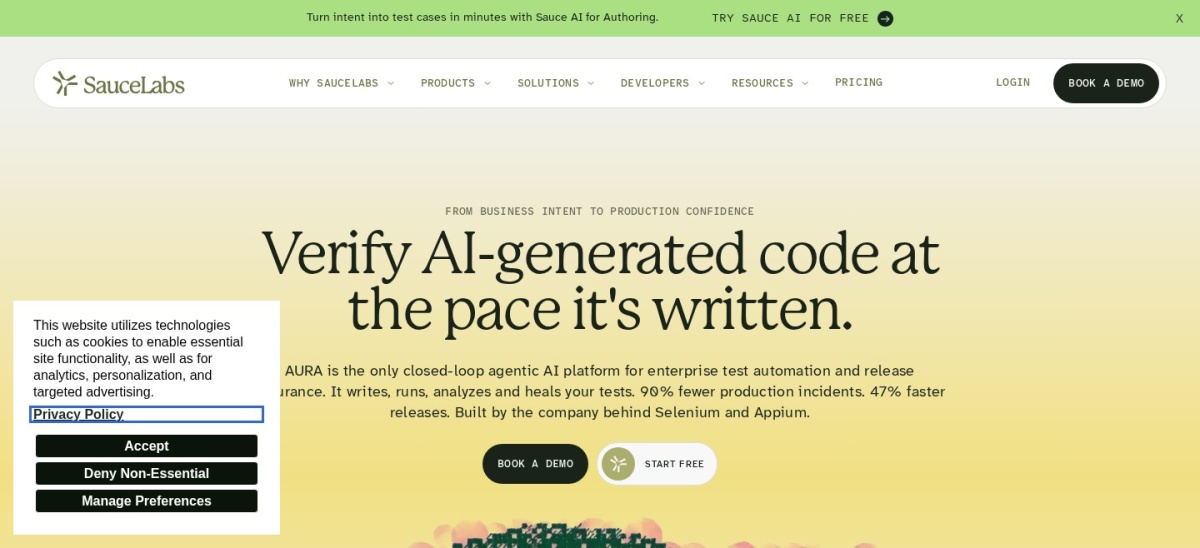
Sauce Labs is a cloud testing platform for web and mobile apps that runs Selenium, Appium, Cypress and Playwright suites across browsers, operating systems and real devices. Its single self-serve Live Testing plan costs $39 a month billed annually, with unlimited users and unlimited testing minutes.
The trade off is depth. The $39 plan is one tier with selectable parallel tests, and larger teams move to custom enterprise plans for private device clouds and premium support. It suits teams that want a simple flat price for automated and live testing.
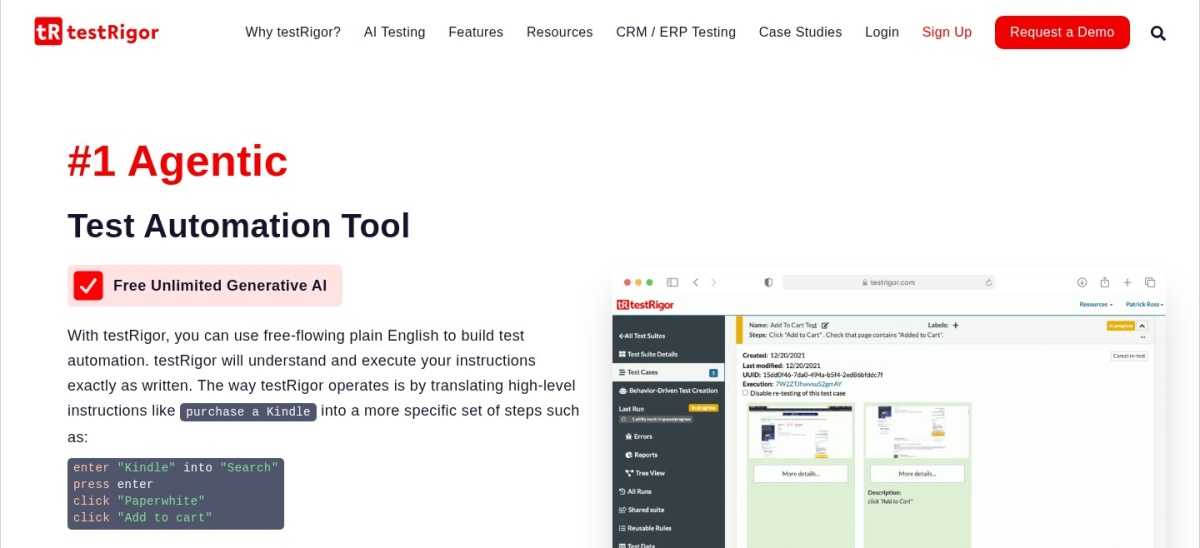
testRigor is a codeless automation platform where a test is a set of plain-English sentences describing elements the way a user would, with no locators to write. Its AI-driven recognition finds elements as the app changes, and it covers web, mobile and API testing from one platform. Private plans were last published from $300 a month.
The trade off is price transparency. The pricing page no longer lists a rate, so the $300 starting figure is the last published price, and other configurations are custom-quoted. It suits teams where non-technical testers need to write and maintain tests.
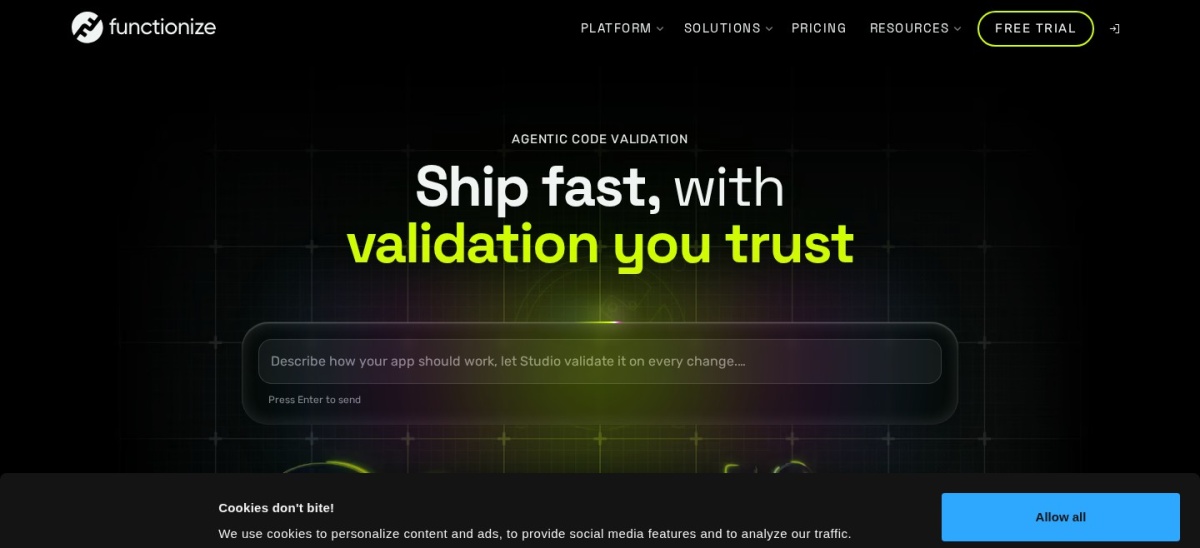
Functionize Studio is an agentic testing platform where you describe what good looks like and the agent builds, runs and maintains the tests. The free plan includes 800,000 credits a month and 5 parallel runs, and Growth at $20 a month raises that to 3,200,000 credits and 25 parallel runs.
The trade off is the thin rating base. Functionize is rated 4.6 out of 5 on G2 from only 11 reviews, and credit-based pricing needs watching as suites grow. It suits teams that want AI to carry test creation and maintenance.
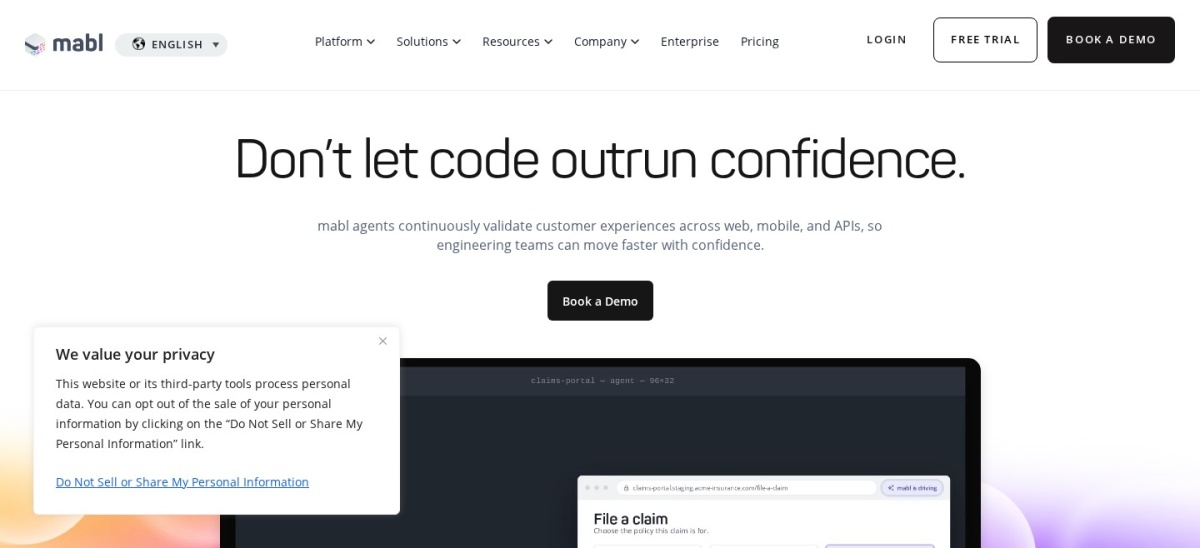
mabl is a cloud-native test automation platform whose machine-learning engine heals broken locators automatically and whose agentic runtime can adapt mid-run when a flow changes. It covers UI and API workflows across browsers and devices, with unlimited local test runs and a 14-day trial.
The trade off is price opacity. mabl publishes no prices, so the $500-a-month figure is a third-party report, and mobile testing costs extra. It suits DevOps teams that want low-code authoring with strong auto-healing.
What we like
Automatic locator healing
Agentic runtime adapts mid-run
Unlimited local test runs
Covers UI, API, accessibility and performance
Watch out for
Publishes no prices, quote-only
Reported price is high for small teams
Mobile testing costs extra
Paid plans are custom-quoted with a CSM includedVisit mabl.com
Frameworks vs cloud grids: which do you need?
There are two kinds of tool here. Frameworks such as Playwright, Cypress and Selenium run on your machines and cost nothing. Cloud grids such as BrowserStack and Sauce Labs run your tests on their browsers and devices, and charge by parallel session.
Most teams end up with one of each. A framework writes and runs the tests, and a grid supplies the browsers and devices the team does not own.
A staging site is the third piece. Our staging site guide explains why tests should run against a copy of the site, not the live one.
If your budget is zero, start with Playwright. If you need real devices, add the cheapest grid tier and keep the framework free.
How we chose
We started from the established automation testing tools for web applications: the free frameworks teams actually use, the low-code platforms, and the cloud grids that run their suites.
Prices come from each vendor's pricing page, checked on 25 November 2026, except mabl and testRigor, whose prices are the best published reports because neither page lists a rate today. Ratings and review counts come from G2 on the same day.
We left out tools with no public rating, quote-only enterprise suites with no reported price, and desktop-only tools. No vendor paid for a place, and we do not claim to have used these tools ourselves.
How to choose an automation testing tool for web applications
Start with who writes the tests, then match the tool to their skills and your budget.
Work out who writes the tests. Developers do best with Playwright, Cypress or Selenium. Manual testers and product owners do better with Katalon, testRigor or Functionize.
Check the browsers and devices you must cover. One or two desktop browsers need only a framework. Real phones and tablets point to BrowserStack or Sauce Labs.
Price the paid tier, not the free one. Free plans end at the first parallel run or dashboard feature. Compare the cheapest paid plan against the same test volume, and watch per-result or per-credit pricing as suites grow.
Run a trial against your real app. Record one critical user journey in each shortlisted tool, then keep the one whose failures are easiest to read.
FAQ
What is the best automation testing tool for web applications?
Playwright is the best pick for most teams. It is free, drives Chromium, Firefox and WebKit from one API, includes auto-waiting and tracing, and is rated 4.8 out of 5 on G2, though that rating rests on only 15 reviews.
Is Selenium still a good choice in 2026?
Yes, if your team already knows it. Selenium is free, supports six languages and every major browser, and is rated 4.5 out of 5 on G2. It needs more setup than Playwright, with no built-in runner, auto-waiting or reporting.
Which automation testing tool is best for non-developers?
Katalon Studio is the strongest low-code pick, with record-and-playback authoring and a free plan. testRigor writes tests in plain English, and Functionize lets an AI agent build the tests, both with free plans to try first.
How much does automation testing software cost?
The three frameworks in this list are free. Paid plans start at $20 a month for Functionize and $39 a month for Sauce Labs, while Katalon costs $1,800 a seat a year and mabl is quote-only at a reported $500 a month.
Do I need a cloud grid as well as a framework?
Not at first. A framework alone covers desktop browsers on your own machines. Add a grid such as BrowserStack or Sauce Labs when you need real phones and tablets, older browsers, or more parallel runs than your CI can provide.
What is the cheapest paid automation testing tool?
Functionize Growth at $20 a month is the cheapest paid plan in this list. Sauce Labs follows at $39 a month, and Cypress Cloud Team costs $799 a year. Playwright, Selenium and the free tiers cost nothing.
SaaS SEO and WordPress specialist with about 8 years of experience. Rakib compares WordPress plugins, themes, hosting and software using public pricing, documentation and user reviews. See how we rank.