Best Audio Engine Software in 2026: 8 Tools Compared
WLWPLegible EditorsLast verified 24 Nov 2026How we rank8 min read
★ Short answer
Wwise is the best audio engine software for professional game audio, rated 4.5 out of 5 on G2, with a free Indie licence for projects under a $250,000 budget. Pick FMOD for a faster start with a DAW-like editor, or Unity Audio if your game already runs on Unity.
How we make this list: we compare pricing pages, product documentation and public user reviews, then re-check every price before each update. No product paid for a place. Disclosure.
Wwise leads for professional game audio: 4.5/5 on G2, free Indie licence under a $250,000 production budget, paid Pro from $7,000 per project.
FMOD is the friendlier middleware: free Indie licence under $200,000 revenue, then $2,000 per title, with a DAW-like Studio editor.
Unity Audio and Godot Audio cost nothing extra: Unity Personal is free under $200,000 revenue, and Godot is free and open source.
JUCE is the pick for building your own audio engine or plug-in, free up to $20,000 revenue, then $40 per user a month.
CRI ADX is priced on request and has no public rating, while SoLoud and OpenAL are free but thin on reviews, with 3 and 4 G2 reviews.
What an audio engine should cover
An audio engine plays, mixes and positions sound while a game or app runs. It handles 3D spatial audio, interactive music that reacts to gameplay, dialogue, effects and voice management across platforms.
Middleware such as Wwise and FMOD gives sound designers an authoring tool apart from code. Engine built-ins such as Unity Audio and Godot Audio keep everything inside the game editor instead.
Licensing is the part buyers miss. Most tools here are free for small projects, then charge per title, per seat or by quote once revenue or budget passes a threshold, so check the limit before you commit.
Ratings are thin in this niche. Only Unity, Wwise and FMOD have more than 20 G2 reviews, so treat the smaller scores as a weak signal and weigh the track record instead.
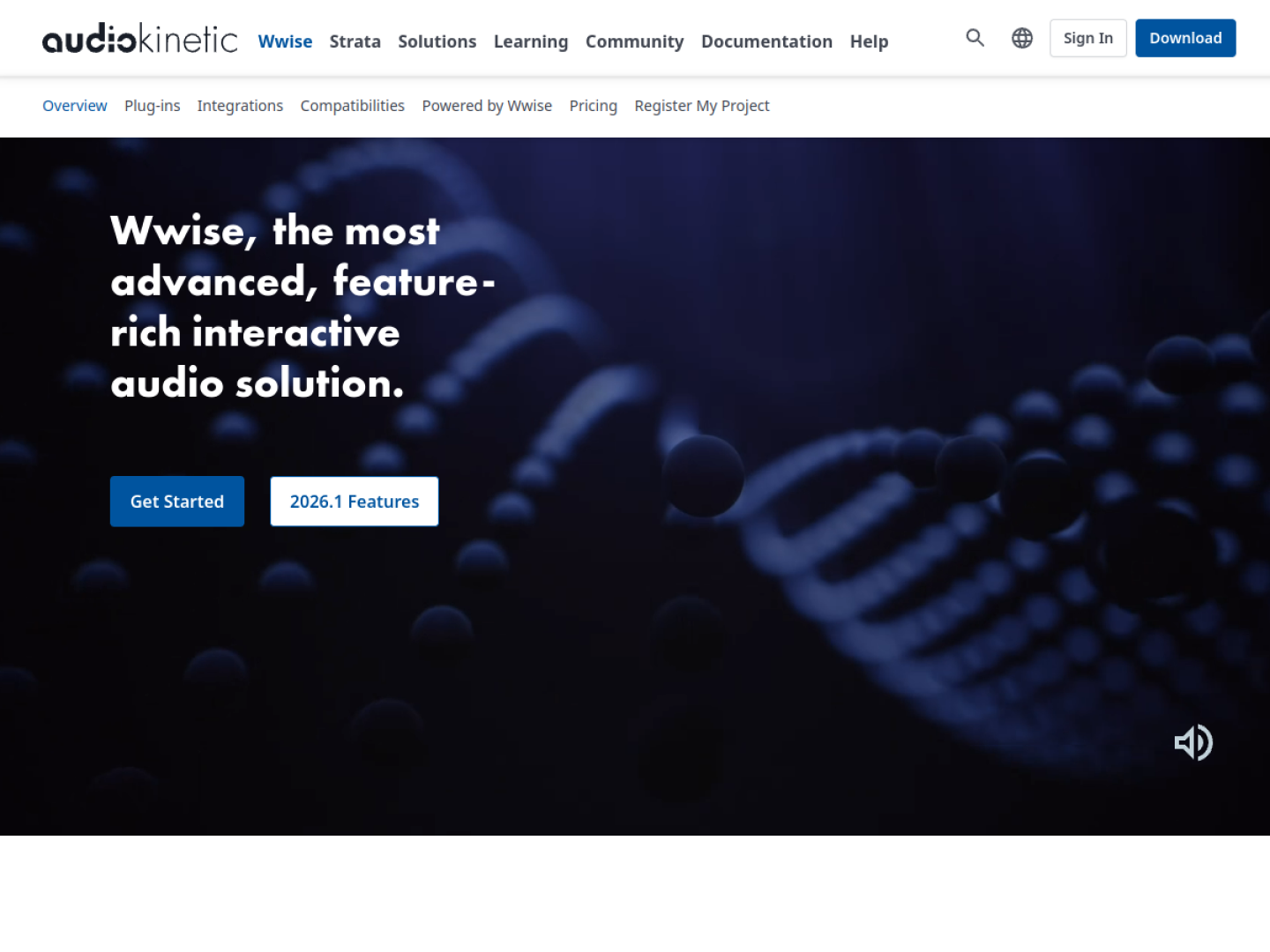
Wwise is Audiokinetic's audio middleware for interactive games, built around an authoring tool where sound designers build events, states and interactive music without writing code. The free Indie licence covers projects with a production budget under $250,000, and the trial caps SoundBanks at 200 media assets. It is rated 4.5 out of 5 on G2 from 36 reviews.
The trade off is depth and price. Learning Wwise takes real time, and the first paid tier, Pro, starts at $7,000 per project and platform, with Premium and Platinum higher still. It suits studios shipping complex multi-platform games where audio is a core part of the experience.
What we like
Deepest interactive music and dialogue authoring here
Real-time profiler shows what the engine does at run time
FMOD is Firelight Technologies' audio middleware for games, pairing the FMOD Studio authoring tool with a runtime engine for Unity, Unreal and other platforms. The free Indie licence covers developers under $200,000 in yearly revenue on projects under a $600,000 budget, and the Studio editor works like a DAW. It is rated 4.1 out of 5 on G2 from 22 reviews.
The trade off is scale. Above the Indie limits the licence costs $2,000 per title, then $6,000 for Basic and $18,000 for Premium, and every licence requires the FMOD logo on a splash screen. It suits indie and mid-size teams that want professional adaptive audio without Wwise's learning curve.
What we like
DAW-like editor is the fastest to learn here
Free Indie licence for small teams
Live update lets designers hear changes in the running game
Unity Audio is the built-in audio system of the Unity engine, with audio sources, 3D positioning, mixers with effects and snapshots for dynamic mixing. Unity Personal is free for developers under $200,000 in yearly revenue or funding, so small teams pay nothing extra for audio. Unity itself is rated 4.5 out of 5 on G2 from 364 reviews.
The trade off is ceiling. Complex interactive music and large dialogue systems strain the built-in tools, which is when teams add FMOD or Wwise, and Pro costs $2,310 per seat a year once revenue passes $200,000. It suits Unity projects whose audio needs are straightforward and stay inside the editor.
What we like
Nothing extra to install or licence for small teams
Full engine access on the free Personal tier
Largest review base in this list
No royalty on game revenue
Watch out for
Weaker than middleware for complex interactive music
Advanced audio work needs code
Pro seat price rises once revenue passes $200,000
Pro adds console publishing and removes the revenue capVisit unity.com
04
JUCE
4.6/5on OnWorks (270 reviews, checked Nov 2026)
Paid from$40/user/mo
Best framework for building audio engines
Free planStarter, up to $20K revenue
Cheapest paid planIndie, $40/user/mo
BuildsVST3, AU, AAX, LV2, apps
OnWorks rating4.6/5, 270 reviews
juce.com
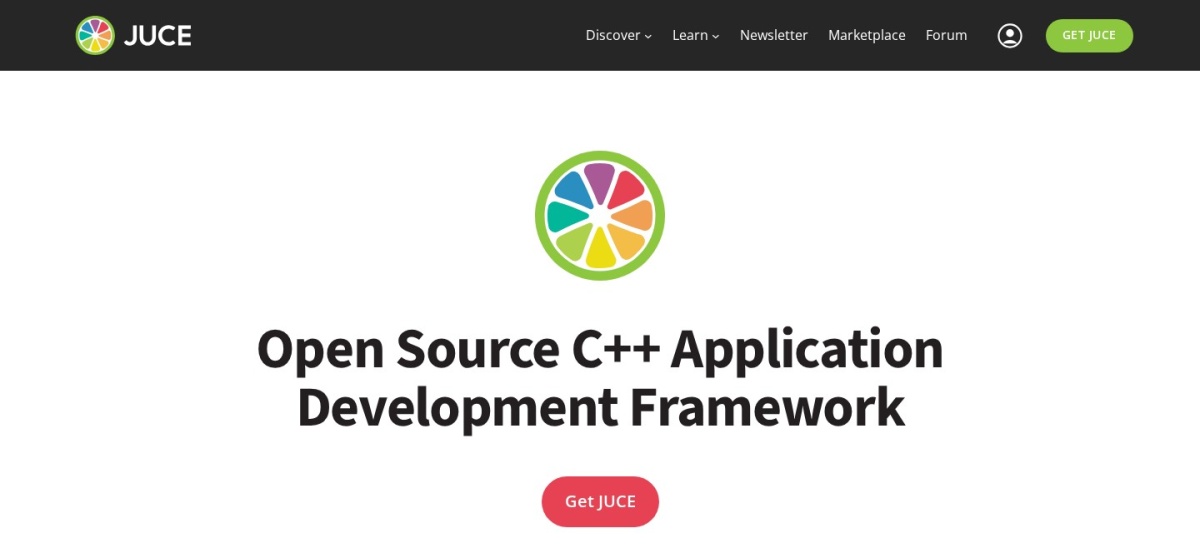
JUCE homepage, captured Nov 2026.
JUCE is a C++ framework for building audio engines, plug-ins and apps from one codebase across Windows, macOS, Linux, iOS and Android. The Starter licence is free up to $20,000 in yearly revenue or funding, or free under the AGPLv3 open-source licence, and Indie costs $40 per user a month. It builds VST3, AU, AAX and LV2 plug-ins.
The trade off is that JUCE is a toolkit, not a finished engine. You write the audio logic yourself in C++, and Pro costs $175 per user a month with a 12-month minimum. It suits developers building a custom engine, a plug-in or a music app rather than shipping a game.
What we like
One codebase ships plug-ins and apps on five platforms
Godot Audio is the built-in audio system of the free, open-source Godot engine, with positional audio in 2D and 3D, audio buses with effects and straightforward scripting. There is no licence fee, no revenue limit and no paid tier at all. Godot itself is rated 4.5 out of 5 on G2 from 27 reviews.
The trade off is depth. Godot's audio tools are less mature than commercial middleware, so demanding productions with huge dialogue or music systems will feel the limits. It suits indie teams already building in Godot who want capable audio with no extra cost or licence to track.
4/5on Unity Asset Store (5 reviews, checked Nov 2026)
PricingCustom/quote
Best audio middleware for Japanese game pipelines
PriceOn request
Authoring toolCRI AtomCraft
Audio toolsInteractive music, DSP, 3D audio
Asset Store rating4/5, 5 reviews
game.criware.jp
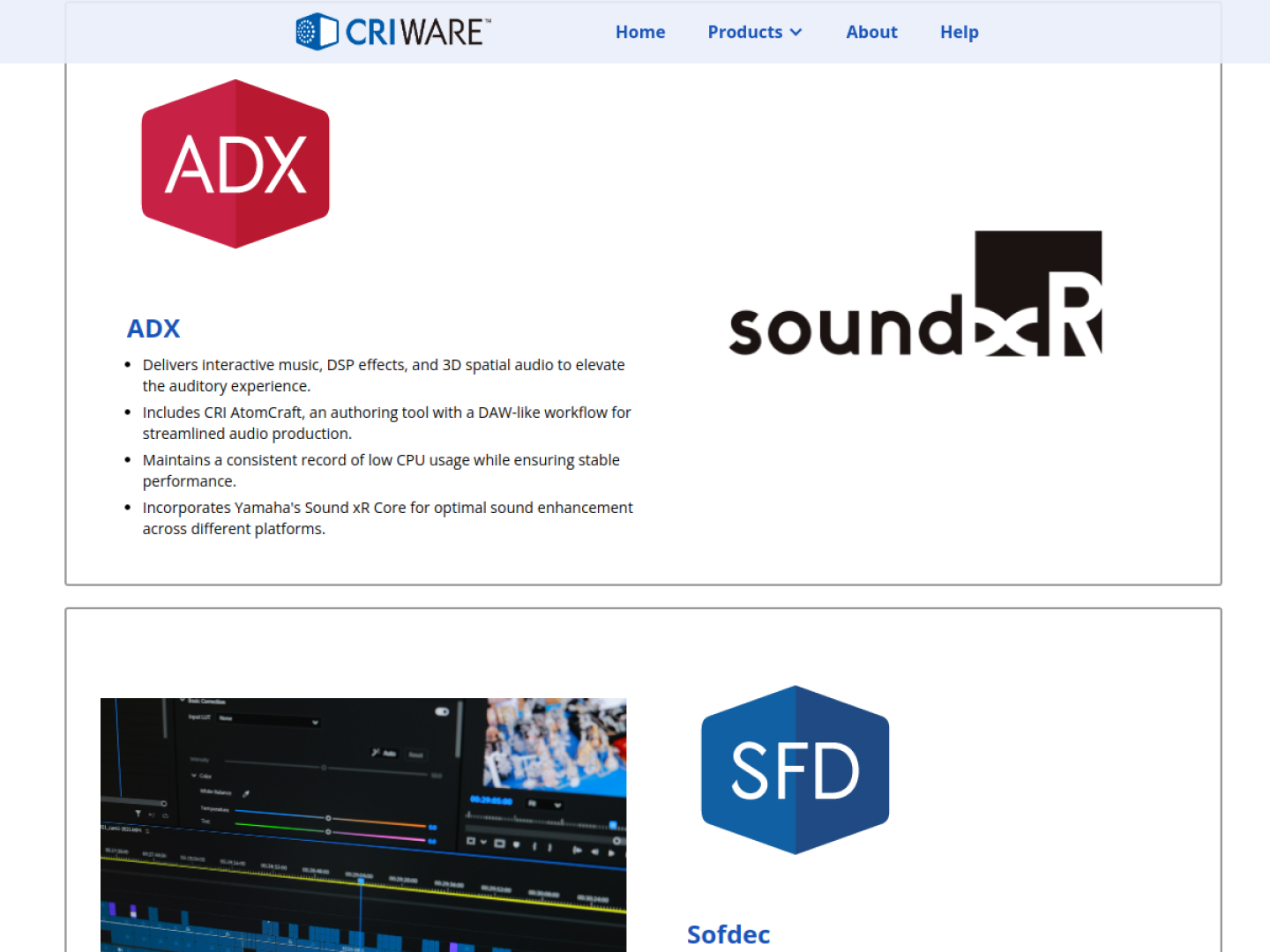
CRI ADX homepage, captured Nov 2026.
CRI ADX is the audio middleware standard in the Japanese game industry, with streaming audio, interactive music and voice management proven in thousands of shipped console and mobile titles. Its AtomCraft authoring tool uses a DAW-like workflow, and the runtime keeps CPU use low. Pricing is on request, with a free ADX LE edition for small projects.
The trade off is access. There is no public price list, documentation in English is thinner than for Wwise or FMOD, and the free LE edition has revenue conditions. It suits teams working with Japanese publishers or targeting Japanese platforms, where ADX is often the expected choice.
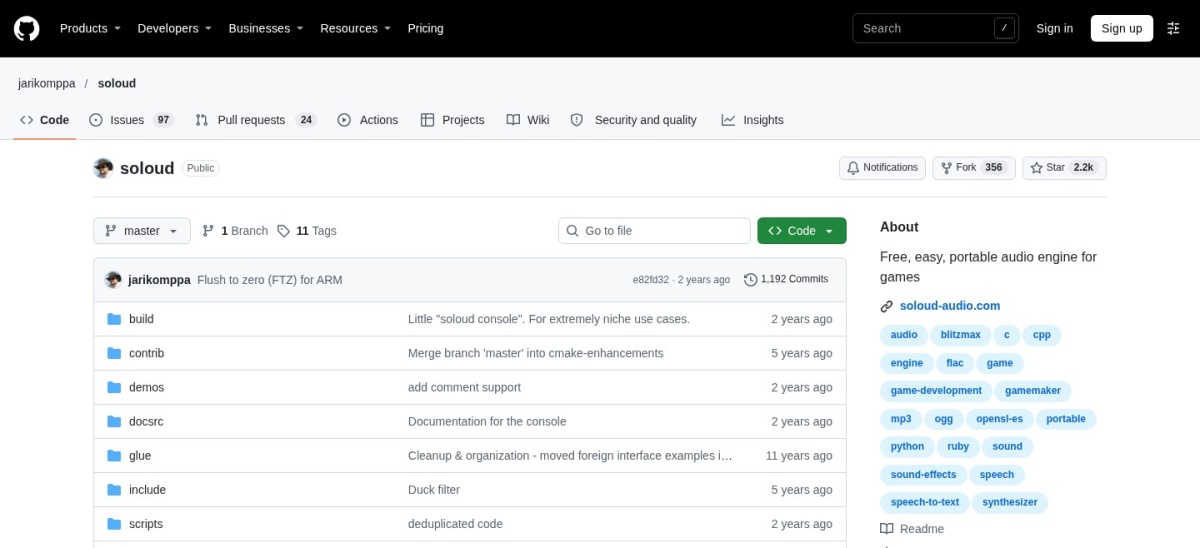
SoLoud is a free, lightweight C/C++ audio engine for games, built for simple playback, mixing and 3D positioning with little integration effort. It plays common formats, supports filters, faders and gapless looping, and its permissive licence needs no legal review. It is rated 3.8 out of 5 on G2 from 3 reviews.
The trade off is scope. There is no designer authoring tool and no advanced interactive music system, so sound design stays in code. It suits indie developers and prototypes that need capable game audio without middleware overhead or licence fees.
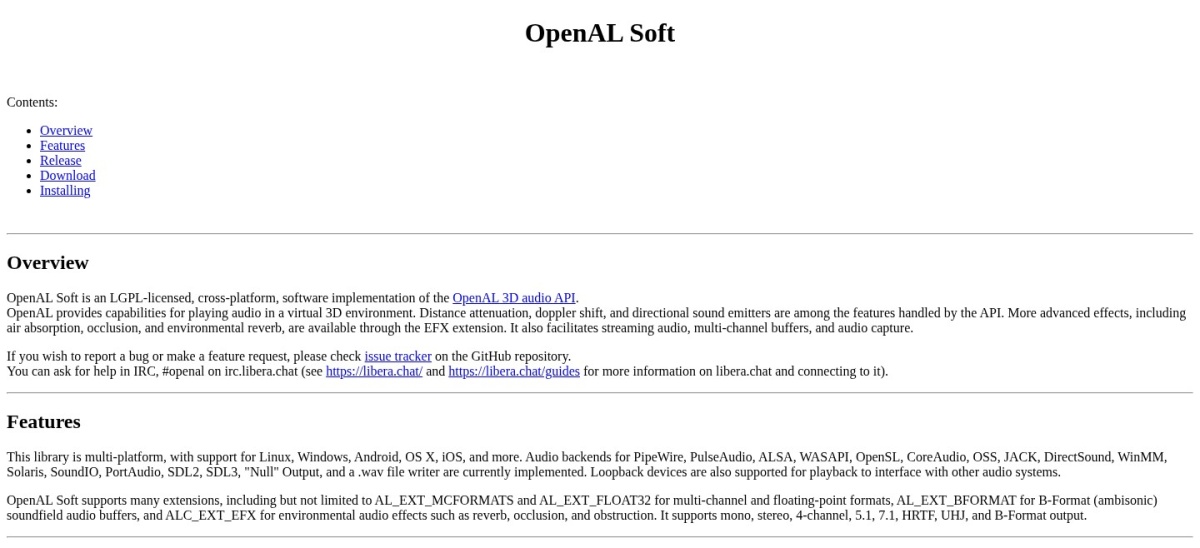
OpenAL is a cross-platform API for 3D positional audio in games, simulating distance attenuation, the Doppler effect and directional sound. OpenAL Soft is the maintained open-source implementation, licensed under the LGPL, with support for mono to 7.1 output and HRTF. It is rated 3.8 out of 5 on G2 from 4 reviews.
The trade off is that OpenAL is only an API. There is no authoring tool, no music system and no mixer UI, so every behaviour is built in code on top of it. It suits programmers who want a free, standard 3D audio layer inside their own engine.
Free plans cover the basics well. FMOD, Wwise, Unity and Godot all ship real games without a licence fee at small scale, and SoLoud and OpenAL cost nothing at any scale.
Paid tiers mostly buy scale and support. FMOD Basic adds email support, Wwise Pro adds premium plug-ins and direct engineering help, and Unity Pro removes the revenue cap.
The line between free and paid is the same trade-off in every category. Our guide to free vs premium plugins explains how to weigh a free plan against a paid upgrade before you commit.
If audio earns you money, budget for the licence at the project's real scale. A $2,000 FMOD title fee or a $7,000 Wwise project fee is small next to recording, voice work and mixing.
How we chose
We started from the audio engines most often named in 2026 game-audio comparisons, then kept 8 established products with published prices or clear licence terms and a public review footprint.
Prices come from each vendor's pricing or licensing page, checked on 24 November 2026. Wwise's official pricing page blocked automated access, so its Pro price comes from G2's pricing page instead. Ratings are G2 scores from the same week, except JUCE, rated on OnWorks, and CRI ADX, rated on the Unity Asset Store. Where a vendor shows a sale, the list shows the regular price.
We left out tools with no public rating and no published price, including Superpowered and Steam Audio. No vendor paid for a place, and we do not claim to have used these tools ourselves.
How to choose audio engine software
Match the engine to the project you are actually building, then check the licence limit before you commit.
Decide middleware or built-in. If your game already runs on Unity or Godot and audio is simple, the built-in tools are enough. Add FMOD or Wwise when sound designers need their own authoring tool.
Check the free licence limit. Wwise is free under a $250,000 production budget, FMOD under $200,000 revenue, and Unity Personal under $200,000 revenue. Crossing a limit mid-project changes the cost.
Prototype the hardest audio first. Build a vertical slice of the interactive music or dialogue system before committing, because swapping audio engines mid-project is painful.
Add up the per-platform cost. FMOD and Wwise licences are per title and per platform, so a game shipping on five platforms costs more than the headline fee suggests.
FAQ
What is the best audio engine software?
Wwise is the best pick for professional game audio. It is rated 4.5 out of 5 on G2 from 36 reviews, with the deepest interactive music and spatial audio authoring, and a free Indie licence for projects under a $250,000 budget.
What is the difference between FMOD and Wwise?
FMOD is the friendlier middleware, with a DAW-like Studio editor and a free Indie licence under $200,000 revenue. Wwise goes deeper on interactive music, dialogue systems and profiling, but costs more and takes longer to learn.
Do I need audio middleware or is engine audio enough?
Engine audio is enough for most indie and mid-size games. Middleware earns its place with complex interactive music, large dialogue systems, multi-platform shipping or sound designers who need to work apart from code.
Are FMOD and Wwise free?
Both offer free licences for small projects: FMOD under $200,000 yearly revenue on a project under a $600,000 budget, and Wwise under a $250,000 production budget. Larger projects pay per-title fees.
Which audio engine is best for indie developers?
FMOD is the best middleware pick for indies, free under its revenue limit with the fastest editor to learn. Godot Audio and SoLoud cost nothing at any scale, and Unity Audio is free while revenue stays under $200,000.
What is the cheapest audio engine software?
SoLoud, OpenAL and Godot Audio are free with no paid tier at all. JUCE is free up to $20,000 revenue, then $40 per user a month, while FMOD and Wwise stay free only while a project stays under their budget limits.