LingoDeer is the best app for learning Chinese for most people: its course explains grammar in plain English, drills characters stroke by stroke and covers about HSK 3, and it is rated 4.3/5 on Trustpilot. Start free with Duolingo for daily habit building, or pick Pimsleur if speaking comes first.
How we make this list: we compare pricing pages, product documentation and public user reviews, then re-check every price before each update. No product paid for a place. Disclosure.
LingoDeer explains Chinese grammar in English and drills characters, with an annual plan listed at $159.99 (often on sale for $95.99).
Duolingo is the best free start: the full Chinese course costs nothing, and Super is about $83.99 a year.
Rosetta Stone costs $159 a year and teaches without translations, with pronunciation feedback on every lesson.
Memrise is the cheapest paid plan here at $61.99 a year, built around 72,000 native-speaker videos.
Pimsleur costs $149.95 a year for one language, but it is the strongest for speaking by ear.
Drops caps free study at 5 minutes every 10 hours; Premium is $69.99 a year.
What to look for in a Chinese learning app
Chinese is hard to learn from a phrasebook. Tones change meaning, characters carry no sound clues, and word order works differently from English, so the app you pick matters more than it does for Spanish or French.
A good Chinese app should teach pinyin and tones early, show stroke order for characters, and explain grammar instead of leaving you to guess it from examples. Speaking practice matters too: an app that never hears you speak cannot fix your tones.
Price is a poor guide on its own. Machine translation still misses tone and context, as our guide on translating a WordPress site with AI shows for written text, and the same gap applies to learning: cheap apps that only drill words leave the hard parts untouched.
Most learners end up with two apps: one structured course and one vocabulary or speaking supplement. The list below ranks full courses first, then the best supplements, so you can pair them without paying twice for the same lessons.
4.3/5on Trustpilot (13,829 reviews, checked Nov 2026)
Paid from$159.99/yr
Best app for learning Chinese overall
Chinese courseTo about HSK 3
Character drillsYes, stroke order
Speaking practiceFluent conversations
Paid planMultilingual Pass, $159.99/yr
lingodeer.com
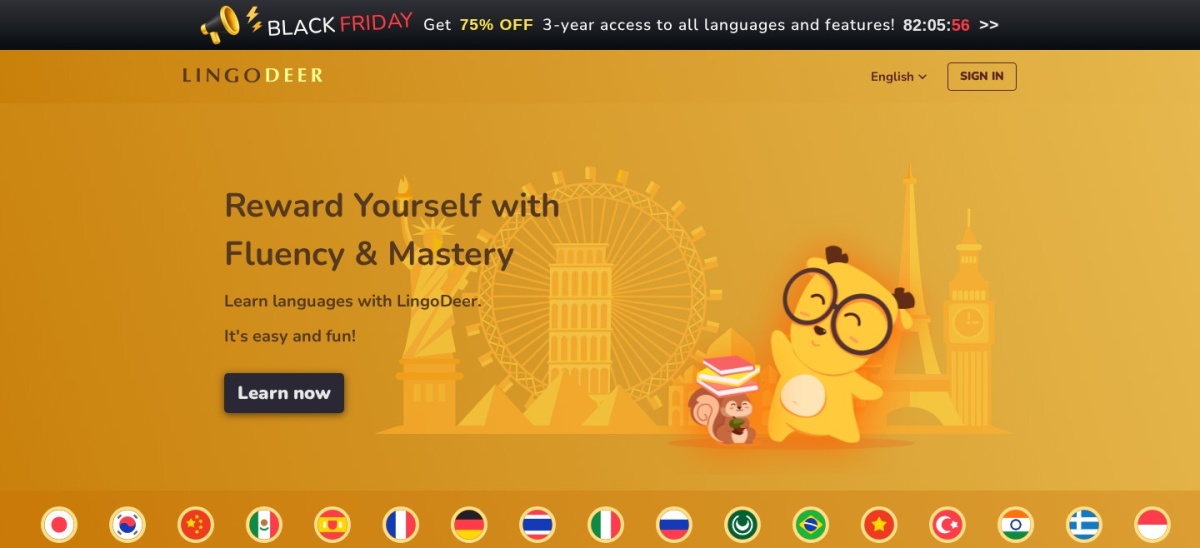
LingoDeer homepage, captured Nov 2026.
LingoDeer is a course app built for East Asian languages, and its Chinese course is one of its strongest. Lessons explain grammar in plain English, show stroke order for every character, and let you hide pinyin once you can read. The free tier covers the first unit, and Chinese is one of five languages with Fluent conversation practice.
The trade off is price and depth. The annual pass lists at $159.99 a year, though it is often on sale for $95.99, and the Chinese course ends near HSK 3, so advanced learners will outgrow it. It suits beginners and lower-intermediate learners who want grammar explained rather than guessed.
Duolingo is the best-known free way to start Chinese. The full course costs nothing and covers pinyin, characters, tones and basic sentences in short game-like lessons with a daily streak. Super removes the ads and the daily energy limit that stops free lessons.
The trade off is depth. Grammar is rarely explained, speaking practice is limited, and the course will not take you far past the basics on its own. Super costs about $83.99 a year, though Duolingo shows different prices to different accounts. It suits casual learners building a daily habit.
Rosetta Stone is an immersion course that teaches Mandarin without translations, using pictures, audio and speech recognition. Its TruAccent tool scores your pronunciation on every phrase, and the new Sapphire app adds chat missions and flashcards. A 3-day trial lets you try a lesson before paying.
The trade off is price and the lack of a free plan. The yearly plan costs $159, and the Lifetime plan is no longer sold, so long-term learners pay every year. It suits learners who like learning by ear and picture and want structured pronunciation feedback.
What we like
No-translation immersion builds thinking in Chinese
Memrise is a vocabulary app built around short videos of native speakers saying each phrase. Its official Chinese course pairs those clips with spaced-repetition review, and Pro adds MemBot, an AI partner for speaking practice. The annual plan costs $61.99, the lowest paid price in this list.
The trade off is structure. Memrise teaches words and phrases well but explains little grammar, so it works best beside a course app rather than instead of one. The monthly plan is steep at $24.99, so the yearly plan is the only sensible buy. It suits learners who freeze when native speakers talk at full speed.
4.2/5on Trustpilot (211 reviews, checked Nov 2026)
Starts at$149.95/yr
Best for speaking Chinese by ear
Chinese courseMandarin, 5 levels
Lesson lengthAbout 30 minutes
Speaking practiceCore focus
Paid planPremium, $149.95/yr
pimsleur.com
Pimsleur homepage, captured Nov 2026.
Pimsleur is an audio-first course that teaches Mandarin by listening and answering out loud. Each lesson runs about 30 minutes, works offline and hands-free, and repeats new words at spaced intervals. One subscription covers up to four people in a household.
The trade off is reading and writing. Pimsleur builds speaking confidence fast but teaches few characters and little grammar, so you will need another app for reading. Premium for one language costs $149.95 a year. It suits commuters and anyone who learns best by ear.
4.5/5on Trustpilot (20,040 reviews, checked Nov 2026)
Paid from$70/yr
Best for corrections from native speakers
Chinese courseYes, Mandarin
Free planFull course with ads
Speaking practiceCommunity corrections
Paid planPremium, $70/yr
busuu.com
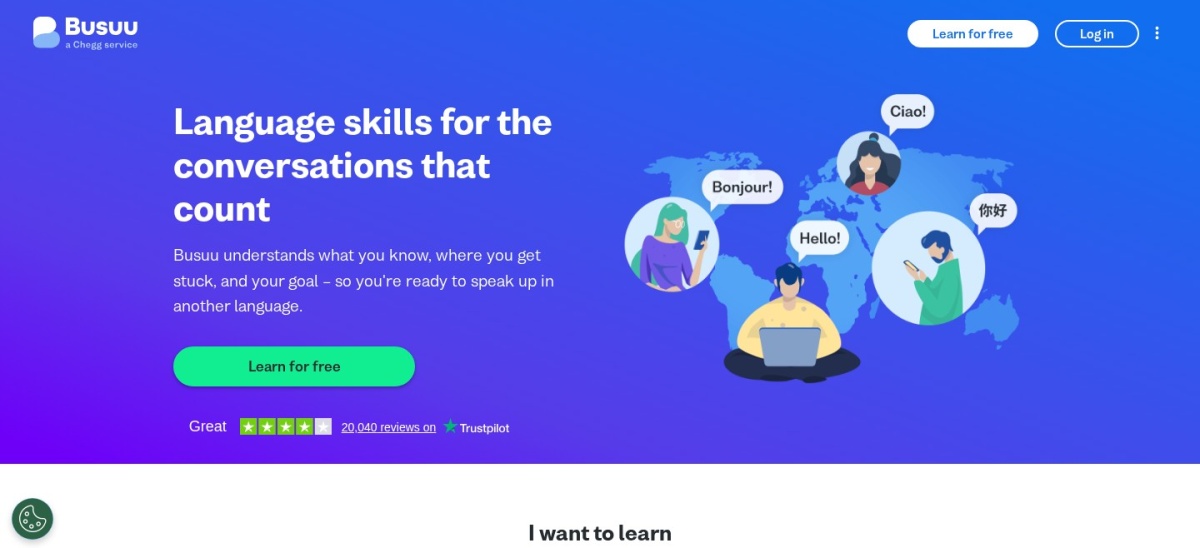
Busuu homepage, captured Nov 2026.
Busuu is a structured course that follows CEFR levels from A1 to B2, with grammar tips, review tools and certificates. Its community sets it apart: native speakers correct your written and spoken exercises, usually within hours. The free plan covers the full course with ads.
The trade off is the upsell ladder. Offline mode, certificates and grammar review need Premium at $70 a year, while AI conversations sit on the pricier Premium Plus tier. Prices also vary by platform and sale. It suits learners who want their Chinese checked by real people.
What we like
Native speakers correct your exercises
CEFR levels with completion certificates
Study plan sets a target date and schedules review
Watch out for
AI speaking features need Premium Plus
Only 14 languages
Correction quality varies by reviewer
Premium adds offline mode, certificates and review toolsVisit busuu.com
07
Drops
4.7/5on App Store (71,800 reviews, checked Nov 2026)
Paid from$69.99/yr
Best for quick vocabulary drills
Chinese courseYes, with scripts
Free plan5 minutes per 10 hours
Speaking practiceNone, vocabulary only
Paid planPremium, $69.99/yr
languagedrops.com
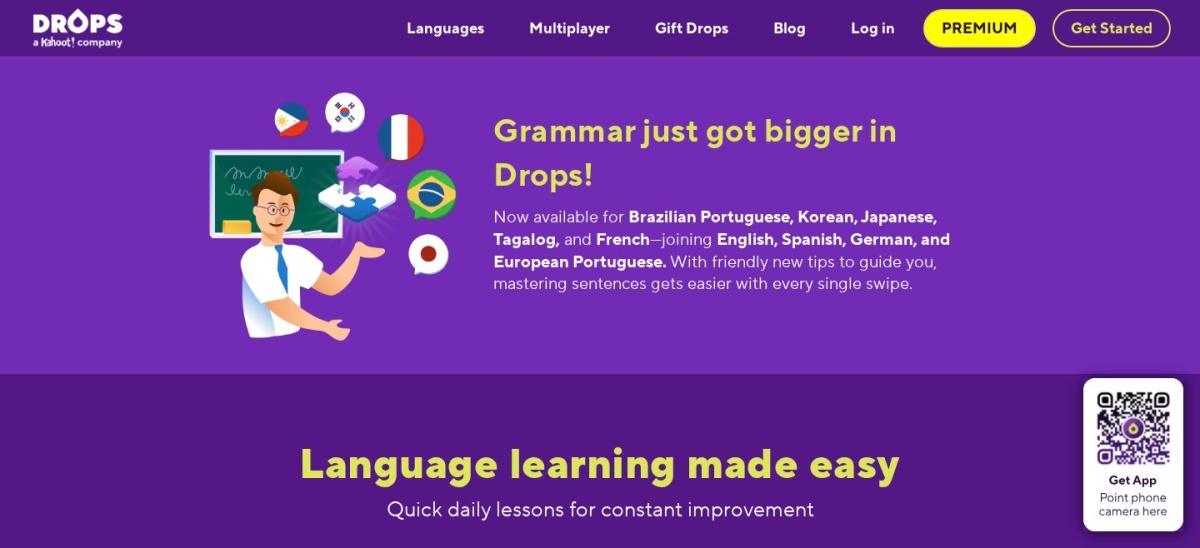
Drops homepage, captured Nov 2026.
Drops is a vocabulary game that teaches Chinese words with a picture and a recording for each one. Sessions last five minutes, the illustrations are clear, and it covers 55+ languages with dedicated script practice for Chinese characters. Premium removes the time limit.
The trade off is scope. Drops drills words and short phrases but teaches no grammar and never asks you to speak, so it is a supplement, not a course. Premium costs $69.99 a year. It suits learners who want a few minutes of visual word practice each day.
Free plans cover the basics well. Duolingo's whole Chinese course is free, Busuu's full course is free with ads, and Drops gives five minutes of vocabulary every ten hours.
Paid plans mostly add time and feedback. You get unlimited lessons, offline mode, pronunciation scores and corrections from people instead of a timer telling you to stop.
The cheapest paid plan here is Memrise Pro at $61.99 a year. The dearest full course is LingoDeer at $159.99 a year on its list price, though it is often on sale.
Pay for a month before you pay for a year. A yearly plan saves money only if the app is still on your home screen in month three.
How we chose
We started from the apps Chinese learners mention most, then kept those with a full Mandarin course and a public price.
Prices come from each vendor's pricing page or app store listing, checked on 25 November 2026. Ratings come from G2 or Trustpilot on the same day, except Drops, whose rating comes from the App Store. Where a vendor shows a sale, the list shows the regular price.
We left out apps with no public rating on G2, Capterra or Trustpilot, including several Chinese-only courses. No vendor paid for a place, and we do not claim to have used these tools ourselves.
How to choose an app for learning Chinese
Start with how much time you can give each day, then match the app to that habit.
Decide whether you need characters from day one. If reading and writing matter, pick an app with stroke-order drills such as LingoDeer. If you only need to speak, Pimsleur or Rosetta Stone fits better.
Check how far the course goes. Several apps stop near HSK 3, so learners aiming for HSK 4 or 5 will need a second app later. Look for the stated ceiling before you pay for a year.
Try the free tier for a week. Free plans show the teaching style and the daily time limit. Pay only after the habit sticks.
Add real conversation early. Apps build vocabulary and patterns, but speaking with a person is what turns them into usable Chinese. A tutor or language exchange covers what no app grades.
FAQ
What is the best app for learning Chinese?
LingoDeer is the best pick for most learners. It explains Chinese grammar in plain English, drills characters stroke by stroke, and covers about HSK 3. It is rated 4.3 out of 5 on Trustpilot from more than 13,000 reviews.
Can I learn Chinese free with an app?
Yes, up to a point. Duolingo teaches its full Chinese course free with ads, and Busuu offers its full course free with ads too. Free plans cover basics well, but speaking feedback, offline mode and advanced lessons usually need a paid plan.
Is Duolingo good for Chinese?
Duolingo is good for starting Chinese and building a daily habit. It teaches pinyin, tones and characters in short lessons, and the whole course is free. It explains little grammar and will not take you past the basics, so most learners add a second app later.
Which app is best for speaking Chinese?
Pimsleur is the strongest for speaking, because every lesson is built around listening and answering out loud. Rosetta Stone is close behind with pronunciation scoring on every phrase. Both cost more than vocabulary apps, and neither teaches many characters.
Do I need to learn Chinese characters?
Yes, if you want to read anything beyond a menu. Pinyin tells you the sound but not the meaning, and characters are how the language is written. Apps with stroke-order drills, such as LingoDeer and Drops, make characters far easier to remember.
How long does it take to learn Chinese with an app?
Daily study of 15 to 30 minutes can get you through simple conversations in a few months. Reaching an intermediate level usually takes a year or more, plus speaking with real people. No app alone makes you fluent, whatever its marketing says.
Are paid Chinese apps worth it?
They are worth it if you study most days. A yearly plan costs far less than paying month by month for a year on most apps here, and it unlocks unlimited lessons and feedback. Try the free tier for a week first, and only pay once the habit sticks.
SaaS SEO and WordPress specialist with about 8 years of experience. Rakib compares WordPress plugins, themes, hosting and software using public pricing, documentation and user reviews. See how we rank.