Khan Academy Kids is the best free app for kids to learn science, rated 4.8 out of 5 from 133,000+ App Store ratings, with no ads or subscriptions. Pick Tappity for teacher-led science lessons at $74.99 a year, or BrainPOP Jr. for animated science movies at $119 a year.
How we make this list: we compare pricing pages, product documentation and public user reviews, then re-check every price before each update. No product paid for a place. Disclosure.
Khan Academy Kids is free with no ads, and it is the highest-rated app here at 4.8 out of 5 from 133,546 App Store ratings.
Tappity is the only app built purely around science lessons, with 500+ teacher-led lessons for $74.99 a year.
BrainPOP Jr. covers 300+ topics with short animated movies and quizzes for $119 a year.
PBS Kids Games is free and rated 4.4 out of 5 from 372,832 ratings, the largest rating base in this list.
Three one-time apps cost under $6 each: Tinybop The Human Body at $3.99, and Thinkrolls Space and Inventioneers at $5.99.
ABCmouse and Lingokids teach science inside a broader curriculum, so they suit families who want one app for several subjects.
What a good science app for kids should do
A good science app lets a child ask a question, try something and see what happens. Watching a video alone teaches less than a game or a simulation that answers back.
Age matters more than the number of topics. Preschoolers need short, visual play, while elementary children can follow a lesson, a quiz or a simple experiment.
Check the price model before you install. Free apps, one-time purchases and yearly subscriptions behave very differently over two years, and a $5.99 app can cost less than one month of a subscription.
Ads and purchases deserve a look too. The free apps in this list carry no ads, while the paid apps below either charge once or ask for a yearly plan with a trial.
4.8/5on App Store (133,546 reviews, checked Nov 2026)
PriceFree
Best free science app for kids overall
Ages2 to 8
Activities5,000+ games and books
AdsNone
Paid planNone, fully free
khanacademy.org
Khan Academy Kids homepage, captured Nov 2026.
Khan Academy Kids is a free learning app from the Khan Academy nonprofit, built for children aged 2 to 8. It covers reading, math, logic and social-emotional skills with more than 5,000 games and activities and over 300 books, and its science content includes nonfiction books and videos from National Geographic Young Explorer.
The trade off is depth. Science sits inside a broad early-learning app, so it covers basics rather than a full science course, and the app stops at second grade. It suits families with a child under 8 who want a complete learning app that costs nothing.
What we like
100% free with no ads or subscriptions
Rated 4.8 out of 5 from 133,000+ App Store ratings
Science books and videos from National Geographic Young Explorer
4.5/5on App Store (8,584 reviews, checked Nov 2026)
Paid from$74.99/yr
Best teacher-led science lessons
AgesK-5, about 5 to 11
Lessons500+ science lessons
Free trial14 days
Paid planAnnual, $74.99/yr
tappity.com
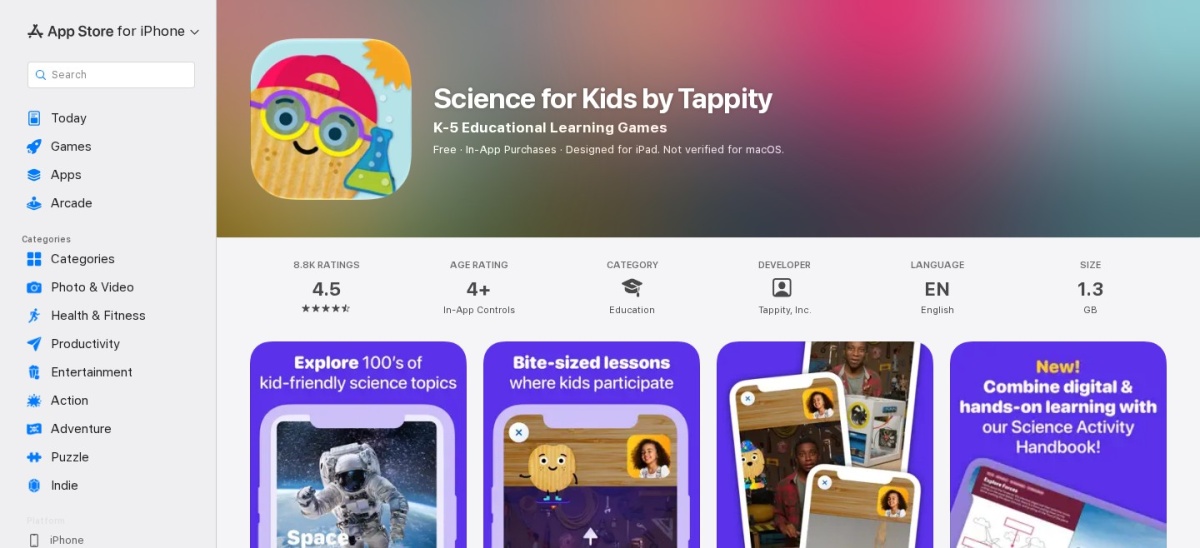
Tappity homepage, captured Nov 2026.
Tappity is a science app for elementary children, with more than 500 lessons led by a real teacher. Lessons cover animals, space, weather and the human body, and children can record what they find in a science journal and try simple activities at home.
The trade off is price and platform. Full access costs $74.99 a year, or $14.99 a month, and the app is built mainly for iOS and the web. It suits curious elementary children who like a teacher explaining why things work.
What we like
Built purely around science, not general learning
Teacher-led lessons across 100+ science topics
Science journal for recording discoveries
First story in each world is free to try
Watch out for
Subscription needed for the full lesson library
Built mainly for iOS and web, with less Android coverage
4.6/5on App Store (21,000 reviews, checked Nov 2026)
Paid from$119/yr
Best animated science explanations
GradesK to 3
Topics300+ movies and activities
Child profiles2 per family plan
Free trial2 weeks
brainpop.com
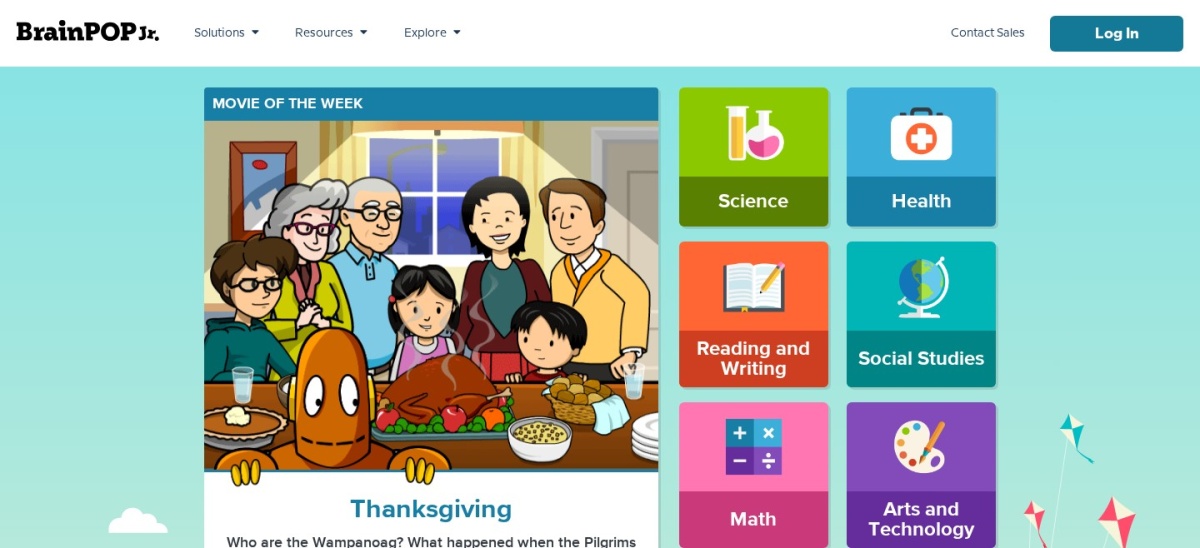
BrainPOP Jr. homepage, captured Nov 2026.
BrainPOP Jr. is an animated learning app that explains science through short movies with the characters Annie and Moby. It covers 300+ topics for kindergarten to third grade, from animals and space to weather and the human body, and each movie comes with quizzes, games and activities.
The trade off is that science is one subject among several, and full access costs $119 a year for the Jr. family plan. It suits younger elementary children who learn best by watching a short explanation and then answering questions about it.
What we like
Short animated movies make hard ideas simple
Quizzes and activities check understanding
Rated 4.6 out of 5 on the App Store
Movies now available with Spanish audio
Watch out for
Covers all subjects, so you pay for more than science
4.4/5on App Store (372,832 reviews, checked Nov 2026)
PriceFree
Best free science games with familiar characters
Ages2 to 8
SubjectsMath, reading, science
AdsNone
Paid planNone, fully free
pbskids.org
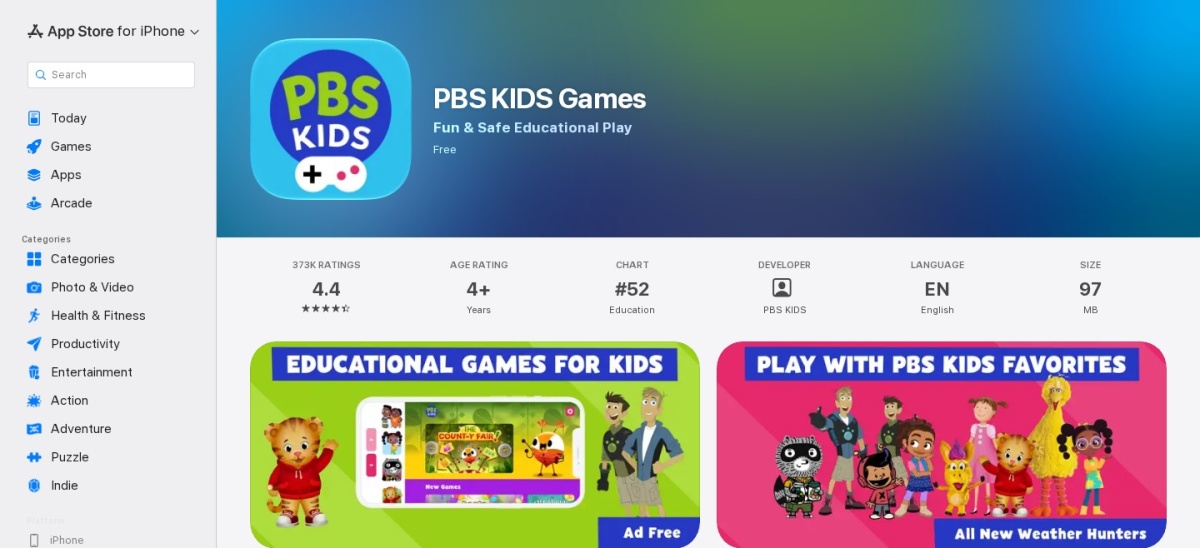
PBS Kids Games homepage, captured Nov 2026.
PBS Kids Games is a free app from the public broadcaster PBS, with games and videos starring characters children already know from its shows. Games cover animal habitats, weather, plants and simple machines, in short activities that suit young attention spans.
The trade off is depth. The games are short and playful, so they work as practice and play rather than a full science course. It suits families who want a free, ad-free app their child can open without a parent managing lessons.
What we like
Free with no subscription or purchases
Rated 4.4 out of 5 from 372,000+ App Store ratings
4.6/5on App Store (3,400 reviews, checked Nov 2026)
Starts at$5.99/yr
Best physics puzzles for ages 5 and up
Ages5 and up
Levels200+ mazes, 7 planets
AdsNone
InternetNot needed to play
avokiddo.com
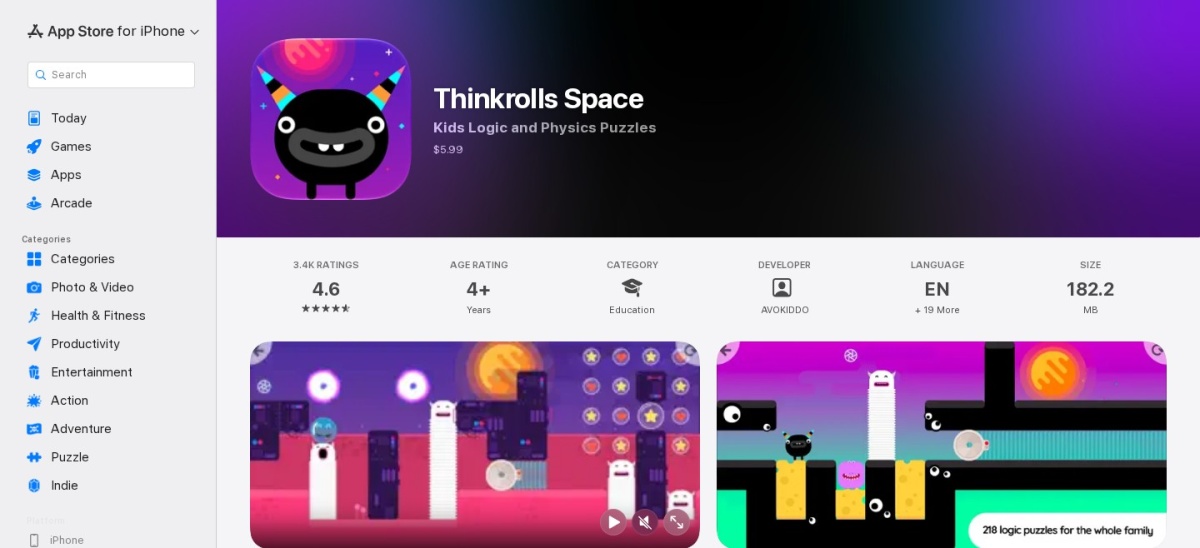
Thinkrolls Space homepage, captured Nov 2026.
Thinkrolls Space is a puzzle game that teaches physics by playing. Children roll characters through more than 200 mazes across seven planets, moving and combining objects to clear a path, with 110 easy levels for ages 5 and up and 108 harder levels for ages 8 and up.
The trade off is scope. It builds reasoning about forces and cause and effect, but it does not teach science facts or vocabulary like a lesson app does. It suits a child who likes puzzles and learns by trying, failing and trying again.
What we like
200+ physics and logic levels in easy and hard modes
No ads, no in-app purchases and no internet needed
Up to six player profiles and Family Sharing
Rated 4.6 out of 5 from about 3,400 App Store ratings
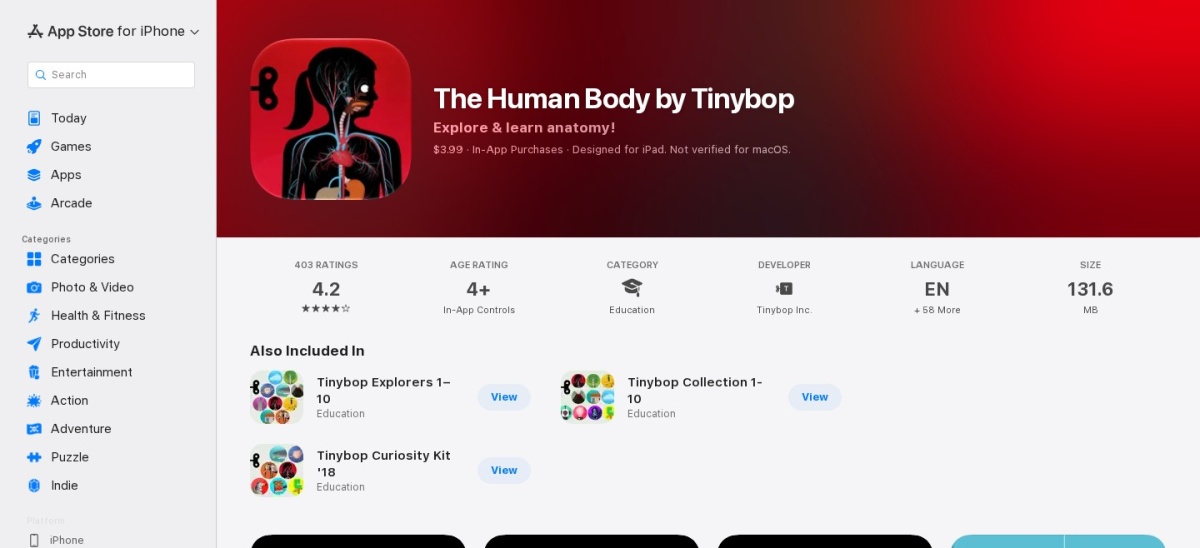
Tinybop: The Human Body homepage, captured Nov 2026.
Tinybop: The Human Body is an interactive model rather than a lesson. Children aged 4 and up explore eight body systems, including the skeletal, muscular, nervous, circulatory, digestive and immune systems, and the heart beats, the lungs breathe and the eye shows how sight works.
The trade off is that it is explore-only, with no quizzes, levels or lessons to follow. It suits a young child who learns by touching and poking at things, and it pairs well with a lesson app for facts and vocabulary.
What we like
Interactive model of eight body systems
Labels in 50+ languages and a free parent handbook
No third-party advertising
Cheapest paid app in this list at $3.99 once
Watch out for
Explore-only, with no quizzes or levels
Designed for iPad; small phone screens feel cramped
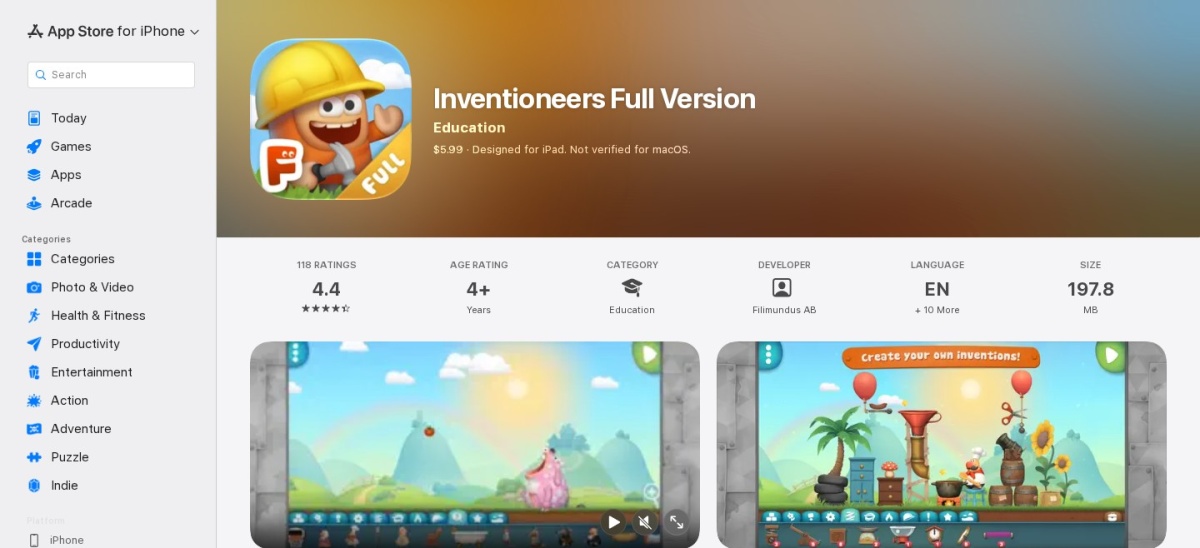
Inventioneers is a contraption-building game that teaches real-time physics. Children solve 120 invention puzzles across eight chapters with helpers that blow air, light fires, use magnets or freeze things, then use a create tool to build and share their own machines.
The trade off is reach. It has the smallest rating base in this list, at 118 App Store ratings, and it is designed for iPad. It suits a child who likes building more than watching, and adults often enjoy the harder levels too.
4.1/5on App Store (147,925 reviews, checked Nov 2026)
Paid from$79.99/yr
Best step-by-step early learning path
Ages2 to 8
FormatStep-by-step learning path
Free tierABCmouse Basic, daily access
Paid plan$79.99/yr, or $14.99/mo
abcmouse.com
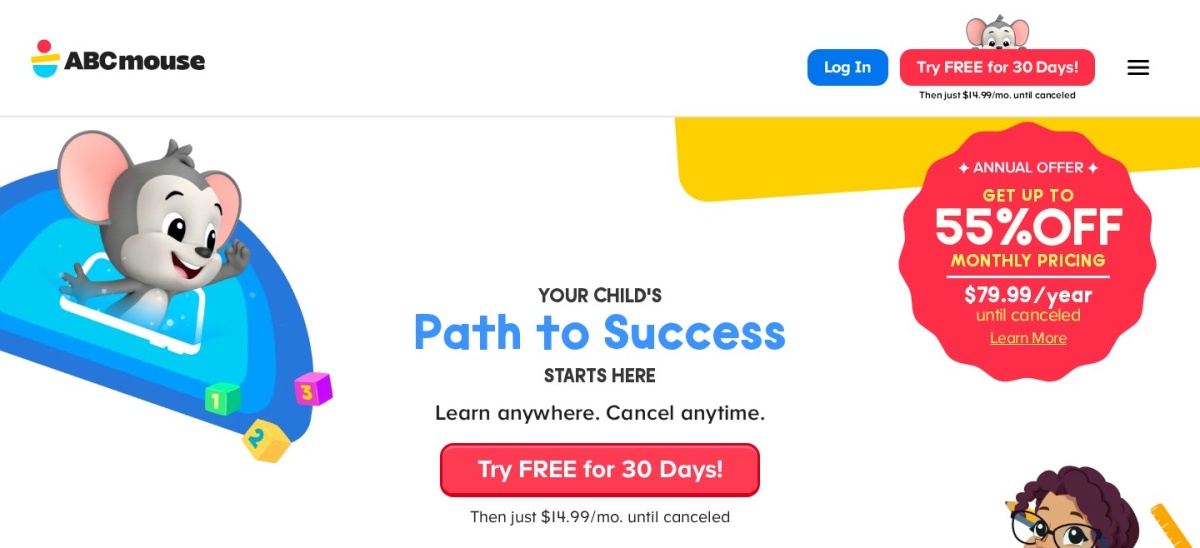
ABCmouse homepage, captured Nov 2026.
ABCmouse is a guided early learning program for children aged 2 to 8, with a step-by-step path through reading, math, science, art and music. Children earn tickets and rewards as they finish lessons, and parents can follow progress on a dashboard.
The trade off is billing. Trustpilot reviews score ABCmouse 1.2 out of 5 from 84 reviews, mostly about renewal charges and refunds rather than the lessons. It suits families with a child under 6 who want a set path to follow each day.
What we like
Clear step-by-step path for ages 2 to 8
Covers reading, math, science, art and music
Free Basic tier gives daily access
Rated 4.1 out of 5 from 147,000 App Store ratings
Watch out for
Trustpilot reviews flag billing and refund problems
4.2/5on App Store (689,000 reviews, checked Nov 2026)
Paid from$89.99/yr
Best playful science for ages 2 to 8
Ages2 to 8
Activities4,000+ games and songs
AdsNone
Child profilesUp to 4 on Plus
lingokids.com
Lingokids homepage, captured Nov 2026.
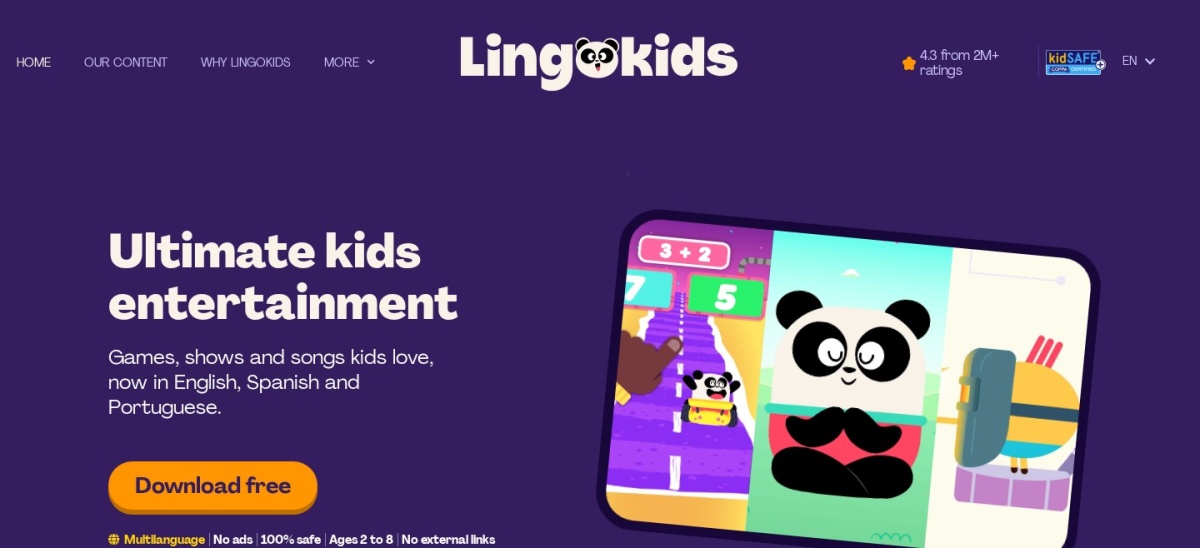
Lingokids is a play-based learning app for children aged 2 to 8, with more than 4,000 games, songs, videos and podcasts. The free Basic plan gives 10 activities a day, and Plus opens the full library, offline mode and up to four child profiles.
The trade off is price. Plus costs $89.99 a year on the App Store, or $13.49 a month on the Lingokids website, which works out to $161.88 a year, so check both before you pay. It suits families with a younger child who want one app that mixes science, English, math and songs.
What we like
4,000+ activities across science, English, math and songs
Free Basic plan with 10 activities a day
Ad-free with a timer parents can set
Rated 4.2 out of 5 from 689,000 App Store ratings
Watch out for
Plus is pricey at $13.49 a month on the website
Science is one subject among many, not the sole focus
Plus unlocks the full library, offline mode and four profilesVisit lingokids.com
Free vs paid: what the money buys
Free apps cover the basics well. Khan Academy Kids and PBS Kids Games cost nothing, carry no ads and give a young child plenty of science play.
One-time apps are the cheapest paid route. Tinybop, Thinkrolls Space and Inventioneers cost $3.99 or $5.99 once, with nothing to renew.
Subscriptions buy structure. Tappity, BrainPOP Jr., ABCmouse and Lingokids charge $74.99 to $119 a year for lessons, movies or a set learning path, so try the free trial first.
For most families, one free app plus one cheap one-time app is enough to start. Add a subscription only when a child outgrows the free content and asks for more.
How we chose
We started from the science apps recommended for children across age ranges, from preschool play to upper-elementary lessons, and kept nine with a public App Store rating and a verifiable price.
Prices come from each vendor's site or its US App Store listing, checked on 25 November 2026. Ratings are US App Store ratings on the same day, with the rating source shown on every tool. Where a vendor shows a sale, the list shows the regular price.
We left out school-only programs with no family price and no public app rating, including Mystery Science and Generation Genius. No vendor paid for a place, and we do not claim to have used these tools ourselves.
How to choose a science app for your child
Start with your child's age, then match the format to how they like to learn.
Match the app to the age. Explore-and-play apps suit ages 2 to 8, teacher-led lessons suit elementary children, and simulations suit ages 8 and up.
Decide between lessons and play. Video lessons and quizzes teach facts and vocabulary, while puzzle and building apps build reasoning about forces and cause and effect.
Check ads and purchases first. Every app in this list is ad-free or carries no third-party ads, but subscriptions renew every year while one-time apps do not.
Try it for two weeks before paying. Use the free plan or trial, watch whether your child returns to the app without being asked, and keep only the one they ask for again.
FAQ
What is the best app for kids to learn science?
Khan Academy Kids is the best free start for ages 2 to 8, while Tappity suits elementary children who want teacher-led science lessons. BrainPOP Jr. is best for children who learn from short animated movies, and PBS Kids Games is the best free choice for preschoolers.
Is there a free science app for kids?
Yes. Khan Academy Kids and PBS Kids Games are both completely free with no ads, no subscriptions and no in-app purchases. Together they cover science basics, nature, weather and simple machines for children aged 2 to 8.
What is the best science app for preschoolers?
PBS Kids Games is the best free pick for preschoolers, with short science games starring familiar characters. Khan Academy Kids is a strong second choice, and Tinybop: The Human Body suits children aged 4 and up who like to explore by touch.
How much does Tappity cost?
Tappity costs $74.99 a year for an annual membership, or $14.99 a month if you pay monthly. The first story in each world is free to try, and a 14-day free trial is available before you pay.
How much does BrainPOP Jr. cost for families?
BrainPOP Jr. Family costs $119 a year for kindergarten to third grade, with two child profiles and a two-week free trial. The combined plan with both BrainPOP and BrainPOP Jr. costs $159 a year.
Which science app is best for homeschool?
Tappity is the strongest homeschool pick here, with 500+ teacher-led science lessons, a science journal and activities to try at home. BrainPOP Jr. also works well, with 300+ topics, quizzes and activities for kindergarten to third grade.
Do science game apps really teach science?
Puzzle apps like Thinkrolls Space and Inventioneers build reasoning about forces and cause and effect. For facts and vocabulary, add a lesson app such as Tappity or BrainPOP Jr., and pair screen time with one simple experiment a week.
SaaS SEO and WordPress specialist with about 8 years of experience. Rakib compares WordPress plugins, themes, hosting and software using public pricing, documentation and user reviews. See how we rank.