HelloChinese is the best app to learn Mandarin for most beginners, a complete course built only for Chinese and rated 4.9 out of 5 from about 24,000 App Store ratings. Pick Duolingo if you want the whole course free, or ChineseSkill for Taiwan Mandarin and Cantonese.
How we make this list: we compare pricing pages, product documentation and public user reviews, then re-check every price before each update. No product paid for a place. Disclosure.
HelloChinese is the highest-rated Mandarin course here at 4.9 out of 5, with tone training, handwriting and 2,000+ native-speaker videos.
Duolingo is the only app where the whole Chinese course is free, with about 6,000 words running to CEFR level B2.
ChineseSkill is the only pick with separate Taiwan Mandarin and Cantonese courses, and the cheapest full year at $59.99.
Pimsleur is the strongest for speaking, but Premium at $149.95 a year is the priciest single-language plan here.
Skritter and Drops are specialists: Skritter for handwriting, Drops for visual vocabulary, and neither is a full course.
What to look for in a Mandarin app
Mandarin is hard in ways other languages are not. Tones change meaning, characters carry no alphabet to sound out, and the writing system needs its own practice.
A good app should teach tones from the start, with speech recognition that checks them, and show pinyin beside every character until you can read without it.
Decide what you need most: a full course, speaking practice, reading, or handwriting. No single app here covers all four well, so most learners pair a course with one specialist.
Prices vary by store and by account. Duolingo shows different Super prices to different accounts, and several apps run sales, so check the price on your own checkout screen before you pay.
4.9/5on App Store (24,100 reviews, checked Nov 2026)
Paid from$69.99/yr
Best Mandarin course overall
HSK coverageAbout HSK 1–5
Speech recognitionYes, tones included
Handwriting practiceYes
Paid planPremium, $69.99/yr
hellochinese.cc
HelloChinese homepage, captured Nov 2026.
HelloChinese is a game-based Mandarin course built only for Chinese, with lessons in reading, writing, speaking, vocabulary and grammar. The free version covers the first lessons, and Premium unlocks the full course, including a pinyin course, speech recognition for tones and more than 2,000 videos of native speakers.
The trade off is the paywall, which arrives early in the course, and the graded stories sit in the pricier Premium+ tier at $149.99 a year. It suits beginners who want one structured app that teaches tones, characters and grammar from zero.
What we like
Built only for Chinese, with tone and pinyin training
4.7/5on App Store (5.6M reviews, checked Nov 2026)
Paid from$83.99/yr
Best free start for beginners
Free planFull course, with ads
Chinese course levelTo CEFR B2
Daily energy limitYes, unless Super
Paid planSuper, from $83.99/yr
duolingo.com
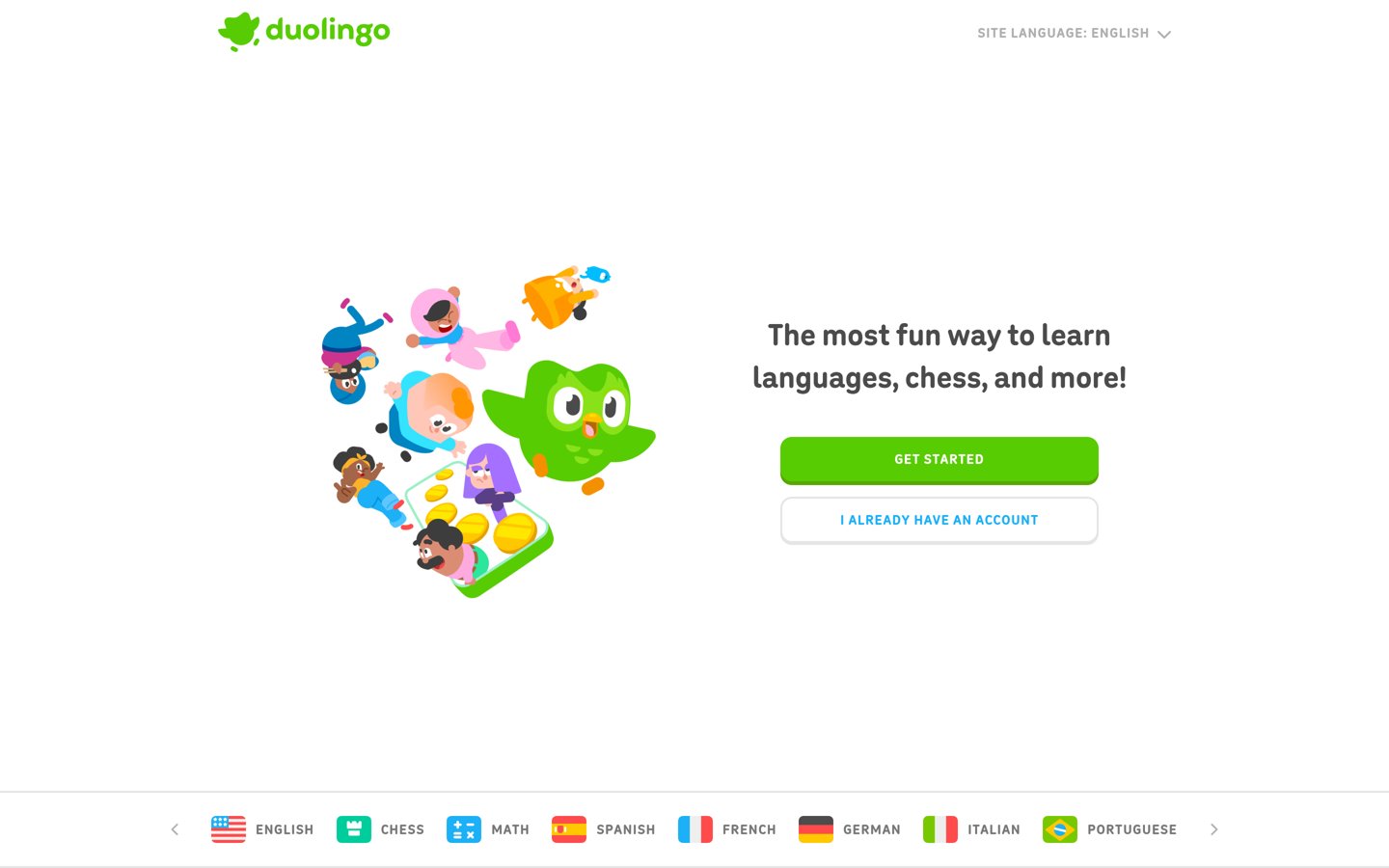
Duolingo homepage, captured Nov 2026.
Duolingo is the free way to start Mandarin, with short gamified lessons that build a daily habit around words, characters and simple sentences. The whole Chinese course is free, with ads and a daily energy limit, and it now runs through CEFR level B2 with about 6,000 words in 310 units.
The trade off is depth. The course is slow, and its short practice sentences give you little real Chinese to read or listen to, so most learners outgrow it. Super removes ads and the energy limit, but Duolingo shows different annual prices to different accounts, from $83.99 to $119.99 a year. It suits anyone who wants a free daily habit before paying for anything.
4.8/5on App Store (15,400 reviews, checked Nov 2026)
Paid from$59.99/yr
Best for Taiwan Mandarin and Cantonese
CoursesMainland, Taiwan, Cantonese
HSK coverageZero to about HSK 4
Offline modeYes
Paid planPremium, $59.99/yr
chineseskill.com
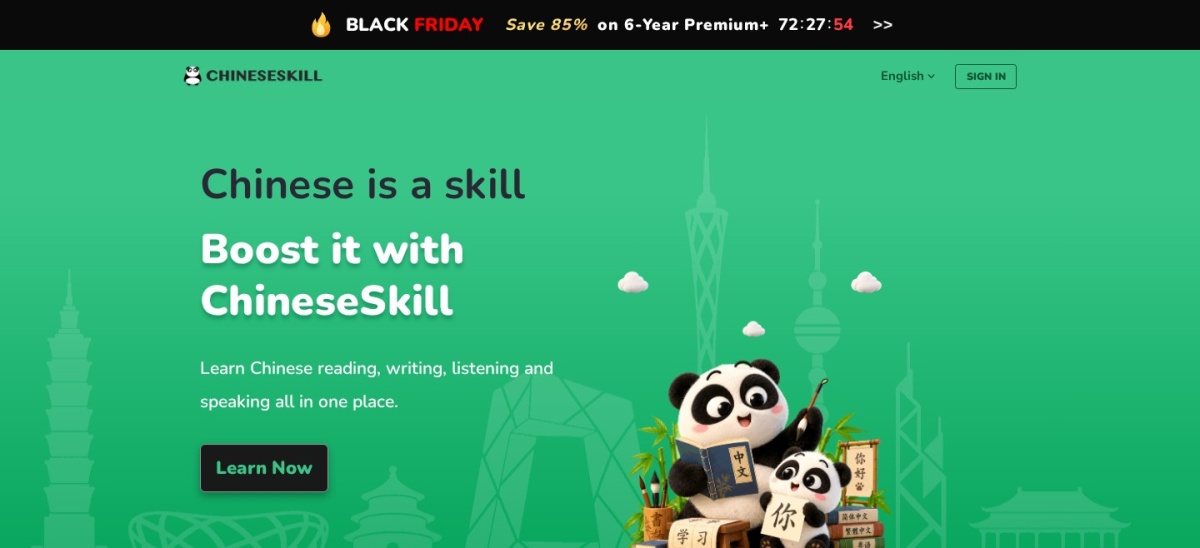
ChineseSkill homepage, captured Nov 2026.
ChineseSkill is a gamified Chinese course from the team behind LingoDeer, with separate courses for Mainland Mandarin, Taiwan Mandarin in Traditional characters and Hong Kong Cantonese, plus a new Hokkien course. Lessons cover speaking, reading and listening, with native-speaker video clips and spaced-repetition reviews.
The trade off is the free limit. Only the first few lessons are free, and the full course needs Premium at $11.99 a month or $59.99 a year. It suits learners heading to Taiwan or Hong Kong, or anyone who wants Cantonese rather than Mandarin.
What we like
Only course here with Taiwan Mandarin and Cantonese
4.7/5on App Store (28,100 reviews, checked Nov 2026)
Paid from$95.99/yr
Best grammar explanations
Chinese course levelZero to intermediate
Grammar notesIn every lesson
HSK alignmentNo, own path
Paid planPremium, $95.99/yr
lingodeer.com
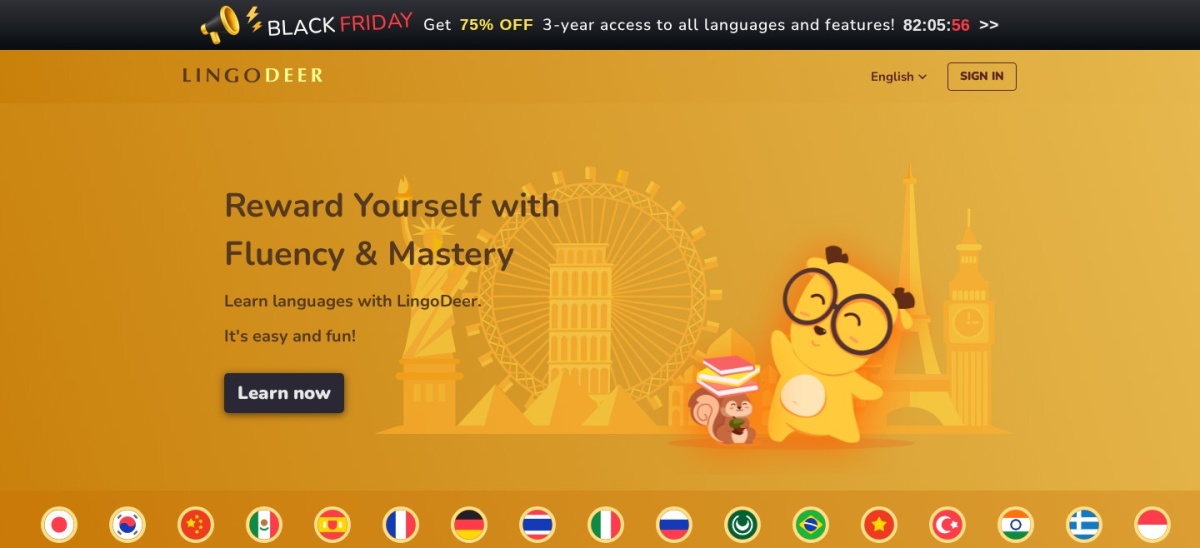
LingoDeer homepage, captured Nov 2026.
LingoDeer is a structured course built for Asian languages, with clear grammar notes, native-speaker audio and character drills in every lesson. The Chinese course runs from zero to about intermediate, with pinyin you can hide and a travel phrasebook.
The trade off is the paywall. Only the alphabet, the first unit and the test-outs are free, and the course does not follow the HSK, so exam learners need a second source. Premium costs $14.99 a month or $95.99 a year. It suits learners who want to understand how Chinese sentences work.
4.7/5on App Store (31,000 reviews, checked Nov 2026)
Starts at$149.95/yr
Best for learning by ear
Lesson lengthAbout 30 minutes
Mandarin levels5, with reading lessons
Free trial7 days, first lesson free
Paid planPremium, $149.95/yr
pimsleur.com
Pimsleur homepage, captured Nov 2026.
Pimsleur is an audio-first course built around 30-minute lessons of listening and answering aloud, with spaced recall that brings phrases back just as you start to forget them. Mandarin has five levels with about 100 reading exercises, and the first lesson of every language is free.
The trade off is price and scope. Premium costs $19.95 a month or $149.95 a year for one language, and the method teaches little reading, writing or grammar. All Access, at $164.99 a year, opens all 51 languages. It suits commuters who want to speak first and read later.
4.8/5on App Store (218,000 reviews, checked Nov 2026)
Paid from$61.99/yr
Best native-speaker video vocabulary
Native-speaker videoYes, for every word
AI conversationMemBot practice chats
Free planLimited, with ads
Paid planPro, $61.99/yr
memrise.com
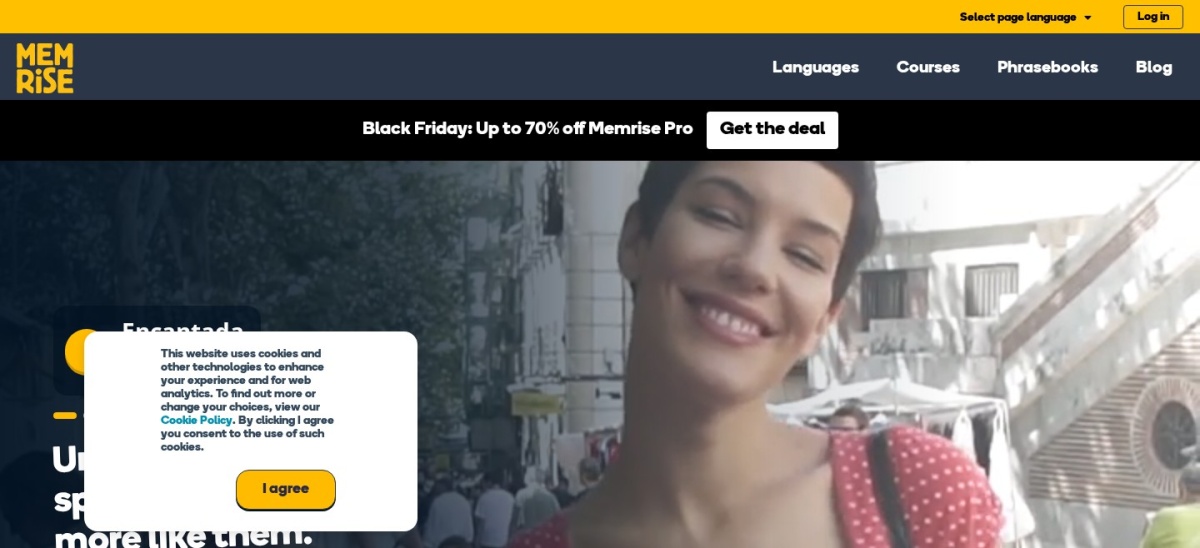
Memrise homepage, captured Nov 2026.
Memrise is a vocabulary app that teaches words and phrases through short videos of native speakers, with spaced review that brings words back over days and months. The free plan covers some lessons and videos with ads, and Pro adds all lessons, unlimited speaking practice and no ads.
The trade off is scope. Memrise drills words and phrases rather than teaching grammar, so it works best beside a full course. Pro costs $24.99 a month or $61.99 a year. It suits learners who want to hear how people actually speak.
What we like
Native speakers on video in every lesson
Lowest annual price among the big apps
MemBot runs practice conversations
Watch out for
Mostly vocabulary, little grammar
Recent reviews are weaker than the lifetime rating
4.7/5on App Store (72,000 reviews, checked Nov 2026)
Paid from$69.99/yr
Best visual vocabulary builder
Session length5 minutes free a day
Languages55+ in the app
Grammar lessonsNo
Paid planPremium, $69.99/yr
languagedrops.com
Drops homepage, captured Nov 2026.
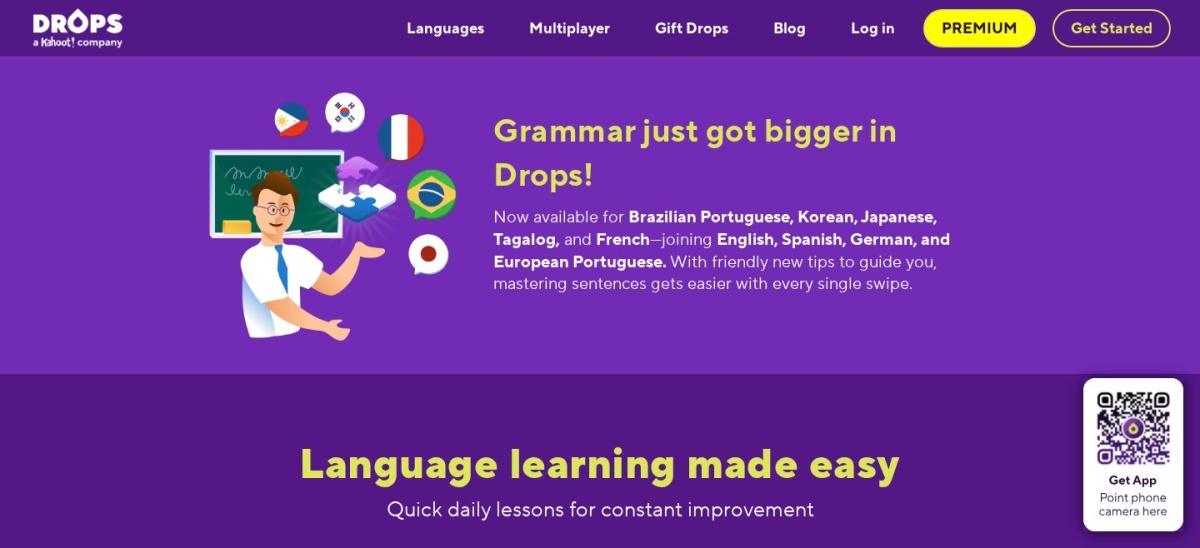
Drops is a visual vocabulary app that teaches words through quick picture games, with a custom illustration and recording for each word. The free version allows one five-minute session every ten hours, and Premium removes the time limit and the ads.
The trade off is that Drops only teaches words. There is no grammar, no speaking practice and no course path, so it is a supplement rather than a main app. Premium costs $12.99 a month or $69.99 a year. It suits visual learners who want a few minutes of words a day.
4.6/5on App Store (2,400 reviews, checked Nov 2026)
Starts at$159/yr
Best immersion method
MethodDynamic Immersion, no translations
Speech feedbackTruAccent pronunciation
Languages includedAll 25
Paid planSapphire, $159/yr
rosettastone.com
Rosetta Stone homepage, captured Nov 2026.
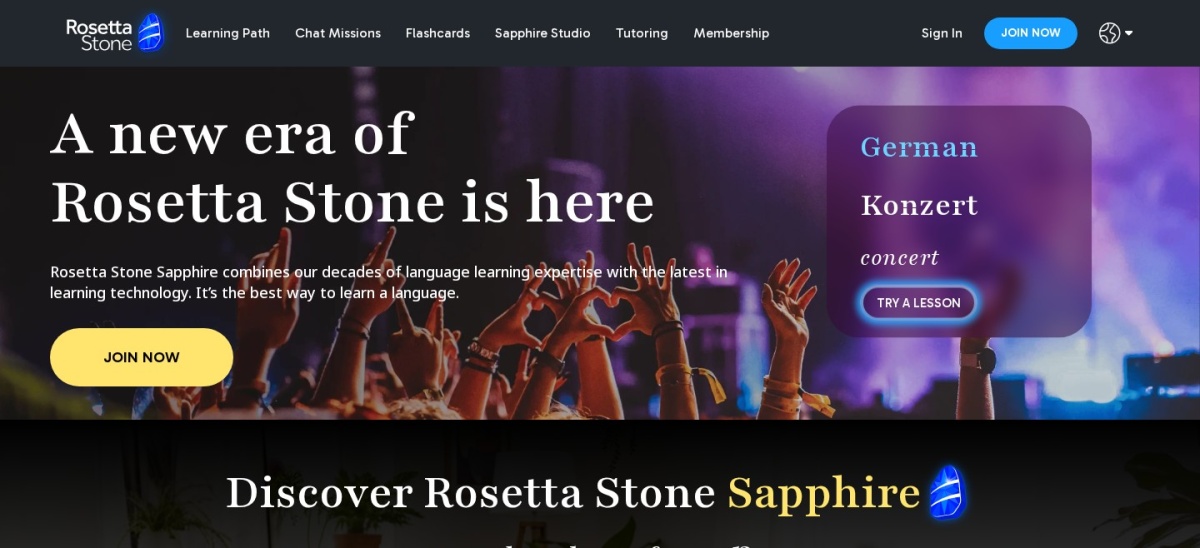
Rosetta Stone is an immersion course that teaches through Dynamic Immersion, with lessons shown entirely in Mandarin and no translations, plus TruAccent speech feedback, Chat Missions and flashcards. The current Sapphire product covers all 25 languages for $19.99 a month or $159 a year.
The trade off is the new app. Sapphire replaced the Classic app in 2026, the lifetime plan is no longer sold, and Sapphire holds only about 2,400 App Store ratings at 4.6. A 7-day free trial is included. It suits patient learners who like learning without English.
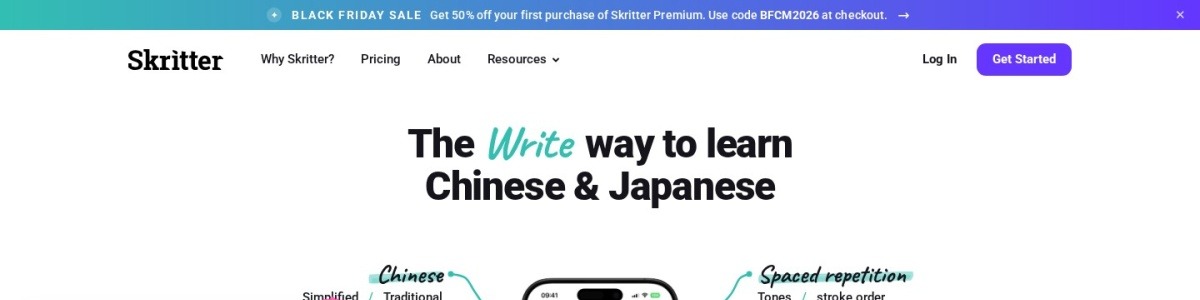
Skritter is a handwriting app that makes you write each character from memory, stroke by stroke, then checks every stroke and schedules reviews with spaced repetition. It covers HSK 1 to 6 and the new HSK levels 1 to 9, with more than 700 official decks.
The trade off is narrowness. Skritter teaches characters, not Chinese: there is no grammar course and nothing hears you speak. Premium costs $14.99 a month or $99.99 a year, with a 7-day free trial. It suits learners who want to write characters by hand.
Free plans are enough to start. Duolingo's whole course is free, and HelloChinese, ChineseSkill and LingoDeer all let you try the first lessons without paying.
Paid plans mostly add depth and time. You get the full course, offline mode and no ads, and the per-month cost falls sharply on the yearly plan.
The cheapest full year here is ChineseSkill at $59.99, and the dearest is Rosetta Stone at $159. Pimsleur's single-language Premium sits between them at $149.95 a year.
If you only want one skill, a specialist can cost less than a course. Drops Premium is $69.99 a year for vocabulary, and Skritter is $99.99 a year for handwriting.
How we chose
We started from the Mandarin apps with the most App Store ratings and the clearest course offering, then kept nine that cover different skills: full courses, speaking, reading, vocabulary and handwriting.
Prices come from each app's US App Store listing and pricing page, checked on 25 November 2026. Ratings and review counts come from the US App Store on the same day. Where a vendor shows a sale, the list shows the regular price.
We left out dictionary-only tools and tutor marketplaces, since they are not courses. No vendor paid for a place, and we do not claim to have used these tools ourselves.
How to choose an app to learn Mandarin
Start with your goal, then match the app to the skill you need most.
Pick your main skill. If you want a full course, start with HelloChinese or ChineseSkill. If you want to speak, start with Pimsleur.
Try the free version first. Duolingo's whole course is free, and most others offer free lessons or a trial. Use them before paying for a year.
Check the price on your own screen. Duolingo and Drops show different prices by account and store. Confirm the yearly price at checkout, not in a review.
Add one specialist, not five. Pair your course with Skritter for handwriting or Drops for vocabulary. Two apps you open daily beat five you forget.
FAQ
What is the best app to learn Mandarin?
HelloChinese is the best pick for most beginners. It is a complete course built only for Chinese, with tone training, handwriting practice and speech recognition, and it holds 4.9 out of 5 from about 24,000 ratings on the US App Store.
Can I learn Mandarin for free?
Yes. Duolingo's whole Chinese course is free, with ads and a daily energy limit, and HelloChinese, ChineseSkill and LingoDeer all offer free starter lessons. You will need a paid plan for the full course in most apps, starting at $59.99 a year.
Is Duolingo good for learning Mandarin?
It is good for a free daily habit and basic vocabulary, and its Chinese course now runs to CEFR level B2. It is slow, though, and gives you little real Chinese to read or listen to, so most learners move on to a fuller course.
Which app is best for learning to write Chinese characters?
Skritter is the best choice for handwriting. It makes you write each character from memory, checks every stroke and schedules reviews, with decks for HSK 1 to 6 and the new HSK levels 1 to 9. Premium costs $99.99 a year.
Which app is best for speaking Mandarin?
Pimsleur is the strongest for speaking, with 30-minute audio lessons built around listening and answering aloud. Mandarin has five levels, and Premium costs $19.95 a month or $149.95 a year, with a 7-day free trial.
Do these apps follow the HSK exam levels?
Some do. HelloChinese and ChineseSkill build their courses around HSK levels, and Skritter has decks for HSK 1 to 6 and the new levels 1 to 9. LingoDeer and Rosetta Stone follow their own paths instead.
SaaS SEO and WordPress specialist with about 8 years of experience. Rakib compares WordPress plugins, themes, hosting and software using public pricing, documentation and user reviews. See how we rank.