Best AI Tools for PI Attorneys in 2026: 9 Tools Compared
WLWPLegible EditorsLast verified 22 Nov 2026How we rank8 min read
★ Short answer
ChatGPT is the best AI tool for PI attorneys who want one flexible assistant for drafting and research, at $20 a month with a 4.6 out of 5 G2 rating. CasePeer is the best PI-specific pick at $90 per user a month, while Supio leads for medical record review.
How we make this list: we compare pricing pages, product documentation and public user reviews, then re-check every price before each update. No product paid for a place. Disclosure.
ChatGPT leads for general drafting and research at $20 a month, rated 4.6 out of 5 on G2 from 5,254 reviews.
Claude is the strongest choice for long medical records, at $17 a month billed yearly and rated 4.7 out of 5 on G2.
CasePeer is the only PI-specific tool here with a published price: $90 per user a month, rated 4.8 out of 5 on Capterra.
Supio and EvenUp are the strongest PI demand tools, but both are quote only, so get a price before comparing.
Five of the nine tools publish no price, so budget on a sales call, not on the list price alone.
What PI attorneys need from an AI tool
Personal injury work runs on documents. Medical records, depositions, bills and demand letters take hours to read and draft, and that is where AI tools help most.
Two kinds of tool matter here. General assistants such as ChatGPT and Claude draft and summarise well, but they know nothing about PI practice. PI-specific tools such as CasePeer, Supio and EvenUp understand medical chronologies and demand packages.
Price is the hardest part to compare. Most PI-specific platforms sell by quote or per case, so this list states that plainly instead of guessing a figure. Ask for the per-case price and the monthly minimum on a sales call.
Check data handling before you upload a file. Client records need a tool that keeps matter data private and does not train on it.
ChatGPT is a general-purpose AI assistant for drafting, summarising long documents and research. Plus at $20 a month adds Deep Research reports, file upload and analysis, and expanded reasoning models.
The trade off is it is not built for PI work, so it has no matter management or medical-record workflow. It suits firms that want one flexible assistant for drafting and research beside a case system.
What we like
Versatile across drafting, research and brainstorming
Claude is an AI assistant for long-document summarisation, drafting and research. Pro at $17 a month billed yearly adds Research mode, Projects for case material and at least 5 times more usage than Free.
The trade off is usage limits apply even on Pro, and it has no native image generation. It suits firms that work through long medical records, depositions and demand drafts.
What we like
Strong long-document analysis and structured responses
CasePeer is a cloud case management tool built only for plaintiff personal injury firms, with native AI writing and case research. Basic at $90 per user a month covers medical treatment, settlement and expense tracking, automated statute alerts and unlimited document storage.
The trade off is intake, two-way texting and the AI writing assistant sit on Pro at $130 per user a month, not Basic. It suits PI firms that want case management and AI writing in one PI-specific system.
What we like
Purpose-built for PI, not adapted from general practice tools
Supio is a PI-focused AI platform for medical record review, chronologies and demand-letter drafting. It builds medical chronologies and case summaries from records, depositions and case files, and drafts demand letters in the same workflow.
The trade off is pricing is quote only, sold by case volume, so cost cannot be compared without a sales call. It suits firms where medical record review is the most time-heavy task.
What we like
Built around medical record review
Demand drafting in the same workflow
Westlaw integration
Watch out for
No published price
Per-case pricing can be costly for low-volume firms
EvenUp is an AI platform that generates demand packages for PI firms, including the demand letter, medical chronology and billing summary. It adds valuation analysis from verdict data, plus negotiation, discovery and trial tools that carry the same case facts forward.
The trade off is pricing is quote only and charged per case, so low-volume firms pay for each demand. It suits firms that want the full demand workflow handled end to end.
Filevine is a case management platform with an AI layer that runs agents across matters, plus AI drafting and document review. The free LOIS Explore tier covers AI tools only, while paid plans add DemandsAI demand drafting and MedChron medical chronologies.
The trade off is pricing is custom per firm with no published price, and the AI works best only if the firm runs its practice on Filevine. It suits firms already on Filevine that want AI inside the case system.
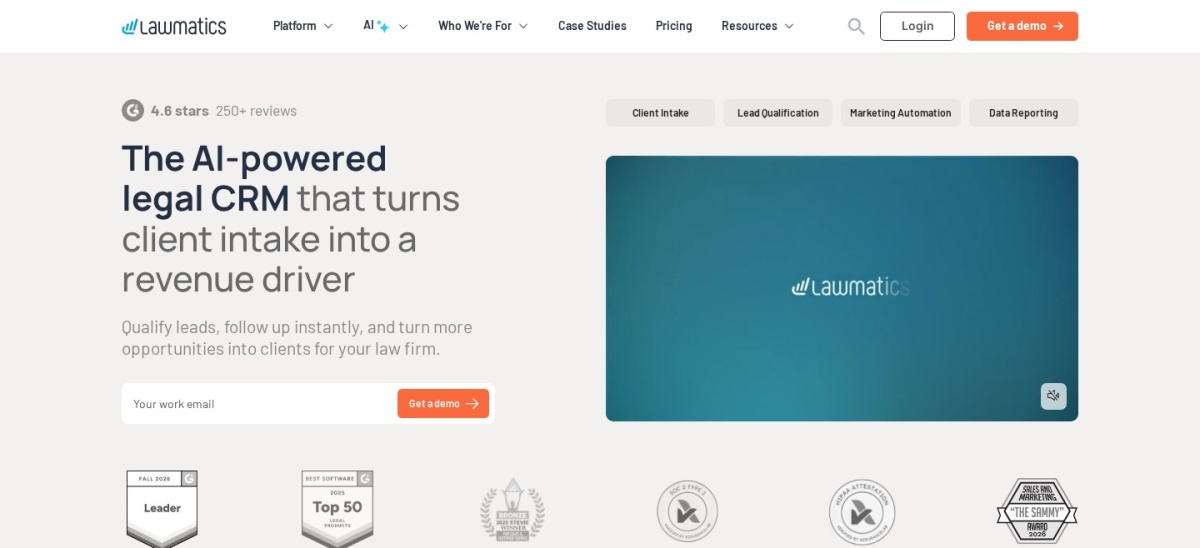
Lawmatics is a legal CRM and marketing automation tool for client intake, follow-up and lead nurturing. It covers customisable intake forms with conditional logic, automated email and SMS follow-up, appointment scheduling and e-signatures.
The trade off is the vendor does not publish a price, and third-party figures conflict widely, from $99 to $267 a month. It suits firms that lose cases at intake and want follow-up automated.
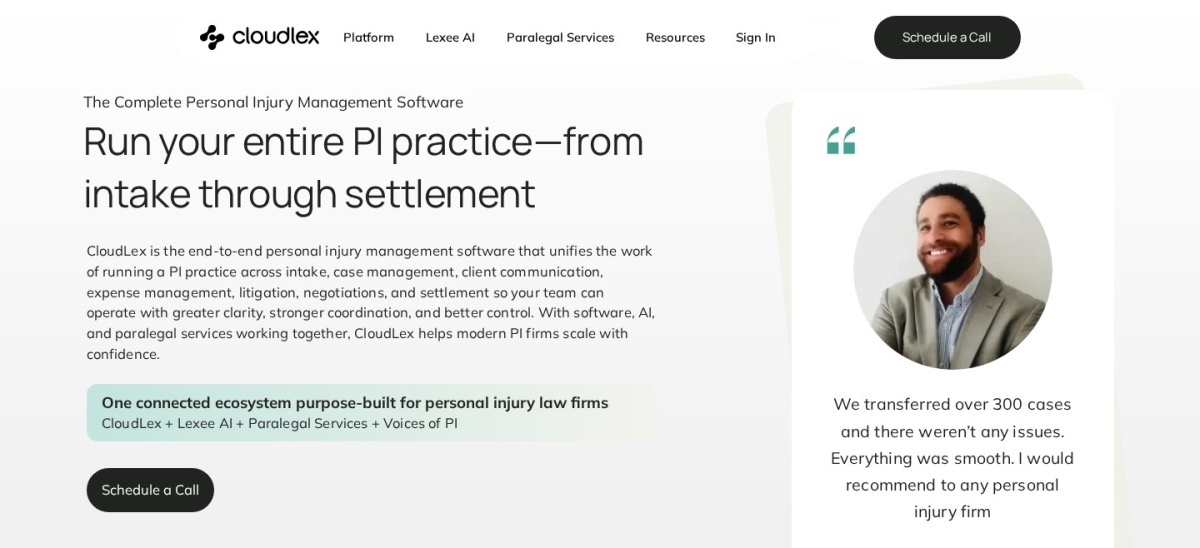
CloudLex is a cloud case management tool built for personal injury plaintiff firms, with an AI assistant and a client portal. It covers matter, document and communication tracking, plus Lexee AI and a portal that keeps clients updated without staff calls.
The trade off is no published price was found, and it has a smaller public review footprint than CasePeer or Filevine. It suits PI firms that want clients kept updated through a portal.
What we like
PI-specific rather than general practice management
CoCounsel is an AI legal research and drafting assistant built on Westlaw and Practical Law content. It handles jurisdiction-aware research with citations, deposition preparation, document review and drafting on Westlaw content.
The trade off is there is no public price list, and it is sold as part of a Westlaw subscription, so cost depends on the firm's existing package. It suits firms that already pay for Westlaw and want research grounded in that library.
Most PI-specific vendors sell by quote because price depends on case volume and firm size.
Ask for the per-case price, the monthly minimum and what counts as a case before you sign.
A tool that looks cheap per case can cost more than a flat monthly plan once volume rises.
Get the quote in writing, with the renewal terms, before you move files across.
How we chose
We started from PI-focused roundups and vendor sites, then kept tools with a real PI use case or a strong general drafting and research record. Five of the nine publish no price, so those are marked as quote only.
Prices come from each vendor pricing page, checked on 22 November 2026. Ratings come from G2, Capterra or Trustpilot on the same day, where a rating was published. Where a vendor shows a sale, the list shows the regular price.
We left out tools with no published price or no public review record where a priced alternative existed. No vendor paid for a place, and this list is based on pricing, docs and reviews, not on using the tools ourselves.
How to choose an AI tool for a PI practice
Start with the task that eats the most time, then check price and data handling before you buy.
Name the task first. Medical record review, demand drafting, intake and research need different tools. Pick the task that costs the most hours.
Check the price model. Flat monthly plans are easy to budget. Per-case and quote-only tools need a written quote with the monthly minimum.
Ask about data handling. Check whether uploads train the model, where data is stored, and whether a business associate agreement is available.
Trial it on one closed file. Run one finished case through the tool and compare its chronology or draft against the file you already know.
FAQ
What is the best AI tool for PI attorneys?
ChatGPT is the best general pick for PI attorneys, at $20 a month with a 4.6 out of 5 G2 rating. It drafts, summarises records and researches well, but it is not PI-specific. CasePeer is the best PI-specific system at $90 per user a month.
Is there an AI tool made only for personal injury?
Yes. CasePeer, CloudLex, Supio and EvenUp are built for plaintiff personal injury work. CasePeer covers case management, Supio covers medical record review, and EvenUp covers demand packages. Most of them are priced by quote.
Can AI write a demand letter?
Yes, Supio and EvenUp draft demand letters from case files, medical records and bills. EvenUp adds valuation analysis from verdict data. A lawyer should still check every fact and figure before the letter goes out.
Do these tools keep client data private?
That depends on the vendor and the plan. Check whether the tool trains on your uploads, where data is stored, and whether a business associate agreement is available before you upload medical records.
How much should a PI firm budget for AI?
A general assistant costs $17 to $20 a month per user. A PI-specific system starts at $90 per user a month for CasePeer, while Supio and EvenUp are priced per case. Budget for the sales call, not just the headline price.
Can I use ChatGPT for PI work?
Yes, for drafting, summarising and research, with care. Do not paste confidential client data into a free account, and check every citation and figure against the source document before you rely on it.