Wysa is the best AI therapy app for most people, with an AI chatbot offering CBT and DBT exercises, mood tracking and meditations, free to start, Premium at $99.99 a year and a 4.8-star App Store rating. Pick Headspace for guided meditation with its Ebb AI companion, or Finch if a gentle daily habit loop keeps you coming back.
How we make this list: we compare pricing pages, product documentation and public user reviews, then re-check every price before each update. No product paid for a place. Disclosure.
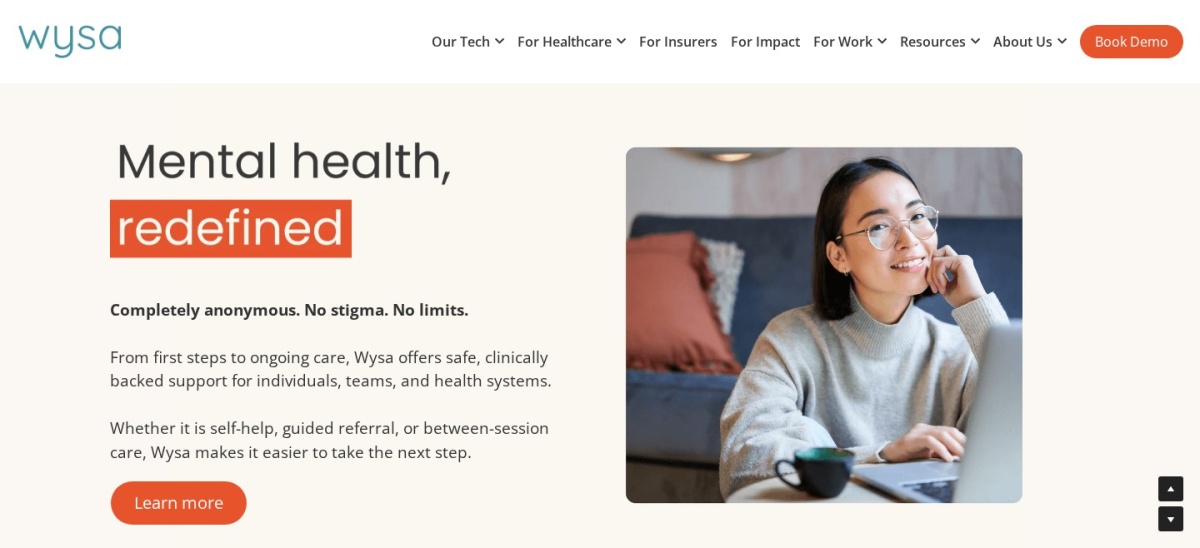
Wysa is the top pick: an AI chatbot with CBT and DBT exercises, free to start, rated 4.8 out of 5 from 25,000 App Store ratings.
Headspace pairs 500+ guided meditations with Ebb, its AI companion, for $69.99 a year.
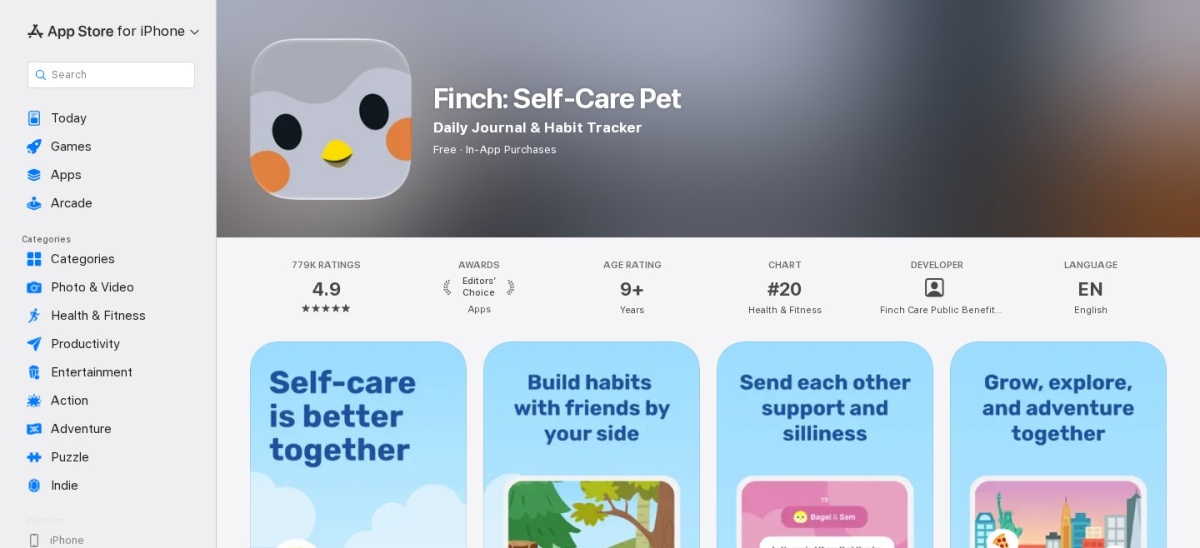
Finch has the highest rating here, 4.9 out of 5 from 778,000 ratings, and its core habit loop is free.
MindDoc is the most structured CBT option, with courses and symptom tracking for $69.99 a year.
None of these apps is therapy. They offer support and coping skills, and they cannot diagnose, prescribe or replace a licensed professional.
What an AI therapy app can and cannot do
AI therapy apps are chatbots and guided programs that use techniques from CBT and related approaches. They answer at any hour, cost far less than a session with a therapist, and suit people who want support between sessions or while waiting for care.
What they cannot do matters more. No app on this list can diagnose a condition, prescribe medication or handle a crisis. If you feel unsafe, contact a crisis line or emergency services in your area right away.
When comparing apps, look for a clear statement that the app is not therapy, a free tier you can try first, and a price you can check before you pay. Our guide on adding an AI chatbot to WordPress explains how these chatbots are built, which helps to see their limits.
Prices below are the regular annual prices from each app's App Store listing, checked on 25 November 2026. Some apps also show lower prices inside the app, so check the payment screen before you subscribe.
Wysa is an AI chatbot that talks through everyday stress, low mood and anxiety with exercises drawn from CBT and DBT. The free version includes the chat, mood tracking and mindfulness exercises, and Wysa says 93% of people who talk to it find it helpful. It is rated 4.8 out of 5 from 25,000 App Store ratings.
The trade off is price. Premium costs $99.99 a year, and the listing still shows an older $74.99 annual option, so check which price your app store shows before you pay. It suits people who want a chat-first app with a large library of coping tools rather than guided courses.
What we like
Chat-first CBT and DBT exercises
Free tier covers the core chatbot
Anonymous chats with no name needed
Mood tracking and mindfulness in one app
Watch out for
Premium is the priciest chat app in this list
Human coaching costs extra on top
Two different annual prices appear in the store listing
Premium unlocks the full library of exercises and toolsVisit wysa.com
02
Headspace
4.8/5on App Store (974K reviews, checked Nov 2026)
Paid from$69.99/yr
Best for meditation plus AI support
AI companionEbb, included
Guided meditations500+
Free planTrial and some free content
Human therapyExtra, via insurance
headspace.com
Headspace homepage, captured Nov 2026.
Headspace is a meditation and sleep app that now includes Ebb, an AI companion that gives personal recommendations and support between sessions. The subscription covers 500+ guided meditations, sleepcasts and focus music, and the app is rated 4.8 out of 5 from 974,000 App Store ratings.
The trade off is that the site shows 50% off the first year, so the $69.99 annual price is the renewal price, not the first-year price. It suits people who want structured meditation first and an AI companion second, rather than a chat-led app.
What we like
Ebb AI companion included in the price
Large library of meditations and sleep content
Coaching and therapy available for those who want it
4.9/5on App Store (778K reviews, checked Nov 2026)
Paid from$69.99/yr
Gentlest way to build a daily habit
AI chatNo, guided check-ins
Free planCore habits and journaling
Mood trackingYes, with trends
Finch Plus$69.99 a year
finchcare.com
Finch homepage, captured Nov 2026.
Finch is a self-care app where looking after a virtual pet means looking after yourself. Daily check-ins, breathing exercises, journaling and goal tracking feed the bird and build a habit loop, and the free version covers the core loop with no ads. It is rated 4.9 out of 5 from 778,000 App Store ratings.
The trade off is depth. Finch is a gentle habit and mood app, not a CBT program, and Plus mainly adds more prompts, exercises and pet items. It suits people who find other apps too clinical and need a low-pressure reason to check in each day.
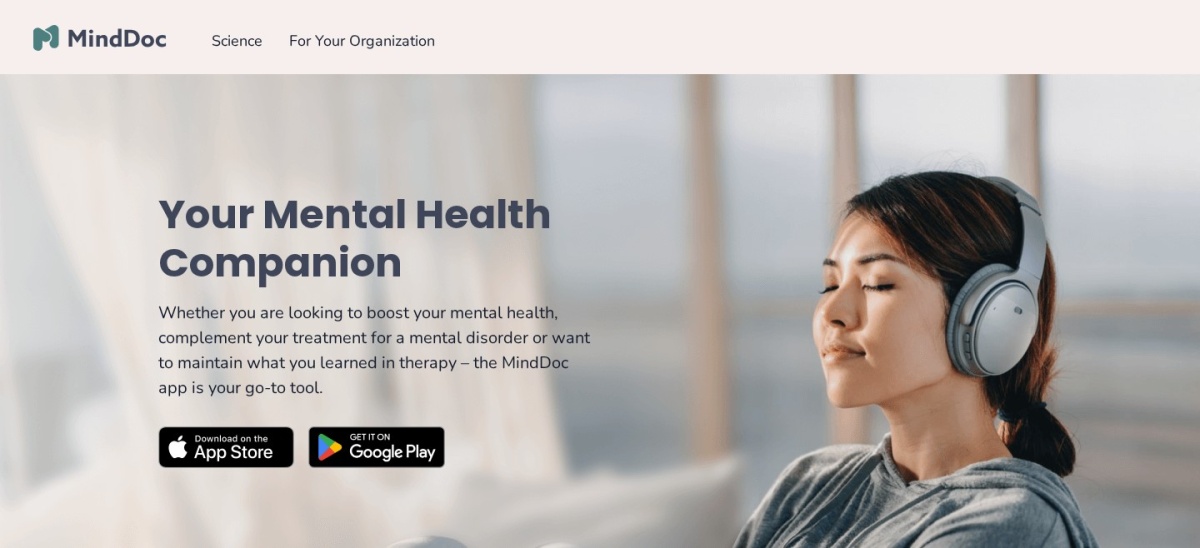
MindDoc is a mental health companion built by clinical psychologists, with mood tracking, journaling and CBT-based courses. It offers short symptom screenings up to three times a day and a summary you can share with a clinician. It is rated 4.7 out of 5 from 29,000 App Store ratings.
The trade off is the paywall. Much of the course content needs MindDoc+, which costs $69.99 for 12 months, and the free version is a sampler. It suits people who want structured learning and tracking more than open-ended chat.
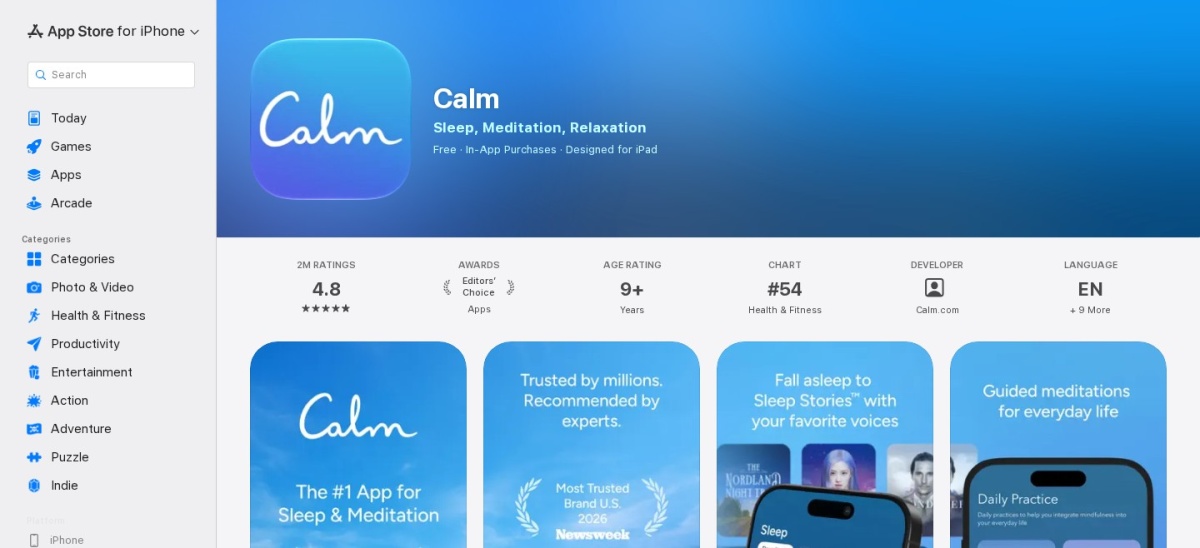
Calm is a sleep, meditation and relaxation app built around its library of Sleep Stories, soundscapes and guided meditations. The listing describes 100+ Sleep Stories read by well-known voices, and the app is rated 4.8 out of 5 from about 2 million App Store ratings.
The trade off is price and clarity. The website checkout shows $79.99 a year while the App Store also lists $69.99, so check the price where you pay. It suits people whose main goal is falling asleep rather than working through thoughts by chat.
4.5/5on App Store (4,500 reviews, checked Nov 2026)
Paid from$139.99/yr
Best mood-boosting games and tracks
AI coachAnna, on some tracks
CBT activitiesGames and journaling
Free plan18 tracks and games
Premium$139.99 a year
happify.com
Happify homepage, captured Nov 2026.
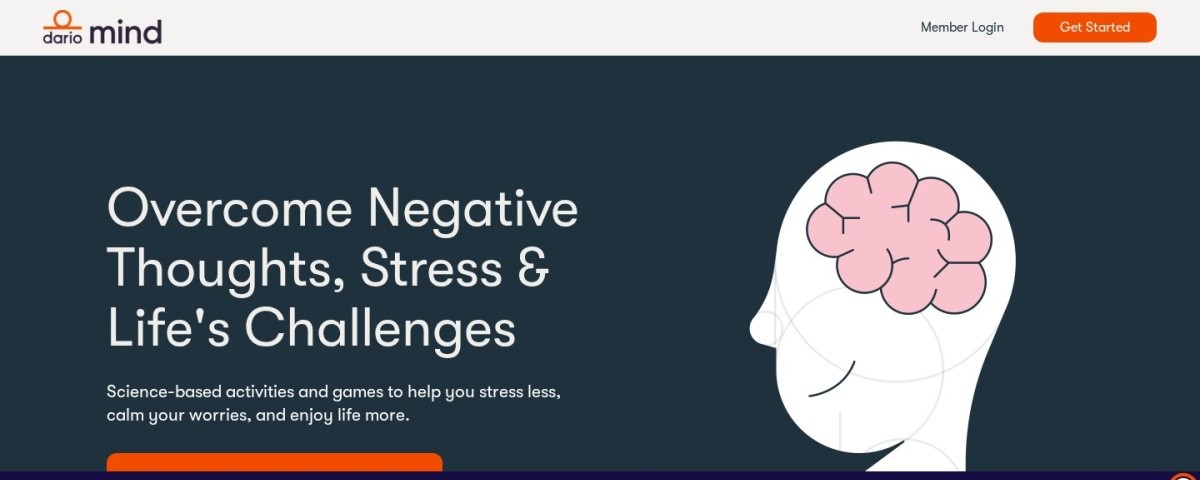
Happify is a CBT and positive psychology app that teaches coping skills through short games, activities and guided tracks. The free version includes 18 tracks, games and journals, and some tracks include an AI coach called Anna. Its site now presents the app as Dario Mind.
The trade off is price. Happify Plus costs $139.99 a year, the highest in this list, for 100+ tracks and the full strengths profile. It suits beginners who like playful, game-like exercises more than long chats or courses.
4.4/5on App Store (228K reviews, checked Nov 2026)
Paid from$69.99/yr
Best AI companion for open-ended chat
AI chatYes, with memory
Voice callsPro only
Free planBasic chat
Age rating18+
replika.com
Replika homepage, captured Nov 2026.
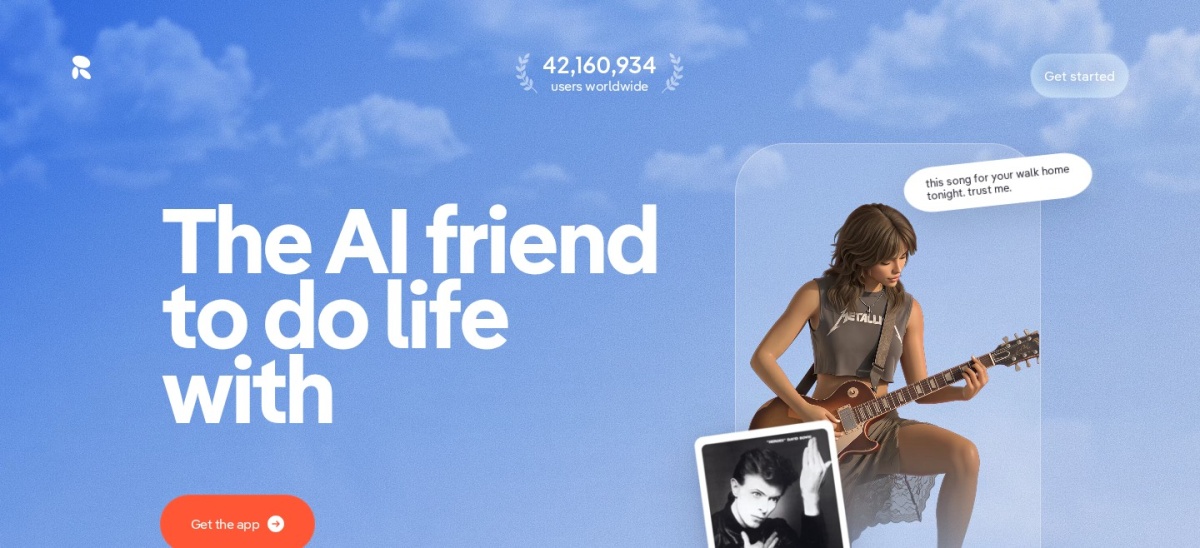
Replika is an AI companion app built around one AI friend that remembers your conversations and checks in over time. Basic chat is free, and Replika says it has more than 42 million users. It is rated 4.4 out of 5 from 228,000 App Store ratings.
The trade off is focus. Replika is a companion, not a therapy app: it has no CBT program and no crisis support, and voice calls and image features need Pro at $69.99 a year. It suits adults who want open-ended conversation rather than structured exercises.
What we like
Strong memory across conversations
Genuinely usable free chat tier
Voice calls and avatar on Pro
Large, long-running user base
Watch out for
Not a therapy or CBT app
Replika publishes no price page
Pro features are mostly cosmetic and voice
Pro adds voice calls, image features and premium voicesVisit replika.com
08
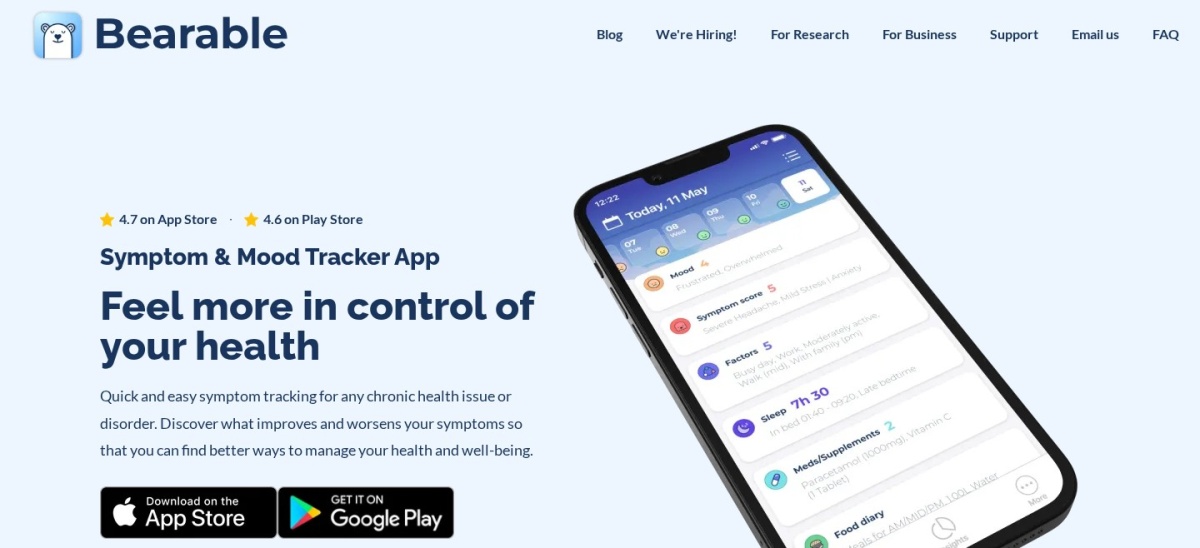
Bearable
4.8/5on App Store (6.8K reviews, checked Nov 2026)
Paid from$34.99/yr
Best for tracking what affects your mood
AI chatNo
Mood trackingYes, with correlations
Medication logYes
Premium$34.99 a year
bearable.app
Bearable homepage, captured Nov 2026.
Bearable is a mood and symptom tracker that logs mood, energy, sleep, medication and habits, then shows which factors line up with better or worse days. The free version covers unlimited custom tracking and weekly reports. It is rated 4.8 out of 5 from 6,800 App Store ratings.
The trade off is that it is a tracker, not a chat app: it records and reports but offers no AI conversation or guided exercises. It suits people already in therapy, or waiting for care, who want clear data to share with a clinician.
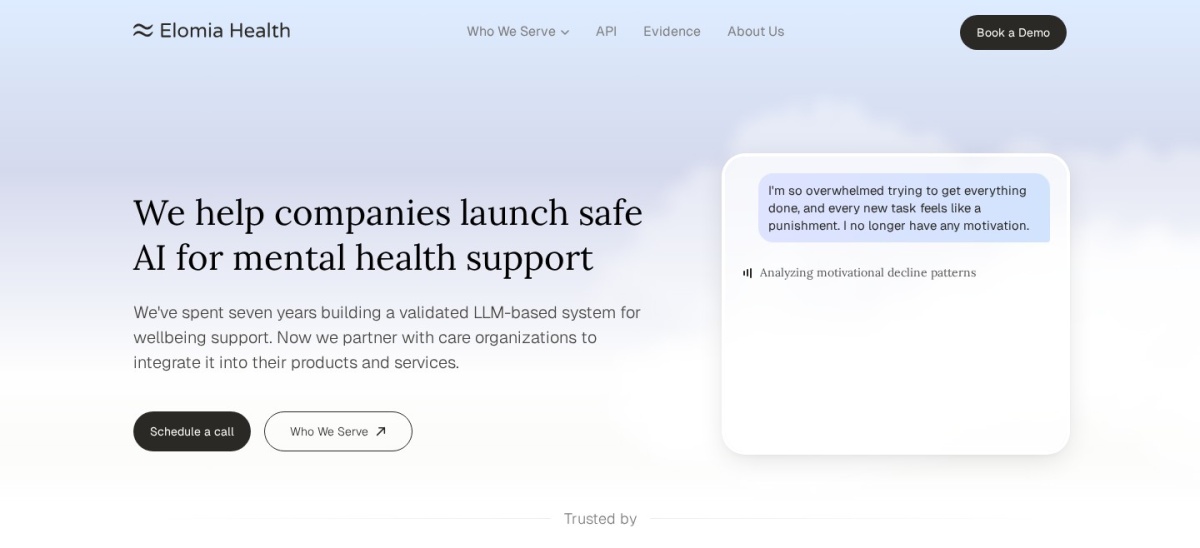
4.5/5on App Store (1,100 reviews, checked Nov 2026)
Paid from$55.99/yr
Best for AI chat in many languages
AI chatYes, CBT-style prompts
Languages32
Free planChat tier, 3-day trial
Crisis buttonOn screen in the app
elomia.com
Elomia homepage, captured Nov 2026.
Elomia is an AI mental health chat app that offers supportive conversation, mood tracking and CBT-style prompts in 32 languages. Its listing states plainly that it provides supportive conversation only and is not a replacement for professional care. It is rated 4.5 out of 5 from 1,100 App Store ratings.
The trade off is pricing. The App Store lists several annual prices, and the Pro yearly plan we found is $55.99, so check the price shown in your app before you pay. It suits people who want to chat in a language other than English.
Every app on this list describes itself as support or self-help, not treatment. An AI chatbot can help you name a feeling, practise a coping skill or keep a habit, but it cannot diagnose, prescribe or judge risk the way a clinician can.
That limit is worth keeping in mind when an app feels convincing. A warm, confident reply is still generated text, and it can be wrong. Treat any advice about medication, diagnosis or safety as a prompt to ask a professional, not as an answer.
If you are in crisis, do not wait for an app to help. Contact a crisis line or emergency services in your area right away, and tell someone near you.
How we chose
We started from the apps people search for when they look for AI therapy: Wysa, Headspace, Finch, MindDoc, Calm, Happify, Replika, Bearable and Elomia. Each one is an established app with a public App Store rating.
Prices and ratings come from each app's US App Store listing, checked on 25 November 2026. Where a listing showed more than one annual price, the list shows the current regular price and the notes name the other figure.
We left out Woebot and Youper, which both closed their consumer apps in 2025 and 2026, and any app without a public rating. No vendor paid for a place, and we do not claim to have used these tools ourselves.
How to choose an AI therapy app
Start with what you need most: a chat, a course, sleep help or a tracker, then try the free tier first.
Decide what kind of help you want. A chatbot suits open-ended talk, a course suits structured learning, and a tracker suits spotting patterns. Pick the format before the brand.
Try the free tier for a week. Most of these apps give you real features for free. Use them daily for a week and keep the one you actually open.
Check the price where you will pay. Annual prices differ between the website and the app store, and some listings show several prices. Read the payment screen before you subscribe.
Know when to get human help. If low mood or anxiety lasts more than two weeks, or daily life gets hard, talk to a doctor or licensed therapist. These apps work best beside professional care, not instead of it.
FAQ
What is the best AI therapy app?
Wysa is the best AI therapy app for most people. Its chatbot offers CBT and DBT exercises, mood tracking and meditations, free to start, with Premium at $99.99 a year. It is rated 4.8 out of 5 from 25,000 App Store ratings.
Are AI therapy apps real therapy?
No. They are support and self-help tools that use therapy techniques such as CBT, but they cannot diagnose, prescribe or replace a licensed therapist. Use them for coping skills and daily support, and get professional help for anything that lasts or gets worse.
Are AI therapy apps free?
Most have a free tier. Wysa, Finch, MindDoc, Happify, Replika, Bearable and Elomia all let you start free, while Headspace and Calm offer trials and limited free content. Paid plans run from $34.99 to $139.99 a year.
Which AI therapy app is best for anxiety?
Wysa is the strongest pick for anxiety, with CBT exercises built for anxious thoughts and a chat that is always available. MindDoc is a good second choice if you prefer structured courses and symptom tracking over chat.
Can I use an AI therapy app instead of a therapist?
No, and none of the apps on this list claims you should. They help with everyday stress, habits and coping skills. If symptoms persist for more than two weeks or affect work, sleep or relationships, talk to a doctor or licensed therapist.
Is what I tell an AI therapy app private?
It depends on the app. Most say chats are private and not linked to your name, but some use anonymized samples to improve their models. Read the privacy policy before sharing anything sensitive, and never share passwords or financial details.
SaaS SEO and WordPress specialist with about 8 years of experience. Rakib compares WordPress plugins, themes, hosting and software using public pricing, documentation and user reviews. See how we rank.