WLWPLegible EditorsLast verified 22 Nov 2026How we rank9 min read
★ Short answer
SeekOut is the best AI sourcing tool for most recruiters, searching 1 billion plus profiles at $149 a month billed yearly and rated 4.5/5 on G2. Pick Juicebox for plain-English search at $99 a month, and hireEZ for outbound sourcing at scale.
How we make this list: we compare pricing pages, product documentation and public user reviews, then re-check every price before each update. No product paid for a place. Disclosure.
SeekOut is the best pick for technical, cleared and diverse talent, with 1 billion plus profiles and 500 contact credits a month.
Juicebox is the fastest way in: a free tier and plain-English search across 800 million profiles from $99 a month.
hireEZ is the outbound pick, with sourcing, screening and sequences in one seat at $494 a month.
Gem adds a recruiting CRM and analytics on top of AI sourcing, from $130 a month billed yearly for startups.
Entry prices run from $49 a month for Apollo Basic to $494 a month for hireEZ Solo. LinkedIn Recruiter Lite starts at $170 a month.
What an AI sourcing tool should do
AI sourcing tools answer one question: who should you contact next? They search profiles across the web, rank people against a job description and, in most cases, find an email or phone number.
The main split is between search tools and all-in-one platforms. Search tools find people fast. Platforms such as hireEZ, Gem and Loxo add outreach sequences and a CRM, so you can run a whole campaign from one place.
Watch the meter. Most tools charge by seat and by contact credits, so the headline monthly price is only part of the cost. Our guide on recruiting on a budget explains how to compare cost per contact.
Data quality decides the result. A tool that searches GitHub, patents and papers finds engineers other tools miss, while LinkedIn Recruiter has the freshest profile data for most roles.
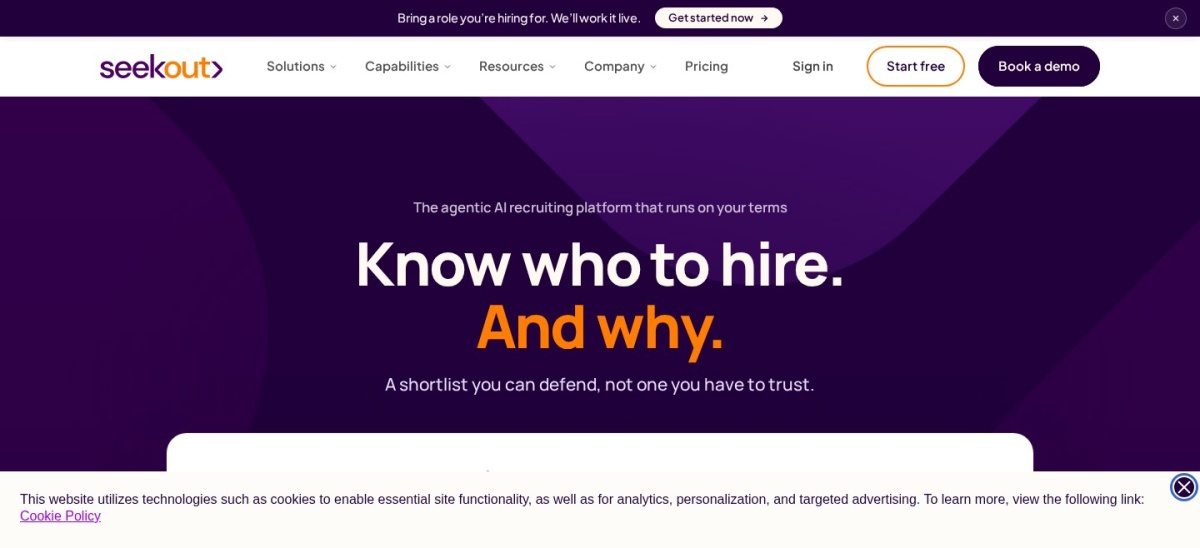
SeekOut is an AI talent search platform that looks past LinkedIn. It searches more than 1 billion profiles from GitHub, patents, academic papers and the open web, with 300-plus power filters and diversity search. Recruit Core includes 3 seats sharing 500 contact credits and 1,000 exports a month.
The trade off is price per seat. Recruit Core costs $149 a month billed yearly, or $179 billed monthly, and diversity filters sit on custom tiers. It suits recruiters hiring technical, cleared or research talent that other tools miss.
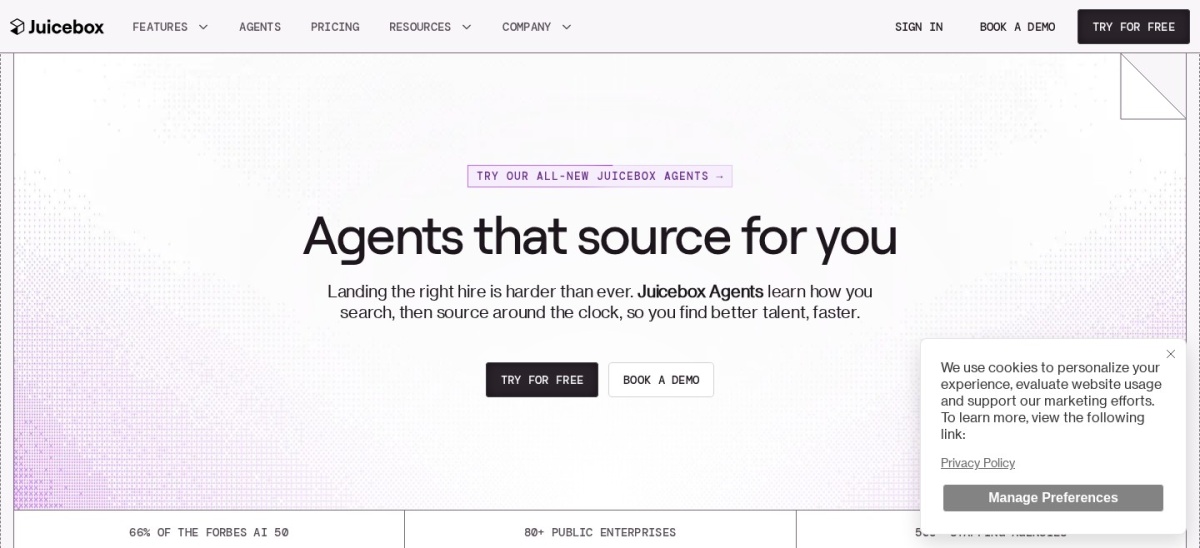
Juicebox is a natural-language search tool that turns plain-language requests into candidate searches through PeopleGPT, so you describe the person you want instead of writing Boolean strings. It searches 800 million profiles from dozens of sources, and Juicebox Agents can shortlist and email candidates on their own.
The trade off is review depth. Juicebox has a small G2 review base, and agents cost $199 each a month on top of the seat. Starter costs $99 a seat a month billed yearly, or $119 monthly. It suits startups and agencies that want to start fast.
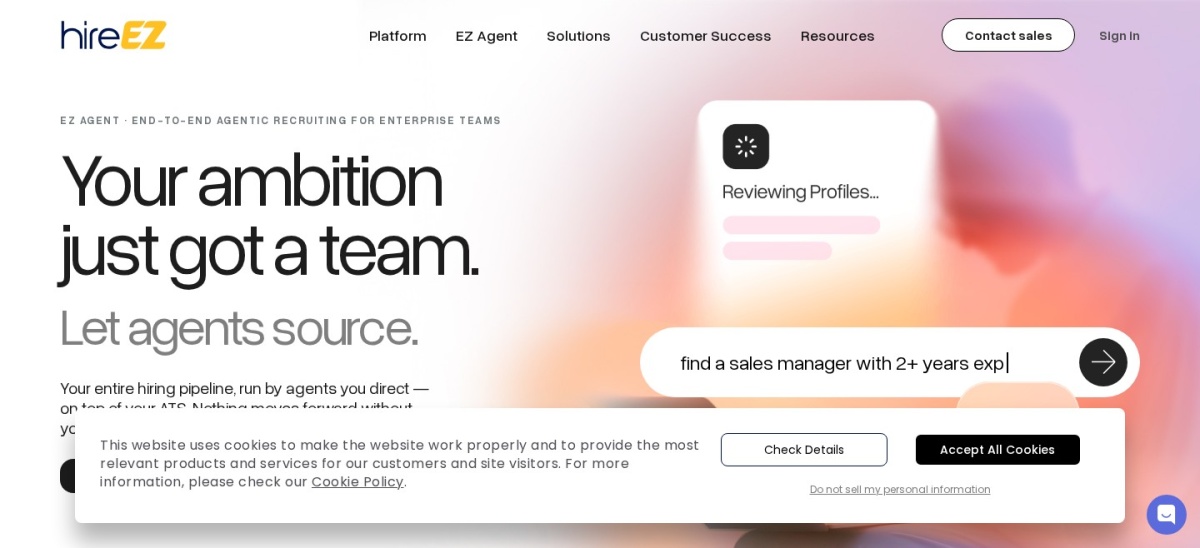
hireEZ is an AI sourcing platform that works on top of your ATS, covering sourcing, screening, outreach and scheduling in one seat. It searches more than 1 billion profiles across 45-plus platforms, ranks candidates with AI and runs drip campaigns, with 40-plus native ATS connections.
The trade off is cost. Solo recruiters start at $494 a month billed yearly, or $549 month to month, after a 7-day trial. It suits teams replacing several point tools with one outbound system.
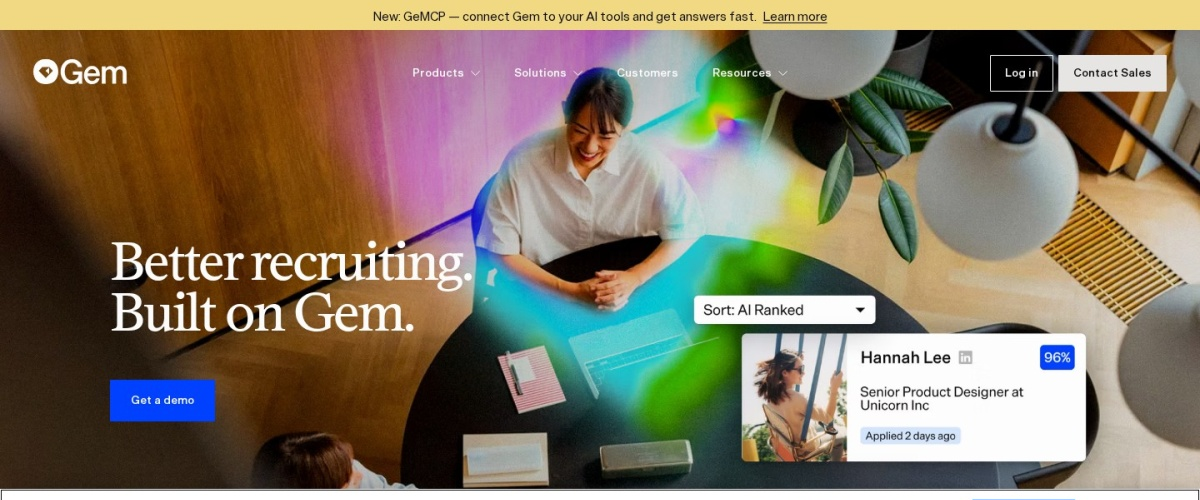
Gem is a recruiting CRM with an AI sourcing agent and its own ATS. It finds candidates, runs email nurture sequences, schedules interviews and reports on pipeline health, so sourcing and follow-up live in one place. The startup program runs from $130 a month billed yearly for companies with 1 to 10 employees.
The trade off is fit. Gem suits in-house teams running sourcing as an outbound programme, not solo sourcers who only need search. It suits teams that want CRM depth and analytics beside the search.
Loxo is an ATS and recruiting CRM built for agencies and search firms, with an 850 million plus profile talent graph inside it. Core includes natural-language AI search, a Chrome extension and email and calendar sync, so a search firm can run a whole assignment without leaving one system.
The trade off is that Core at $149 a user a month billed yearly does not include sourcing; sourcing tiers are quote-only. It suits agencies that want ATS, CRM and sourcing together and can ask for a quote.
Pin is an AI recruiting platform for solo recruiters and small teams. It sources candidates from 850 million plus profiles, ranks them with AI agents and runs multi-channel outreach sequences across email, LinkedIn and SMS, then books interviews on your calendar.
The trade off is review depth. Pin is rated 4.8 out of 5 on G2, but from only 27 reviews. The Solo plan costs $99 a month billed yearly, with a free tier giving 5 contact credits a week. It suits solo recruiters who want an agent-style workflow at a low price.
Fetcher is a done-with-you sourcing service: AI search plus human curation delivers batches of vetted candidates to your inbox on a schedule, with outreach sequencing to engage them. It suits teams that want shortlists without running the search themselves.
The trade off is control. You get curated batches rather than a search box you drive, and the G2 base is small at 28 reviews. Fetcher lists self-serve from $115 a month, while other comparisons list $149 a seat a month, so confirm the price. It suits small in-house teams that want help, not just software.
LinkedIn Recruiter is the default professional network search, with over 1 billion members and the freshest profile data for most roles. Recruiter Lite costs $170 a month per seat, and Corporate plans are quote-based. InMail, saved searches and hiring insights come with the seat.
The trade off is scope. It searches LinkedIn only, so it misses GitHub, papers and the open web that SeekOut and hireEZ cover. It suits teams that live inside LinkedIn and want the most current profiles.
Apollo is a contact database with built-in sequencing and a dialer, holding 265 million plus contacts. Basic costs $49 a user a month billed yearly, with a free plan for limited credits. It suits teams that already know who to contact and need verified emails and phone numbers at scale.
The trade off is that Apollo finds contact data, not candidates. It will not rank people for a role the way SeekOut or Juicebox do. It suits budget teams that pair it with a search tool.
Free plans are real here, but small. Juicebox gives limited searches, Pin gives 5 contact credits a week, and ContactOut-style extensions show a few lookups a day.
Paid plans mostly add contact credits and exports. That is the meter that matters: 500 credits a month is about 25 contacts a working day.
If you hire rarely, a free tier plus LinkedIn may be enough. Our guide on free recruiting tools lists other no-cost options worth pairing with these.
For a desk that hires every week, the cheapest seat is rarely the cheapest hire. Compare cost per contact before you pick.
How we chose
We started from the AI sourcing tools recruiters name most often in 2026 comparisons, then kept those with a published price or a free plan.
Prices come from each vendor's pricing page or a dated comparison that read it, checked on 22 November 2026. Ratings come from G2 on the same day. Where a vendor publishes no price, the list says so.
We left out tools that only manage applicants and never find candidates. No vendor paid for a place. This list is based on pricing, docs and reviews, not on using the tools ourselves.
How to choose an AI sourcing tool
Start with the roles you hire for most, then count the contacts you actually need each month.
List your hardest roles. Technical, cleared and research roles need a tool that searches GitHub, patents and papers. Standard office roles do not.
Count your monthly contacts. Check how many emails and phone numbers you reveal each month. A 500-credit plan covers about 25 contacts a working day.
Try the free tier on a live role. Search for a role you are hiring for now. If the top 10 results are wrong, the tool is wrong for you.
Check your ATS connection. Make sure the tool syncs with your ATS before you pay, or exports will become a weekly chore.
FAQ
What is the best AI sourcing tool?
SeekOut is the best pick for most recruiters. It searches 1 billion plus profiles, is rated 4.5 out of 5 on G2 from 797 reviews, and Recruit Core costs $149 a month billed yearly.
What is the cheapest AI sourcing tool?
Juicebox and Pin are the cheapest published options at $99 a month billed yearly, and Juicebox has a free tier. Apollo Basic is cheaper still at $49 a month, but it is a contact database, not a sourcing search.
Is there a free AI sourcing tool?
Yes. Juicebox has a free plan with limited searches, Pin gives 5 contact credits a week free, and Apollo has a free plan with limited credits.
How much does SeekOut cost?
SeekOut Recruit Core costs $149 a month billed yearly, or $179 billed monthly. The plan includes 3 seats sharing 500 contact credits and 1,000 exports a month, with a 14-day trial.
Do AI sourcing tools replace LinkedIn Recruiter?
Not always. They search beyond LinkedIn, across GitHub, papers and the open web, but LinkedIn still has the freshest profile data for many roles. Most teams use both.
What are contact credits?
A contact credit is what a tool charges each time it reveals an email or phone number. Juicebox Starter and SeekOut Core both include 500 credits a month, so check your monthly volume first.