Best AI Platforms for Industrial Engineering in 2026: 9 Tools Compared
WLWPLegible EditorsLast verified 24 Nov 2026How we rank14 min read
★ Short answer
Siemens Insights Hub is the best AI platform for industrial engineering for most manufacturers: it covers OEE, energy and asset health in one place and is rated 4.5 out of 5 on G2. Pick IBM Maximo for asset-heavy fleets, or Tulip if your operators need AI on the shop floor.
How we make this list: we compare pricing pages, product documentation and public user reviews, then re-check every price before each update. No product paid for a place. Disclosure.
Siemens Insights Hub leads on breadth: OEE, energy, asset health and quality in one platform, with a Gartner Leader rating for 2026.
IBM Maximo has the largest review base here at 651 G2 reviews, and its entry package starts under $40,000 a year.
Tulip is the only tool with published per-interface pricing, but its 10-interface minimum means $1,000 a month to start.
Six of the nine tools publish no price at all, so expect a sales quote for Siemens, AVEVA, Augury, Seeq, C3 AI and Braincube.
Databricks is the cheapest way in, with a free edition, but it is a general data platform that needs data engineers to run well.
What an AI platform for industrial engineering should cover
Industrial engineering is about flow: keeping lines running, cutting waste and hitting quality targets. An AI platform for this work should connect to machines and sensors, then turn that data into actions a plant can take.
Look for three things. First, predictive maintenance that flags a failing bearing before it stops a line. Second, process optimization that adjusts setpoints as conditions change. Third, a way for engineers and operators to ask questions and get answers without writing code.
Most platforms connect to historians and sensors you already have. If you want the general idea of wiring a model into existing software, our guide on connecting an AI model to WordPress walks through it. The models are only as good as that data, so a plant with patchy sensors should fix data collection before buying AI.
The 9 best AI platforms for industrial engineering
01
Siemens Insights Hub
4.5/5on G2 (67 reviews, checked Nov 2026)
PricingCustom/yr
Best AI platform for industrial engineering overall
Cheapest paid planQuote only
Free planNo
AI focusOEE, energy, asset health
DeploymentCloud
siemens.com
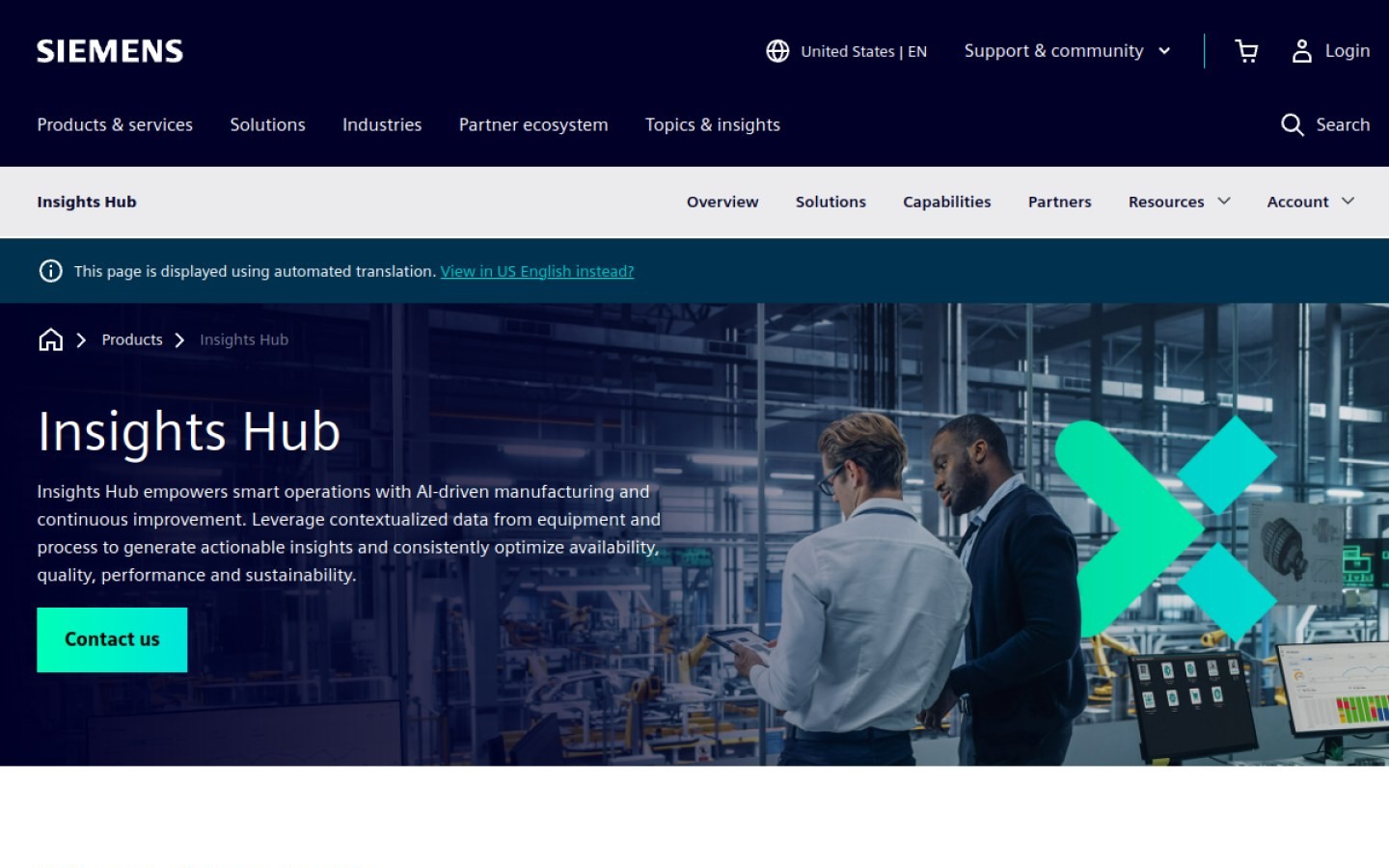
Siemens Insights Hub homepage, captured Nov 2026.
Siemens Insights Hub is an AI platform for manufacturing that turns machine and process data into live insight. It auto-measures OEE, predicts equipment health and quality, and adds a Production Copilot that answers questions in plain language. Gartner named it a Leader in its 2026 Global Industrial AIoT Platforms quadrant, and it is rated 4.5 out of 5 on G2 from 67 reviews.
The trade off is pricing. Siemens publishes no list price for Insights Hub, so budgeting means a sales conversation and a quote based on plants, assets and data volume. It suits manufacturers that already run Siemens equipment or want one platform for OEE, energy and maintenance, rather than a point tool for a single line.
What we like
Gartner Leader in 2026 industrial AIoT quadrant
Covers OEE, energy, asset health and quality in one platform
Production Copilot answers questions in plain language
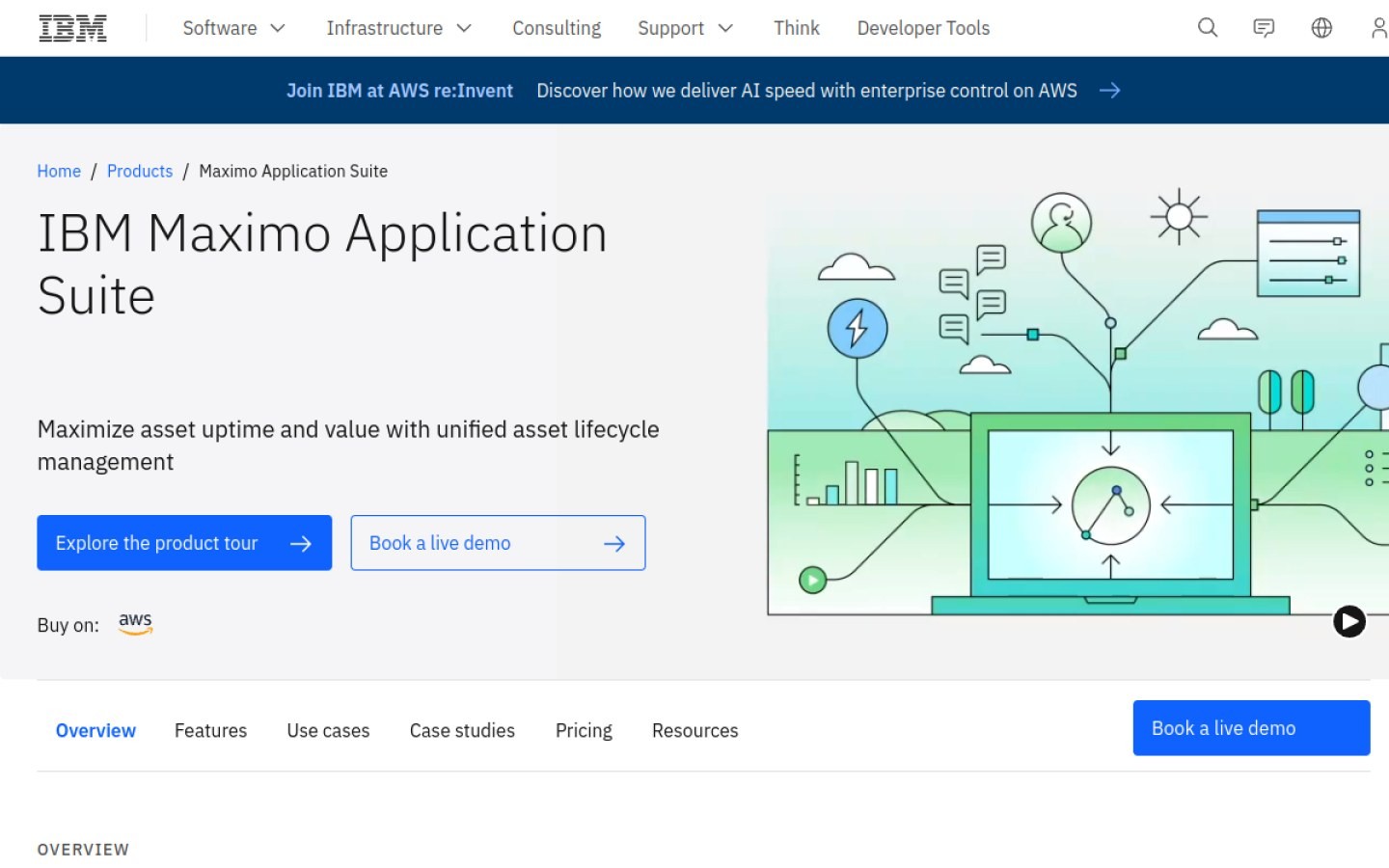
IBM Maximo Application Suite homepage, captured Nov 2026.
IBM Maximo Application Suite is a unified asset management platform with AI built in for maintenance, reliability and monitoring. It covers work orders, health scoring, visual inspection and remote monitoring in one suite, and IBM prices its Maintenance Essentials package from under $40,000 a year. It is rated 4.4 out of 5 on G2 from 651 reviews.
The trade off is scale and cost. The entry package covers up to 25 users and one environment on 150 AppPoints, and G2 lists $3,150 a month, so it is priced for plants and fleets rather than a single workshop. A guided trial of Manage and Health is available. It suits large asset-heavy operations that need maintenance, monitoring and reliability in one contract.
What we like
Largest review base here, 651 G2 reviews
Maintenance, monitoring and reliability in one suite
Guided trial of Manage and Health
Under-$40,000 entry package published
Watch out for
Entry package limited to 25 users and one environment
Priced for large asset-heavy operations
Entry package under $40,000 a year for up to 25 usersVisit ibm.com
03
AVEVA PI System
4.6/5on G2 (21 reviews, checked Nov 2026)
PricingCustom/yr
Best for process data
Cheapest paid planQuote only
Free planNo
AI focusOperations data, analytics
DeploymentOn-premises + cloud
aveva.com
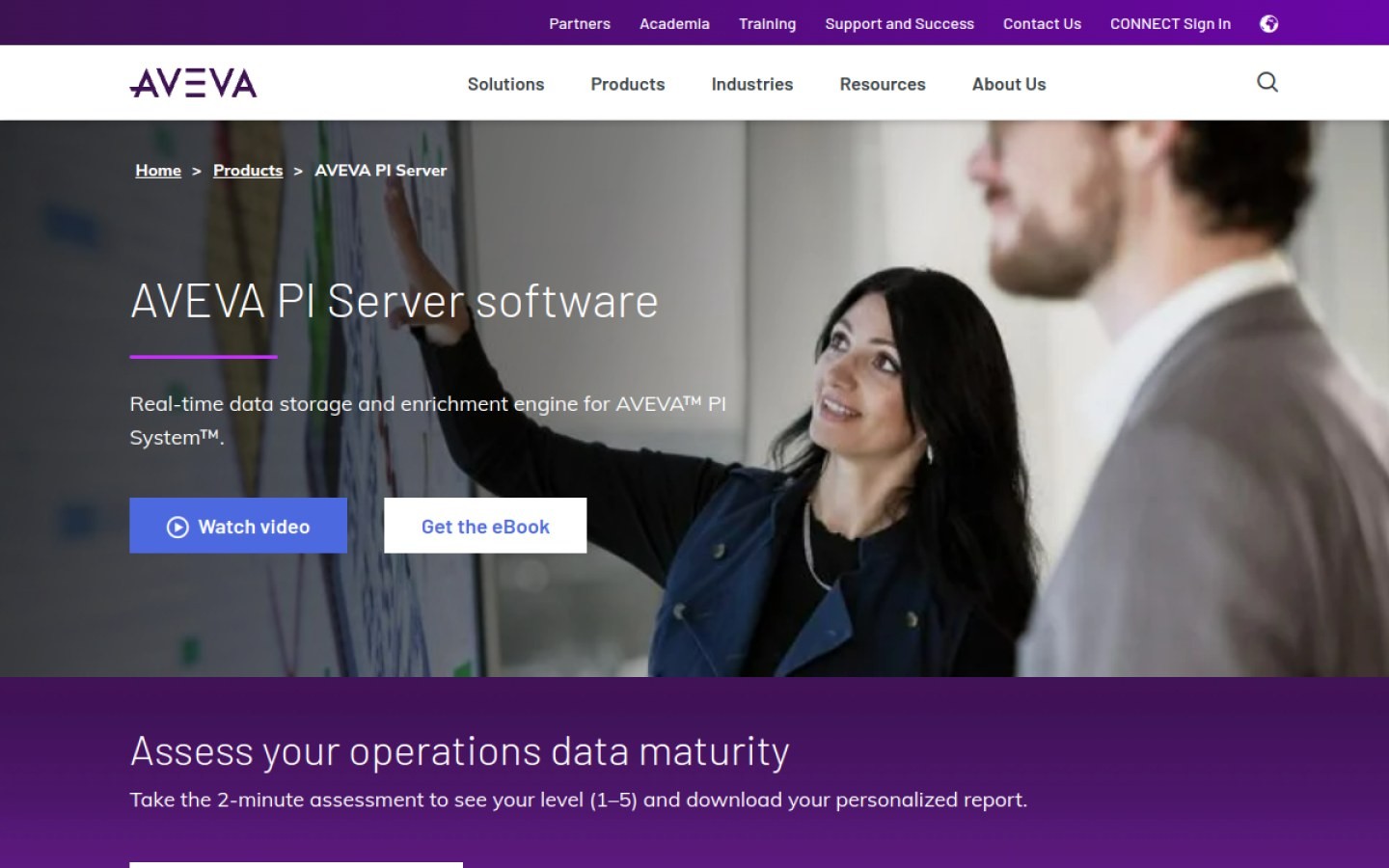
AVEVA PI System homepage, captured Nov 2026.
AVEVA PI System is the industry-standard platform for real-time operations data, built around PI Server. It collects, stores and enriches sensor and process data, and plants use it to track production, energy and equipment health. It runs in 25 of the top 25 pharmaceutical companies and more than 1,000 power utilities, and it is rated 4.6 out of 5 on G2 from 21 reviews.
The trade off is that PI System is a data platform first, not an AI app. Its AI value comes from the models and applications built on top of its data, and AVEVA sells it through Flex credits with no public list price. It suits plants that need one trusted source of operations data before adding analytics, especially in pharma, power and mining.
What we like
Industry-standard operations data platform
Used by 25 of the top 25 pharma companies
Customer case: Kellogg's cut critical control points 64%
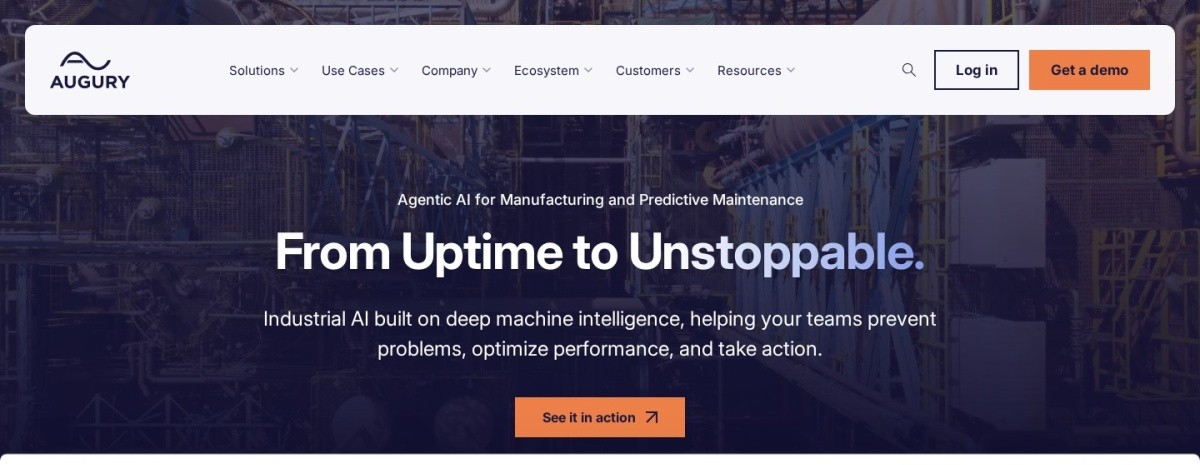
Augury is an Industrial AI platform for predictive maintenance and manufacturing performance. Its Halo sensors watch vibration, temperature and other signals, and its context graph ties machine health to production outcomes. A Forrester study put its ROI at 310 percent, and it is rated 4.6 out of 5 on G2 from 34 reviews.
The trade off is scope. Augury is strongest where machine health drives uptime, and it publishes no list price, so costs come from a quote. It suits manufacturers with large fleets of rotating equipment who want alerts their technicians can act on, rather than a general analytics platform.
What we like
310% ROI in a Forrester study
Halo sensors plus a context graph for machine health
Analyst support from CAT II/III vibration specialists
Seeq is an analytics platform for process data, built for engineers who need answers from time-series data fast. Its Seeq AI and Agent Q tools help find causes, predict issues and share findings, and LNS Research names it a leader. It is rated 4.6 out of 5 on G2 from 150 reviews.
The trade off is pricing and focus. Seeq publishes no price list and its pricing page is gone, so costs come from a sales quote, though G2 shows a vendor-listed Basic plan at $1,200 a year. It suits process engineers in oil and gas, pharma and food who live in time-series data, rather than teams looking for a maintenance app.
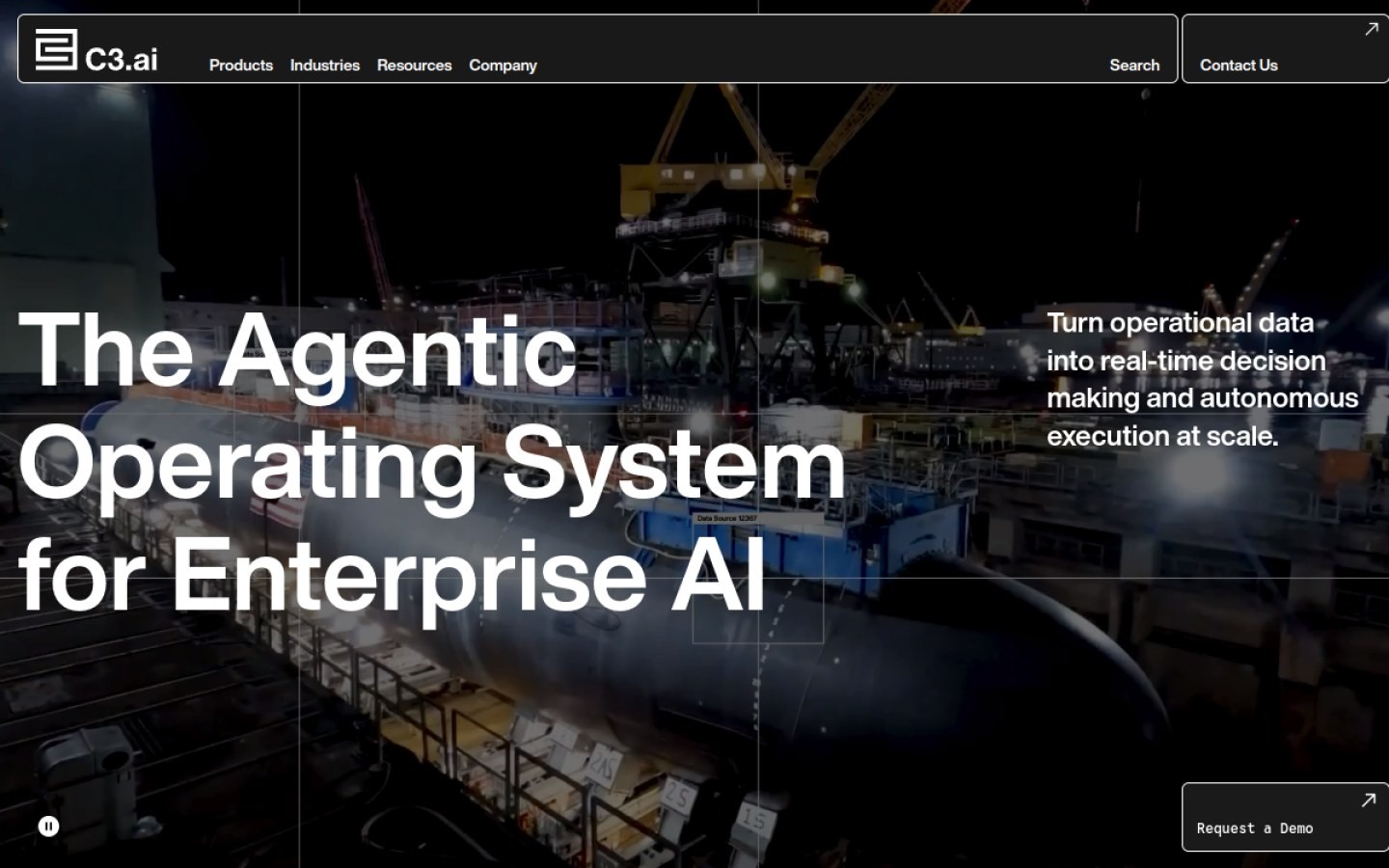
C3 Agentic AI Platform homepage, captured Nov 2026.
C3 Agentic AI Platform is an enterprise AI platform for industrial operations, with ready-built applications for reliability, production scheduling, process optimization and energy management. Dow runs more than 500 of its AI models across 50-plus steam cracker furnaces, and it is rated 4.4 out of 5 on G2 from 26 reviews.
The trade off is that C3 AI is built for large enterprises, with quote-only pricing and deployments sized for whole plants or fleets. It suits companies that can fund a platform roll-out and want many AI applications on one system, rather than a single team looking for one predictive maintenance tool.
What we like
Ready-built apps for reliability, scheduling and energy
Dow and Holcim run it at plant scale
Agentic AI across the platform
Watch out for
Quote-only pricing for large enterprises
Heavyweight for a single-team project
Quote-only; built for large enterprisesVisit c3.ai
07
Tulip
4.5/5on G2 (38 reviews, checked Nov 2026)
Starts at$100/interface/mo
Best for the shop floor
Cheapest paid planEssentials, $100/interface/mo
Free planNo
AI focusFrontline AI Actions
DeploymentCloud
tulip.co
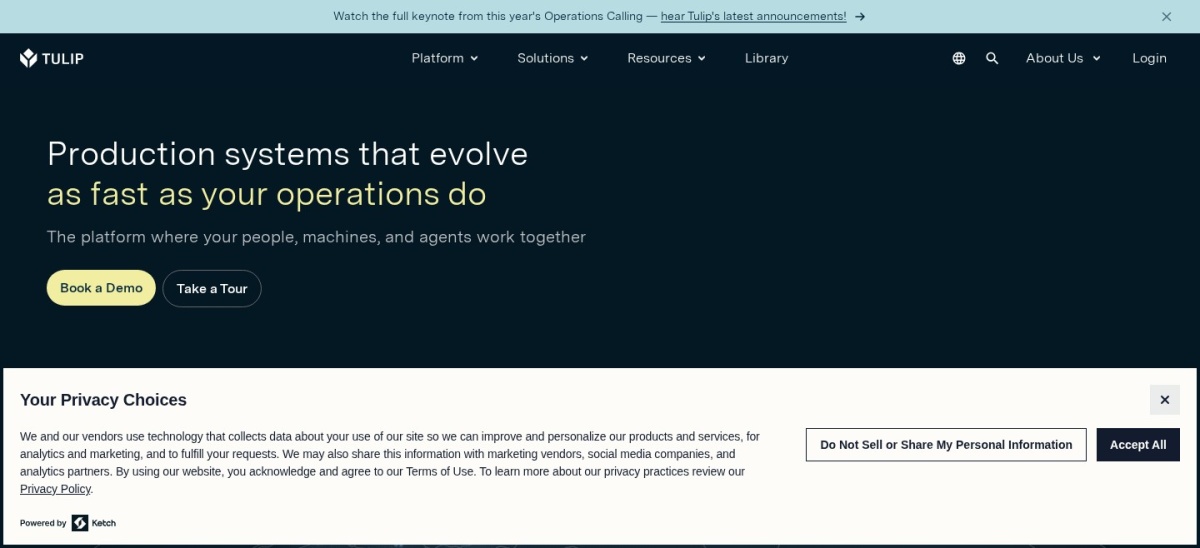
Tulip homepage, captured Nov 2026.
Tulip is a frontline operations platform that brings AI to the shop floor. It builds no-code apps for production, quality and maintenance, and its AI Actions automate tasks inside those apps. The Essentials plan starts at $100 a month per interface, and it is rated 4.5 out of 5 on G2 from 38 reviews.
The trade off is the entry cost. Essentials needs a 10-interface minimum, so the real starting price is $1,000 a month billed annually, and the cheapest plan caps AI Actions at 250 a month. It suits plants that want operators, machines and AI working in one system, rather than a back-office analytics project.
What we like
No-code apps operators actually use on the floor
AI Actions built into production apps
Published per-interface pricing
Watch out for
10-interface minimum means $1,000 a month to start
Cheapest plan caps AI Actions at 250 a month
10-interface minimum means $1,000 a month to startVisit tulip.co
08
Databricks
4.6/5on G2 (1421 reviews, checked Nov 2026)
PricingUsage-based/mo
Best for building your own models
Cheapest paid planUsage-based, from $0.15/DBU
Free planYes, non-commercial
AI focusData engineering, model building
DeploymentCloud
databricks.com
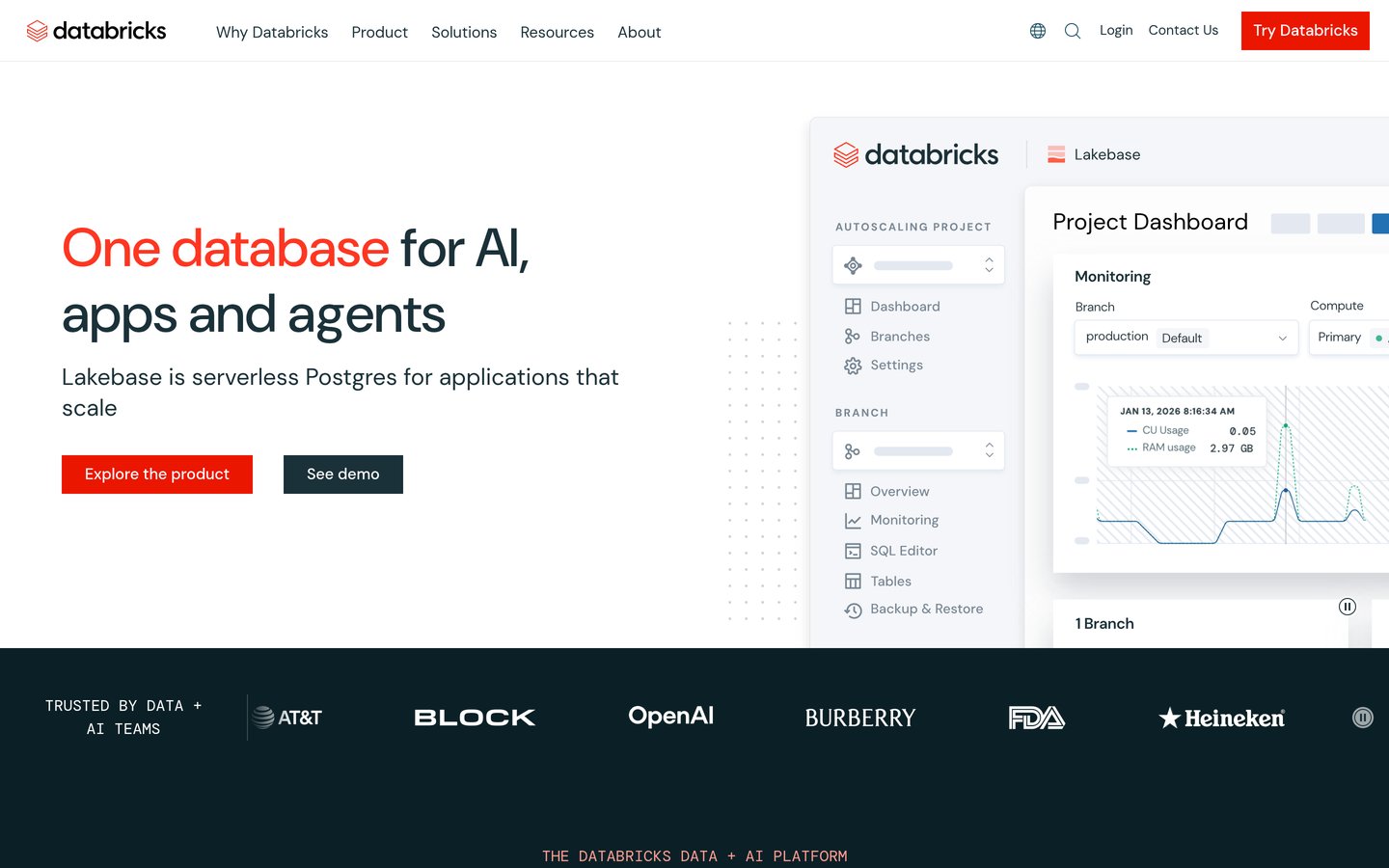
Databricks homepage, captured Nov 2026.
Databricks is a data and AI platform that industrial teams use to build models on plant and sensor data. It combines data engineering, warehousing and AI on one lakehouse, with a free edition for non-commercial use and a 14-day trial. It is rated 4.6 out of 5 on G2 from 1,421 reviews.
The trade off is that Databricks is a general platform, not an industrial app. Pricing is usage-based from $0.15 per DBU for data engineering, so costs depend on how much compute your models use, and teams need data engineers to run it well. It suits companies that already centralize plant data and want to build their own AI on it.
What we like
Free edition for non-commercial use
One lakehouse for data engineering, warehousing and AI
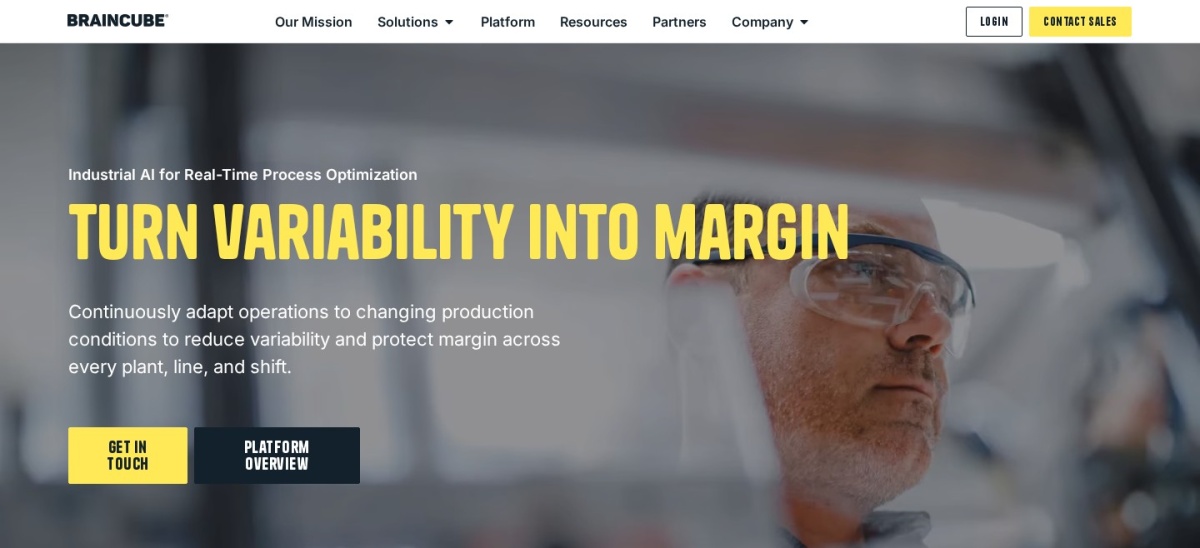
Braincube is an Industrial AI platform for real-time process optimization. It continuously adapts operating targets as production conditions change, using ready-made industry apps that run on the edge or in the cloud. It is rated 4.3 out of 5 on G2 from 6 reviews.
The trade off is evidence. Braincube publishes no price list, so costs come from a quote, and its G2 base is small at 6 reviews, though Gartner Peer Insights carries about 85 reviews. It suits manufacturers who want continuous process optimization without a big in-house data science team.
Six of the nine platforms in this list publish no price. That is normal for industrial software, where the price depends on the number of plants, assets and data streams.
Ask vendors for the same scope when you compare quotes: number of sites, number of assets, data volume and who does the implementation. A quote that leaves out implementation is not comparable to one that includes it.
Tulip and Databricks are the exceptions here. Tulip lists per-interface prices, and Databricks lists per-DBU rates, so you can estimate a starting cost before you talk to sales.
How we chose
We started from the industrial AI platforms with the largest review bases on G2 and the widest use in manufacturing, then kept nine that cover asset health, process data, frontline operations and general data platforms.
Prices come from each vendor's pricing page, checked on 24 November 2026. Ratings and review counts come from G2 on the same day. Where a vendor shows a sale, the list shows the regular price. Where a vendor publishes no price, the list says so.
We left out tools with almost no reviews or no clear industrial focus. No vendor paid for a place, and we do not claim hands-on testing for this list.
How to choose an AI platform for industrial engineering
Match the platform to the problem on your worst line, then check price and data needs before you sign.
Start with your worst line, not the whole plant. Pick the line with the most downtime or scrap and check which tools cover that problem. A predictive maintenance tool helps a line that stops; a process optimizer helps a line that drifts.
Check what data the tool needs. Most of these platforms need historian or sensor data to work. If your plant data is patchy, fix collection first, or pick a tool with its own sensors, such as Augury's Halo sensors.
Get quotes on the same scope. Six of these tools are quote-only. Ask each vendor for the same number of sites, assets and users so the quotes compare fairly.
Trial it on one line. Run a pilot on one line for a few weeks and measure downtime, scrap or energy before you roll out plant-wide.
FAQ
What is the best AI platform for industrial engineering?
Siemens Insights Hub is the best pick for most manufacturers. It covers OEE, energy, asset health and quality in one platform, is named a Gartner Leader for 2026, and is rated 4.5 out of 5 on G2 from 67 reviews.
How much does industrial AI software cost?
It varies widely. Tulip starts at $100 a month per interface with a 10-interface minimum, IBM Maximo's entry package starts under $40,000 a year, and six of the nine tools in this list publish no price at all, so you need a quote.
Is there a free AI platform for industrial engineering?
Databricks has a free edition for non-commercial use, and IBM Maximo offers a guided trial. The other tools here have no free plan, though most offer a demo.
What is the difference between predictive maintenance and process optimization?
Predictive maintenance flags equipment that is about to fail, so you can fix it before it stops a line. Process optimization adjusts running conditions, such as temperatures and setpoints, to cut waste and protect quality while the line runs.
Do I need sensors to use an AI platform?
Most platforms use data from sensors and historians you already have. Augury sells its own Halo sensors, and Braincube can run on the edge, but a plant with patchy data should fix collection before buying AI.
Which platform is best for a small plant?
Tulip is the most approachable for a single plant, with published pricing and no-code apps for operators. Databricks is the cheapest way to start building models, but it needs data engineers to run well.