Best AI Optimization Platforms for Analytics Depth in 2026: 9 Tools Compared
WLWPLegible EditorsLast verified 22 Nov 2026How we rank13 min read
★ Short answer
Scrunch is the best AI optimization platform for analytics depth, tracking 125 prompts across 4 AI engines with hallucination detection and site audits for $250 a month. Peec AI is the best value at $95 a month, and Otterly is the cheapest entry at $29 a month.
How we make this list: we compare pricing pages, product documentation and public user reviews, then re-check every price before each update. No product paid for a place. Disclosure.
Scrunch goes deepest for most teams: 125 prompts, 4 engines, hallucination detection and site audits for $250 a month.
Goodie is the only tool here that ties AI visibility to revenue, but Core starts at $295 a month billed annually.
Peec AI gives the best value depth: daily tracking, sentiment and source-gap data for $95 a month.
Profound and Brandlight are enterprise-first: Profound's brand plans are custom-priced, and Brandlight publishes no price at all.
Otterly is the cheapest way in at $29 a month, but Gemini, AI Mode and Claude cost extra on every plan.
SE Ranking, Semrush and Ahrefs add AI visibility to SEO suites you may already pay for, with tight prompt caps at entry level.
What analytics depth means in an AI optimization platform
Analytics depth is not the number of engines alone. It is how far the data goes: prompt-level tracking, citation sources, sentiment, share of voice, competitor benchmarks and what AI crawlers actually fetch from your site. A tool that only counts mentions tells you far less than one that shows which pages get cited and why.
Most tools in this list track prompts they run themselves, daily or every few days. Ahrefs is the exception: Brand Radar starts from a database of search-backed prompts, so it shows demand you did not think to ask about. Our guide on AI SEO plugins for WordPress covers the WordPress side of the same job.
Prices hide traps. Semrush charges per domain, Ahrefs charges per AI platform, and several tools charge extra for engines such as Claude and Gemini. Check what the entry price actually includes before comparing monthly figures.
Free trials matter here because the dashboards differ so much. Scrunch, Goodie, Peec, Profound, Otterly and SE Ranking all offer a trial of 7 to 14 days. Brandlight starts with a paid pilot instead, and the Semrush AI Toolkit has no free trial.
The 9 best AI optimization platforms for analytics depth
01
Scrunch
4.6/5on G2 (74 reviews, checked Nov 2026)
Starts at$250/mo
Best analytics depth overall
AI engines on Core4
Tracked prompts125
Free trial7 days
Cheapest planCore, $250/mo
scrunch.com
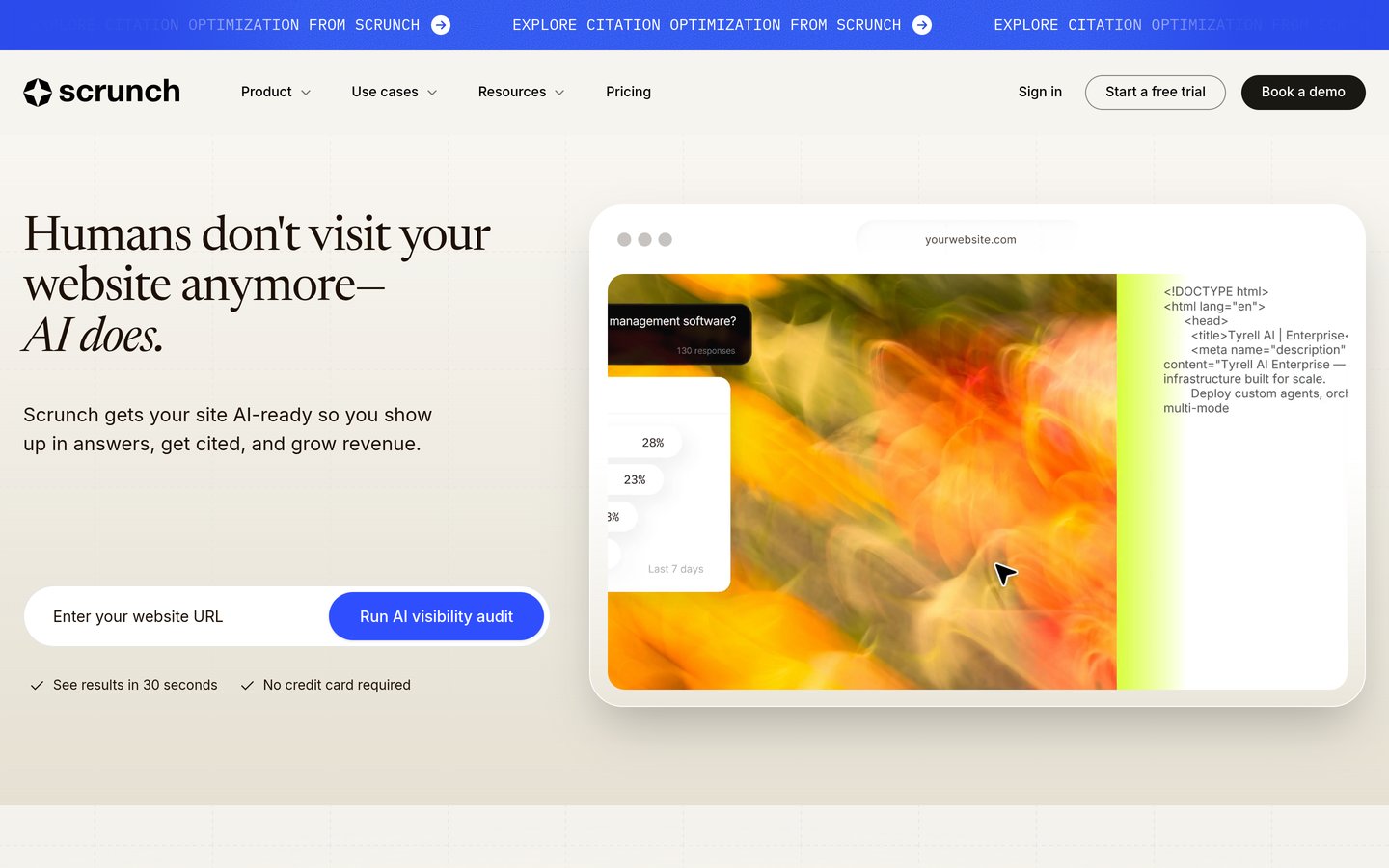
Scrunch homepage, captured Nov 2026.
Scrunch is an AI visibility platform that tracks how AI engines describe your brand, with the deepest self-serve analytics in this list. Core covers 125 prompts across ChatGPT, Perplexity, Google AI Overviews and Copilot, with citation tracking, persona-based monitoring, hallucination detection and 5 site audits a month.
The trade off is the engine cap. Claude, Gemini, Google AI Mode, Meta AI and Grok need the custom-priced Enterprise plan, as do the API, MCP access and the Agent Experience Platform. It suits mid-size brands and agencies that want deep analytics without an enterprise sales process.
What we like
Hallucination detection no rival in this list offers
Citation tracking plus site audits in one plan
Persona-based monitoring shows how buyers see you
7-day free trial with no sales call
Watch out for
Claude, Gemini and AI Mode need Enterprise
Core covers only 4 engines and 125 prompts
Refreshes every 72 hours after the first 14 days
Enterprise adds 9 engines, API access and the Agent Experience PlatformVisit scrunch.com
02
Goodie
4.9/5on G2 (11 reviews, checked Nov 2026)
Starts at$295/mo
Best for tying AI visibility to revenue
AI engines on Core5
Tracked prompts110
Optimization actions50/mo
Cheapest planCore, $295/mo
higoodie.com
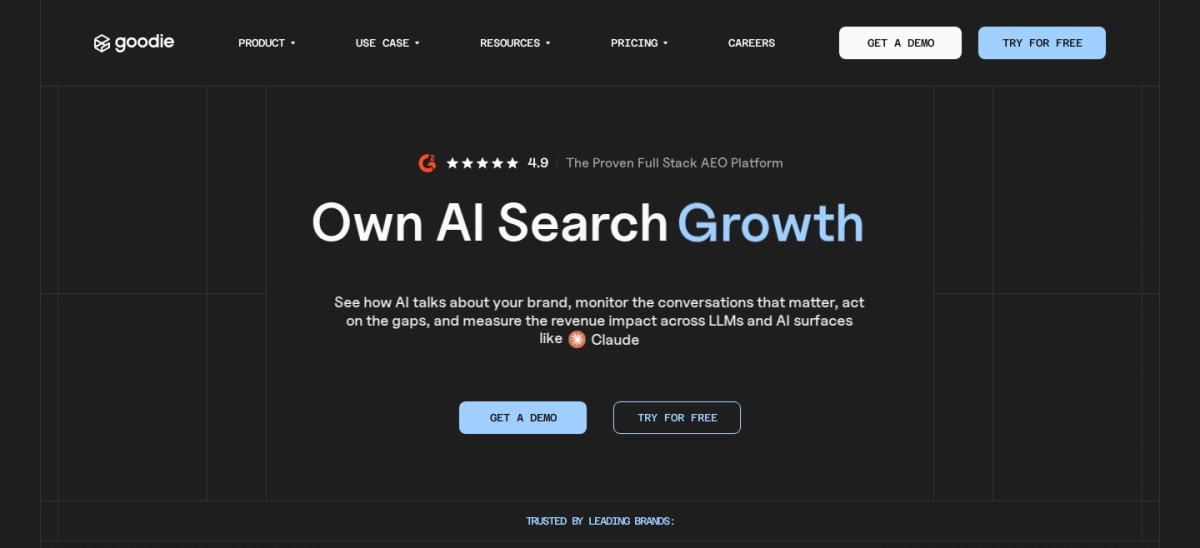
Goodie homepage, captured Nov 2026.
Goodie is an AI search platform that turns visibility data into ranked optimization actions and ties results to revenue. Core tracks 110 prompts across 5 engines, ChatGPT, AI Overviews, Perplexity, AI Mode and Copilot, with 50 optimization actions a month, agent analytics and unlimited seats.
The trade off is price. Core costs $295 a month billed annually, the highest self-serve entry here, and Gemini needs the $999 Pro plan while Claude waits for Enterprise. It suits mid-market brand teams that must show AI search is moving pipeline, not just mentions.
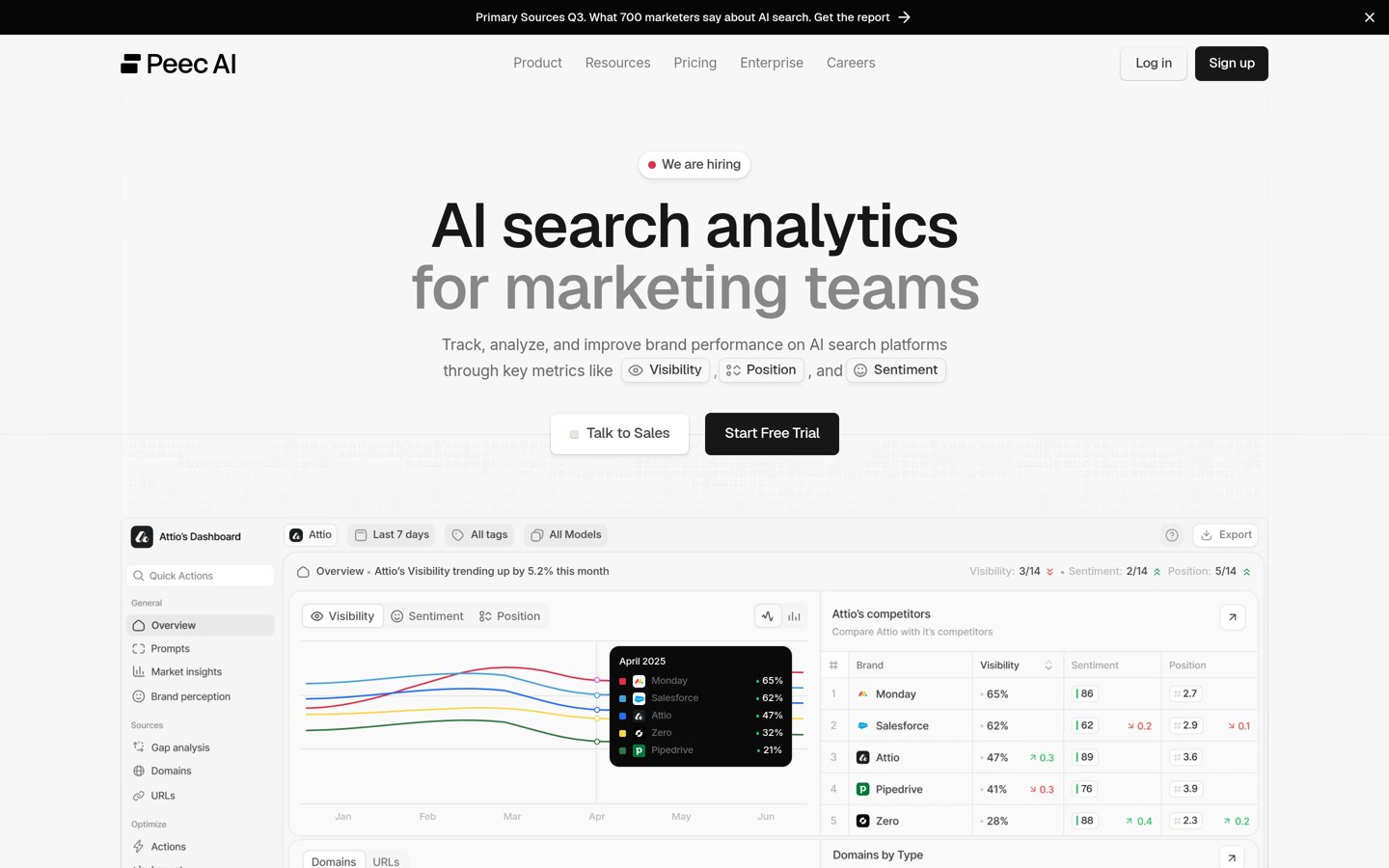
Peec AI is a Berlin-based analytics platform that tracks brand visibility, position and sentiment across AI search. Starter covers 50 prompts on 3 of 8 models, with daily tracking, unlimited users, competitor benchmarking, source-gap analysis and agent analytics from CDN log data.
The trade off is the three-model cap. Every self-serve plan tracks only 3 models at a time, and extra models cost $30 a month each on Starter. It suits data-led in-house teams that want daily visibility, sentiment and citation data without paying for content tools.
What we like
Daily tracking with visibility, position and sentiment
Unlimited users on every plan
Source-gap and competitor analysis included
Looker Studio connector on Advanced
Watch out for
Only 3 models tracked at a time
Extra models cost $30 a month each on Starter
Recommendations can lack clear next steps
Pro adds 150 prompts, API access and 2 projectsVisit peec.ai
04
Profound
4.5/5on G2 (1,133 reviews, checked Nov 2026)
Starts at$99/mo
Best enterprise analytics depth
AI enginesUp to 9
Free trial7 days
Brand plansCustom
Agency base$99/mo
tryprofound.com
Profound homepage, captured Nov 2026.
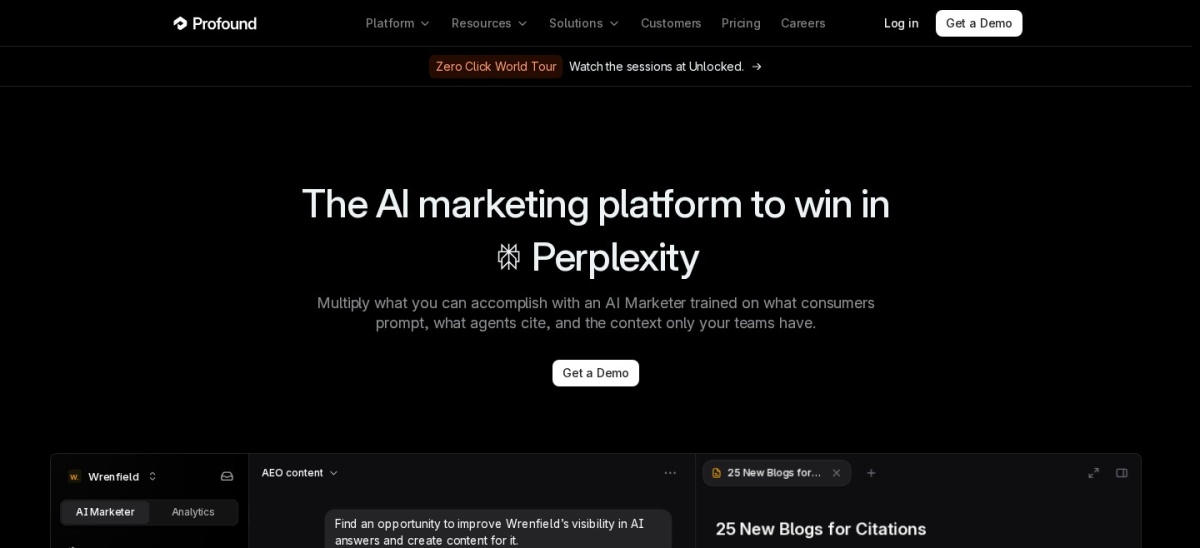
Profound is an enterprise AI marketing platform that tracks brand answers across up to 9 engines, with prompt-volume data, agent analytics and AI Marketer agents that draft content from what the data shows. Agencies can start self-serve on Agency Growth at $99 a month plus $399 per client workspace.
The trade off is access for brands. The old $99 and $399 brand plans were retired in September 2026, so brands now get a free 7-day trial and then a custom Enterprise contract. It suits large brands and agencies that need the deepest engine coverage and agent workflows.
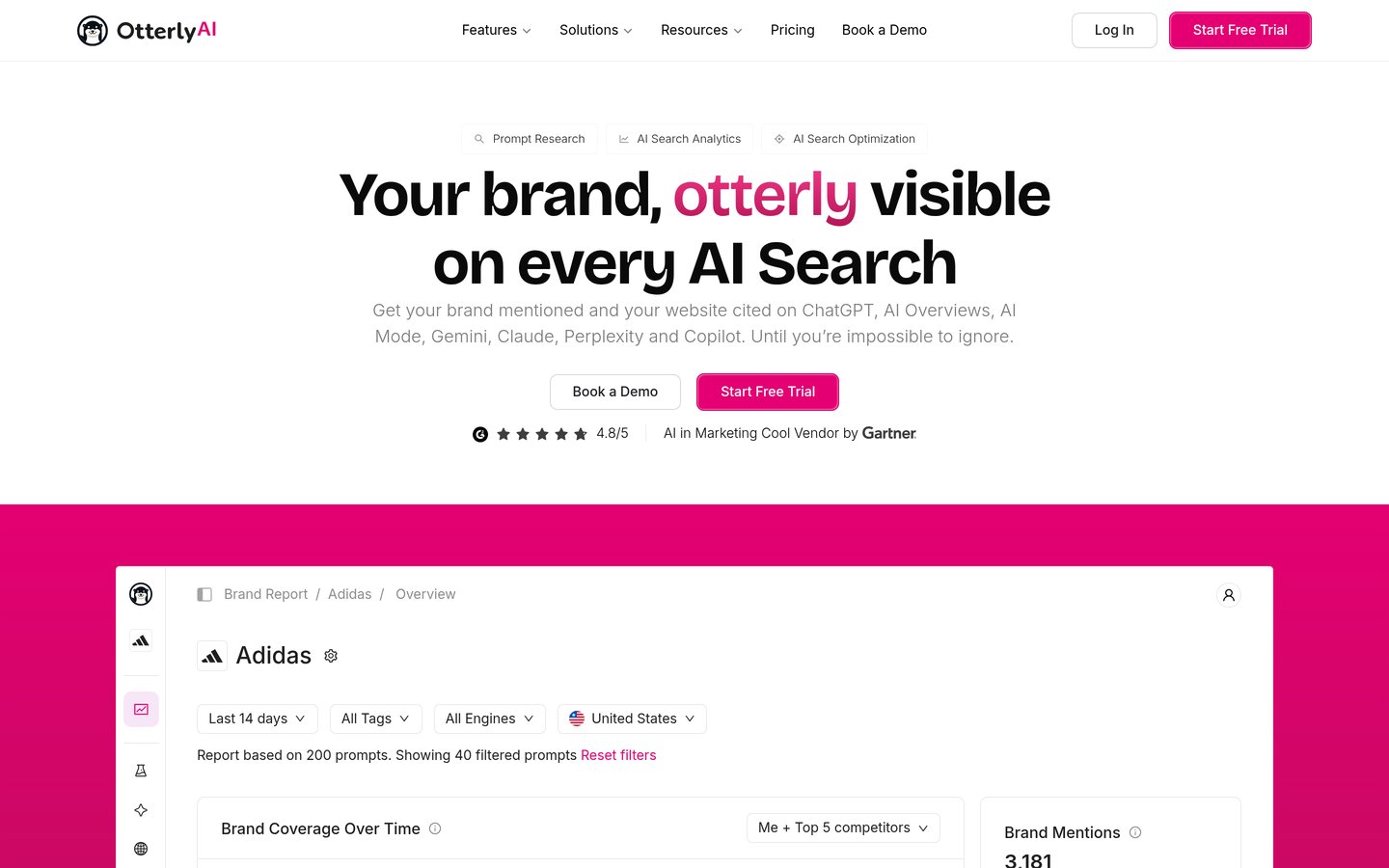
Otterly AI is the cheapest credible AI visibility tracker in this list. Lite costs $29 a month for 15 prompts across ChatGPT, Google AI Overviews, Perplexity and Copilot, with unlimited team members, daily tracking, sentiment data and a GEO audit that finds page-level problems.
The trade off is coverage at the entry price. Gemini, Google AI Mode and Claude are paid add-ons on every plan, and the jump from Lite to Standard is $189 a month for 100 prompts. It suits freelancers and small teams tracking one brand on the four main engines.
Brandlight is an enterprise AI visibility platform built for Fortune 500 brand portfolios. It monitors mentions, sentiment, bias and cited sources across 11 AI engines, with multi-brand, multi-region reporting, publisher influence analysis and SOC 2 Type II compliance.
The trade off is that nothing is self-serve. There is no published price, no free trial, and most engagements start with a paid three-month pilot and two to four weeks of onboarding. It suits global enterprises with procurement muscle and many brands to watch.
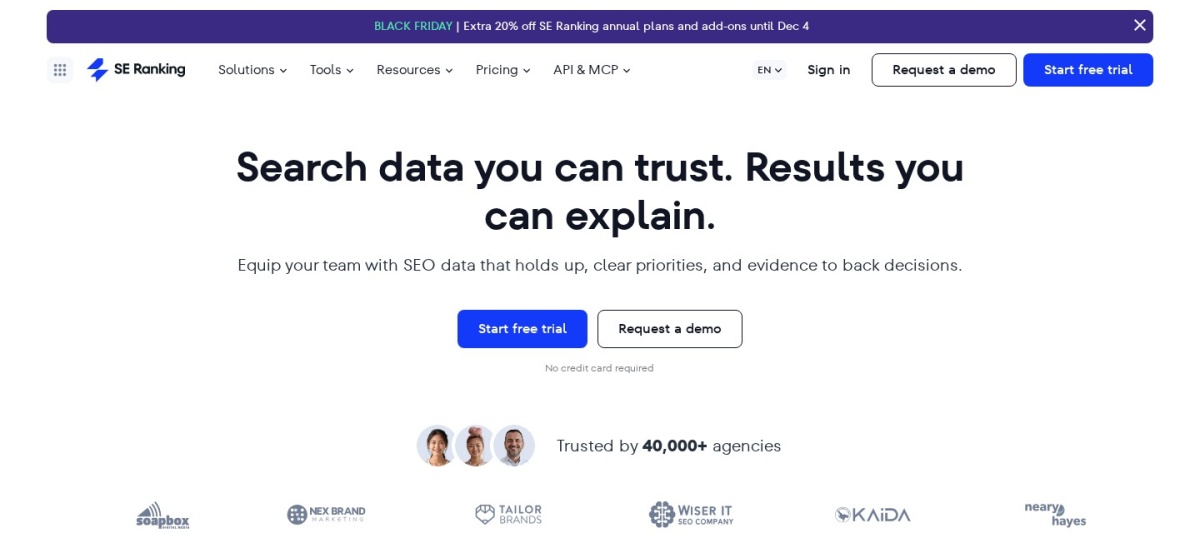
SE Ranking is an all-in-one SEO platform whose Core plan includes AI visibility tracking. Core costs $129 a month and tracks 25 AI prompts a day across 5 engines, with competitor research, source and coverage analysis, plus rank tracking, backlinks and site audits in the same account.
The trade off is prompt volume. Twenty-five prompts a day is thin for a serious AI program, and the AI Search add-on costs $89 a month more for 200 prompts. It suits SEO teams that already run SE Ranking and want AI visibility beside their keyword data.
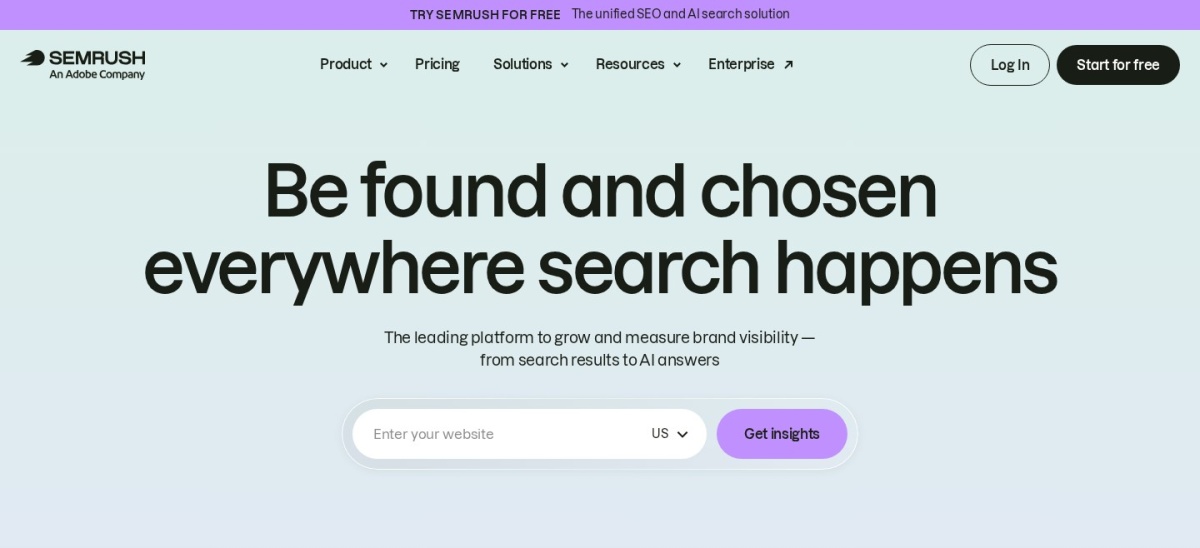
Semrush AI Toolkit is a $99-a-month add-on that puts AI visibility next to the keyword data Semrush users already track. It covers 5 engines, ChatGPT, AI Overviews, AI Mode, Gemini and Perplexity, with 25 tracked prompts, prompt research, brand performance reports and an AI-readiness site audit.
The trade off is the per-domain billing. The $99 covers one domain and one user, and each extra domain or seat adds another $99 a month, so multi-brand teams pay far more. It suits a team tracking one flagship domain inside a Semrush account it already pays for.
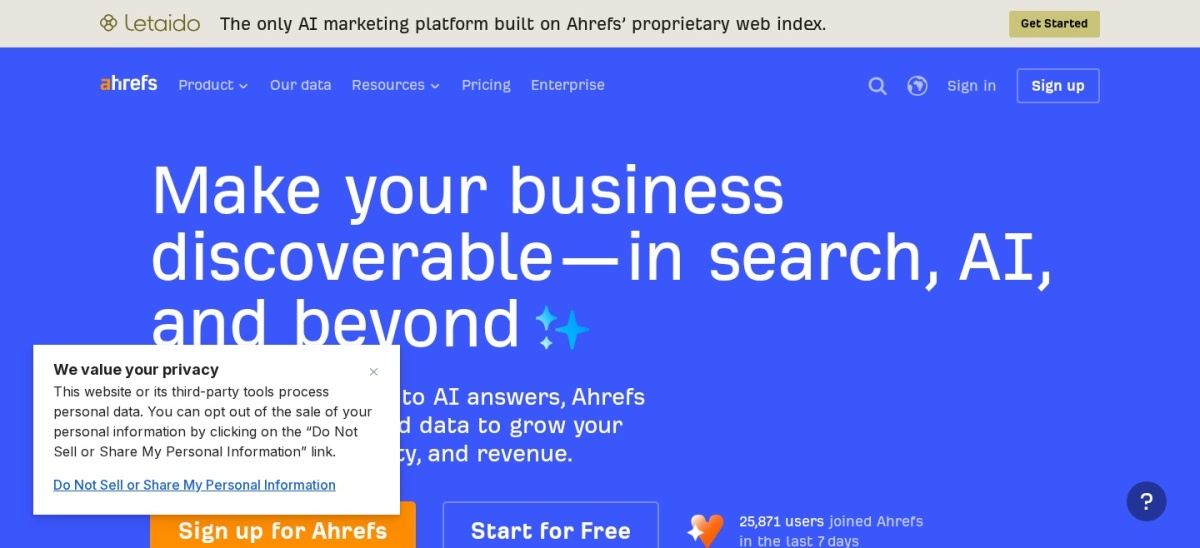
Ahrefs Brand Radar is an AI visibility add-on built on a database of 462 million search-backed prompts. It tracks brand mentions and citations across 7 AI platforms, shows the order brands appear in each answer, and covers YouTube, Reddit and TikTok alongside web answers.
The trade off is price and sentiment. Index access costs $199 a month per AI platform, or $699 for all of them, and Brand Radar does not monitor sentiment. It suits SEO teams that already use Ahrefs and want AI visibility grounded in real search demand.
What we like
462M-prompt database built on real searches
Shows brand order inside each AI answer
Covers YouTube, Reddit and TikTok too
Custom prompt packs from $50 a month
Watch out for
No sentiment monitoring
$199 per platform; $699 for all platforms
Chatbot indexes refresh monthly
All-platform access adds every index and 2,500 checksVisit ahrefs.com
What analytics depth actually means
Depth starts with coverage: how many engines, how many prompts, and how often they run. Daily tracking catches changes that weekly runs miss.
Then comes the citation layer. The deeper tools show which of your pages AI answers cite, which competitor pages win instead, and where your content has gaps.
The deepest layer is behavior: which AI crawlers visit your site, what they fetch, and whether AI answers send you traffic. Only a few tools in this list report that.
How we chose
We started from the AI visibility platforms that publish prompt-level tracking across ChatGPT, Perplexity and Google AI Overviews, then kept the nine with the deepest reporting: citation data, sentiment, competitor benchmarks or crawler analytics.
Prices come from each vendor's pricing page, checked on 22 November 2026, with review scores from G2 on the same day. Where a vendor shows a sale or an annual rate, the list shows the regular monthly price.
We left out tools with no verifiable rating on G2, Capterra or Trustpilot, and tools that publish neither a price nor a trial. No vendor paid for a place, and we do not claim hands-on testing for this list.
How to choose an AI optimization platform for analytics depth
Match the tool to the question you need answered, not to the longest feature list.
Count the engines your buyers use. If your buyers ask ChatGPT and Perplexity, 4 engines is enough. If they use Gemini and Claude too, check whether those engines cost extra.
Check the prompt limit against your topics. A 15-prompt plan covers one brand and a few themes. A 125-prompt plan covers a full product range and competitors.
Ask for citation data, not just mentions. Mentions tell you that you appeared. Citations tell you which pages won and which competitor pages beat you.
Run the free trial on your own brand. Set up your real prompts and competitors, then compare the dashboards side by side before you pay for a year.
FAQ
Which AI optimization platform has the deepest analytics?
Scrunch. Its Core plan tracks 125 prompts across 4 AI engines with citation tracking, persona-based monitoring, hallucination detection and site audits for $250 a month. Goodie runs it close with revenue attribution, and Profound covers the most engines at 9 on Enterprise.
What is the cheapest AI visibility platform?
Otterly AI, at $29 a month for its Lite plan. It tracks 15 prompts across ChatGPT, Google AI Overviews, Perplexity and Copilot, with unlimited team members and a GEO audit. Gemini, Google AI Mode and Claude cost extra on every Otterly plan.
Do I need a separate tool if I already use Semrush or Ahrefs?
Not always. The Semrush AI Toolkit costs $99 a month per domain and adds 25 tracked prompts beside your keyword data. Ahrefs Brand Radar starts at $199 a month per AI platform. Both have tight caps, so a dedicated tracker such as Peec AI may work out cheaper at scale.
How many AI engines should a tool track?
Four covers most buyers: ChatGPT, Perplexity, Google AI Overviews and Copilot. Add Gemini and Claude if your audience uses them, but check the price first, because several tools in this list charge extra for those two engines or lock them behind Enterprise plans.
Why do some AI visibility tools not publish prices?
Enterprise tools such as Profound and Brandlight sell through demos and custom contracts, so there is no list price to publish. That makes comparison harder: budget for a sales process and a paid pilot, and ask for the per-workspace or per-brand cost in writing before you commit.
What is the difference between prompt tracking and citation analytics?
Prompt tracking runs your questions through AI engines and records whether your brand is mentioned. Citation analytics goes further: it shows which pages the engines link to, which competitor pages win instead, and where your content is missing from the answers.
Can these tools show which pages AI search cites?
Yes, most of them can. Scrunch, Peec AI, Goodie and Brandlight all report cited sources per prompt, and SE Ranking maps cited domains by category. Ahrefs Brand Radar shows citations too, but it does not track sentiment, so pair it with another tool if tone matters.