Best AI Code Review Tools in 2026: 9 Tools Compared
WLWPLegible EditorsLast verified 22 Nov 2026How we rank13 min read
★ Short answer
CodeRabbit is the best AI code review tool for most teams, rated 4.4 out of 5 from 150 G2 reviews, with free reviews on public repos and paid plans from $24 a seat a month. Pick Qodo for credit-based team pricing, or Codacy when you also want security scanning and quality gates in one dashboard.
How we make this list: we compare pricing pages, product documentation and public user reviews, then re-check every price before each update. No product paid for a place. Disclosure.
CodeRabbit is the best overall pick: free on public repos, $24 a seat a month, and the largest G2 review base here at 150 reviews.
Qodo suits small teams with modest pull request volume: $30 a month buys about 14 reviews shared across the team, with no per-seat fee.
Codacy is the only pick that bundles SAST, secrets detection, coverage and AI review for $18 a developer a month.
Greptile charges $1 per review credit with no seat fees, so a quiet month costs almost nothing and a busy month costs more.
Bito has the cheapest seat at $12 a month, but each seat only covers 5,000 reviewed lines a month.
What an AI code review tool should cover
AI code review tools read a pull request before a human does. They summarise the change, flag bugs and security issues, and suggest fixes inline, so reviewers spend their time on design and intent instead of style nits.
The tools split into two kinds. Dedicated reviewers such as CodeRabbit, Qodo and Greptile comment on pull requests, while quality platforms such as Codacy, SonarQube Cloud and DeepSource add static analysis, security scanning and merge gates around the same review.
Pricing splits three ways too. Most charge per developer seat, from $12 to $40 a month. Qodo and Greptile charge for the reviews themselves, through credits, so a quiet month costs less. SonarQube Cloud charges by lines of code, so the bill follows the codebase.
Free tiers are generous but narrow. Most cover public repositories or individual developers, and the paid plan is where private repositories, security checks and team features live.
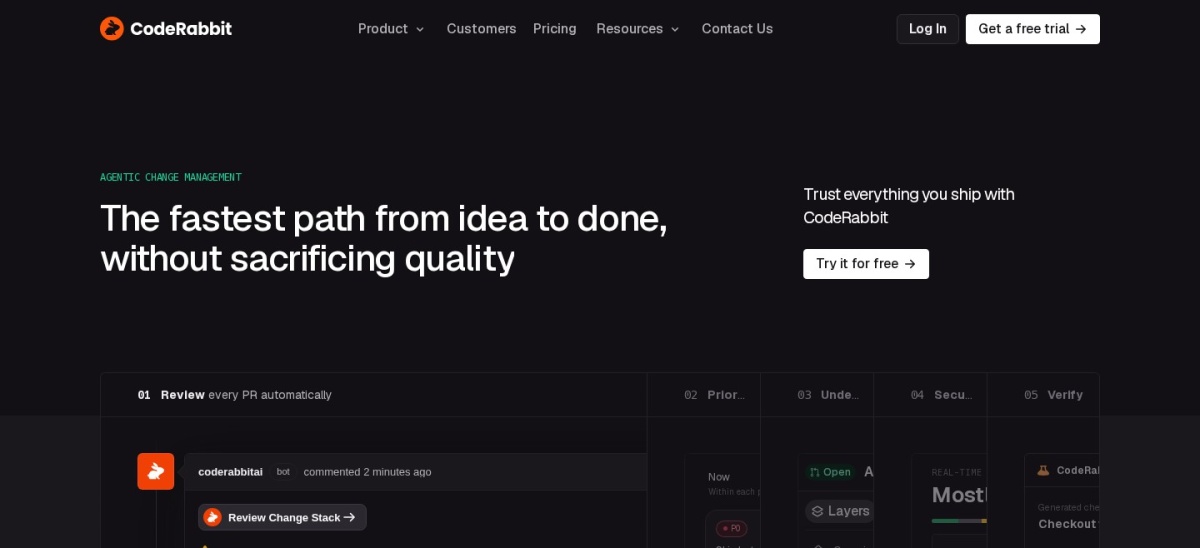
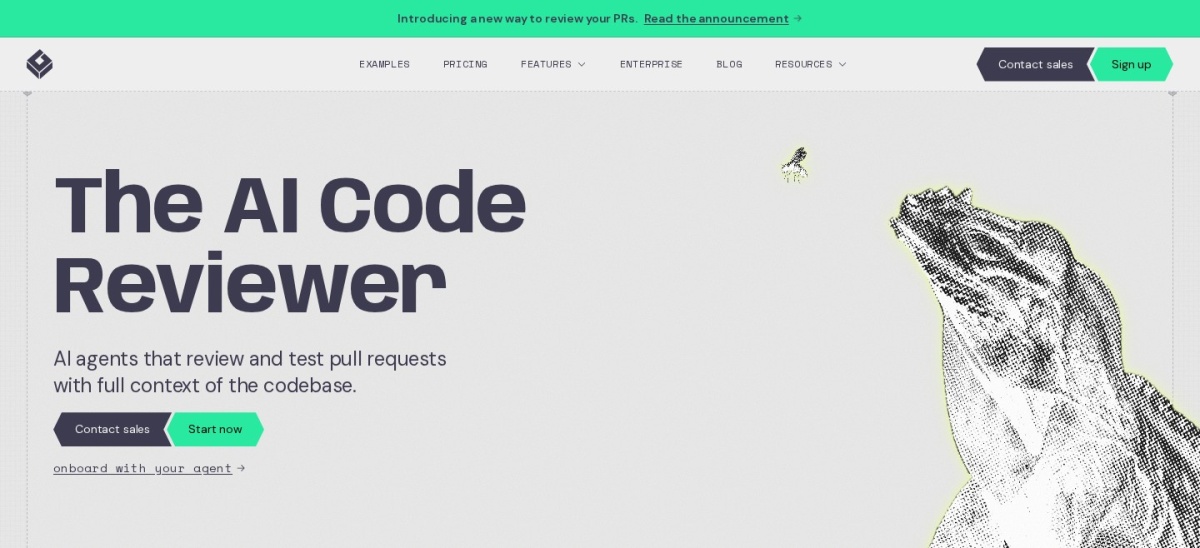
CodeRabbit is an AI reviewer that comments on every pull request with line-by-line feedback, summaries and diagrams. The free plan covers public repositories forever, and paid plans add one-click fixes, learnings from past reviews and Jira and Linear integrations.
The trade off is price. Essentials costs $24 per developer a month billed annually, or $30 month to month, which adds up fast on a large team. It suits teams of 10 to 50 developers that want a predictable per-seat bill with no cap on pull requests.
What we like
Free AI reviews on public repositories
One-click fixes for review comments
Learnings carry context between pull requests
Works with GitHub, GitLab, Bitbucket and Azure DevOps
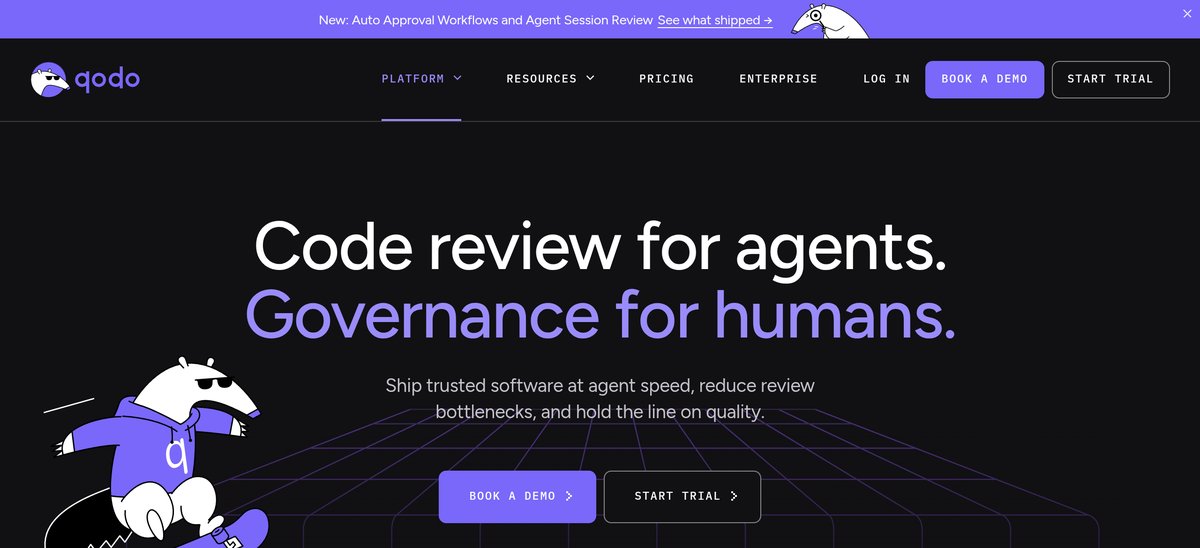
Qodo is an AI code review platform that reviews pull requests against full multi-repository context, not just the diff. The free tier covers a 14-day trial with unlimited reviews, and the paid Pro Team plan sells pooled credit packs the whole team shares.
The trade off is the meter. A $30 pack buys 2,000 credits, about 14 reviews by Qodo's own estimate, so a busy month costs more than a flat seat price. It suits small teams that open a modest number of pull requests and want no per-developer fee.
What we like
No per-user fee; credits pool across the team
Multi-repository context for reviews
Generates unit tests as well as reviews
Watch out for
Credit packs make monthly spend hard to predict
Unused credits expire at the end of each month
Pricing changed three times in 18 months
Enterprise adds SSO, BYOK and on-prem deploymentVisit qodo.ai
03
Codacy
4.6/5on G2 (31 reviews, checked Nov 2026)
Paid from$18/mo
Best all-in-one quality and security
Free planDeveloper tier
Languages49
AI ReviewerIncluded in Team
Cheapest paid planTeam, $18/mo
codacy.com
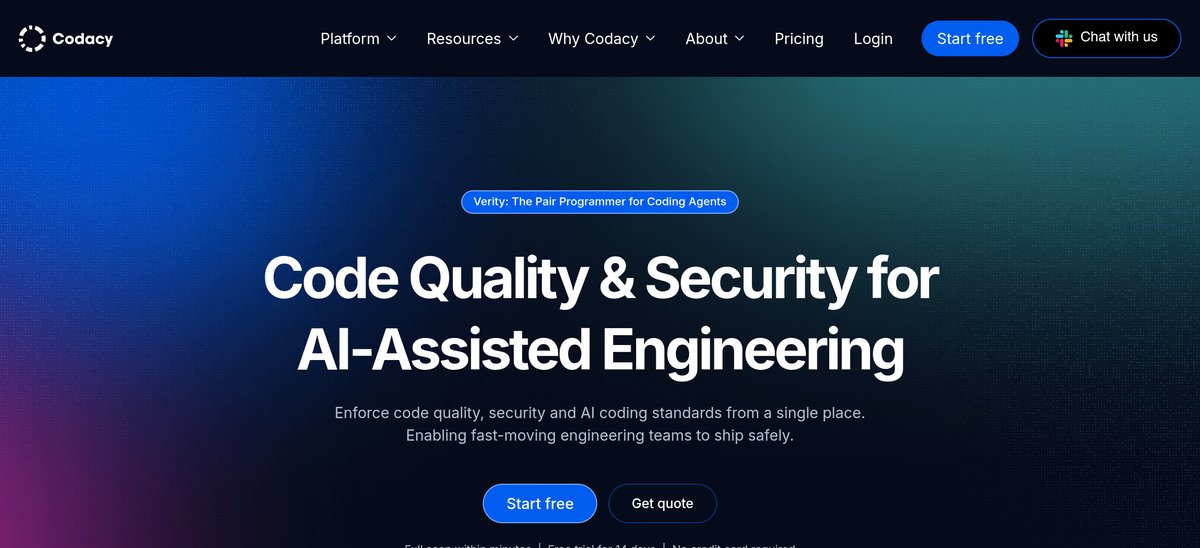
Codacy homepage, captured Nov 2026.
Codacy is a code quality and security platform that combines static analysis with an AI reviewer on every pull request. The free Developer tier covers the Guardrails IDE extension, while the Team plan adds the full cloud platform with SAST, SCA, secrets detection and quality gates.
The trade off is that the free tier is thin. Real pull request review, coverage tracking and dashboards need the Team plan at $18 per developer a month billed annually, or $21 month to month. It suits teams that want quality and security checks in one dashboard.
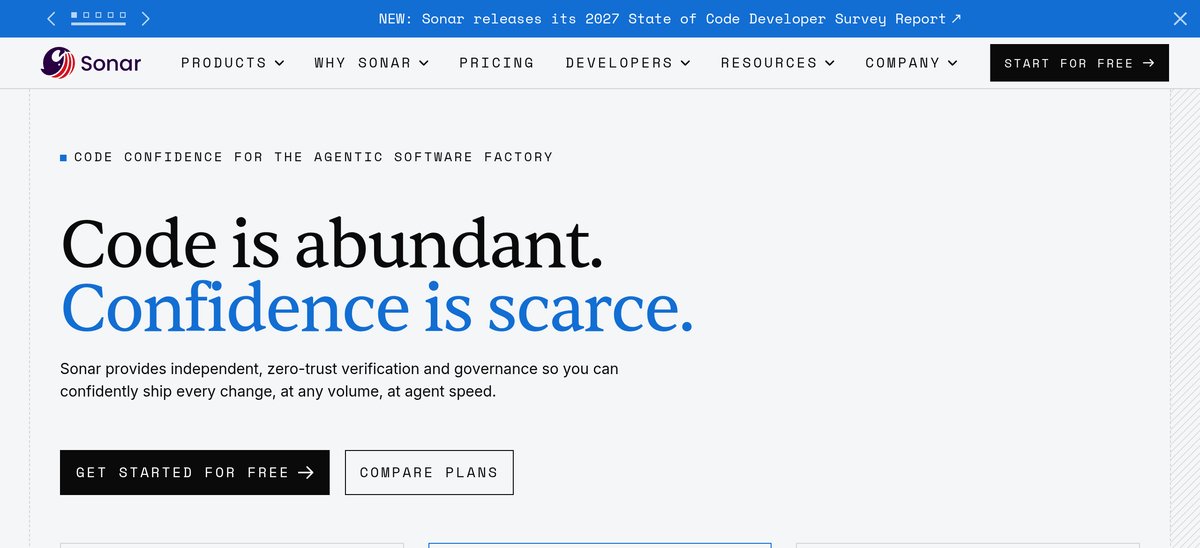
SonarQube Cloud is the hosted version of SonarQube, a code quality platform that applies more than 7,000 rules to every pull request. The free tier covers private projects up to 50,000 lines of code for up to five users, and the Team plan adds more languages and enterprise features.
The trade off is the billing unit. Team starts at $32 a month for up to 100,000 lines of code, so the bill grows with the codebase rather than the team. It suits teams that want deterministic quality gates and security hotspots in one scan.
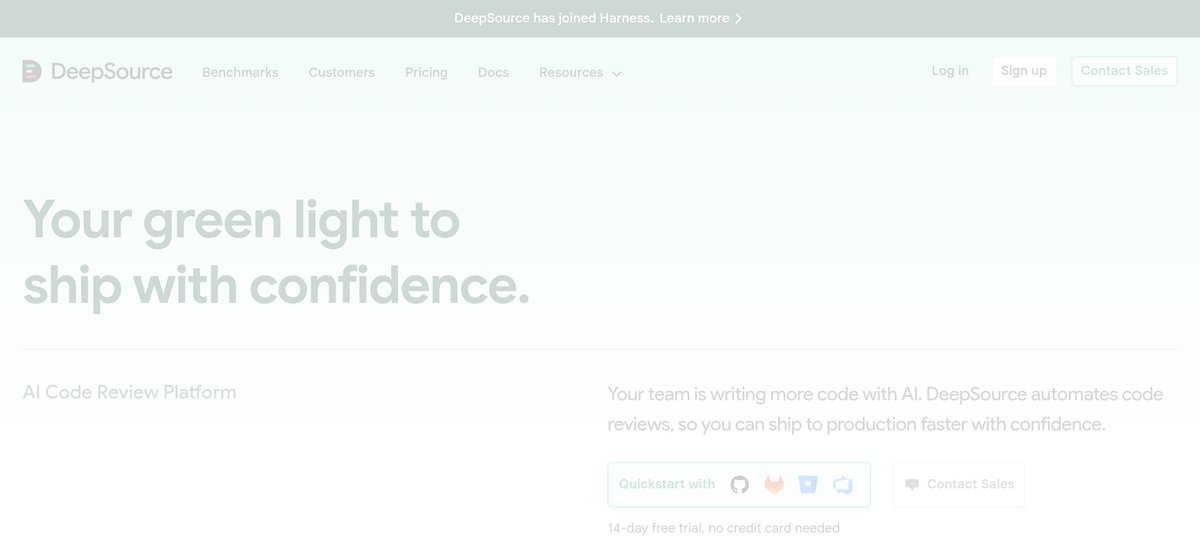
DeepSource is a code analysis platform that runs deterministic static analysis before its AI reviews a pull request, and claims a false-positive rate under 5%. The free tier covers individual developers and open-source projects, and the Team plan adds AI review, Autofix and security scanning.
The trade off is metering. Team costs $24 per user a month billed annually, and AI review draws on credits billed at $8 per 10,000 lines of code on the Standard tier, so heavy AI use adds to the bill. It suits teams that want fewer, more precise findings.
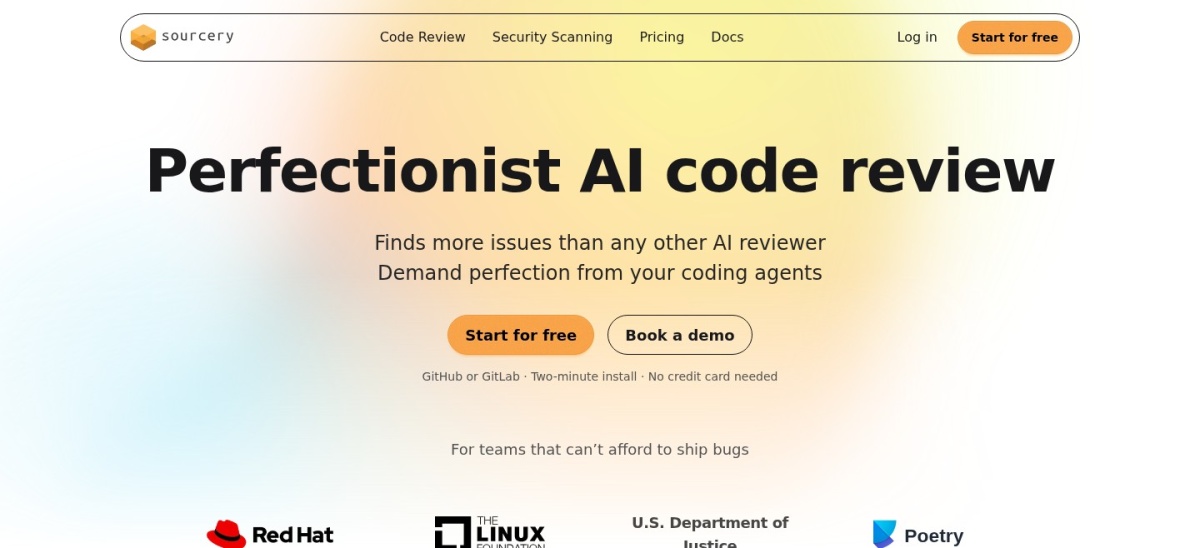
Sourcery is an AI reviewer for GitHub and GitLab that posts summaries, diagrams and line-by-line feedback on pull requests. The free Open Source plan covers public repositories, and Pro at $15 per developer a month adds private repositories and deep refactors across 30+ languages.
The trade off is depth. Pro's review limits are higher than the free tier but not published as a number, and security scanning and analytics wait for the Team plan at $30. It suits budget-conscious teams that want AI review on private repos at the lowest seat price.
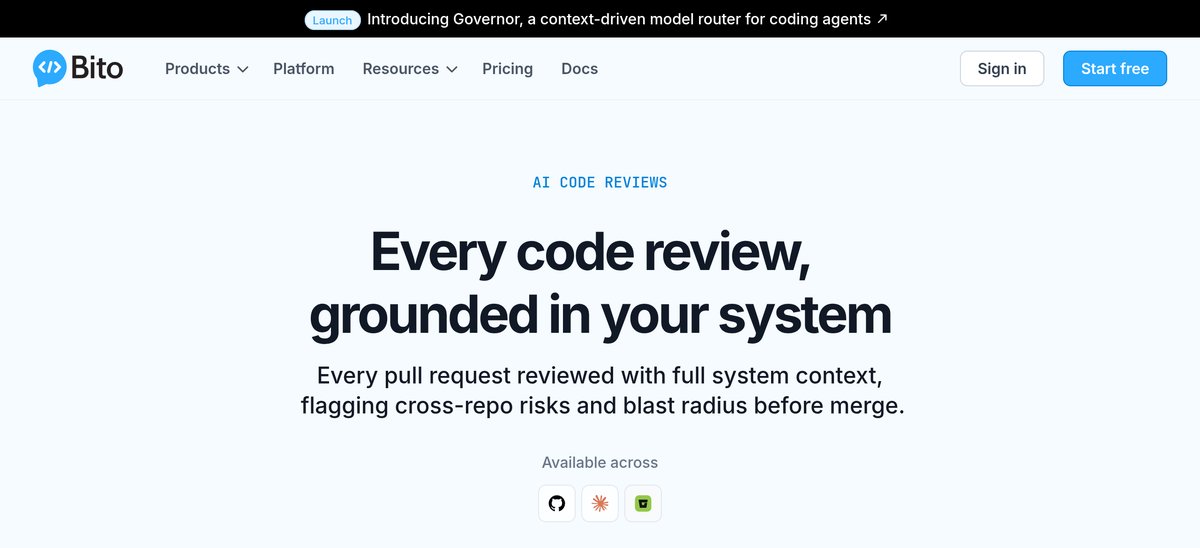
Bito is an AI code review agent that works across Git, the IDE and the command line, posting summaries and suggestions on pull requests. The free plan covers individuals, and the Team plan at $12 per seat a month billed annually adds AI review with a 5,000-line monthly allowance per seat.
The trade off is the line meter. Each seat includes 5,000 reviewed lines a month, and extra lines cost $5 per 1,000, so large pull requests raise the bill. It suits teams on Bitbucket or mixed Git hosts that want a low seat price and IDE review too.
What we like
Lowest seat price for team review
Works in the IDE as well as pull requests
Highest G2 rating in this list at 4.7
Watch out for
Line allowance caps each seat
Custom guidelines need Professional at $20
Only 16 G2 reviews
Professional adds custom guidelines and CI reviewsVisit bito.ai
08
Greptile
4/5on G2 (27 reviews, checked Nov 2026)
Pricing$1 per credit/credit
Best for full-codebase context
Free planStarter, 1 developer
Pricing model$1 per credit
Review tiersBase, Plus, Apex
Free credits50 per month
greptile.com
Greptile homepage, captured Nov 2026.
Greptile is an AI code reviewer that indexes your whole codebase into a graph before reviewing a pull request, so it can trace bugs across files and services. The Starter plan is free for one developer with 50 credits a month, and Pro charges $1 per credit with no seat fees.
The trade off is predictability. A Base review costs 1 credit, Plus costs 3 and Apex costs 10, so deep reviews on a busy month can cost far more than a flat seat price. It suits teams whose worst bugs hide in how files interact.
What we like
Full-codebase context, not just the diff
No seat fees; credits share across the org
Free for qualified open-source projects
Watch out for
Costs scale with review volume and depth
Highest false-positive rate among leading reviewers
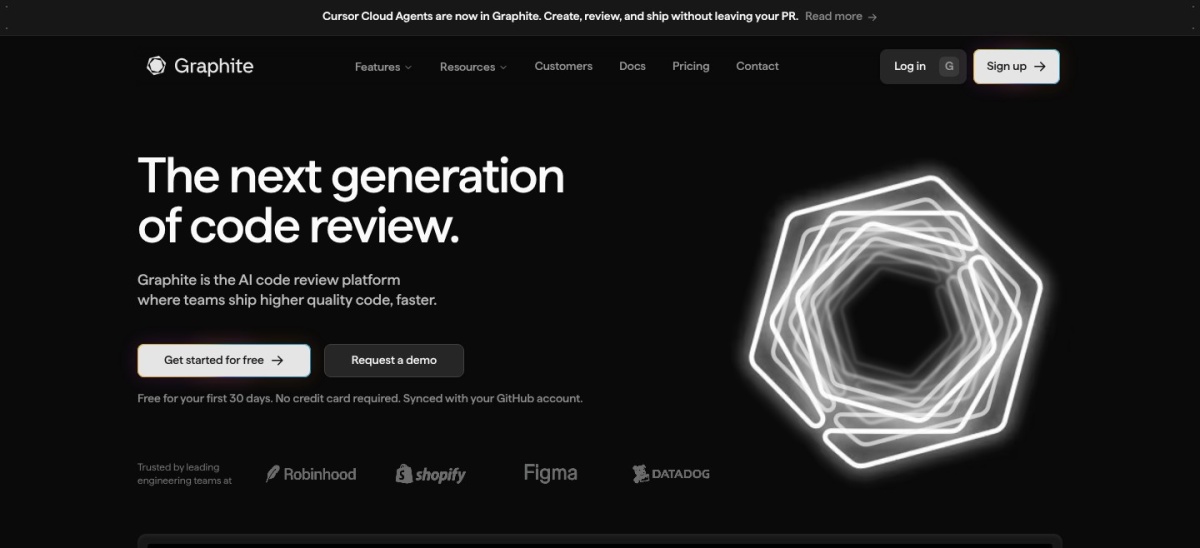
Graphite is a pull request workflow platform for GitHub built around stacked pull requests, with an AI reviewer on top. The free Hobby tier covers personal repositories, and the Starter plan at $20 per user a month billed annually adds organisation repositories and limited AI reviews.
The trade off is that unlimited AI reviews need the Team plan at $40 per user a month billed annually, and Graphite only works with GitHub. It suits GitHub teams that want stacked pull requests, a merge queue and AI review in one tool.
What we like
Stacked PRs without rebase bookkeeping
Vendor reports fewer than 5% of comments downvoted
Seat vs credit pricing: which model fits your team
Seat pricing is predictable. You pay the same each month no matter how many pull requests the team opens, which makes budgeting easy for busy teams.
Credit pricing fits uneven volume. Qodo's $30 pack covers about 14 reviews and Greptile's $1 credits cover one Base review each, so a slow month costs little.
Watch the overage. Both credit tools keep reviewing past the pack and charge for the extra, so set a spending cap before the first busy sprint.
How we chose
We started from the AI code review tools with a public G2, Capterra or Trustpilot listing, then kept the nine with verifiable ratings and published pricing.
Prices come from each vendor's pricing page, checked on 22 November 2026, and ratings come from G2 or Capterra on the same day. Where a vendor shows a sale, the list shows the regular price.
We left out tools with no verifiable rating on any of the three review sites. No vendor paid for a place, and we do not claim hands-on testing for this list.
How to choose an AI code review tool
Start with how your team opens pull requests, then match the billing model to that volume.
Count your pull requests. A team opening 20 pull requests a month fits a credit pack; a team opening 200 needs a flat seat price.
Check your Git host. Graphite only works with GitHub, while CodeRabbit, Codacy and DeepSource also cover GitLab and Bitbucket.
Decide what else you need. If you also want security scanning, coverage and merge gates, pick a platform such as Codacy or SonarQube Cloud instead of a pure reviewer.
Try the free tier on a real repository. Run the free plan on one active repository for two weeks and count how many comments your team acts on before paying.
FAQ
What is the best AI code review tool?
CodeRabbit is the best overall pick for most teams. Its Essentials plan costs $24 per developer a month billed annually, it reviews every pull request with one-click fixes, and it holds a 4.4 out of 5 rating from 150 G2 reviews, the largest base in this list.
Are AI code review tools worth paying for?
They are worth it when review volume is the bottleneck. An AI reviewer catches bugs, security issues and style problems before a human opens the pull request, which shortens review cycles. Teams with only a few pull requests a month can usually stay on a free tier.
How much does AI code review cost?
Seat-based tools in this list run from $12 to $40 per developer a month billed annually. Credit-based tools charge differently: Qodo sells packs from $30 a month and Greptile charges $1 per review credit. SonarQube Cloud starts at $32 a month priced by lines of code.
Do AI code reviewers replace human review?
No. They catch bugs, security flaws and style issues early, but they cannot judge product intent, architecture trade-offs or whether a change is the right thing to build. Treat the AI as a first pass and keep a human approving every merge.
Which AI code review tool is cheapest?
Bito has the cheapest seat at $12 per developer a month billed annually, though each seat only covers 5,000 reviewed lines. Greptile can be cheaper still in a quiet month, since its free Starter plan includes 50 credits and Pro charges $1 per credit with no seat fee.
Can I use an AI code reviewer on private repositories?
Yes, on a paid plan. Most tools in this list review public repositories free and charge for private ones. CodeRabbit's free plan covers private repositories with limited reviews, while Qodo, Sourcery and Greptile offer free trials or free tiers for trying private repos first.