Best AI Brand Visibility Checking Software in 2026: 9 Tools Compared
WLWPLegible EditorsLast verified 22 Nov 2026How we rank12 min read
★ Short answer
Peec AI is the best AI brand visibility checking software for most teams, tracking 50 prompts across three AI models of your choice for $95 a month with a 4.7 out of 5 G2 rating. Otterly AI is the cheapest solid option at $29 a month, while Semrush suits teams that already pay for SEO tools.
How we make this list: we compare pricing pages, product documentation and public user reviews, then re-check every price before each update. No product paid for a place. Disclosure.
Peec AI leads with the clearest dedicated tracking: 50 prompts, three models of your choice and daily updates for $95 a month.
Otterly AI is the cheapest entry point at $29 a month, with 20 prompts and a 7-day free trial.
Semrush, Ahrefs and SE Ranking fold AI visibility into full SEO suites, so they suit teams that already pay for those tools.
Profound no longer sells self-serve brand plans; brands now get custom Enterprise pricing after a demo.
Every tool here tracks ChatGPT, and most add Perplexity, Gemini and Google AI Overviews.
What AI brand visibility checking means
AI answers now sit between your brand and your buyers. When someone asks ChatGPT or Perplexity for a recommendation, the answer may name your competitors and skip you entirely.
An AI brand visibility tool runs the questions your buyers ask, records whether your brand appears, and shows how the answer describes you. Most tools also track which sources the AI cites and how competitors compare.
Coverage differs more than the marketing suggests. Some tools track three engines, others nine or more, and prompt counts on entry plans range from 20 to 150. Check the engine list before you pay, not after.
Prices move fast in this category. Profound retired its self-serve plans in September 2026, and several vendors run first-month or first-year discounts. Our guide to the best AI SEO plugins for WordPress covers the WordPress side of the same shift.
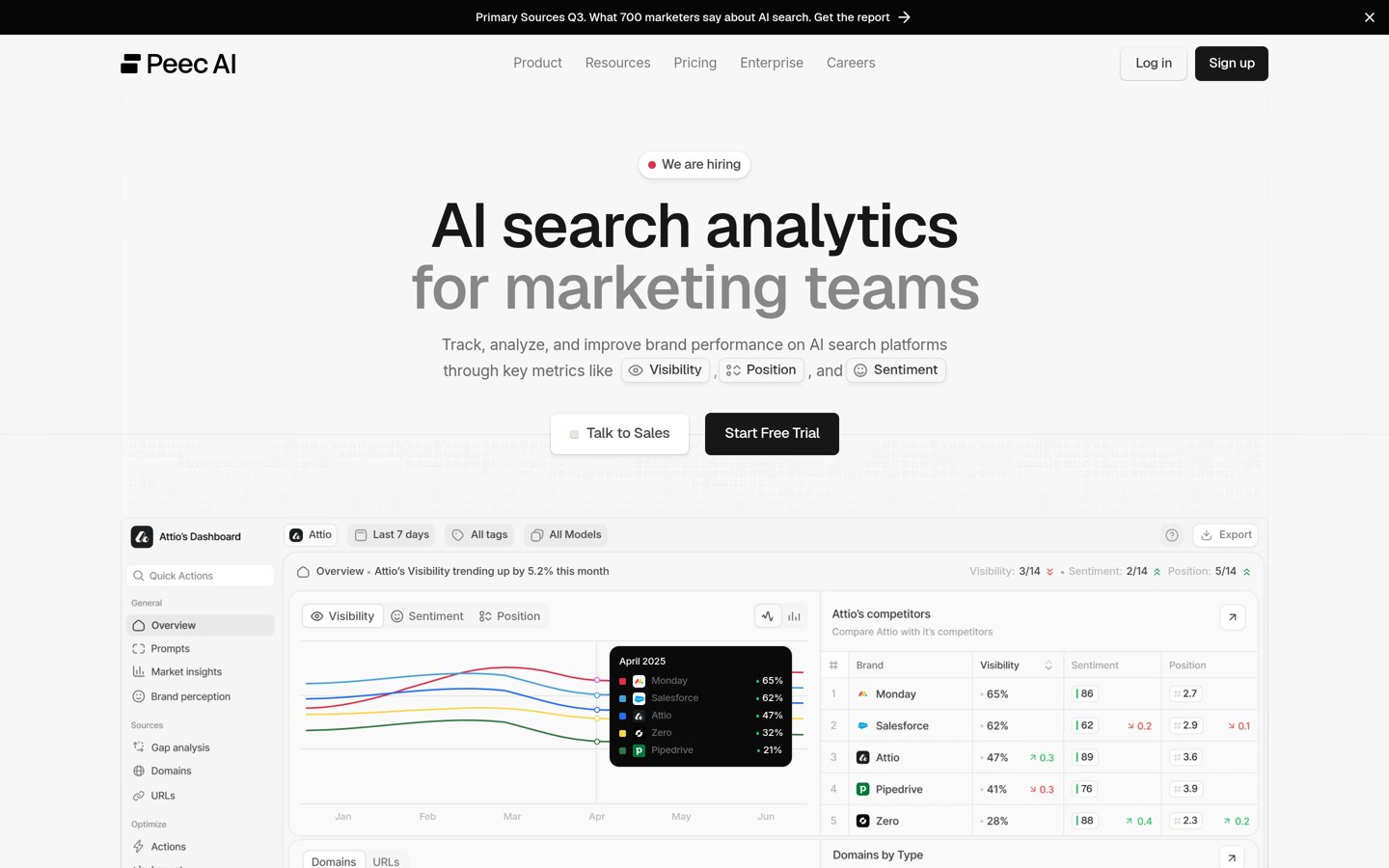
Peec AI is a dedicated AI search tracker that shows how ChatGPT, Perplexity, Gemini and Google AI Overviews describe your brand. The Starter plan tracks 50 prompts across three models of your choice, with daily updates, unlimited users and a prompt suggestion tool that finds questions worth tracking.
The trade off is scale. Starter covers one project and 50 prompts, so agencies and multi-brand teams move to Pro at $245 a month or Advanced at $495. It suits marketing and SEO teams that want a focused tracker without buying a full SEO suite.
What we like
Daily tracking across the models you choose
Clean reporting that is easy to share with clients
Unlimited users on every plan
Prompt suggestions find gaps in your coverage
Watch out for
Only 21 G2 reviews, so the rating rests on a small base
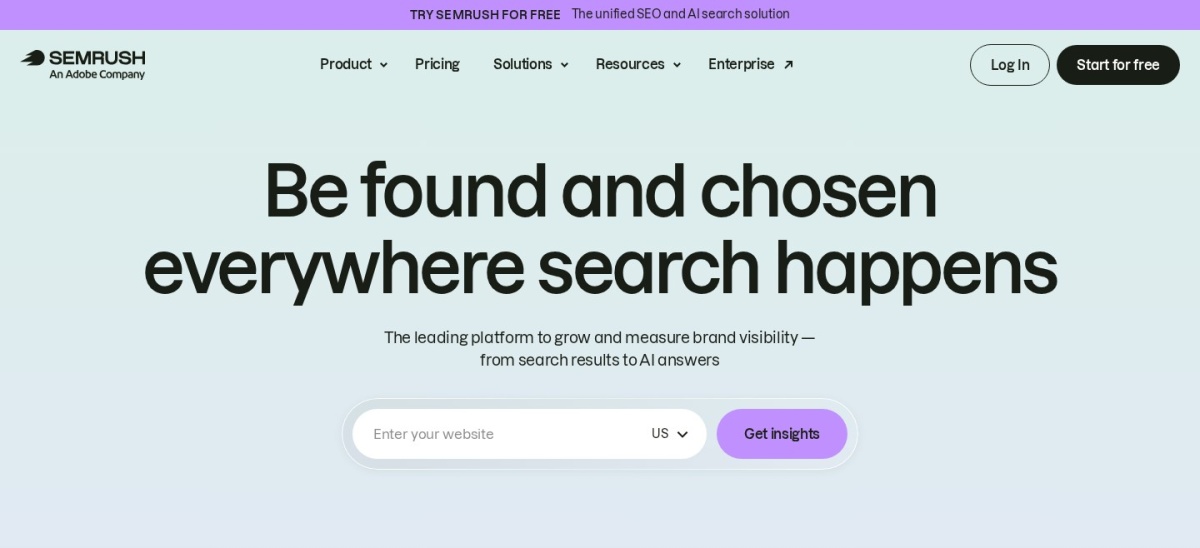
Semrush is an all-in-one SEO platform that added AI visibility tracking to its plans. The SEO plan tracks 500 keywords daily, monitors AI sentiment, runs custom prompts and produces AI visibility reports for any domain, alongside its keyword, backlink and audit tools.
The trade off is price and scope. At $139 a month it costs more than a dedicated tracker, and the AI features sit inside a large platform that takes time to learn. It suits teams that already use Semrush for SEO and want AI tracking in the same account.
Ahrefs is a long-running SEO platform whose Brand Radar tracks how AI search mentions your brand. The Lite plan includes 150 AI prompt checks, 750 tracked keywords, site audits and the backlink database Ahrefs is known for, with Brand Radar available as a standalone product from $199 a month.
The trade off is prompt volume. Lite covers 150 AI prompt checks, which is thin for teams tracking many questions, and the $129 price is the annual-billing rate. It suits SEO teams that already rely on Ahrefs data and want brand tracking beside it.
Otterly AI is a focused AI search analytics tool that tracks brand mentions, citations and share of voice across seven AI engines. The Lite plan covers 20 prompts on three engines of your choice, with daily tracking, sentiment and citation sources, plus a 7-day free trial.
The trade off is the add-on bill. Gemini, Google AI Mode and Claude cost extra on every plan, so full seven-engine coverage on Lite costs $76 a month, and Lite cannot buy extra prompt credits. It suits small teams watching a short list of prompts on a tight budget.
SE Ranking is an all-in-one SEO platform that includes AI visibility tracking on every plan. The Core plan tracks 2,000 keywords daily, runs 25 AI prompts a day across five engines and adds website audits, backlink checks and content tools, with a 14-day free trial.
The trade off is prompt depth. Twenty-five AI prompts a day is modest beside dedicated trackers, and the annual rate of $103.20 a month is the cheaper way to buy it. It suits small teams that want SEO and AI visibility in one cheaper subscription.
Scrunch is an AI visibility platform that watches how AI answers cite your site and how AI agents crawl it. The Core plan covers 15,000 AI responses a month, 10 citation targets, 8 AI engines and 5 seats, with daily tracking, competitor tracking and a 7-day free trial.
The trade off is price for the depth. Core costs $250 a month, and Claude tracking is an add-on rather than included. It suits brands that care about citations and AI agent traffic, not just whether their name appears in an answer.
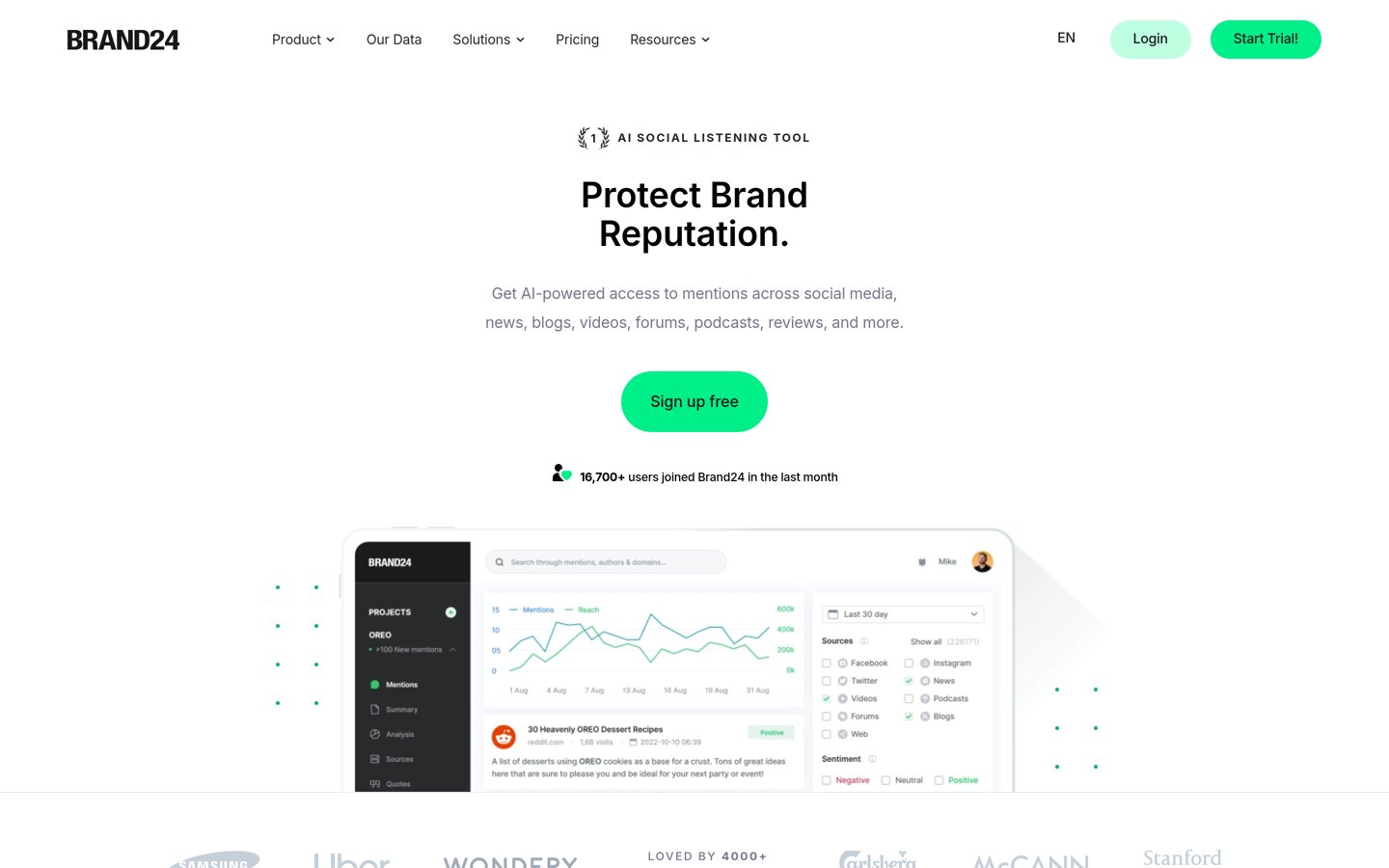
Brand24 is a social listening platform that tracks brand mentions across social media, news, blogs, forums and podcasts. AI visibility comes through a $99-a-month add-on that watches 30 prompts across ChatGPT, Perplexity, Google AI Overviews and Gemini, on top of the Individual plan at $249 a month.
The trade off is the combined bill. AI tracking is not in the base plan, so the cheapest way in costs $348 a month, and the add-on covers four models with no Claude. It suits PR and brand teams that already need social listening and want AI answers in the same account.
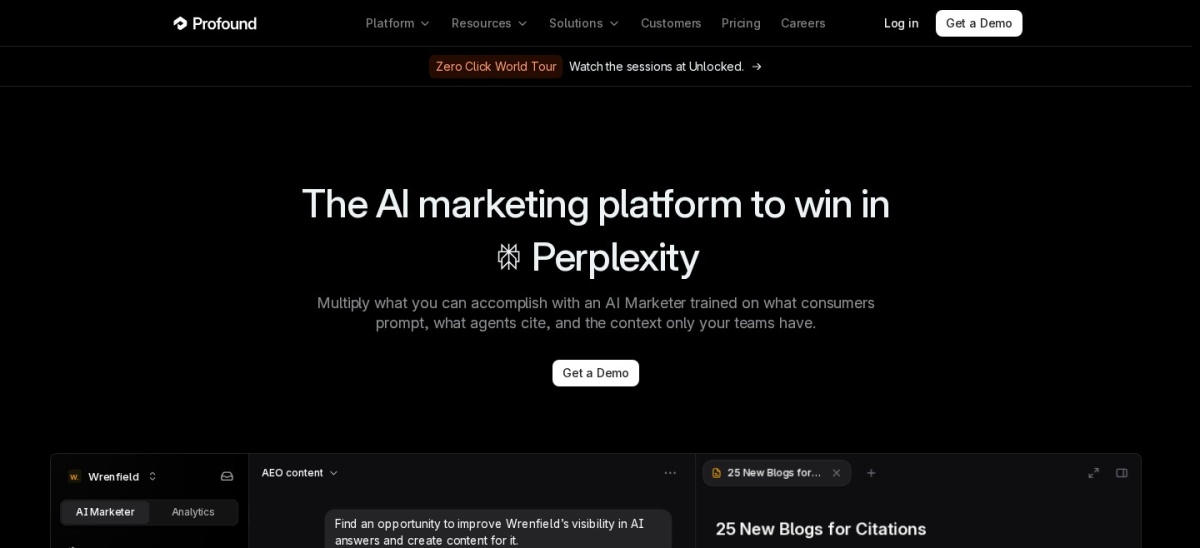
Profound is the best-known enterprise AI visibility platform, tracking brand answers across up to 10 engines including ChatGPT, Perplexity, Gemini, Claude and Google AI Overviews. It adds prompt volume data, agent analytics and AI agents that draft content, with a free 7-day trial of 50 prompts.
The trade off is access. Profound retired its $99 Starter and $399 Growth plans for brands in September 2026, so new brand customers get custom Enterprise pricing after a demo. It suits large brands running a serious AI visibility program with budget to match.
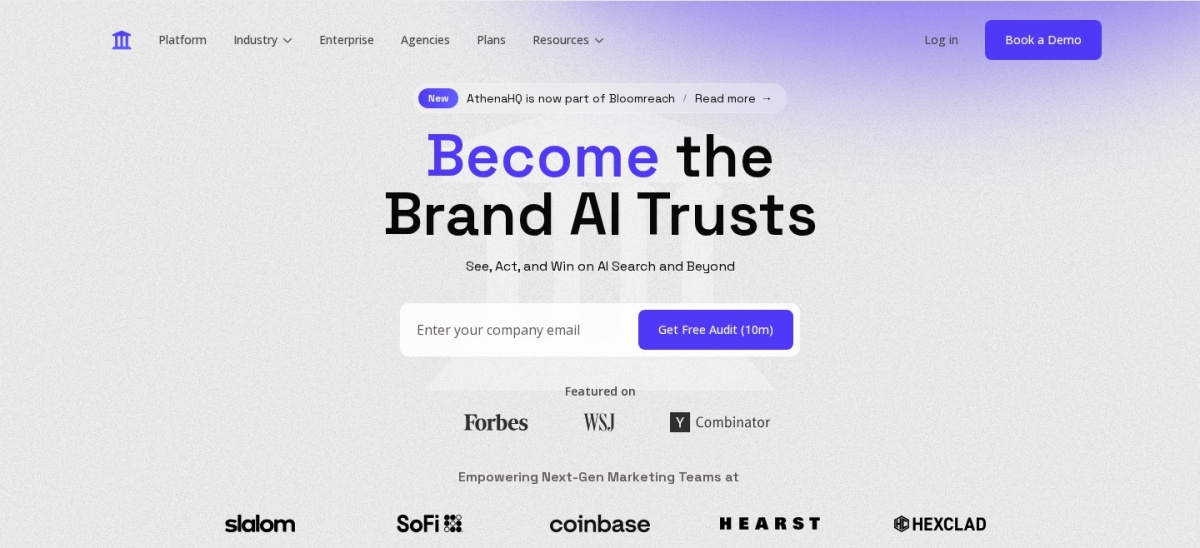
AthenaHQ is a generative engine optimization platform built by former Google Search and DeepMind engineers. The Starter plan covers 11 AI models with 3,600 credits a month, unlimited topics and competitors, and an AI agent that recommends on-page and off-page actions, plus a free Essential tier.
The trade off is credit burn. One credit equals one AI response, so tracking many prompts across 11 models can use up the monthly allowance in days, and API access costs extra. It suits teams that want the tool to tell them what to fix, not just what changed.
No tracker sees the full picture. Each tool runs its own prompts, so two tools can report different visibility for the same brand on the same day.
A mention is not a click. AI answers can name your brand without sending a single visitor, so pair visibility scores with referral traffic from your analytics.
Scores move when models change, not only when you do. A new model version can shift your position overnight, so judge trends over weeks, not single days.
How we chose
We started from every dedicated AI visibility tracker and SEO suite with a published AI visibility feature, then kept the nine with verifiable G2 ratings and published pricing.
Prices come from each vendor's pricing page, checked on 22 November 2026. Ratings and review counts come from G2 on the same day. Where a vendor shows a sale, the list shows the regular price.
We left out tools with no verifiable rating and tools whose pricing is hidden behind a sales call. No vendor paid for a place, and we do not claim hands-on testing for this list.
How to choose an AI brand visibility checking tool
Start with the questions your buyers ask, then match the tool to that list.
List the prompts that matter. Write down the 20 to 50 questions buyers ask AI about your category. A tool that cannot track those prompts is the wrong tool.
Check the engine list. Make sure ChatGPT, Perplexity, Gemini and Google AI Overviews are included. Claude and Grok often cost extra.
Count the real monthly cost. Add-ons for extra engines, prompts and API access can double the headline price. Price the plan you will actually run.
Run the free trial on real prompts. Use the trial to track your own questions for a week and compare the answers with what you see when you ask the models yourself.
FAQ
What is the best AI brand visibility checking software?
Peec AI is the best pick for most teams. It tracks 50 prompts across three AI models of your choice for $95 a month, with daily updates and a 4.7 out of 5 rating from 21 G2 reviews.
How much does AI brand visibility software cost?
Entry prices run from $29 a month for Otterly AI to $348 a month for Brand24 with its AI add-on. Most dedicated trackers sit between $95 and $250 a month, while enterprise tools such as Profound are custom-priced.
Which AI engines do these tools track?
Every tool in this list tracks ChatGPT. Most also cover Perplexity, Gemini and Google AI Overviews, while Claude, Grok and DeepSeek appear on higher plans or as paid add-ons.
Can I check my AI brand visibility for free?
Yes, in a limited way. AthenaHQ has a free tier with 300 credits, Semrush and Ahrefs offer free accounts and checkers, and most paid tools in this list offer a 7-day or 14-day free trial.
What is the difference between AI visibility and SEO?
SEO measures where your site ranks in search results. AI visibility measures whether AI answers mention, recommend or cite your brand, which can happen even when your site does not rank on the first page.
Do I need a dedicated tracker if I already use Semrush or Ahrefs?
Not always. Both suites now include AI visibility tracking, so they cover the basics. A dedicated tracker such as Peec AI or Otterly AI makes sense when you want more prompts, more engines or deeper citation data.