Claude is the best alternative to the OpenAI API for most teams, with strong coding and agent models and a cheap entry model. OpenRouter covers hundreds of models behind one key, while Gemini is the best pick for free prototyping.
How we make this list: we compare pricing pages, product documentation and public user reviews, then re-check every price before each update. No product paid for a place. Disclosure.
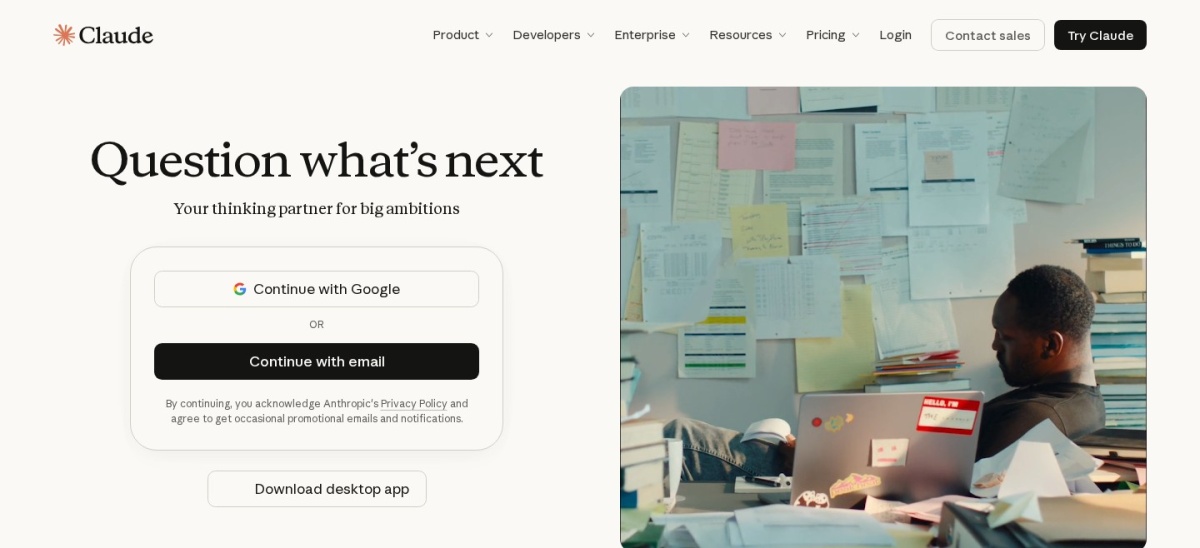
Claude is the closest quality rival to OpenAI, with Haiku 5.5 from $0.10 per million input tokens and no free tier.
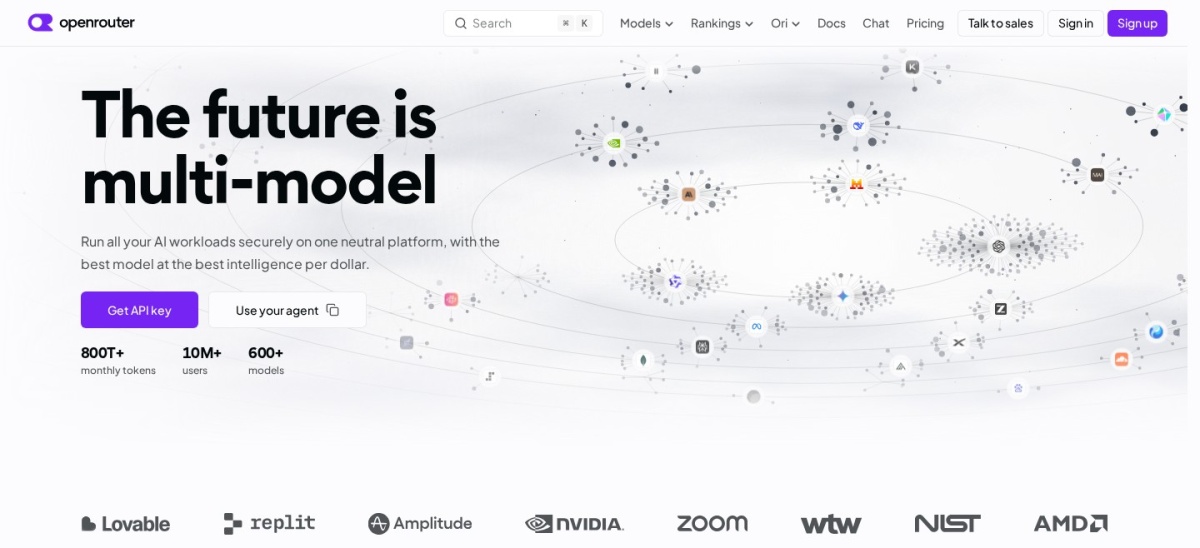
OpenRouter is the only pick that needs no model choice, with 600+ models behind one key and a 5.5% fee on credit buys.
Gemini has the most generous free tier, with Flash models free within rate limits.
DeepSeek, Mistral and the open-model hosts all undercut frontier prices, with cheapest models from $0.10 to $0.30 per million input tokens.
Groq was left out: it has no verifiable G2, Capterra or Trustpilot rating beyond a single Trustpilot review.
How do you choose the best alternative to the OpenAI API?
Start with what your app actually calls. A general chat app can move to any frontier API, while retrieval, coding or voice work each favour a different provider.
Compare the cheapest model, not the flagship. Haiku, Flash-Lite and Ministral all start at $0.10 to $0.30 per million input tokens, while flagships cost $2 to $8 for the same million.
Check the free tier and the billing model. Gemini and OpenRouter let you prototype free, Together AI and Fireworks are prepaid only, and OpenRouter adds a fee to every credit purchase.
Plan for price changes. Gemini raises flagship prices in December, DeepSeek has warned of a rise, and model names move fast, so pin the model version in code.
Claude is Anthropic's model family, served through the Claude API with the closest quality rivalry to OpenAI's flagships. Haiku 5.5 costs $0.10 per million input tokens and $0.50 per million output tokens for prompts up to 100,000 tokens, while Sonnet 5.5 and Opus 5.5 cover harder coding and agent work.
The trade off is that there is no free tier, only limited starter credit for new accounts, and Haiku jumps to $0.50 in and $2.50 out above 100,000 prompt tokens. It suits teams that want the strongest coding and agent model with OpenAI-compatible tooling.
OpenRouter is a gateway that puts hundreds of models from many providers behind one OpenAI-compatible API key, with automatic failover when a provider fails. More than 25 models are free within daily limits, and paid models bill at the provider's list price.
The trade off is the fee. OpenRouter adds 5.5 percent to credit purchases on its Standard plan, and free models are capped at 50 requests a day until you buy $10 of credits. It suits teams that switch models often and want one bill.
Gemini is Google's model family, served through the Gemini API with a genuine free tier on most Flash models and very long context windows. Flash-Lite costs $0.30 per million input tokens and $2.50 per million output tokens, and the API handles text, image and video input.
The trade off is price movement. Gemini 4 Carbon rises from $2 to $4 per million input tokens on 1 December 2026, and Flash-Lite pricing changes again in January. It suits teams that prototype free and want multimodal models on one key.
DeepSeek is the budget pick in this list, with its Flash model at $0.30 per million input tokens and $1.20 per million output tokens at peak hours, and half that off-peak. The API is OpenAI-compatible, so switching usually means changing the base URL and key.
The trade off is that off-peak pricing is the real bargain, peak prices are higher, and DeepSeek has warned of a price rise. There is no free allowance. It suits high-volume workloads and batch jobs where cost beats brand.
Together AI is an AI cloud that serves more than 200 open-weight models through one OpenAI-compatible API, with fine-tuning and GPU clusters on the same bill. Its shared GPT OSS 120B model costs $0.15 per million input tokens and $0.60 per million output tokens.
The trade off is that Together AI is prepaid only, with no free trial and access that stops when the balance empties. It suits startups and ML teams running open models in production who also want fine-tuning.
Mistral AI is a European provider whose La Plateforme API serves its own open-weight and premier models, with EU hosting and on-premises deployment for regulated buyers. Ministral 3 3B costs $0.10 per million input and output tokens, and Large 4 costs $0.70 in and $2.10 out.
The trade off is breadth. Mistral's model range is narrower than OpenAI's or Google's, and its G2 base of 57 reviews is small next to the leaders. It suits European teams and buyers who want open weights they can self-host later.
Fireworks AI is a production home for open models, serving fine-tuned models at base-model token prices through an OpenAI-style API. Its shared GPT OSS 120B model costs $0.15 per million input tokens and $0.60 per million output tokens, with batch calls at half price.
The trade off is that Fireworks is prepaid, with no free tier stated, and its dedicated GPUs are the expensive part. It suits developer teams shipping open models in production who plan to fine-tune.
Cohere is a provider of models for enterprise retrieval, with Command models for generation plus Embed and Rerank APIs that plug into search stacks. Command R costs $0.15 per million input tokens and $0.60 per million output tokens, while Command A costs $2.50 in and $10 out.
The trade off is focus. Cohere fits retrieval work better than general chat, and its G2 base of 27 reviews is the smallest in this list. It suits enterprise teams whose Claude or OpenAI workload is mostly retrieval over internal documents.
Grok is xAI's model family, served through an OpenAI-compatible API with a large context window of one million tokens. Grok 4.7 costs $2 per million input tokens and $6 per million output tokens, which undercuts most frontier models on price.
The trade off is the thin review base, with only 28 G2 reviews, and a model lineup that changes fast. It suits teams that want a low-cost frontier model and can pin the model version in code.
Every pick here bills per million tokens, split into input and output, with output usually three to five times dearer than input.
Batch calls and prompt caching cut the bill hard: most vendors halve batch prices, and cached input costs a fraction of fresh input.
Free tiers are for prototyping, not production. They cap requests per day and per minute, and free models are usually not suitable for production traffic.
How we chose
We started from every provider comparison sources name as an OpenAI API replacement, then kept only production APIs with published per-token pricing and a verifiable rating on G2.
Prices are per million tokens from each provider's own pricing page, as read in November 2026 and checked on 29 November 2026. Ratings and review counts come from G2 on the same day. The table shows the cheapest rate per 10 million tokens, since per-million rates run under a dollar. Flagship prices change often, so the cheapest model anchors each card.
We left out Groq, the fastest option in most comparisons, because it has no verifiable rating on G2, Capterra or Trustpilot beyond a single Trustpilot review. No vendor paid for a place, and we do not claim hands-on testing for this list.
How to choose an alternative to the OpenAI API
Start with your current bill, then test the cheapest model that meets your quality bar.
Price one real workload. Take a typical request, count its input and output tokens, and cost it on two or three providers. The cheapest model, not the flagship, decides the bill.
Test quality on your own prompts. Run your hardest prompts through the trial or free tier and compare answers side by side. Benchmarks do not predict your use case.
Check the compatibility path. Most picks here offer an OpenAI-compatible endpoint, so switching usually means changing the base URL and key. Confirm tool use and JSON output work first.
Plan for price and model changes. Pin the model version, watch for announced price rises, and keep a second provider configured so a price change never strands you.
FAQ
What is the best alternative to the OpenAI API in 2026?
Claude is the best alternative to the OpenAI API for most teams. Its Haiku model costs $0.10 per million input tokens, Sonnet covers harder coding work at $2, and the API is the closest quality rival to OpenAI's flagships.
What is the cheapest alternative to the OpenAI API?
Ministral 3 3B from Mistral, Haiku 5.5 from Claude and Flash-Lite from Gemini all start at $0.10 per million input tokens. DeepSeek Flash is $0.30 at peak and half that off-peak, and OpenRouter offers more than 25 models free within daily limits.
Is there a free alternative to the OpenAI API?
Yes. Gemini has a free tier on most Flash models, OpenRouter offers 25+ free models with 50 requests a day, and Mistral has a free experiment tier. Claude gives new accounts limited starter credit, while Together AI and Fireworks are prepaid only.
Which OpenAI API alternative is fastest?
Groq is the fastest option in most comparisons, but it has no verifiable rating on G2, Capterra or Trustpilot, so it is not in this list. Among the picks here, Together AI and Fireworks are built for low-latency open-model inference.
Claude vs Gemini: which API should I choose?
Choose Claude for coding, agents and long documents, where it is the closest quality rival to OpenAI. Choose Gemini for free prototyping, multimodal work and very long context, with a free tier on most Flash models.
Can I switch from the OpenAI API without rewriting my code?
Usually yes. Most picks here, including OpenRouter, Together AI, Fireworks and Grok, offer an OpenAI-compatible endpoint, so you change the base URL, the key and the model name. Claude and Gemini need their own SDKs for full features.
SaaS SEO and WordPress specialist with about 8 years of experience. Rakib compares WordPress plugins, themes, hosting and software using public pricing, documentation and user reviews. See how we rank.